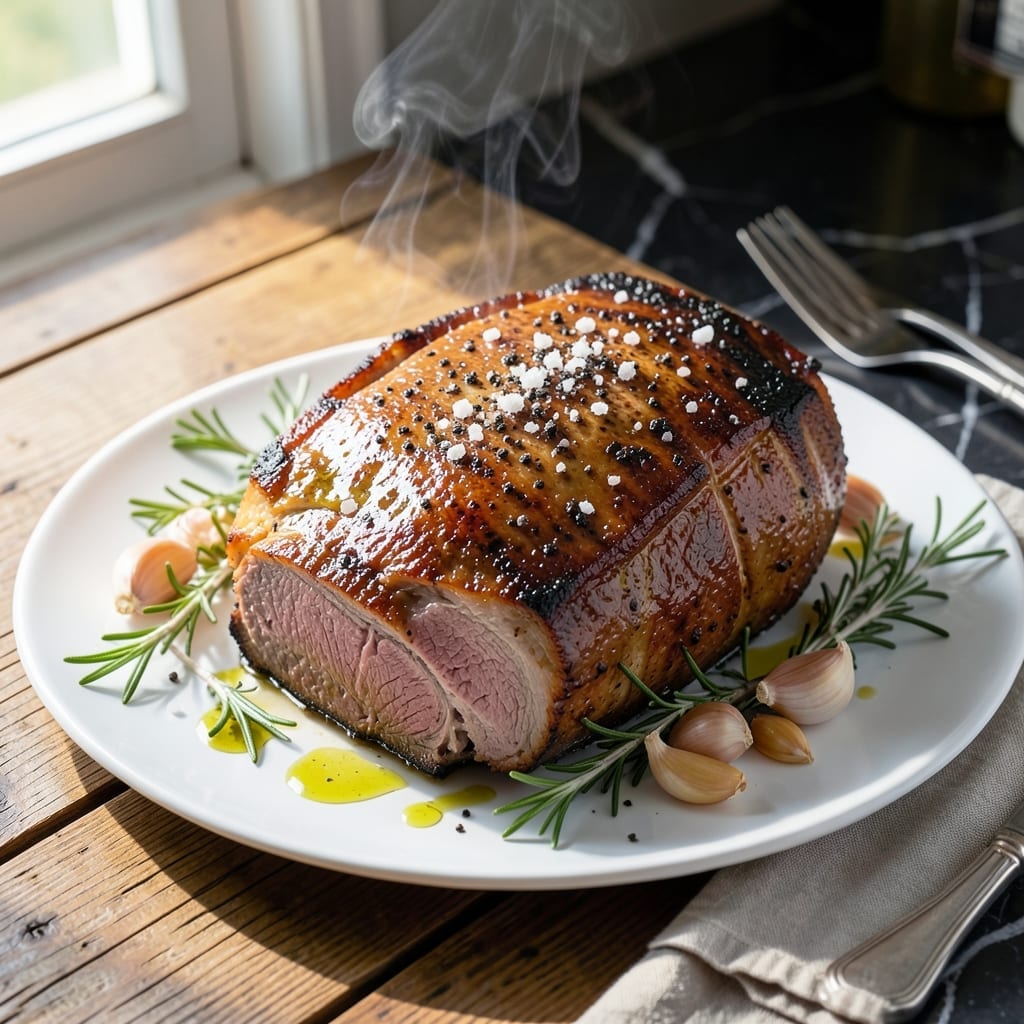
This reverse-sear method guarantees even doneness from edge to edge, transforming prime rib into a showstopping centerpiece. I perfected this technique after years of uneven results with traditional roasting.
The low-and-slow start in the oven, followed by a high-heat finish, creates a perfectly pink interior with a deeply browned crust. It is the most reliable way to cook prime rib I have found.
Ingredients for Alton Brown Prime Rib Roast
This showstopping centerpiece starts with prime rib and a handful of bold, aromatic ingredients.
| Ingredient | Amount | Notes |
|---|---|---|
| Prime Rib Roast 🥩 | 5 lb | Bone-in, well-marbled preferred |
| Kosher Salt 🧂 | 2 tbsp | Diamond Crystal preferred for texture |
| Freshly Ground Black Pepper 🌶️ | 1 tbsp | Coarsely ground for crust |
| Garlic Cloves 🧄 | 6 cloves | Smashed but left whole |
| Fresh Rosemary Sprigs 🌿 | 4 pieces | About 6 inches long each |
| Fresh Thyme Sprigs 🍃 | 4 pieces | About 6 inches long each |
| Olive Oil 🫒 | 2 tbsp | Extra-virgin for richness |
| Dijon Mustard 🟡 | 2 tbsp | For crust adhesion |
| Red Wine 🍷 | 1 cup | Dry variety for deglazing |
| Beef Stock 🥣 | 1 cup | Low-sodium preferred |
| Unsalted Butter 🧈 | 4 tbsp | For finishing baste |
| All-Purpose Flour 🌾 | 1 tbsp | For thickening pan sauce |
[recipe_ingredient_scaler]
The prime rib is non-negotiable—bone-in provides superior flavor and structure. Source from a reputable butcher or high-end grocery like Whole Foods; ask for a well-marbled cut from the small end of the ribeye. The fat cap should be at least 1/2 inch thick for proper rendering. Diamond Crystal kosher salt is ideal here due to its coarse texture and clean taste, but Mortons works in a pinch.
No fresh herbs? Dried at one-third the amount, but fresh delivers better aroma. For the wine, any bold dry red works—Cabernet, Merlot, or even a decent Malbec. Short on time? Skip the pan sauce and serve with prepared horseradish cream. The butter can be omitted for a leaner finish, though it adds a luxurious sheen to the crust.
The roast can rest at room temperature for up to 2 hours before cooking. Leftovers? Wrap tightly and refrigerate for 3-4 days or freeze for 3 months. Reheat slices gently in a warm oven with a splash of beef stock to prevent drying.
Why You’ll Love This Recipe
- Set It and Forget: Honestly, once that prime rib is seasoned with salt, pepper, garlic, and rosemary, the oven does all the heavy lifting.
- Crust You’ll Brag About: That rosemary and garlic crust forms a dark, fragrant seal that crackles when you slice into it.
- Holiday Hero: I’ve served this for Christmas and casual Sunday suppers—always gets the same wide-eyed reaction.
- Leftovers Worth Fighting Over: Cold prime rib on crusty bread with a little horseradish? My lunch the next day is basically a free steak sandwich.
Step-by-Step Instructions for Reverse-Sear Prime Rib Roast
This method ensures perfectly even doneness from edge to edge with a beautiful crust.
Step 1: Season and Prepare the Prime Rib Roast
Begin by patting the 5 lb Prime Rib Roast completely dry with paper towels. This is crucial for achieving a proper sear. Rub the entire surface with the 2 tbsp Olive Oil, then evenly coat with the 2 tbsp Kosher Salt and 1 tbsp Freshly Ground Black Pepper.
Create small slits in the roast and insert the 6 cloves Garlic Cloves, 4 pieces Fresh Rosemary Sprigs, and 4 pieces Fresh Thyme Sprigs for aromatic infusion. Let it sit at room temperature for 1 hour to allow the seasoning to penetrate.
Step 2: Initial Low-Temperature Roast
Preheat your oven to 250°F. Place the roast on a wire rack set over a baking sheet, fat-side up. Roast until the internal temperature reaches 110-115°F for medium-rare, which will take approximately 2 to 2.5 hours for this size.
Use a meat thermometer to monitor the temperature accurately. This slow roasting phase ensures even cooking throughout the thick cut without overcooking the outer layers.
Step 3: Create the Herb Crust
Once the roast reaches the target internal temperature, remove it from the oven. Brush the entire surface with the 2 tbsp Dijon Mustard—this will help the crust adhere and add depth of flavor.
Increase the oven temperature to 500°F to prepare for the final searing step. The mustard layer will caramelize slightly during this high-heat phase, creating a flavorful crust.
Step 4: High-Heat Sear and Rest
Return the roast to the 500°F oven and cook for 15-20 minutes until the external crust is deeply browned and the internal temperature reaches 130°F for perfect medium-rare.
Remove from the oven and transfer to a cutting board. Tent loosely with foil and let rest for 20-30 minutes to allow the juices to redistribute throughout the meat.
Step 5: Prepare the Pan Sauce
Place the roasting pan on the stovetop over medium heat. Add the 1 cup Red Wine and deglaze, scraping up all the browned bits from the bottom. Reduce by half, then add the 1 cup Beef Stock.
In a small bowl, mix the 1 tbsp All-Purpose Flour with 2 tbsp of the 4 tbsp Unsalted Butter to create a beurre manié. Whisk this into the pan juices and simmer until thickened. Finish by swirling in the remaining 2 tbsp Unsalted Butter for a glossy, rich sauce. Strain and serve with the carved prime rib.
Pro Tips For Making Alton Brown Prime Rib Roast
- Salt Overnight: I learned this the hard way—dry-brine the prime rib with kosher salt at least 12 hours before cooking. It seasons deep into the meat and guarantees a perfect crust.
- Start Hot, Finish Low: Sear the roast at 500°F for 15 minutes, then drop the temp to 250°F. This locks in flavor and ensures even cooking without overcharred edges.
- Skip the Cold Roast: After burning a few ends, I finally figured out—let the prime rib sit at room temperature for 1-2 hours before cooking. It cooks more evenly and prevents a dry outer layer.
- Crush Garlic Hard: Sounds weird, but it works: smash the garlic cloves before rubbing them on the meat. It releases more flavor and adheres better to the roast.
Regional Styles of alton brown prime rib roast
Texas Hill Country Style
In the Lone Star State, we keep it simple with just coarse salt and black pepper—no mustard, no herbs. The beef speaks for itself. I learned this at a local BBQ competition where the pitmaster swore by Diamond Crystal salt only. 🔥
French Classic Approach
My French training kicks in here: create a mirepoix base under the roast with carrots, celery, and onions. Add 1 cup red wine to the pan for deglazing, then reduce with beef stock into a rich jus. It elevates the prime rib to haute cuisine.
California Wine Country
Out west, we incorporate fresh rosemary and thyme from the garden, plus a Cabernet Sauvignon reduction. The wine’s bold tannins cut through the richness beautifully. I forage wild herbs along the coast for an extra layer of complexity. 🌿
Midwest Comfort Style
This hearty version includes a horseradish cream sauce served on the side. Mix ½ cup sour cream with 2 tbsp prepared horseradish and a squeeze of lemon. It’s a nod to the creamy sides my family always served with roast beef.
Coastal Herb Crust
For a lighter touch, blend olive oil with minced garlic, rosemary, and thyme to form a paste. Rub it over the roast before the final sear. The coastal breeze in my foraging spots inspires this fresh, aromatic approach.
Nutrition Facts
Frequently Asked Questions
What internal temperature should I aim for?
For perfect medium-rare, remove from oven at 130°F. The temperature will rise to 135°F during resting. Use a meat thermometer for accuracy.
Can I use a boneless roast instead?
Yes, but bone-in provides better flavor and structure. If using boneless, reduce cooking time by about 15% and tie it with butcher twine to maintain shape.
How long should I let it rest before slicing?
A 20-30 minute rest is crucial. This allows juices to redistribute, ensuring moist, tender slices. Skipping this step risks dry meat.
What if my crust isn’t browning enough?
Increase oven to 500°F for the final sear. If needed, broil for 2-3 minutes, watching closely to prevent burning.

Trained in classic French technique but raised on slow-cooked ribs and spicy rubs, she blends culinary skill with smoke and soul.
- Recipe for Boneless Pork Chops in Cast Iron Skillet: Sear and Baste to Juicy Perfection - October 3, 2026
- Recipe for Boneless Cross Rib Roast: Slow-Roasted Beef with Herb Crust - October 3, 2026
- Hamburgers in Sauce Recipe Crock Pot: Slow-Cooked Savory Delight - October 3, 2026