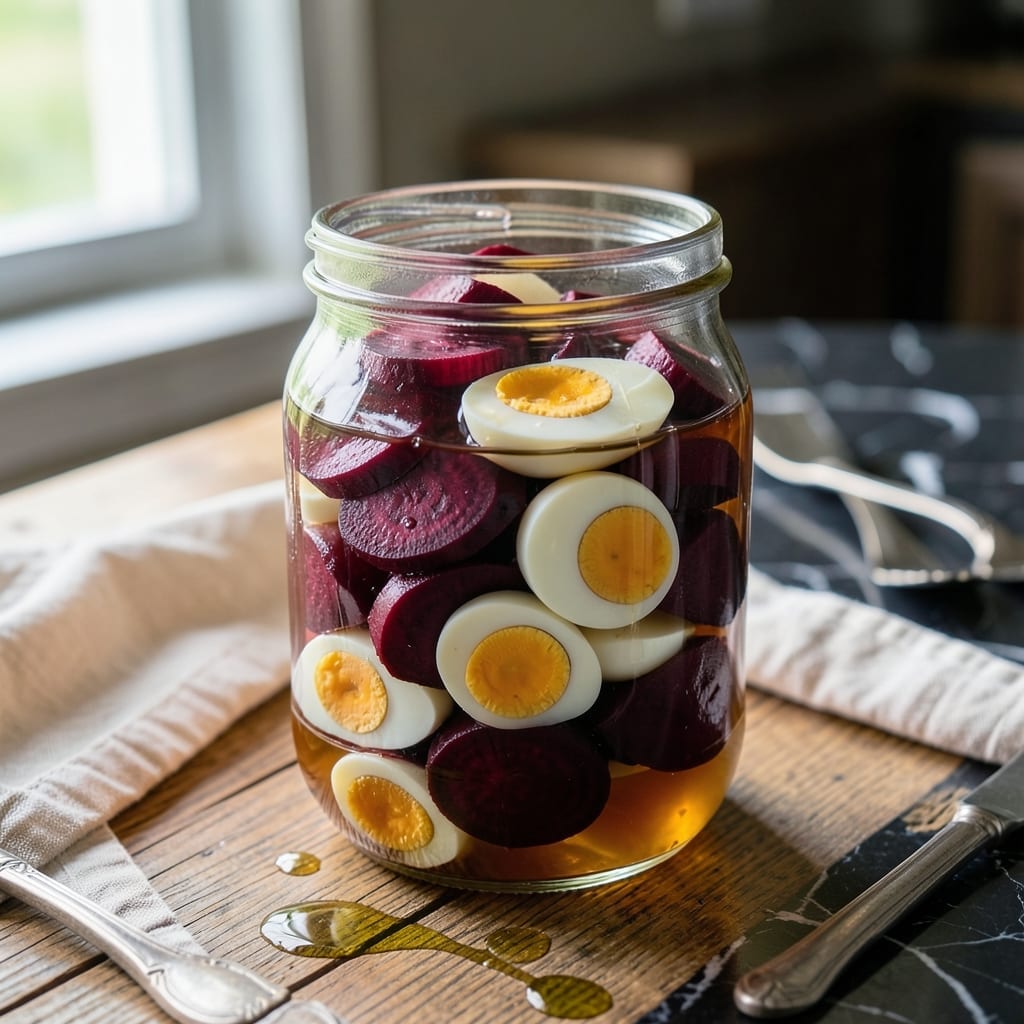
This Amish pickling method transforms simple ingredients into something extraordinary. Hard-boiled eggs and beets soak up a sweet-tangy brine, creating a dish that’s as beautiful as it is delicious.
I first tried this at a church potluck years ago, and the vibrant pink eggs were impossible to resist. The secret is in the balance—just enough sugar to mellow the vinegar’s bite without overpowering the natural flavors.
The process couldn’t be simpler: pack the jars, pour the hot brine, and let time work its magic. In 24 hours, you’ll have tender eggs with a subtle beet sweetness and that signature pickled tang.
These keep well in the fridge for weeks, making them a foolproof make-ahead option for picnics, holidays, or everyday snacks. The longer they sit, the deeper the flavor develops.
Ingredients for Amish Pickled Eggs and Beets
Simple ingredients transform into vibrant, tangy pickled treasures in every jar.
| Ingredient | Amount | Notes |
|---|---|---|
| Large Eggs 🥚 | 12 whole | Hard-boiled, peeled, cooled |
| Medium Beets 🫑 | 2 whole | Cooked, peeled, sliced |
| White Vinegar 🍶 | 2 cups | 5% acidity for proper pickling |
| Water 💧 | 1 cup | Filtered for best flavor |
| Granulated Sugar 🍚 | 1 cup | Balances vinegar acidity |
| Pickling Salt 🧂 | 1 tbsp | Non-iodized for clear brine |
| Yellow Onion 🧅 | 1 whole | Thinly sliced for flavor depth |
| Whole Cloves 🌿 | 4 pieces | Optional for aromatic warmth |
| Bay Leaves 🍃 | 2 pieces | Dried, for subtle earthiness |
| Black Peppercorns 🌶️ | 1 tsp | Whole for infusion |
| Mustard Seeds 🌿 | 1 tsp | Yellow or brown variety |
[recipe_ingredient_scaler]
The beets are key—look for firm, deep-red roots with no soft spots. I grab mine from local farmers markets when they’re in season (usually late summer through fall), but the pre-cooked vacuum-sealed beets at Trader Joe’s work in a pinch (just skip the peeling step). The eggs should be as fresh as possible for easy peeling. Large or extra-large give you the best presentation in jars.
No pickling salt? Kosher salt at the same amount works, but avoid iodized table salt—it can cloud the brine. Out of mustard seeds? Coriander seeds or a pinch of ground mustard can stand in. For a milder vinegar bite, swap half the white vinegar for apple cider vinegar. The cloves and bay leaves are optional but add that signature Amish complexity.
These keep getting better with time. Refrigerate in sealed jars for up to 3-4 weeks. The eggs will turn a deeper pink the longer they sit. Perfect for picnics or potlucks—just pack them in a cooler with ice. Don’t forget to label your jars with the date!
Why You’ll Love This Recipe
- Set and Forget: I boil the eggs and beets, then just let the vinegar-sugar brine work its magic overnight.
- Tangy Sweetness: The vinegar cuts through the earthy beets and creamy eggs with just the right sweet balance.
- Picnic Ready: I pack these for potlucks and they’re always the first to disappear.
- Budget Stretch: A dozen eggs and a handful of beets turn into a week’s worth of snacks.
Step-by-Step Instructions for Amish Pickled Eggs and Beets
Here’s the method I use to create perfectly balanced pickled eggs and beets with that classic tangy-sweet flavor.
Step 1: Prepare the Eggs and Beets
Start by placing the 12 whole Large Eggs in a large pot and cover them with cold water by about 1 inch. Bring to a boil over high heat, then remove from heat, cover, and let them sit for 12 minutes. This method prevents the green ring around the yolks that can happen with aggressive boiling.
While the eggs cook, peel and slice the 2 whole Medium Beets into ¼-inch thick rounds. I find that wearing gloves prevents my hands from getting stained. Once the eggs are done, drain them and cover with cold water to stop the cooking process. Peel them under running water for easier handling.
Step 2: Create the Pickling Brine
In a medium saucepan, combine the 2 cups White Vinegar, 1 cup Water, 1 cup Granulated Sugar, and 1 tbsp Pickling Salt. Stir well and bring to a boil over medium-high heat, stirring occasionally until the sugar and salt are completely dissolved.
This is where the magic happens—the vinegar provides the tang, while the sugar balances it with sweetness. The pickling salt ensures a clear brine without cloudiness. Once boiling, reduce the heat to medium-low to maintain a gentle simmer.
Step 3: Infuse the Brine with Aromatics
Add the thinly sliced Yellow Onion, 4 pieces Whole Cloves, 2 pieces Bay Leaves, 1 tsp Black Peppercorns, and 1 tsp Mustard Seeds to the simmering brine. Let this mixture steep for 5 minutes to allow the spices to infuse their flavors into the liquid.
I always use whole spices for pickling because they release their flavors slowly and can be easily strained out later. The onion adds a subtle sweetness, while the cloves and bay leaves contribute a warm, aromatic depth that defines this Amish-style pickle.
Step 4: Combine and Jar the Ingredients
Carefully place the peeled eggs and sliced beets into clean, sterilized quart jars, alternating layers for a beautiful presentation. Pour the hot brine over the eggs and beets, ensuring they are completely submerged. Use a clean spoon to press them down gently and remove any air bubbles.
This step is crucial for both safety and flavor. The brine must cover the eggs and beets completely to prevent spoilage and ensure even pickling. If your jars aren’t quite full, you can top them off with a little extra White Vinegar.
Step 5: Seal and Refrigerate
Seal the jars tightly with their lids and let them cool to room temperature on the counter. Once cooled, refrigerate for at least 24 hours before eating to allow the flavors to fully develop. I’ve found that 3-4 days in the fridge gives the best flavor penetration.
The eggs will gradually take on a beautiful pink hue from the beets, creating a visually stunning jar. For the best texture, consume within 3-4 weeks. The longer they pickle, the more pronounced the flavors become, but the eggs can get slightly rubbery if left too long.
Pro Tips For Making Amish Pickled Eggs And Beets
- Boil Eggs Gentle: Hard-boil the eggs for 9 minutes in simmering—not rolling—water to prevent rubbery yolks. I learned this the hard way after peeling too many green-ringed eggs.
- Roast the Beets: Skip boiling beets and roast them at 400°F until tender (45-60 minutes) for a deeper, sweeter flavor that holds up better in the vinegar brine.
- Cool Before Brining: Let both eggs and beets cool completely before adding to the vinegar mixture—hot ingredients will dilute the brine and make the pickling uneven.
- Use Fresh Vinegar: After burning a batch with old vinegar, I finally figured out that fresh white vinegar (5% acidity) gives the crispest, tangiest result.
Creative Variations of This Recipe
Spicy Kick Variation
Add 1 tsp crushed red pepper flakes to the brine for a subtle heat that builds with each bite. I love how the spice plays against the sweetness of the beets and sugar. For more intensity, include 2 sliced jalapeños in the jars before pouring the hot brine. 🌶️
Sweet and Sour Twist
Swap half the White Vinegar for apple cider vinegar to add a fruity depth. Then add ¼ cup brown sugar to the brine for a richer caramel note. This variation reminds me of the pickled treats at county fairs.
Herb-Infused Version
Enhance the aromatics by adding 5 fresh dill sprigs or 1 tbsp dried dill to the brine. The herbal brightness pairs wonderfully with the earthy beets. I also toss in 3 garlic cloves for an extra layer of flavor.
Citrus Zing Option
Incorporate 2 strips of orange or lemon peel to the simmering brine for a citrusy lift. The oils release a bright aroma that cuts through the richness. Remove the peels before jarring to avoid bitterness. 💛
Smoky Depth Addition
Use 1 tsp smoked paprika or a dash of liquid smoke in the brine for a barbecue-inspired twist. This works beautifully if you’re serving these at a summer cookout. The smokiness complements the sweet-tangy profile.
Onion-Free Alternative
Replace the Yellow Onion with 3 shallots for a milder, slightly sweeter allium flavor. Or skip the onions entirely and add 1 tsp celery seeds for a different aromatic complexity that still feels authentically Amish.
Nutrition Facts
Frequently Asked Questions
How long do they need to pickle before eating?
Wait at least 24 hours for basic flavor, but 3-4 days gives the best taste. The eggs will turn a pretty pink as they soak up the beet color.
Can I use canned beets instead of fresh?
Yes, drained canned beets work fine. Skip peeling and just slice them. Use the same ¼-inch thickness for even pickling.
Why did my brine turn cloudy?
Cloudiness often comes from using iodized salt or hard water. Stick with pickling salt and filtered water for a clear, beautiful brine.
How can I make them less sweet?
Reduce the sugar to ½ cup or swap half for apple cider vinegar. This keeps the tang while cutting the sweetness.

Trained in classic French technique but raised on slow-cooked ribs and spicy rubs, she blends culinary skill with smoke and soul.
- Recipe for Boneless Pork Chops in Cast Iron Skillet: Sear and Baste to Juicy Perfection - October 3, 2026
- Recipe for Boneless Cross Rib Roast: Slow-Roasted Beef with Herb Crust - October 3, 2026
- Hamburgers in Sauce Recipe Crock Pot: Slow-Cooked Savory Delight - October 3, 2026