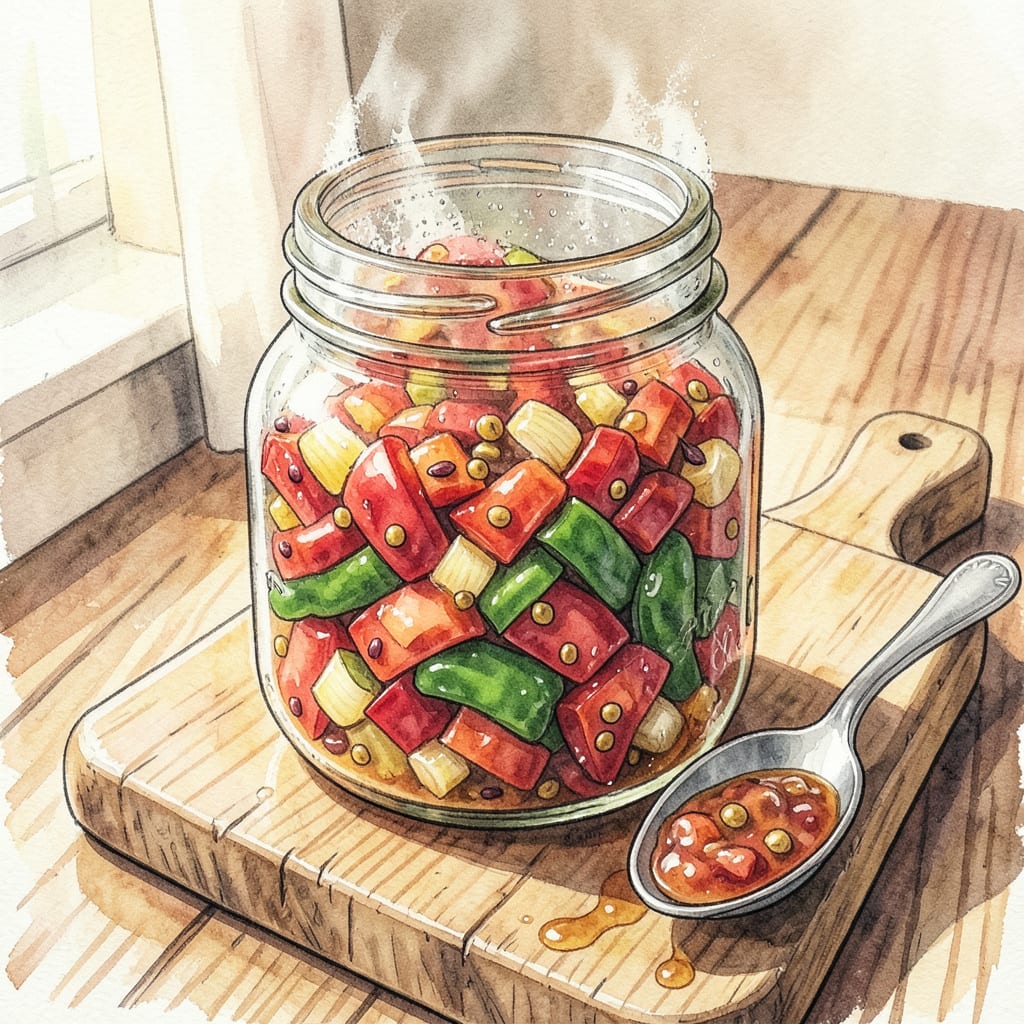
This traditional Amish sweet pepper relish captures the perfect balance of tangy vinegar and natural sweetness that defines classic preservation techniques. Developed through generations of small-batch canning, the recipe transforms simple garden peppers into a versatile condiment that elevates everything it touches. The slow simmering process allows flavors to meld while maintaining the peppers’ vibrant texture.
The method relies on precise ingredient ratios and proper sterilization to ensure both exceptional flavor and safe preservation. What emerges is a relish with just the right consistency—thick enough to cling to spoons but loose enough to spread easily. This vegan preserve keeps its bright, fresh character for months when properly canned, making it a pantry staple worth mastering.
Ingredients for Amish Sweet Pepper Relish
Ten garden-fresh ingredients transform into this signature Amish preserve with perfect sweet-tangy equilibrium.
| Ingredient | Amount | Notes |
|---|---|---|
| Sweet Red Bell Peppers 🌶️ | 3 cups | Finely diced, seeds removed |
| Sweet Green Bell Peppers 🌶️ | 2 cups | Finely diced, seeds removed |
| Yellow Onions 🧅 | 1 ½ cups | Finely diced, about 2 medium |
| Granulated Cane Sugar 🍚 | 1 ½ cups | Organic preferred for clean flavor |
| Apple Cider Vinegar 🍏 | 1 cup | Raw, unfiltered for depth |
| Yellow Mustard Seeds 🌿 | 1 tbsp | Whole, not ground |
| Celery Seeds 🌿 | 1 tsp | Freshly opened for potency |
| Turmeric Powder 🌶️ | ½ tsp | Ground, for golden hue |
| Canning Salt 🧂 | 1 tbsp | Non-iodized, preserves crispness |
| Filtered Water 💧 | ½ cup | For vinegar dilution |
[recipe_ingredient_scaler]
The peppers are foundational—farmers markets yield the sweetest, most vibrant specimens in late summer. Opt for thick-walled varieties like Cubanelle or Jimmy Nardello alongside standard bells for complex flavor. Onions should be freshly harvested (avoid pre-diced); their sharpness mellows during the long simmer. For vinegar, Bragg’s raw apple cider vinegar provides the ideal acidity profile, though any unfiltered brand works. The mustard and celery seeds—critical for authentic Amish flavor—are best sourced from Penzeys or bulk sections with high turnover to ensure freshness.
Substitutions require careful balance to maintain the relish’s signature character. White vinegar at 5% acidity can replace apple cider in a pinch, though flavor will be sharper. Brown sugar introduces molasses notes but alters the clean sweetness; if using, reduce quantity by one-fourth. For seed allergies, ground mustard at half the volume substitutes adequately, though texture will differ slightly. The turmeric is primarily for color—omit if preferred, but expect a paler final product. Always maintain the 1:1 sugar-to-vinegar ratio for proper preservation and texture.
Properly canned, this relish maintains peak quality for 12-18 months in a cool, dark pantry. Refrigerate after opening and use within 3 months. For small batches, sterile glass jars with airtight lids suffice; commercial canning requires Ball or Mason jars with new lids. The relish’s high acidity prevents spoilage, but always check for seal integrity before storage. Flavor continues developing for up to 2 weeks post-canning—ideal for gift-giving after this maturation period.
Step-by-Step Instructions for Amish Sweet Pepper Relish
This method ensures perfect balance of sweetness and tang with ideal texture preservation.
Step 1: Prepare and Combine Vegetables
Begin by thoroughly dicing the 3 cups Sweet Red Bell Peppers, 2 cups Sweet Green Bell Peppers, and 1.5 cups Yellow Onions into uniform ¼-inch pieces. I recommend using a sharp chef’s knife and maintaining consistent size for even cooking and texture. Remove all seeds and membranes from the peppers to prevent bitterness in the final product.
Combine the diced vegetables in a large non-reactive bowl (glass or stainless steel). Sprinkle the 1 tbsp Canning Salt over the mixture and toss thoroughly to coat. The salt will begin drawing out moisture immediately, which is essential for achieving the proper consistency later in the process.
Step 2: Create the Pickling Syrup
In a medium saucepan, combine the 1.5 cups Granulated Cane Sugar, 1 cup Apple Cider Vinegar, 0.5 cup Filtered Water, 1 tbsp Yellow Mustard Seeds, 1 tsp Celery Seeds, and 0.5 tsp Turmeric Powder. Place over medium-high heat and stir constantly until the sugar completely dissolves and the mixture reaches a gentle boil.
Once boiling, reduce heat to medium-low and let simmer for 3-4 minutes until the syrup thickens slightly and the mustard seeds begin to plump. The turmeric will give the syrup a golden hue, while the celery seeds contribute their distinctive aromatic quality. Remove from heat and let stand for 5 minutes to allow flavors to meld.
Step 3: Combine and Simmer the Relish
Drain the salted vegetables thoroughly, pressing gently to remove excess liquid but not rinsing. Transfer the drained vegetables to a large, heavy-bottomed pot. Pour the warm pickling syrup over the vegetables and stir to combine completely.
Return the mixture to medium heat and bring to a gentle simmer. Cook uncovered for 20-25 minutes, stirring occasionally, until the liquid reduces by about one-third and the peppers become translucent but still retain some texture. The relish should have a glossy appearance with vegetables suspended in the syrup.
Step 4: Cool and Store Properly
Remove the pot from heat and let the relish cool at room temperature for 30 minutes. This resting period allows the flavors to fully develop and the vegetables to absorb the remaining liquid. The relish will continue to thicken as it cools.
Transfer the cooled relish to clean, sterilized jars. For immediate use, store in the refrigerator where it will keep for up to 3 weeks. For longer storage, process in a water bath for 10 minutes to seal properly. The flavors will mature and improve over the first 48 hours of storage.
Pro Cooking Tips for Perfect Results
Uniform Dicing Technique
For perfect texture, I swear by my Wüsthof 8-inch chef’s knife and a cut-resistant board. Dice all peppers and onions into precise ¼-inch cubes—this ensures even cooking and consistent mouthfeel. I learned this from my French training: uniform pieces mean uniform flavor absorption during simmering. 💡
Salt’s Hidden Role
The 1 tbsp canning salt isn’t just for seasoning—it’s your texture secret weapon. When you toss it with the diced veggies, it draws out moisture through osmosis. Let it work for 15-20 minutes before draining, but don’t rinse! That extracted liquid carries flavor compounds we want in the final relish.
Syrup Temperature Control
Here’s where many home cooks stumble: the sugar syrup must reach a gentle boil at 225°F before reducing to medium-low. I use an infrared thermometer to verify—no guessing! The mustard seeds should plump but not pop. This stage determines whether your relish will be cloying or perfectly balanced.
Simmering Science
The 20-25 minute simmer is where magic happens. You want the peppers translucent but still holding shape—think “al dente” vegetables. Stir every 5 minutes with a wooden spoon to prevent scorching. The relish should reduce until a spoon dragged through leaves a clear path that slowly fills in.
Jar Sterilization
For canning, I sterilize jars in boiling water for 10 minutes and keep them hot until filling. The Ball FreshTECH Electric Water Bath Canner makes this foolproof. Fill jars while relish is still hot, leaving ½-inch headspace. This prevents siphoning during processing and ensures proper vacuum seals.
Flavor Maturation
Patience pays off with this relish. While it’s safe to eat immediately, I wait 48 hours before tasting. The flavors meld dramatically during this time. Store unopened jars in a cool, dark pantry—my vintage motorcycle rides often take me to perfect foraging spots for the herbs I add to later batches. 🏍️
Nutrition Facts

Trained in classic French technique but raised on slow-cooked ribs and spicy rubs, she blends culinary skill with smoke and soul.
- Recipe for Boneless Pork Chops in Cast Iron Skillet: Sear and Baste to Juicy Perfection - October 3, 2026
- Recipe for Boneless Cross Rib Roast: Slow-Roasted Beef with Herb Crust - October 3, 2026
- Hamburgers in Sauce Recipe Crock Pot: Slow-Cooked Savory Delight - October 3, 2026