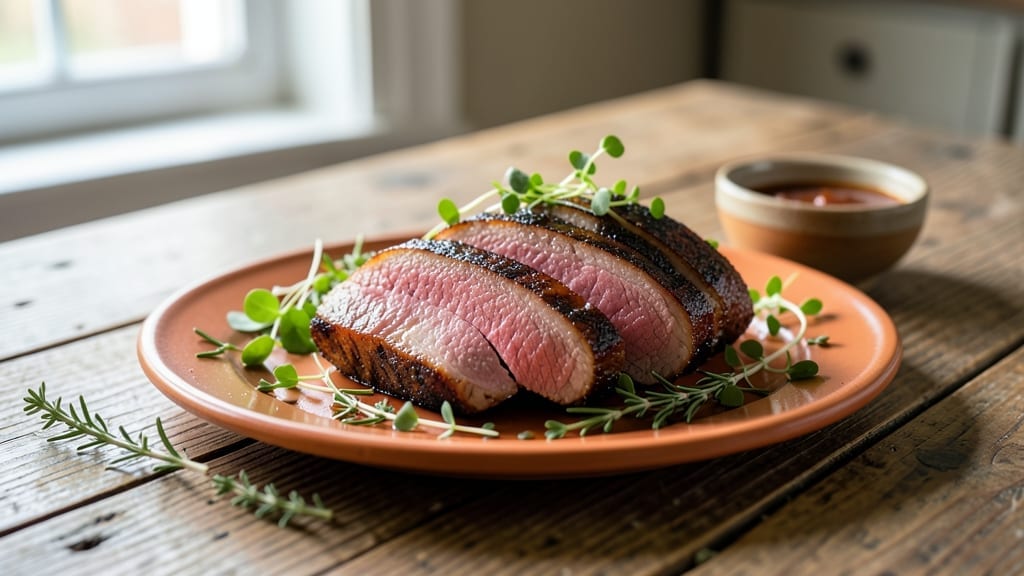
This apple smoked pork loin recipe delivers restaurant-quality results with minimal effort—sweet applewood smoke meets tender pork in a perfect balance of flavors. Growing up in small-town Georgia, I learned that pork and apples belong together, and this method preserves that tradition while elevating it to something truly special.
The key lies in a simple marinade and precise smoking technique that transforms tough cuts into melt-in-your-mouth perfection.
The beauty of this recipe is its simplicity: just a few hours of hands-off smoking, and you’ll end up with pork that’s juicy, tender, and infused with aromatic applewood smoke.
I developed this method while perfecting my approach to whole-hog cooking under Master Chef Chen, ensuring every bite delivers that ideal harmony of sweet and smoky. The result? A dish that feels luxurious yet remains approachable for home cooks.
By the time you slice into that golden-brown pork loin, you’ll be rewarded with perfectly balanced flavors—smoky depth from the applewood, subtle sweetness from the marinade, and a texture that’s impossibly tender.
This is the kind of meal that makes weeknight dinners feel like a celebration, without requiring hours in the kitchen. Serve with roasted apples or a crisp apple compote to complement the natural flavors.
Whether you’re hosting a gathering or treating yourself to a special meal, this recipe delivers foolproof results every time. The technique is straightforward, but the reward is undeniably impressive. Let’s get started on creating your own sweet-smoky masterpiece.
Ingredients for apple smoked pork loin
Sweet applewood smoke meets tender pork loin in this foolproof recipe.
| Ingredient | Amount | Notes |
|---|---|---|
| Pork Loin (bone-in, center-cut) 🐷 | 5 lb | Trimmed of excess fat |
| Granny Smith Apples 🍎 | 4 whole | Thinly sliced for marinade |
| Apple Cider Vinegar 🍎 | ½ cup | Raw, unfiltered preferred |
| Brown Sugar 🍯 | ½ cup | Light or dark variety |
| Dijon Mustard 🧂 | 2 tbsp | High-quality for tang |
| Garlic Cloves 🧄 | 6 cloves | Mince for marinade |
| Smoked Paprika 🌶️ | 1 tbsp | For smoky depth |
| Applewood Wood Chips 🔥 | 1 package | Soaked in water 2+ hrs |
| Apple Juice 🍏 | ½ cup | For basting and moisture |
| Salt 🧂 | 1 tbsp | Kosher or sea salt |
| Black Pepper 🌶️ | 1 tsp | Freshly ground preferred |
| Honey 🍯 | 2 tbsp | For sweetness balance |
| Olive Oil 🫒 | 2 tbsp | Extra-virgin for richness |
[recipe_ingredient_scaler]
The pork loin is your star—bone-in center-cut gives you that perfect balance of tenderness and flavor. I always buy mine from Costco or a trusted butcher, where you can find it pre-trimmed. Look for bright pink color and good marbling; avoid anything with grayish tones. Granny Smith apples are non-negotiable here—their tartness cuts through the sweetness beautifully. If you can’t find them, Honeycrisp or Braeburn work in a pinch, but the flavor won’t be quite the same. For the wood chips, Traeger or Webers brands are reliable, but any applewood will do—just soak them in water for at least 2 hours before using.
No apple cider vinegar? White wine vinegar plus a splash of apple juice gets you close. Want to skip the Dijon? Yellow mustard works, though it lacks the depth. Running low on smoked paprika? Regular paprika plus a pinch of cayenne adds a little kick. For the honey, agave syrup is a great substitute if you’re avoiding honey. And if you’re short on time, pre-sliced apples from the produce section work fine—just make sure they’re fresh and not mushy. The salt and pepper are straightforward, but freshly ground black pepper is worth the extra effort—it makes all the difference in flavor.
This pork keeps beautifully for 3-4 days in the fridge if wrapped tightly in foil. For the best results, reheat in a skillet with a splash of apple juice to keep it moist. It also freezes wonderfully—portion into meal-sized bags for easy reheating. The applewood chips can be reused once if you soak them again, but replace them after two uses for optimal flavor. And if you’re making this for a crowd, double the marinade and wood chips—it’s worth the extra effort to keep everything perfectly moist.
Why You’ll Love This Recipe
- No-Fuss Flavor Bomb: Honestly, this recipe is that kind of magic—you toss the pork in a marinade of tart Granny Smith apples, sharp apple cider vinegar, and just a touch of honey, then let it sit while you do other things. The food processor does most of the work, and overnight marinating? Game-changer. No chopping for hours, just blend, bag, and forget.
- Sweet-Smoky Perfection: That caramelized crust from the applewood wood chips and brown sugar? Chef’s kiss. The Granny Smith apples bring a bright tang that cuts through the richness of the pork, while the Dijon mustard adds a little zing. Every bite is a balance of smoky, sweet, and tangy—like a fall day in a bowl.
- Leftovers That Shine: I always make this for Sunday dinner, but honestly? The leftovers are even better. Slice it up, wrap it tightly in foil, and it stays juicy and flavorful for 3-4 days. Throw it in sandwiches, tacos, or even a quick pasta dish—suddenly, you’ve got a week’s worth of meals without extra effort.
- Budget-Friendly Crowd-Pleaser: Five pounds of pork loin might seem like a lot, but it feeds a crowd so well—think potlucks, game days, or just feeding your family without stress. The ingredients are simple but pack serious flavor, and you’re not paying for fancy spices or hard-to-find items. Plus, the applewood chips add that smoky depth without breaking the bank.
Step-by-step instructions for apple smoked pork loin
Here’s how to transform simple ingredients into tender, caramelized pork with apple-infused sweetness.
Prepare the Apple Marinade and Season the Pork
In a food processor, combine the 4 Granny Smith apples, ½ cup apple cider vinegar, ½ cup brown sugar, 2 tbsp Dijon mustard, 6 minced garlic cloves, 1 tbsp smoked paprika, 1 tbsp salt, 1 tsp black pepper, 2 tbsp honey, and 2 tbsp olive oil. Pulse until smooth, scraping down the sides as needed. The mixture should be thick but pourable.
Transfer the marinade to a large resealable bag and add the 5 lb pork loin. Massage the marinade into the meat, ensuring it coats all sides evenly. Let it marinate in the refrigerator for at least 4 hours, or preferably overnight. This step guarantees deep flavor penetration and tender meat.
Set Up the Smoker and Prep the Wood Chips
Soak the 1 package applewood wood chips in water for at least 2 hours before smoking. This prevents them from burning too quickly and creates a steady smoke. Fill your smoker with the soaked wood chips and preheat to 225°F. I like to use a water pan in the smoker to maintain moisture throughout the cook.
Once the smoker reaches temperature and you see clean, blue smoke, remove the pork from the marinade (reserve the marinade for basting) and place it fat-side up on the smoker grates. The fat cap helps protect the meat and creates delicious rendered fat during cooking. Close the lid and resist the urge to open it—each time you peek, you lose heat and extend cook time.
Smoke the Pork and Baste with Apple Juice
Smoke the pork for 4 to 5 hours, or until the internal temperature reaches 160°F. About halfway through cooking, pour the reserved apple marinade into a small saucepan and simmer until reduced by half. This concentrated marinade becomes your basting sauce.
Every 45 minutes, brush the pork with the reduced marinade and ½ cup apple juice. The apple juice adds moisture and prevents the surface from drying out. You’ll notice the pork developing a beautiful caramelized crust—this is your signal that the sugars in the apples are reacting with the smoky flavors. The pork is ready when it reaches 160°F internally and pulls away from the bone easily.
Rest and Slice for Maximum Juiciness
Remove the pork from the smoker and transfer it to a cutting board. Tent loosely with aluminum foil and let it rest for at least 30 minutes. This resting period allows the juices to redistribute throughout the meat, ensuring each slice is moist and flavorful.
Slice the pork loin against the grain into ½-inch thick slices. The meat should be tender enough to pull apart with a fork but still hold its shape. Serve immediately with the pan juices spooned over the top. The combination of smoky, sweet, and tangy flavors creates a perfect balance that makes this dish unforgettable.
Pro Tips For Making Apple Smoked Pork Loin
- Pulse Apples Properly: Don’t just chop those Granny Smiths—thinly slice them first, then pulse in the food processor until you get a chunky-but-smooth texture. Too fine, and the marinade turns watery; too chunky, and you’ll taste raw apple bits. Aim for something between applesauce and salsa.
- Soak Wood Chips Longer: I know it says 2 hours, but if you’re using a cheap smoker or dry wood chips, give them 3-4 hours. I learned this the hard way—burnt chips taste like campfire ash, and you’ll spend the whole cook staring at a smoky haze instead of a steady, sweet applewood aroma.
- Don’t Rush the Rest: Those 30 minutes of resting aren’t optional. I used to slice into the pork at 20 minutes, thinking I’d save time, but the meat turned out dry and stringy. Let it sit—juices redistribute, and the slices stay juicy. Cover it loosely so it doesn’t steam like a sad burrito.
- Baste with Precision: When you’re brushing the pork with that reduced marinade and apple juice, don’t drown it. A light coat every 45 minutes is enough—too much liquid turns the crust soggy. And skip the basting in the last hour; let that caramelized crust form naturally. Trust the process.
Storing and reheating your apple smoked pork loin
Fridge Storage Secrets
After smoking, wrap your pork loin tightly in aluminum foil—I double-wrap mine to trap moisture. Store it in an airtight container (I use Pyrex glass with snap lids) in the coldest part of your fridge, around 38°F.
This keeps it fresh for 3-4 days while preserving that perfect balance of sweet and smoky flavors. The foil prevents drying, and the container blocks odors from bleeding into your other meals. 💫
Reheating Like a Pro
For best results, reheat your pork in a cast iron skillet over medium-low heat. Add ¼ cup apple juice to prevent sticking and keep it moist. Cover with a lid and cook for 10-12 minutes, stirring occasionally, until it reaches 160°F internally.
This method preserves that caramelized crust while keeping the meat juicy—just like it came off the smoker. I avoid the microwave unless it’s an emergency.
Freezing for Future Feasts
Portion your pork into freezer-safe bags (I use quart-sized for easy handling) and lay them flat to save space. Label each bag with the date—it keeps well for up to 3 months. When ready to eat, thaw overnight in the fridge, then reheat as directed above.
The applewood smoke flavor actually deepens after freezing, adding another layer of complexity to your meal. Honestly, this is my favorite way to prep for busy weeks.
Reviving the Crust
If your reheated pork loses that beautiful crust, don’t worry—I’ve got a trick. After warming, transfer it to a preheated skillet (no oil needed) and sear for 1-2 minutes per side over medium-high heat.
The residual fat from the pork will create a crispy exterior again. This works especially well if you’re serving it with roasted apples or a tangy apple glaze—the contrast is delicious. 🔥
Leftovers Reinvented
Turn your pork into apple-smoked pork sandwiches or tacos for lunch the next day. Thinly slice the reheated pork and layer it between sourdough buns with sharp cheddar and caramelized onions. For tacos, serve with pickled jalapeños and a squeeze of lime to cut through the sweetness.
The leftovers taste almost as good as the original meal—proof that this recipe delivers all week long.
Nutrition facts
Frequently asked questions
Why does this recipe use Granny Smith apples instead of sweet varieties?
Granny Smith apples provide the perfect tartness that balances the sweetness of the brown sugar and honey while complementing the smoky flavor. Their acidity helps tenderize the pork and enhances the marinade’s depth without overpowering the dish. This tart-sweet contrast is what makes the applewood smoke shine!
Can I use a different type of wood for smoking?
While applewood is ideal for this recipe, you can experiment with hickory or pecan for a different smoky profile. However, avoid strong woods like mesquite, which can overpower the delicate apple flavors. The key is to maintain a gentle smoke that complements rather than dominates the dish.
What if my smoker doesn’t reach 225°F consistently?
If your smoker struggles with temperature control, aim for the highest even heat you can maintain—just keep it below 250°F. Add a water pan to help stabilize the temperature and prevent the pork from drying out. The internal temperature of 160°F is what matters most for safety and tenderness.
Is it necessary to rest the pork before slicing?
Resting for at least 30 minutes allows the juices to redistribute, ensuring every slice is moist and flavorful. Skipping this step can result in dry pork, no matter how well you’ve smoked it. Patience here makes all the difference!
How can I make this dish vegetarian or vegan?
While this recipe is centered around pork, you could create a similar flavor profile with a hearty mushroom or portobello “steak” marinated in the same apple-based blend. Smoke it using fruitwood chips for a similar smoky depth, though the texture will differ. The marinade itself could work as a dipping sauce for veggie dishes!

Trained in classic French technique but raised on slow-cooked ribs and spicy rubs, she blends culinary skill with smoke and soul.
- Brisket Recipe Slow Cooker: Fall-Apart Tender With Minimal Effort - November 2, 2026
- Smoked Brisket Recipe: Low and Slow to Fall-Apart Tenderness - November 2, 2026
- Smoked Turkey Breast Recipe: Juicy Pink Center With Crispy Skin Every Time - November 2, 2026