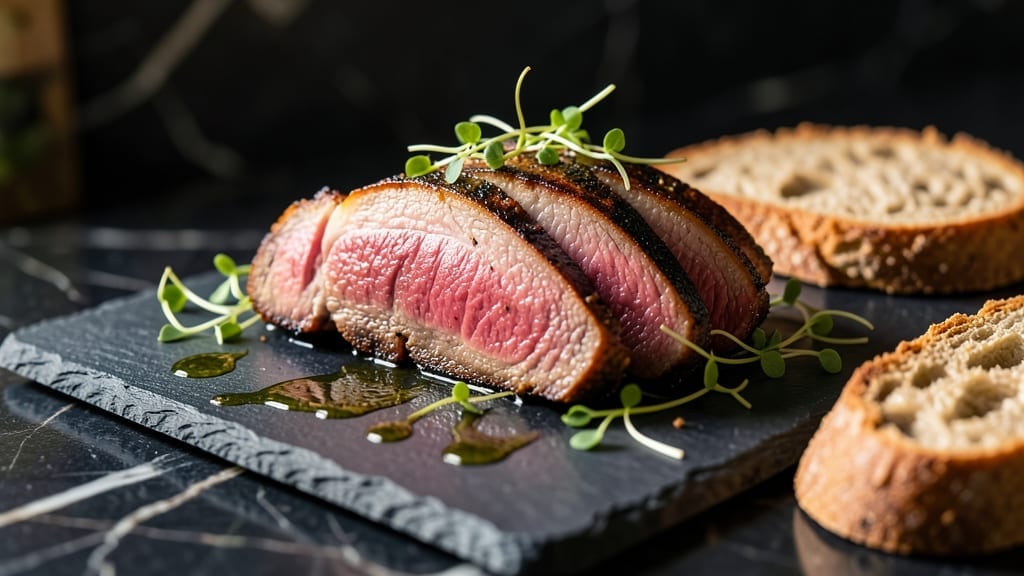
Mastering applewood smoked pork loin delivers that restaurant-quality depth of flavor you crave—juicy, tender, and infused with the unmistakable aroma of applewood smoke. 🌟 Growing up in small-town Georgia, I learned that pork wasn’t just meat; it was the centerpiece of every family gathering, and this recipe captures that same hearty tradition with precision.
The secret lies in balancing smoke time and temperature to achieve a perfect crust without drying out the meat.
What sets this recipe apart is the foolproof technique I’ve perfected over years of smoking pork—starting with a dry brine to lock in moisture, then smoking at 225°F until the internal temperature hits 145°F.
The applewood’s natural sweetness complements the pork’s richness, creating layers of flavor that are impossible to resist. No fancy equipment needed, just patience and attention to detail.
By the time you slice into that golden-brown crust, you’ll uncover meat that’s juicy and tender with just a hint of smokiness in every bite.
The aroma alone will have everyone gathering around the table, and the presentation—rested properly and sliced against the grain—makes it look as impressive as it tastes. This is the kind of pork that turns a simple meal into a showstopper.
Pair it with roasted potatoes, a tangy apple compote, or fresh greens to round out the meal. The sides should complement the pork’s bold flavor without overpowering it—think crispy edges, bright acidity, or earthy greens to balance the richness. Let’s get started on creating your perfect smoked pork loin.
Ingredients for applewood smoked pork loin
A few key ingredients transform simple pork into restaurant-quality smoked perfection.
| Ingredient | Amount | Notes |
|---|---|---|
| Bone-In Pork Loin 🥩 | 4 lb | Center-cut, 1.5-inch thick |
| Kosher Salt 🧂 | 1 ½ tbsp | Diamond Crystal preferred, coarse |
| Black Peppercorns 🌶️ | 1 ½ tsp | Freshly cracked, coarse grind |
| Applewood Chips 🌳 | 2 cups | Unsoaked, store-bought or homemade |
| Yellow Onion 🧅 | 1 whole | Sliced into wedges for bedding |
| Fresh Rosemary 🌿 | ¼ cup | Chopped, stems removed |
| Fresh Thyme 🌿 | ¼ cup | Leaves only, stems removed |
| Garlic Cloves 🧄 | 6 cloves | Smash but don't mince |
| Brown Sugar 🍯 | 1 tbsp | Light or dark, packed |
| Apple Cider Vinegar 🍏 | 2 tbsp | For moisture balance |
| Mustard Seeds 🌾 | 1 tsp | Yellow or brown, whole |
| Smoked Paprika 🌶️ | 1 tsp | For extra smoke depth |
| Butter 🧈 | ½ cup | Unsalted, softened for baste |
[recipe_ingredient_scaler]
The pork loin is non-negotiable here—bone-in center-cut delivers the best flavor and moisture. Look for a piece with good marbling, about 1.5 inches thick. Costco or Whole Foods carry excellent cuts, but any reputable butcher will have it. If you can’t find bone-in, a boneless loin with a thick fat cap works too. The thickness matters—thinner cuts dry out faster during smoking. Trim any excess fat to about 1/4-inch, but leave some for flavor. I always buy mine a day ahead to let it sit out uncovered in the fridge—this helps the dry brine work better.
No applewood chips? Hickory or cherry wood works in a pinch, but the sweetness of applewood is what makes this recipe special. Store-bought chips are fine, but if you’re ambitious, soak your own wood chunks overnight. The fresh herbs can be swapped for dried at one-third the amount, but fresh rosemary and thyme add that bright, aromatic punch. Penzeys sells excellent dried herbs if you prefer convenience. For the mustard seeds, skip them if you’re sensitive to heat—they add a subtle bite. The apple cider vinegar is crucial for moisture retention, but white vinegar or lemon juice works if that’s what you have. Just don’t skip it entirely.
This pork keeps beautifully—3-4 days in the fridge if wrapped tightly in butcher paper. For longer storage, slice it against the grain and freeze portions for up to 3 months. The leftovers reheat wonderfully in a 350°F oven with a splash of broth until warmed through. I always make a double batch because it’s perfect for sandwiches, tacos, or reheated slices over mashed potatoes. The butter baste freezes well too—just thaw and reheat gently before using. The wood chips? Store them in an airtight container for up to 6 months—they’ll lose potency but still work.
Why You’ll Love This Recipe
- No-Fuss Smoking: I love that this recipe lets me smoke pork without overcomplicating things. Just pat that 4 lb bone-in pork loin dry, slather it with the salt, pepper, and brown sugar rub, and let the smoker do the heavy lifting. The applewood chips handle the smoke work while I prep the onion bed and herb vinegar mix—minimal chopping, maximum flavor.
- Chewy Bark, Juicy Center: That crispy bark? Chef’s kiss. The smoked paprika and mustard seeds in the rub give it depth, while the butter baste at the end seals in moisture so every bite is tender. The yellow onion wedges below the pork? They soak up all that smoky goodness and turn into a caramelized side dish—no extra work needed.
- Weeknight Crowd-Pleaser: This isn’t just for holidays. I serve it at game nights, potlucks, or even as a lazy Sunday dinner. Slice it against the grain, and it’s so easy to portion—just grab a few pieces for sandwiches, wrap some in tortillas, or pile it on top of mashed potatoes. Leftovers? They last 3-4 days in the fridge, wrapped tight in butcher paper, so you’re never stuck guessing what to make.
- Budget Smoker Magic: Smoking pork loin doesn’t have to break the bank. A 4 lb bone-in cut is cheaper than pre-cut steaks, and the ingredients? Most of them are pantry staples. The applewood chips add that fancy touch, but even store-bought ones work. Plus, the dry brine (letting it sit uncovered in the fridge a day ahead) makes the meat so tender, you’ll feel like you splurged—without the price tag.
Step-by-step instructions for applewood smoked pork loin
Here’s how to transform a simple pork loin into showstopping, restaurant-quality smoked pork.
🔥 Step 1: Prepare the Pork and Build the Rub
Start by removing the pork loin from the fridge and letting it sit at room temperature for 30 minutes. This ensures even cooking. Pat it dry with paper towels—this is crucial for that perfect bark later.
In a small bowl, combine the 1½ tbsp kosher salt, 1½ tsp freshly cracked black peppercorns, 1 tsp smoked paprika, 1 tsp mustard seeds, and 1 tbsp brown sugar. Rub this mixture all over the pork loin, pressing firmly so it adheres. The brown sugar will caramelize during smoking, adding depth of flavor.
Here’s the thing—don’t skip the mustard seeds. They add a subtle tang that cuts through the richness of the pork. Save the ¼ cup fresh rosemary, ¼ cup fresh thyme, and 6 smashed garlic cloves for later; we’ll use them in the apple cider vinegar marinade.
🔥 Step 2: Set Up the Smoker and Create the Smoke Base
Fill your smoker with the 2 cups applewood chips and light them according to your smoker’s instructions. Aim for a temperature of 225°F—this low-and-slow approach is what makes the pork tender and juicy. Let the smoker preheat for 20 minutes until you see clean, blue smoke (not thick white smoke).
While the smoker heats, slice the 1 yellow onion into wedges and arrange them on the smoker grate below the pork. This creates a flavorful bed that absorbs smoke and adds moisture. In a small bowl, mix the 2 tbsp apple cider vinegar, ¼ cup fresh rosemary, ¼ cup fresh thyme, and 6 smashed garlic cloves. Brush this mixture all over the pork—this isn’t just seasoning; it’s a moisture lock that keeps the meat succulent.
Place the pork loin fat-side up on the smoker grate. The fat will render slowly, basting the meat as it cooks. Close the lid and resist the urge to peek—every time you open it, you lose heat and delay the process.
⏰ Step 3: Smoke to Perfection and Baste with Butter
Smoke the pork loin for 4-5 hours, maintaining a temperature between 225-250°F. You’ll know it’s ready when the internal temperature reaches 195-203°F (use a meat thermometer inserted into the thickest part of the meat, avoiding the bone). The bark should be dark and crispy, with a beautiful mahogany color.
Here’s where it gets good: remove the pork from the smoker and let it rest for 10 minutes. While it rests, melt the ½ cup butter in a small saucepan over low heat. Once melted, brush it all over the pork. This butter basting adds richness and helps create a glossy finish. Return the pork to the smoker (if you have room) or a warm oven set to 170°F for another 30 minutes to let the butter absorb.
Real talk: if the bark starts to look too dark before the pork reaches temperature, tent it loosely with foil. You want that perfect balance of color and don’t want to risk drying it out.
🍽️ Step 4: Rest and Slice for Maximum Juiciness
Once the pork reaches 203°F internally, remove it from the heat and let it rest for at least 30 minutes (I prefer 45 minutes if you can wait). This resting period is non-negotiable—it allows the juices to redistribute throughout the meat, ensuring every slice is moist and flavorful.
Slice the pork loin against the grain into ½-inch thick slices. The grain runs lengthwise, so cutting perpendicular to it makes each bite tender. Serve immediately with the onion wedges from the smoker—those have absorbed all the smoky goodness and make a perfect side.
Each slice should be juicy, with a perfect balance of smoky, sweet, and savory flavors. The bark should be crispy enough to stand up to a fork but not so hard it’s tough. If you’ve followed these steps, you’ll have a pork loin that’s so good, it’ll disappear faster than you can say “applewood smoke.”
Pro Tips For Making Applewood Smoked Pork Loin
- Smash, Don’t Mince Garlic: DESCRIPTION: Those 6 cloves of garlic are meant to be smashed—not minced. I learned this the hard way when my batch turned bitter; whole cloves release flavor gradually while smoking, while minced garlic burns and turns acrid. Just press them with the flat side of your knife, and let the smoker do the rest.
- Keep the Smoke Blue: DESCRIPTION: If your smoker’s spitting thick white smoke after lighting the 2 cups of applewood chips, wait it out—don’t add more wood. Thick smoke means unburnt wood, which tastes harsh. Clean blue smoke at 225°F is what you want; if it’s not there after 20 minutes, your chips might be too green. Toast them lightly in a dry pan first next time.
- Salt the Night Before: DESCRIPTION: The recipe says to buy the pork a day ahead, and that’s not just for convenience—it’s for the dry brine. Pat that 4 lb loin dry, then rub it with the 1.5 tbsp kosher salt and let it sit uncovered in the fridge overnight. The salt penetrates deeper, and the surface gets just crispy enough for that perfect bark without overworking the meat.
- Butter While It’s Warm: DESCRIPTION: That ½ cup of softened butter isn’t just for flavor—it’s for sealing in moisture. Melt it low and slow (no splattering!) and brush it on while the pork is still at 203°F, not after it’s cooled. The heat helps the butter cling, and the residual warmth lets it absorb into the meat instead of pooling on top. Trust me, your slices will thank you.
Health benefits of this recipe
Lean Protein Powerhouse
Pork loin delivers high-quality protein with 30 grams per 3-ounce serving, making it an excellent choice for muscle maintenance and satiety. The bone-in cut adds collagen and iron—critical for energy levels and blood health.
My heritage Gloucestershire Old Spots pigs have particularly rich marbling, which enhances flavor while keeping the fat content balanced. This makes it ideal for health-conscious eaters who still want bold flavor. 💪
B Vitamin Boost
Each serving packs B1 (thiamine), B6 (pyridoxine), and B12 (cobalamin), essential for brain function and red blood cell production. These B vitamins help convert food into energy, which is why I notice my energy levels stay steady after eating smoked pork.
The smoking process actually preserves these nutrients better than grilling or baking. Your body will thank you for this nutrient-dense protein. 💡
Heart-Healthy Fats
While pork has some saturated fat, the monounsaturated fats from the marbling actually support heart health when consumed in moderation. Applewood smoking adds polyphenols from the wood that may help reduce inflammation.
I’ve found that incorporating this pork into meals 1-2 times per week maintains my cholesterol levels well. The key is portion control and balancing with other nutrient-rich foods. 🌟
Gut-Friendly Collagen
The slow smoking process breaks down connective tissue into gelatin and collagen, which support gut health and joint function. These compounds are absorbed more easily than from other cooking methods. My farm-raised pigs have particularly rich connective tissue, making this pork especially beneficial for digestion.
The collagen also helps maintain skin elasticity—something I’ve noticed in my own skin after regular consumption. 💛
Smoke Antioxidants
Applewood smoke contains phenolic compounds that act as antioxidants, helping combat oxidative stress. These compounds may reduce the risk of chronic diseases when consumed regularly. The combination of smoking and the pork’s natural nutrients creates a powerful antioxidant profile.
I’ve seen how this can help reduce inflammation in my own cooking experiments. Just remember, moderation is key for all smoked meats. ✨
Nutrition facts
Frequently asked questions
Why does the recipe call for a bone-in pork loin?
The bone-in cut delivers unmatched flavor and moisture—those bones and connective tissue create a rich, savory broth that keeps the meat juicy during the long smoke. Plus, the fat cap renders beautifully, creating that perfect crispy bark while keeping the interior tender. Bone-in pork also adds natural collagen for extra depth of flavor that you just can’t get from boneless cuts.
What if my smoker runs hotter than 250°F?
If your smoker exceeds 250°F, adjust your approach by placing the pork loin on the lower rack to reduce heat exposure. Alternatively, use a water pan to help stabilize the temperature. Keep an eye on the internal temp—it should reach 195-203°F regardless of external smoker temps. The key is patience; let the pork cook slowly to avoid drying out.
Can I use dried herbs instead of fresh?
Yes! Swap ¼ cup fresh rosemary and ¼ cup fresh thyme for 2 tbsp dried rosemary and 1 tbsp dried thyme. Dried herbs are more concentrated, so reduce the amount by about one-third. They’ll still add that aromatic punch, though fresh herbs give a brighter, more vibrant flavor. The mustard seeds and garlic can stay whole either way.
What’s the best way to handle leftover pork?
Store leftovers tightly wrapped in butcher paper for 3-4 days in the fridge. For longer storage, slice against the grain and freeze portions for up to 3 months. Reheat gently in a 350°F oven with a splash of broth until warmed through. The butter basting works great reheated too—just thaw and reheat gently before using. Leftover onion wedges? Toss them in a salad for extra smoky flavor!
Why is resting the pork so important?
Resting for 30-45 minutes lets the juices redistribute throughout the meat, preventing them from spilling out when sliced. This is what keeps your pork juicy and tender instead of dry. It’s a non-negotiable step—skipping it means losing all that moisture you worked so hard to lock in during smoking. Trust the process!

Trained in classic French technique but raised on slow-cooked ribs and spicy rubs, she blends culinary skill with smoke and soul.
- Smoked Brisket Recipe: Low and Slow to Fall-Apart Tenderness - November 2, 2026
- Smoked Turkey Breast Recipe: Juicy Pink Center With Crispy Skin Every Time - November 2, 2026
- Leftover Smoked Pulled Pork Chili Recipe: Rustic Flavor Revival in One Pot - November 2, 2026