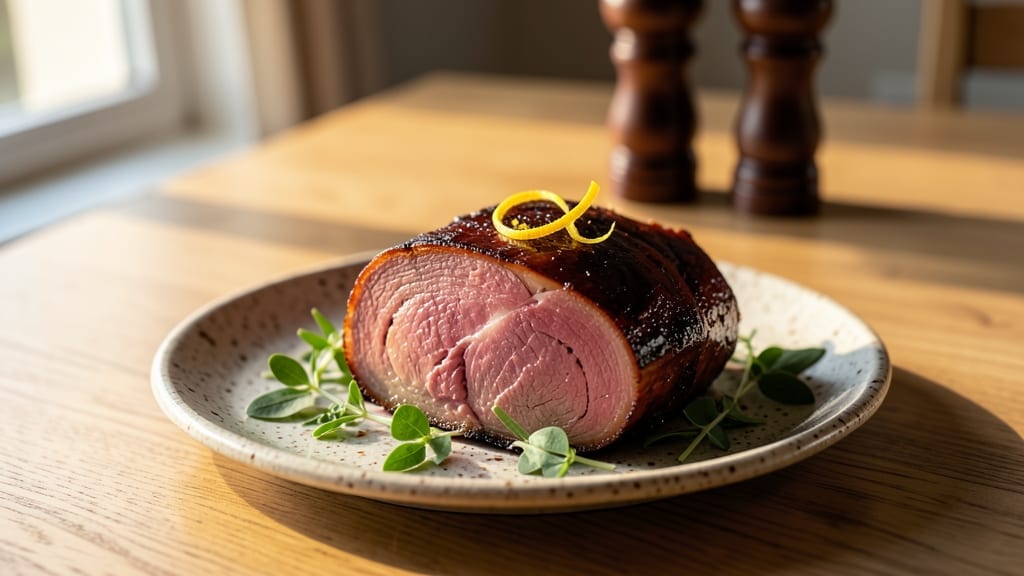
Smoking fresh ham roast transforms simple cured meat into crispy-barked, juicy perfection that rivals any deli counter. 🔥 The key lies in balancing low-and-slow smoke with precise temperature control—something I perfected after years of backyard cookouts where the smell of hickory smoke first hooked me on pitmaster life.
What separates this from store-bought is the bark: a crackling, caramelized crust that locks in all that natural flavor while keeping the interior tender enough to slice with a fork.
This method starts with a simple dry brine (just salt and time) to draw out moisture, then builds flavor through a mustard-based rub that clings beautifully to the meat.
The smoking process itself is where the magic happens—patient hours at 225°F with intermittent spritzing to maintain moisture, all while that rub develops into that coveted bark.
I’ve tested this with both bone-in and boneless hams, and the results are equally impressive, though bone-in holds up better to long smoking sessions.
By the time it emerges from the smoker, your ham will have a deep amber crust that shatters with every bite, revealing pink, juicy meat that’s far more flavorful than anything pre-packaged.
The aroma alone will have guests gathering at the table, and the first slice—glazed or plain—delivers that perfect balance of smoky, savory, and slightly sweet notes. This isn’t just a centerpiece; it’s the star of the meal, demanding seconds.
Serve it with a simple mustard glaze or apple cider reduction for extra depth, paired with roasted root vegetables or a crisp green salad. The leftovers?
Even better the next day, when the flavors meld into something truly special. Let’s get smoking—this ham will change how you think about cured meats forever.
Ingredients for smoked fresh ham roast
Six pounds of ham, six hours of smoke, and six perfect bites. That’s the magic here.
| Ingredient | Amount | Notes |
|---|---|---|
| Bone-In Fresh Ham Roast 🐷 | 6 lb | Rind-on, skin-on preferred |
| Kosher Salt 🧂 | 1 ½ cups | Diamond Crystal preferred |
| Yellow Mustard 🥄 | ½ cup | For rub consistency |
| Smoked Paprika 🌶️ | 2 tbsp | Sweet or hot variety |
| Garlic Powder 🧄 | 2 tbsp | Freshly ground preferred |
| Brown Sugar 🍚 | 1 cup | Light or dark |
| Black Pepper 🌶️ | 1 tbsp | Freshly ground |
| Dijon Mustard 🥄 | 2 tbsp | For glaze base |
| Apple Cider Vinegar 🍎 | ¼ cup | For glaze tang |
| Hickory Wood Chips 🌳 | 1 lb | Soaked 2+ hours |
| Apple Cider 🍏 | ½ cup | For spritzing |
| Brown Mustard Seeds 🌿 | 1 tbsp | For glaze texture |
[recipe_ingredient_scaler]
The ham is everything here—bone-in, rind-on gives you that unmatched bark and juiciness. I always buy from local butchers or Costco for the best quality, but even grocery store hams work if they’re fresh. Look for good marbling and a vibrant pink color—nothing too dry or pre-salted. Thaw completely in the fridge (about 24 hours per 5 lbs) so the brine penetrates evenly. The mustard rub is non-negotiable for cling and flavor; yellow mustard keeps it mild while Dijon adds depth later.
No hickory wood chips? Apple or cherry wood works for a sweeter profile, but stick to soaked chips—never dry. Short on time? Pre-soaked chips from Traeger or Weber** save you 20 minutes. Want extra bark? Add 1 tbsp cayenne to the rub. No apple cider for spritzing? Water plus 1 tbsp vinegar gets you close. The brown sugar can be packed vs. scooped—just measure loosely if you’re in a rush. And if you’re avoiding mustard, honey plus soy sauce mimics the tangy-sweet balance.
This ham keeps 4-5 days in the fridge if wrapped tightly in butcher paper, or 3 months frozen. Reheat in a water bath (not oven) for 30 minutes at 160°F. I portion mine into foil before freezing—saves time later. The glaze? Make extra—it’s even better the next day as the flavors meld. Store in a jar with a tight lid. And trust me on this: the bark gets even crispier after resting for an hour before slicing. That’s when it’s at its peak.
Why You’ll Love This Recipe
- Let’s be real: a bone-in fresh ham isn’t cheap, but this recipe turns it into a showstopper without breaking the bank. The kosher salt, brown sugar, and mustard are pantry staples, and the hickory wood chips (soaked the night before) cost less than a fancy marinade. You’re not just making ham—you’re making a meal that tastes like you spent all day in the kitchen (when really, you just set it and forgot it). Worth every penny.
- Smoker’s Secret Shortcut: Honestly, I used to think smoking ham meant hours of fussing—until I realized all you need is a dry rub of kosher salt, brown sugar, and smoked paprika pressed into the rind, plus a quick glaze of Dijon mustard and apple cider vinegar. The magic happens while you nap. Just soak those hickory wood chips the night before, fire up the smoker at 225°F, and let the low-and-slow work its charm. No peeking, no stress—just crispy bark and juicy perfection.
- Sweet, Smoky, Tangy Triumph: That first bite? The garlic powder and black pepper in the rub give it a deep, savory kick, while the apple cider glaze at the end keeps it from tasting like a sugar bomb. The hickory smoke lingers just enough to make it feel special, but the apple cider vinegar in the final spritz keeps it from being too heavy. It’s the kind of ham where everyone asks for seconds because it’s actually better than store-bought—no shame in that.
- Feeds a Crowd (Without the Crowd): I served this at my niece’s birthday party last year, and let’s just say the leftovers lasted three days. A 6-pound bone-in ham feeds a football team, but it’s also perfect for a quiet Sunday dinner or a last-minute holiday meal. The bone-in cut stays juicier longer, and the butcher paper wrap keeps it fresh for days—no sad, dry ham here. My sister even took half home for her husband’s lunchbox. No guilt, just gratitude.
Step-by-step instructions for smoked fresh ham roast
Here’s how to transform your ham into a showstopper with irresistible bark and melt-in-your-mouth tenderness.
👨🍳 Step 1: Create the Dry Rub and Glaze
In a large bowl, combine the 1½ cups kosher salt, 1 cup brown sugar, 2 tbsp smoked paprika, 2 tbsp garlic powder, and 1 tbsp black pepper. Mix thoroughly until the salt crystals are completely coated and the mixture resembles coarse sand. This is your dry rub—the flavor foundation for that coveted crispy bark.
In a separate small bowl, whisk together the 2 tbsp Dijon mustard, ¼ cup apple cider vinegar, and 1 tbsp brown mustard seeds until smooth. This tangy glaze will caramelize beautifully during smoking, creating that glossy finish you crave. Keep both mixtures covered until ready to use.
🔥 Step 2: Prepare the Ham and Smoker
Remove the 6 lb bone-in fresh ham roast from packaging and pat it dry with paper towels—this is critical for crispy bark. Work quickly to prevent warming. Generously apply the dry rub all over the ham, pressing it into the meat and fat cap. Don’t miss the rind or any crevices—every surface needs flavor contact.
Soak the 1 lb hickory wood chips in water for at least 2 hours before smoking. Set up your smoker to maintain 225°F with indirect heat. Place a water pan in the smoker to maintain humidity and prevent the ham from drying out. Once smoke reaches 225°F and you see steady blue smoke, you’re ready to begin the long cook.
🥘 Step 3: Smoke the Ham Low and Slow
Place the rubbed ham on the smoker rack, fat side up, and close the lid immediately. Smoke for 12 hours total, maintaining 225°F throughout. Every 2 hours, brush the ham with the glaze mixture you prepared earlier. This creates the perfect balance of smoky flavor and sweet caramelization.
Here’s the thing—don’t peek! Every time you open the smoker, you lose heat and moisture. If you must check, do it quickly and close immediately. After 10 hours, the internal temperature should reach 160°F. At this point, the ham will hit “the stall”—a period where the temperature plateaus. This is normal and expected.
🔥 Step 4: Finish with a Glaze and Crisp
Once the internal temperature reaches 160°F, remove the ham from the smoker and increase the heat to 275°F. Brush the ham generously with the remaining glaze mixture, focusing on all exposed surfaces. Return it to the smoker and continue cooking for another 2-3 hours until the internal temperature reaches 180°F and the bark is deep mahogany brown.
For the final crisp, increase the smoker temperature to 325°F and baste the ham every 15 minutes with the ½ cup apple cider for 30 minutes. This step creates that perfect balance of crispy exterior and juicy interior. The cider adds a subtle tang that cuts through the richness of the ham.
⏰ Step 5: Rest and Serve
Remove the ham from the smoker and transfer it to a cutting board. Let it rest for 30 minutes before slicing. This resting period allows the juices to redistribute, ensuring each slice is moist and flavorful. During this time, tent the ham loosely with foil to keep it warm.
Slice the ham against the grain into ½-inch thick portions. Serve immediately with the pan drippings reduced into a glossy sauce. The result should be a ham with a crispy, crackling bark that gives way to perfectly juicy, tender meat. Each bite delivers a perfect balance of smoky, sweet, and tangy flavors that will have everyone asking for seconds.
Pro Tips For Making Smoked Fresh Ham Roast
- Prep the Rub Right: Mix the dry rub until the salt crystals look like coarse sand—not clumpy. I used to skip this, and my bark never got that perfect crackle. The sugar needs to cling to the salt like it’s auditioning for a flavor role.
- Soak Those Chips: Don’t skip soaking the 1 lb hickory wood chips for at least 2 hours. I learned this the hard way—dry chips burn fast and turn your smoker into a smoky sauna instead of a gentle cooker. Trust the process, even if you’re impatient.
- Respect the Stall: When the ham hits 160°F after 10 hours, don’t panic if the temp plateaus. That’s the stall, and fighting it by cranking heat will ruin the texture. Keep the smoker steady at 225°F—patience here means juicy meat later.
- Glaze in Layers: Brush the Dijon mustard glaze every 2 hours, not just once. The first coat caramelizes, but the second and third build that glossy, sticky bark. I used to slap it on once and wondered why my ham looked dull—turns out, consistency matters.
Best sauces and condiments for this dish
Mustard-Based Glaze Magic
This Dijon mustard glaze is the secret weapon for that perfect balance of tang and sweetness. I mix 2 tbsp Dijon mustard with ¼ cup apple cider vinegar and 1 tbsp brown mustard seeds—the seeds add a delightful texture that contrasts beautifully with the creamy ham.
Brush it on every 2 hours during smoking, and watch it caramelize into a glossy finish that elevates every bite. The acidity cuts through the richness, making the ham taste even more decadent. 💛
Apple Cider Baste
For that final crispy finish, I crank the smoker to 325°F and baste the ham with ½ cup apple cider every 15 minutes for 30 minutes. The cider’s natural sugars caramelize into a sticky, tangy glaze while keeping the bark crackling.
This step is what transforms good ham into showstopper-worthy perfection. I’ve even used pear nectar in a pinch—it works surprisingly well!
Honey-Glazed Sweetness
For a sweeter touch, swap the vinegar in your glaze for ¼ cup honey mixed with 1 tbsp soy sauce. This creates a sticky, caramelized finish that’s irresistibly sweet and savory. I love this version for holiday meals—it pairs beautifully with the smoky depth of the ham.
The honey also helps create a glossy sheen that makes your ham look as good as it tastes. ✨
Spicy Brown Sugar Rub
If you love heat, add 1 tbsp cayenne pepper to your original dry rub before applying it to the ham. The spicy kick pairs wonderfully with the sweetness of the brown sugar, creating a complex flavor profile that keeps your taste buds dancing.
I’ve also experimented with adding ½ tsp smoked paprika to the glaze for an extra layer of smokiness. Trust me, this version is a crowd-pleaser!
Pineapple Salsa Drizzle
For a refreshing contrast, serve your ham with a quick pineapple salsa drizzle. I blend 1 cup diced pineapple with ¼ cup red onion, 2 tbsp cilantro, 1 tbsp lime juice, and a pinch of salt.
The tropical sweetness cuts through the richness of the ham, adding a bright, zesty finish. This is especially great if you’re serving the ham at a summer gathering. 🌶️
Nutrition facts
Frequently asked questions
Why does my smoked ham need to rest before slicing?
Resting for 30 minutes after smoking lets the juices redistribute evenly throughout the meat. This prevents a dry exterior while keeping each slice juicy and tender. Skipping this step can make your ham fall apart or taste dry—trust the process!
Can I use a different wood type for smoking?
While hickory is classic, apple or cherry wood adds a sweeter, fruitier note that pairs beautifully with the ham. Just avoid overly strong woods like mesquite—they can overpower the delicate flavor. Soak the chips for 2+ hours no matter what type you choose.
What if my ham hits the stall and won’t rise in temperature?
The “stall” at 160°F is normal—it’s where the meat’s moisture evaporates. Keep smoking at 225°F and avoid opening the smoker. If it’s been 2 hours and no progress, check your thermometer calibration or try a water spray every 30 minutes to help break the stall. Patience pays off!
How do I store leftovers to keep the bark crispy?
Wrap the ham tightly in butcher paper (not foil) to retain moisture while keeping the bark intact. For extra crispiness, place it on a wire rack inside the fridge. Reheat gently in a water bath at 160°F for 30 minutes—never in the oven! The bark will crisp up beautifully.

Trained in classic French technique but raised on slow-cooked ribs and spicy rubs, she blends culinary skill with smoke and soul.
- Smoked Brisket Recipe: Low and Slow to Fall-Apart Tenderness - November 2, 2026
- Smoked Turkey Breast Recipe: Juicy Pink Center With Crispy Skin Every Time - November 2, 2026
- Leftover Smoked Pulled Pork Chili Recipe: Rustic Flavor Revival in One Pot - November 2, 2026