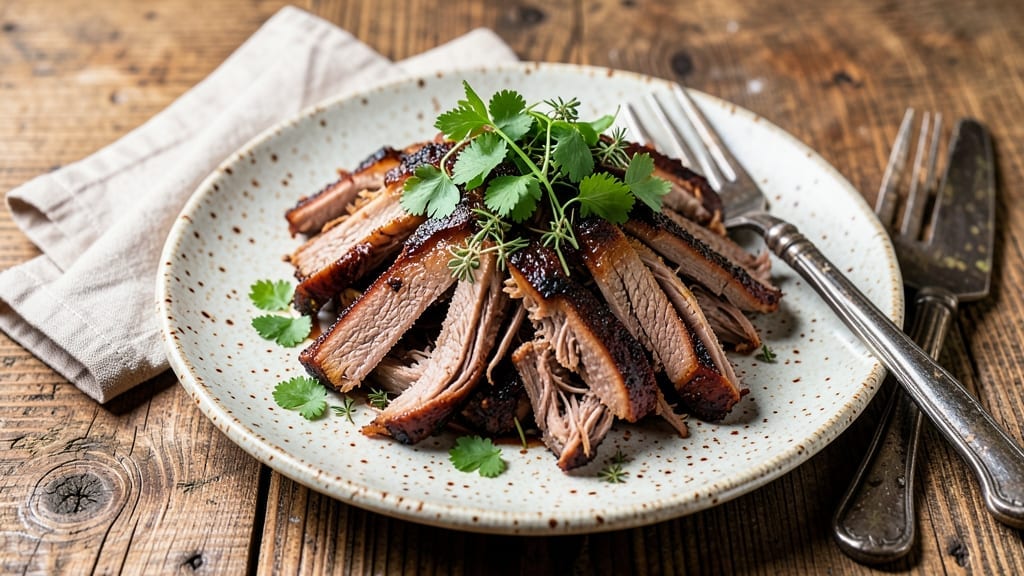
Applewood smoked pulled pork transforms tough pork shoulder into melt-in-your-mouth perfection that falls apart at the slightest touch. Growing up in small-town Georgia, I learned that slow-smoking with applewood creates that signature sweet-smoky flavor that makes every bite unforgettable.
This method builds deep, complex flavors through low-and-slow cooking while keeping the meat impossibly tender.
The secret lies in the combination of applewood’s fruity aroma and the pork’s natural collagen, which breaks down over hours into juicy, shreddable meat. Using a meat thermometer ensures you hit that perfect 203°F internal temperature where tenderness meets flavor.
The result is a dish that’s equally impressive for a backyard cookout or a restaurant-quality spread.
What makes this recipe truly special is how versatile it is—serve it on buns for sandwiches, over rice for bowls, or as a main course with classic sides. The applewood smoke infuses every bite with a subtle sweetness that pairs beautifully with tangy coleslaw or sweet corn bread.
This is the kind of pulled pork that becomes a family tradition.
With just a few key ingredients and patience, you’ll achieve restaurant-quality results that taste like they’ve been simmering all day. The key is letting the smoke work its magic while maintaining moisture through careful temperature control. Let’s get started on creating pulled pork that will have everyone asking for seconds.
Ingredients for applewood smoked pulled pork
Pork shoulder, applewood, and patience—these are the heroes of your smoky masterpiece.
| Ingredient | Amount | Notes |
|---|---|---|
| Boneless Pork Shoulder 🥩 | 6 lb | Well-marbled, 3-4 inches thick |
| Applewood Chips 🍎 | 1 cup | Unsoaked, for smoker box |
| Yellow Onion 🧅 | 1 whole | Quartered, skin on |
| Garlic Cloves 🧄 | 6 cloves | Smashed, skin left on |
| Apple Cider Vinegar 🍏 | ¼ cup | For moisture and tang |
| Brown Sugar 🍚 | ½ cup | Light or dark |
| Kosher Salt 🧂 | 2 tbsp | Diamond Crystal preferred |
| Black Peppercorns 🌶️ | 1 tbsp | Freshly cracked |
| Smoked Paprika 🌶️ | 1 tbsp | For extra smoky depth |
| Mustard Powder 🍯 | 1 tsp | Dry yellow mustard |
| Applewood Smoke Pellets 🔥 | 2 cups | For smoker fuel |
| Unsalted Butter 🧈 | ½ cup | For final basting |
| Fresh Thyme Leaves 🌿 | ¼ cup | Chopped, for finishing |
[recipe_ingredient_scaler]
The pork shoulder is non-negotiable here—look for a well-marbled cut from the butcher section, not pre-cut packages. Costco or local butchers often have the best quality, but any grocery store’s pork shoulder works if it’s fresh. Trim any hard fat, but leave the marbling intact—it’s what keeps this meat juicy. For extra insurance, ask for a cut with a thick fat cap. The applewood chips? Grab the unsmoked ones—soaking them kills their flavor. I usually buy mine from Traeger or local smoke shops if I’m not near a woodlot.
No applewood chips? Hickory works in a pinch, but it’s not the same fruity sweetness. Short on brown sugar? Honey or maple syrup at half the amount adds moisture. The mustard powder is key—it cuts through the richness and adds a subtle tang. If you’re using a pellet smoker, Traeger’s apple pellets are my go-to, but any quality brand will do. Fresh thyme is ideal, but dried works at one-third the amount. The butter at the end? Full-fat is a must—it bastes the meat with richness that no other fat can match.
This meat is best made a day ahead—flavors meld beautifully when reheated. Store leftovers in the fridge for 5 days or freeze for 3 months. I like to portion it into 16-ounce containers for easy sandwiches. For serving, keep it warm in a slow cooker on low or reheat in a 350°F oven for 15 minutes. The butter and thyme at the end? Add them just before serving—that’s when the magic happens.
Why You’ll Love This Recipe
- No Fuss, No Stress: Honestly, this recipe is my secret weapon for lazy Sundays. Just slather that rub with brown sugar and smoked paprika, toss in the yellow onion and garlic cloves inside the pork, and let the smoker do the heavy lifting. The overnight rest? Non-negotiable, but honestly, it’s worth it—no chopping, no fuss.
- Smoky Sweetness Addiction: The applewood chips and apple cider vinegar make this pulled pork dangerously good. That crispy bark from the kosher salt and black peppercorns meets the creamy, fall-apart texture—it’s like dessert and dinner had a baby. Trust me, your taste buds will thank you.
- Feeds a Crowd (or Your Cravings): This is the kind of recipe that disappears fast—whether it’s a game day or just you and a takeout container. The thyme butter finish makes it feel fancy, but honestly, it’s just good food that doesn’t judge if you eat it straight from the pan. Leftovers? Store them for 5 days or freeze for 3 months—because yes, you’ll want seconds.
- Budget-Friendly Luxury: A 6 lb boneless pork shoulder is cheaper than you think, and the applewood smoke pellets give it that restaurant-quality depth without the price tag. The mustard powder and brown sugar keep it from being too heavy, so you’re not sacrificing flavor for your wallet. Plus, feeding a crowd for under $15? That’s a win.
Step-by-step instructions for applewood smoked pulled pork
Here’s the foolproof method that delivers melt-in-your-mouth pulled pork every time.
Prepare the Rub and Season the Pork Shoulder
In a small bowl, combine the 2 tablespoons kosher salt, 1 tablespoon black peppercorns (freshly cracked), 1 tablespoon smoked paprika, 1 teaspoon mustard powder, and ½ cup brown sugar. Mix well until you have a fine, even-textured rub. This blend balances sweetness, heat, and smokiness for perfect flavor penetration.
Pat the 6 lb boneless pork shoulder dry with paper towels—this is critical for crispy bark later. Apply the rub generously all over the meat, pressing it into the crevices. Then place the 1 yellow onion (quartered with skin on) and 6 garlic cloves (smashed with skin left on) inside the pork cavity. The onion and garlic will infuse the meat with aromatic depth during smoking.
Wrap the pork loosely in plastic wrap and refrigerate for at least 4 hours (overnight is even better). This resting period allows the rub to adhere and the meat to relax for more even cooking. Real talk: Don’t skip this step—it makes all the difference in texture and flavor.
Set Up the Smoker for Low and Slow Cooking
Fill your smoker box with the 1 cup applewood chips and add 2 cups applewood smoke pellets to the fuel tray. Preheat the smoker to 225°F using the applewood chips first—you want to establish a strong smoke ring before adding pellets. This dual-smoke approach creates that signature applewood flavor we’re after.
Once you see clean, blue smoke (not white vapor), place the wrapped pork shoulder fat-side up on the smoker grate. The fat will render slowly and baste the meat as it cooks. Add ¼ cup apple cider vinegar to a small water pan in the smoker—this adds moisture and prevents the bark from drying out during the long cook.
Close the lid and resist the urge to check on it too often. Every time you open the lid, you lose heat and moisture. Cook undisturbed for 6 hours, then check the internal temperature. You’re aiming for 165°F—this is when the meat starts to become tender but hasn’t quite reached the pull-apart stage yet.
Wrap and Finish the Cook for Maximum Tenderness
When the pork reaches 165°F, it’s time for the “Texas crutch” technique. Remove the pork from the smoker and wrap it tightly in two layers of aluminum foil. This creates a steam chamber that helps break down collagen and tenderize the meat without drying it out.
Return the wrapped pork to the smoker and continue cooking until the internal temperature hits 203°F (about 4-6 more hours). The meat should now be fork-tender—you’ll see it pull apart easily with minimal resistance. Here’s the thing—don’t rush this step. The longer you cook it at this stage, the more tender it becomes.
While the pork finishes, prepare the ½ cup unsalted butter and ¼ cup fresh thyme leaves (chopped) for basting. When the pork reaches 203°F, remove it from the smoker and let it rest for 15 minutes before unwrapping. This resting period allows juices to redistribute.
Baste and Shred for Restaurant-Quality Results
Unwrap the pork and place it on a cutting board. Use two forks to shred the meat against the grain into ¼-inch thick strands. The meat should pull apart easily—if it’s still tough, it needs a few more minutes in the smoker (but this rarely happens with the proper cook time).
In a small saucepan, melt the ½ cup unsalted butter over low heat and stir in the ¼ cup chopped fresh thyme leaves. Brush this fragrant butter mixture generously over the shredded pork. The thyme adds an herbal brightness that cuts through the richness of the pork and smoke.
Transfer the pulled pork to a serving dish and keep it warm. The result should be meat that’s so tender it practically melts in your mouth, with a perfect balance of smoky, sweet, and savory flavors. Serve on buns with coleslaw or over rice for a complete meal.
Pro Tips For Making Applewood Smoked Pulled Pork
- Preheat with Chips First: Ignore the pellets at first—load the smoker box with that 1 cup of applewood chips and let them burn until you see steady blue smoke before adding the 2 cups of pellets. I used to rush this and ended up with weak smoke flavor; the chips alone give that deep, clean applewood aroma the meat craves.
- Smash Garlic Right: Those 6 garlic cloves aren’t just for show—crack each one with the flat side of your knife until the skin’s torn but still intact. This keeps them from turning to mush in the cavity while letting their oils seep into the pork. I learned this the hard way when my first batch had bland garlic flavor.
- Don’t Skip the Vinegar Pan: That ¼ cup of apple cider vinegar in the water pan isn’t optional—it’s what keeps the bark from drying out during those long 6 hours at 225°F. The acidity also mellows the smoke’s harshness, giving you that balanced sweet-tangy bite. Trust me, your pulled pork will taste flatter without it.
- Rest Before Shredding: The 15-minute rest after hitting 203°F isn’t just a suggestion—it’s what turns tough strands into silky pulled pork. I’ve shredded too soon and ended up with chewy, stringy meat. Let it sit, even if you’re eager to serve. Your future self will thank you.
Serving suggestions for leftovers
Classic BBQ Sandwiches
Nothing beats serving this pulled pork on soft, toasted brioche buns—the kind you can find at any Southern bakery. I swear by Honey Butter Brioche from local Atlanta bakeries. Toast the buns lightly before assembling to keep them crispy.
Layer the pulled pork generously, then top with a thin slice of sharp cheddar and a drizzle of applewood BBQ sauce (like Sweet Baby Ray’s Original). Add a few pickled jalapeños for heat if you like it spicy.
The brioche soaks up the juices perfectly, creating that perfect sandwich experience. 🍔
Southern-Style Bowls
For a lighter but equally satisfying option, serve the pulled pork over steamed white rice with a side of creamy coleslaw and a fried egg on top. I like to use jasmine rice for its delicate texture.
Top with a sprinkle of crumbled blue cheese and a drizzle of apple cider reduction for extra depth. This bowl-style presentation is a crowd-pleaser, especially for those who prefer a non-bun option. The rice absorbs the smoky flavors beautifully while keeping the dish balanced. 🍚
Pulled Pork Sliders
If you’re hosting a crowd, make mini sliders using mini brioche buns or even toasted Hawaiian rolls. The key is to keep the buns small but the pork generous—about ¼ cup per slider.
Add a thin layer of garlic aioli between the pork and the bun for extra richness. For a fun twist, top each slider with a pickled red onion and a sprinkle of smoked paprika.
These sliders are perfect for tailgates or backyard BBQs—they’re easy to eat and always a hit. 🌭
Grilled Cheese & Pulled Pork
Get creative with a grilled cheese twist: use sharp cheddar and Gruyère on sourdough bread, then add a generous layer of pulled pork between the slices. Cook in a cast-iron skillet over medium heat until golden and crispy.
The melted cheese blends seamlessly with the smoky pork, creating a comforting, handheld meal. Serve with a side of tomato soup for the ultimate Southern comfort food experience. 🧀
Taco-Style Pulled Pork
For a fusion twist, serve the pulled pork in warm corn tortillas with all the fixings: shredded lettuce, diced tomatoes, diced avocado, and a squeeze of lime. Add a spicy slaw made with grated cabbage, cilantro, lime juice, and a touch of honey for a tangy kick.
This version is perfect for those who love bold flavors and a little heat. The applewood smoke pairs surprisingly well with the fresh, zesty toppings. 🌶️
Nutrition facts
Frequently asked questions
Why does the recipe call for refrigerating the pork overnight?
Refrigerating the pork shoulder for at least 4 hours (overnight is ideal) lets the rub penetrate deeply and the meat relax. This step ensures even cooking and maximizes tenderness. Skipping it risks dry, unevenly seasoned meat. Trust me—this is where the magic happens!
What if I don’t have applewood chips or pellets?
Hickory works in a pinch, but it won’t give that signature fruity sweetness. For the best results, use applewood pellets if available. If you’re using hickory, add a splash of apple cider vinegar to the water pan to mimic applewood’s tang. The flavor will still be delicious!
How do I know when the pork is done?
Use a meat thermometer to check the internal temperature. Pull it when it reaches 203°F—this is when the meat becomes fork-tender. The 165°F mark is just a starting point before wrapping. Pro tip: The meat will keep cooking slightly after removal, so aim for 203°F for perfect tenderness.
Can I make this recipe ahead of time?
This pulled pork tastes even better the next day. Store leftovers in the fridge for up to 5 days or freeze for 3 months. Reheat gently in a 350°F oven for 15 minutes or keep warm in a slow cooker. The flavors deepen with time—trust the process!
What’s the best way to shred the pork without tearing it?
Use two forks to pull the meat against the grain into ¼-inch strands. If it resists, return it to the smoker for 15-30 minutes until it shreds easily. Avoid over-shredding—this keeps the texture perfect for sandwiches or bowls. Patience pays off!

Trained in classic French technique but raised on slow-cooked ribs and spicy rubs, she blends culinary skill with smoke and soul.
- Smoked Brisket Recipe: Low and Slow to Fall-Apart Tenderness - November 2, 2026
- Smoked Turkey Breast Recipe: Juicy Pink Center With Crispy Skin Every Time - November 2, 2026
- Leftover Smoked Pulled Pork Chili Recipe: Rustic Flavor Revival in One Pot - November 2, 2026