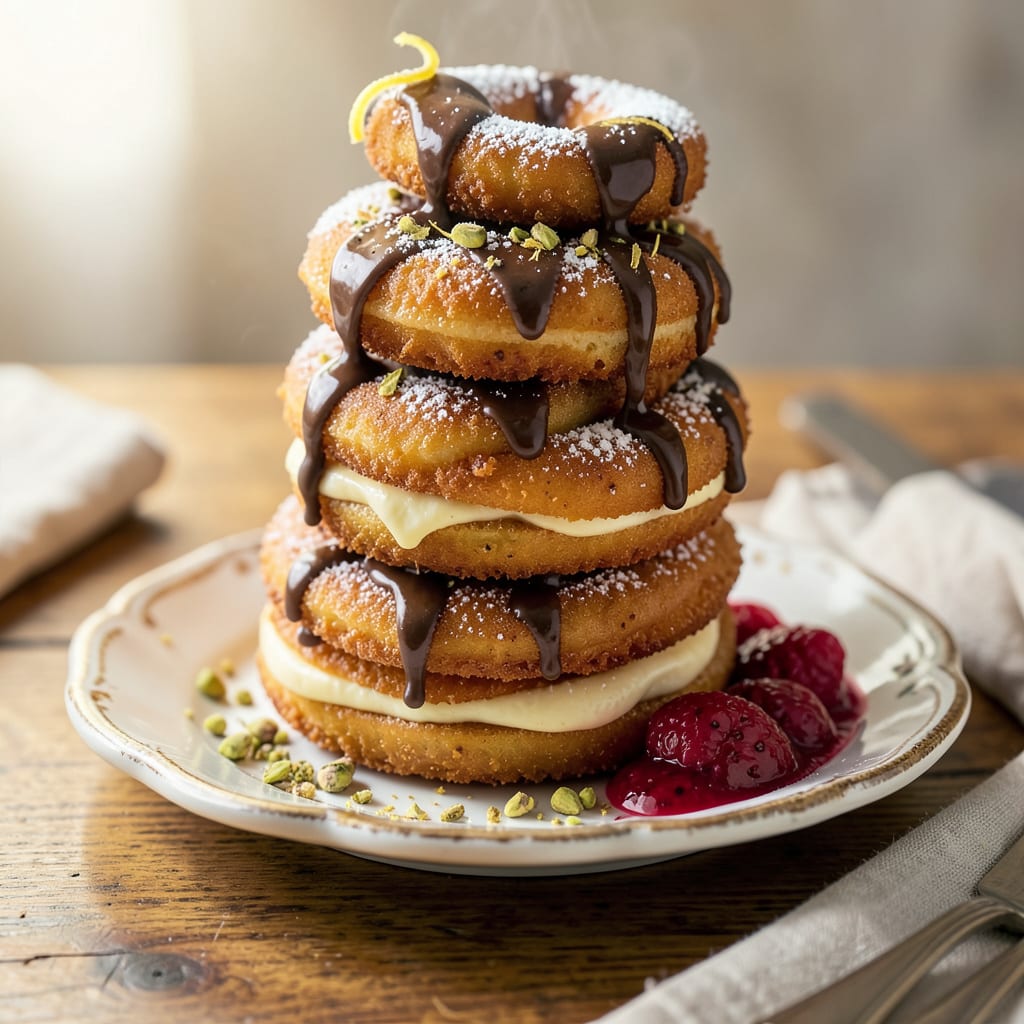
Cake donuts are indeed fried, using a method where the batter is piped directly into hot oil. This creates their signature dense, moist texture and slightly crispy exterior.
This frying technique sets them apart from yeast donuts, which are proofed before frying. The thick batter sinks slightly in the oil, creating that characteristic compact crumb while the exterior develops a delicate crust. 🔥 I’ve found that maintaining oil between 350-375°F is crucial—too cool and they’ll absorb excess oil, too hot and they’ll brown before cooking through. The result is a donut that’s rich without being greasy, with a satisfying heft that baked versions struggle to match.
💡 In This Article
- How Cake Donuts Get Their Unique Fried Texture
- Baking vs. Frying: Cake Donut Alternatives and Tips
How Cake Donuts Get Their Unique Fried Texture
The magic starts with the batter’s chemistry. Cake donut batter is thicker than yeast dough—more like a heavy pancake batter—with a higher ratio of flour to liquid. When this dense mixture hits 350-375°F oil, the exterior instantly forms a protective crust while the interior steams gently.
This creates that signature compact crumb that’s moist but never gummy. The key is the batter’s low hydration level, which prevents excessive oil absorption during frying. 🔥
What happens in those first 30 seconds determines everything. As the batter sinks into the oil, the bottom layer caramelizes slightly while the top remains soft. The oil temperature must stay consistent—too low and you’ll get greasy donuts (the batter absorbs oil instead of sealing), too high and they’ll burn before cooking through.
Professional fryers use thermostatically controlled units, but home cooks can maintain temp by frying in small batches and monitoring with a candy thermometer.
The frying process also develops complex flavors through Maillard reactions. The sugars and proteins in the batter interact with the hot oil to create those subtle caramel notes you taste in a perfect cake donut. Unlike yeast donuts that rely on fermentation for flavor, cake donuts get their depth from this browning process.
That’s why they pair so well with bold glazes—like my favorite dark chocolate ganache with a pinch of smoked salt. ✨
Here’s what most people miss: the oil choice matters. Neutral oils with high smoke points (peanut or vegetable) work best, but I’ve experimented with adding 10% rendered duck fat for an extra-rich flavor. The fat composition affects how the crust forms—duck fat creates a slightly crispier exterior at the same temperature.
The donuts fry for about 2-3 minutes per side, just until golden brown with that perfect crisp edge.
Compare this to yeast donuts, which are proofed before frying. Their lighter structure comes from air pockets created by yeast activity, while cake donuts rely entirely on chemical leavening (baking powder/soda) and the frying process itself.
This is why cake donuts feel more substantial—they’re essentially little fried cakes with a tighter crumb structure that holds up beautifully to glazes and toppings. 💫
The final texture secret? Letting them drain properly. I use a wire rack over a baking sheet so air circulates all around, preventing that dreaded soggy bottom. The residual heat continues cooking the interior slightly as they cool, which is why they taste even better after resting 10-15 minutes before glazing.
This step is non-negotiable for that perfect balance of crisp exterior and tender interior.
Next time you bite into a cake donut, notice how the texture changes from that initial crispness to the dense, moist center. That contrast is the hallmark of proper frying technique—something baked versions simply can’t replicate. The oil creates a micro-thin crisp layer while the steam from the batter keeps the inside perfectly tender.
It’s this duality that makes cake donuts so irresistibly satisfying. ⚡

Trained in classic French technique but raised on slow-cooked ribs and spicy rubs, she blends culinary skill with smoke and soul.
- Recipe for Boneless Pork Chops in Cast Iron Skillet: Sear and Baste to Juicy Perfection - October 3, 2026
- Recipe for Boneless Cross Rib Roast: Slow-Roasted Beef with Herb Crust - October 3, 2026
- Hamburgers in Sauce Recipe Crock Pot: Slow-Cooked Savory Delight - October 3, 2026