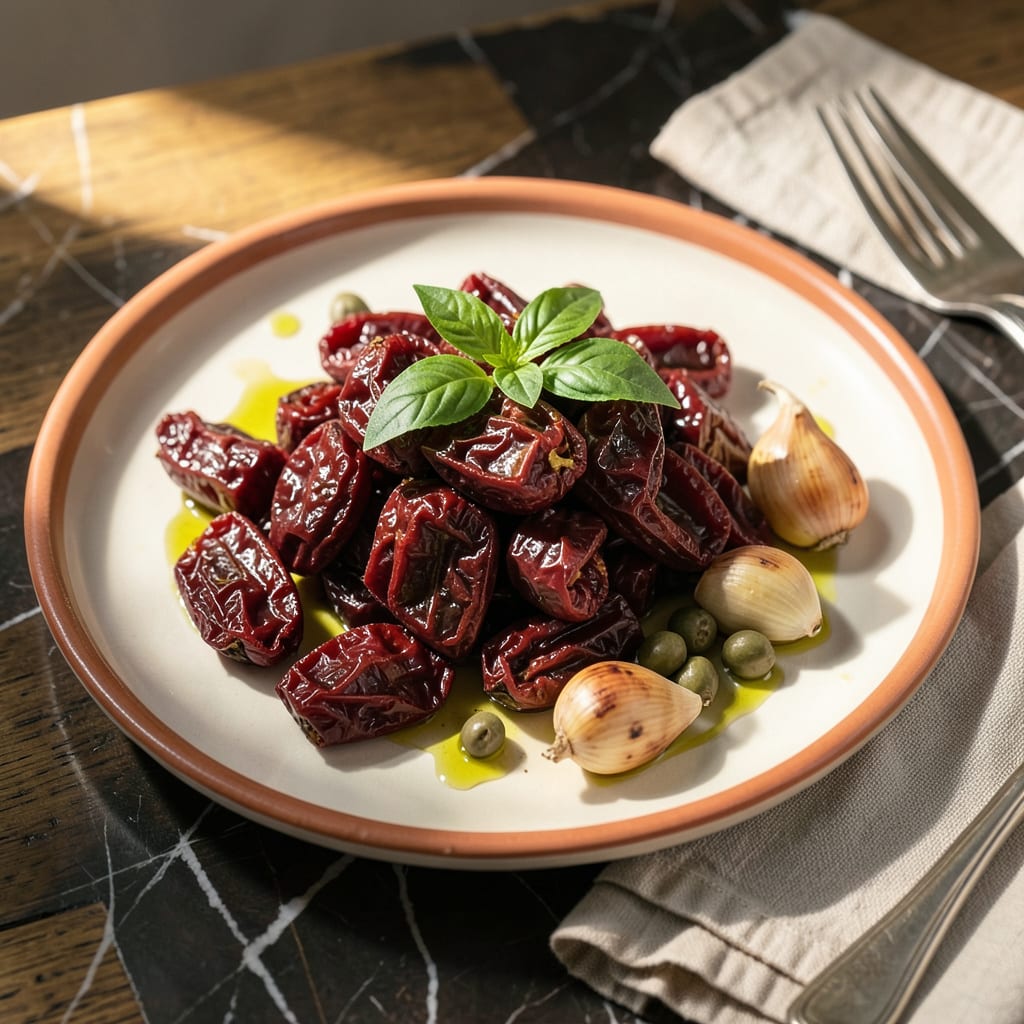
Sun-dried tomatoes are moderately acidic with a pH typically between 3.5 and 4.5, similar to fresh tomatoes but more concentrated. Their acidity comes from natural tomato acids intensified during the drying process.
This concentrated tanginess happens because dehydration removes water while leaving behind the natural malic and citric acids that give tomatoes their signature brightness. Think of it like reducing a sauce—the flavors become more potent as moisture evaporates. 🔥 I’ve noticed this makes them particularly effective for adding depth to dishes without needing extra vinegar or lemon juice. The oil-packing process can slightly mellow the acidity, but you’ll still get that distinctive punch.
💡 In This Article
- Why Sun-Dried Tomatoes Have Higher Acidity Than Fresh
- Managing Sun-Dried Tomato Acidity in Cooking and Diets
Why Sun-Dried Tomatoes Have Higher Acidity Than Fresh
When tomatoes undergo dehydration, something fascinating happens at the molecular level. The drying process removes up to 90% of the water content, but leaves behind all the natural acids—primarily malic acid and citric acid. This concentration effect is similar to reducing a tomato sauce on the stove, where flavors intensify as moisture evaporates.
The pH drops from around 4.3-4.9 in fresh tomatoes to 3.5-4.5 in dried versions, making them noticeably more tart. ✨
The science behind this involves simple chemistry: pH measures hydrogen ion concentration, and when water is removed, the remaining acids become more dominant in the fruit’s composition. A fresh tomato contains about 0.5-0.7% total acids by weight, while sun-dried tomatoes can reach 3-5% acid content.
The drying method matters too—oil-packed versions may have slightly less perceived acidity because the oil acts as a buffer, while completely dry tomatoes deliver the full acidic punch. 🔥
What’s particularly interesting is how this affects flavor balance in cooking. I’ve found that sun-dried tomatoes can replace vinegar in many recipes because their concentrated acidity provides that bright, tangy note without additional liquid.
For example, blending 2 tablespoons of sun-dried tomatoes into a pasta sauce gives the same acidity boost as 1 tablespoon of lemon juice, but with deeper umami complexity. The drying process also converts some sugars into more complex compounds, creating a sweet-tart balance that’s unique to dried tomatoes.
The processing temperature plays a role too. Traditional sun-drying (at 86-104°F for 5-10 days) preserves more delicate acids than industrial dehydrators (often 140-160°F for 8-12 hours). This slower method allows for more gradual water removal, which can slightly modify how the acids interact with the remaining fruit compounds.
The result is a more nuanced acidity profile in traditionally dried tomatoes compared to commercially processed ones. 💫
For those sensitive to acidity, it’s worth noting that the form matters: oil-packed sun-dried tomatoes typically measure around pH 4.0-4.3, while completely dry ones can dip to pH 3.5-3.8. This difference comes from the oil acting as a mild diluent.
I always recommend tasting before adding to dishes—sometimes just 1-2 chopped sun-dried tomatoes can provide enough acidity to balance an entire pot of stew. ⚡
One pro tip I’ve learned from working with these ingredients: if you need to reduce acidity in a dish, soaking sun-dried tomatoes in warm water for 15-20 minutes before using can leach out about 20-30% of the acids.
This technique is particularly useful when incorporating them into creamy sauces or dishes where you want the tomato flavor without the sharp tang. The soaking water actually becomes quite flavorful and can be used as a cooking liquid itself. 🌟

Trained in classic French technique but raised on slow-cooked ribs and spicy rubs, she blends culinary skill with smoke and soul.
- Recipe for Boneless Pork Chops in Cast Iron Skillet: Sear and Baste to Juicy Perfection - October 3, 2026
- Recipe for Boneless Cross Rib Roast: Slow-Roasted Beef with Herb Crust - October 3, 2026
- Hamburgers in Sauce Recipe Crock Pot: Slow-Cooked Savory Delight - October 3, 2026