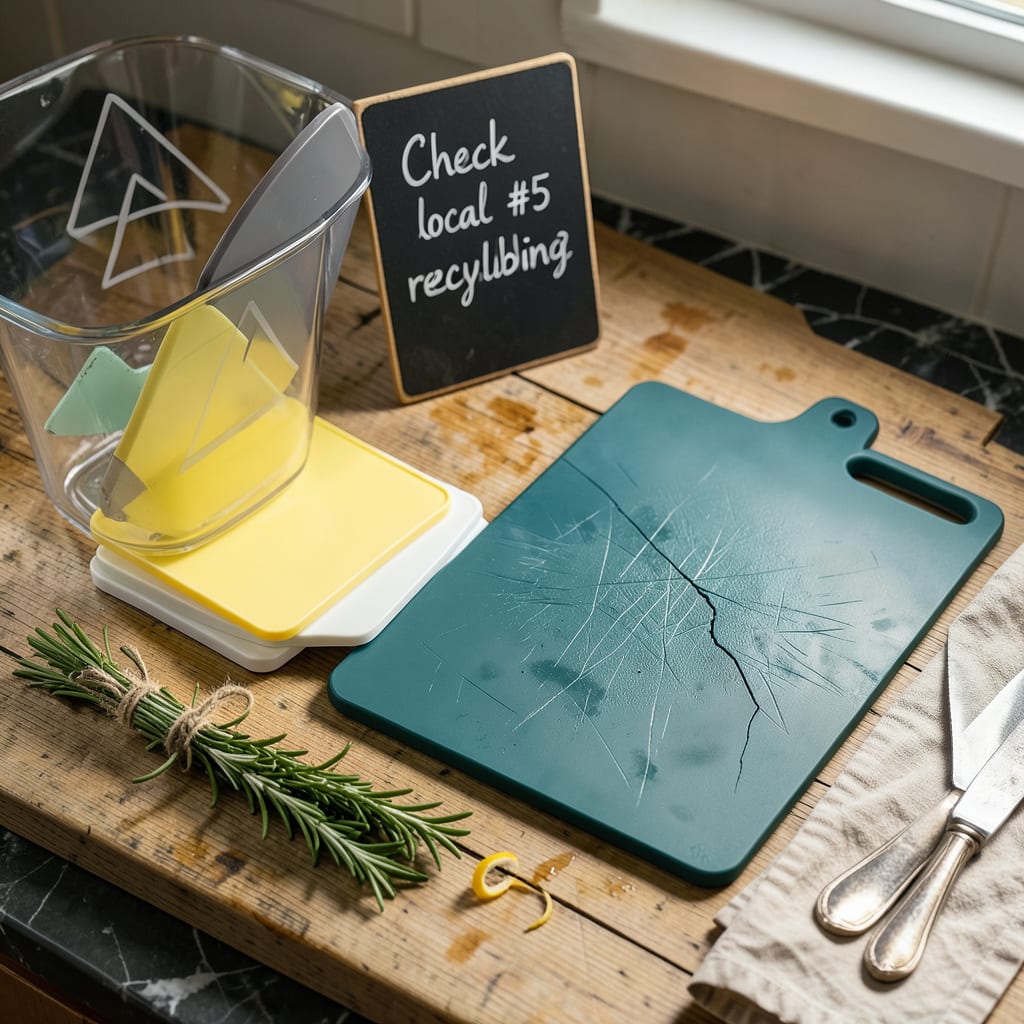
Most plastic cutting boards aren’t accepted in curbside recycling due to their low-quality plastic and food contamination. Some specialized recycling centers may process them, but repurposing or proper disposal is often the better option.
I’ve learned the hard way that those numbered recycling symbols don’t guarantee acceptance. 🔥 Municipal facilities often reject plastic boards because food particles cling to the porous material, making them impossible to clean thoroughly. Even when made from recyclable plastics like polypropylene, the contamination risk outweighs their recycling value. That’s why I always recommend checking with local waste management before tossing them in the bin.
What many don’t realize is that specialized recycling programs exist for kitchen plastics. Some manufacturers offer take-back programs, and certain recycling centers have equipment to handle food-contaminated plastics. But honestly, I’ve found more success giving old boards new life as plant tray liners or workshop protectors. ✨
💡 In This Article
- Why Plastic Cutting Boards Rarely Get Recycled
- Eco-Friendly Alternatives to Plastic Cutting Boards
Why Plastic Cutting Boards Rarely Get Recycled
Most plastic cutting boards are made from either polypropylene (#5) or high-density polyethylene (#2), both technically recyclable materials. The catch? These plastics degrade significantly with each use, developing micro-cracks that trap food particles and bacteria.
Municipal recycling facilities use optical scanners that often can’t distinguish between clean and contaminated plastics, leading to automatic rejection of anything that might compromise the recycling stream.
The real issue lies in the food contamination. Even after washing, plastic boards retain grease and protein residues that can’t be fully removed.
Recycling plants operate at temperatures around 200-250°F during processing, which isn’t hot enough to sterilize contaminated plastics but is sufficient to melt and spread the contaminants throughout an entire batch of recycled material. This is why most facilities have a zero-tolerance policy for kitchen plastics. 🔥
Here’s what happens when you put them in curbside bins: They get sorted out as “residual waste” and typically end up in landfills anyway. The recycling symbol with a number inside (usually 2 or 5) only indicates the plastic type, not that it’s actually accepted by your local program.
I’ve seen well-meaning folks contaminate entire loads of recyclables by including plastic cutting boards, which then forces the whole batch to be landfilled.
Specialized recycling centers exist that can handle these materials, but they’re few and far between. Some manufacturers like Epicurean and OXO offer take-back programs where they grind down old boards to make new products.
The key is finding these niche programs – a quick search for “plastic cutting board recycling near me” often reveals surprising local options. ✨
The material composition itself presents challenges. Polypropylene becomes brittle after repeated washing, while HDPE absorbs odors and stains. Both materials lose their structural integrity during the recycling process, making them poor candidates for repurposing into new products. The energy required to clean and reprocess them often exceeds the value of the resulting material.
What most people don’t realize is that the recycling industry operates on economics. Plastic cutting boards simply don’t provide enough high-quality material to justify the processing costs. The average board contains only about 1-2 pounds of plastic, which yields very little usable material after accounting for contamination and processing losses. 💫
This is why I always recommend checking with your local waste management first. Many have specific guidelines about kitchen plastics that aren’t widely advertised. Some communities accept them during special collection events, while others have partnerships with plastic lumber manufacturers who can handle the contamination levels.

Trained in classic French technique but raised on slow-cooked ribs and spicy rubs, she blends culinary skill with smoke and soul.
- Recipe for Boneless Pork Chops in Cast Iron Skillet: Sear and Baste to Juicy Perfection - October 3, 2026
- Recipe for Boneless Cross Rib Roast: Slow-Roasted Beef with Herb Crust - October 3, 2026
- Hamburgers in Sauce Recipe Crock Pot: Slow-Cooked Savory Delight - October 3, 2026