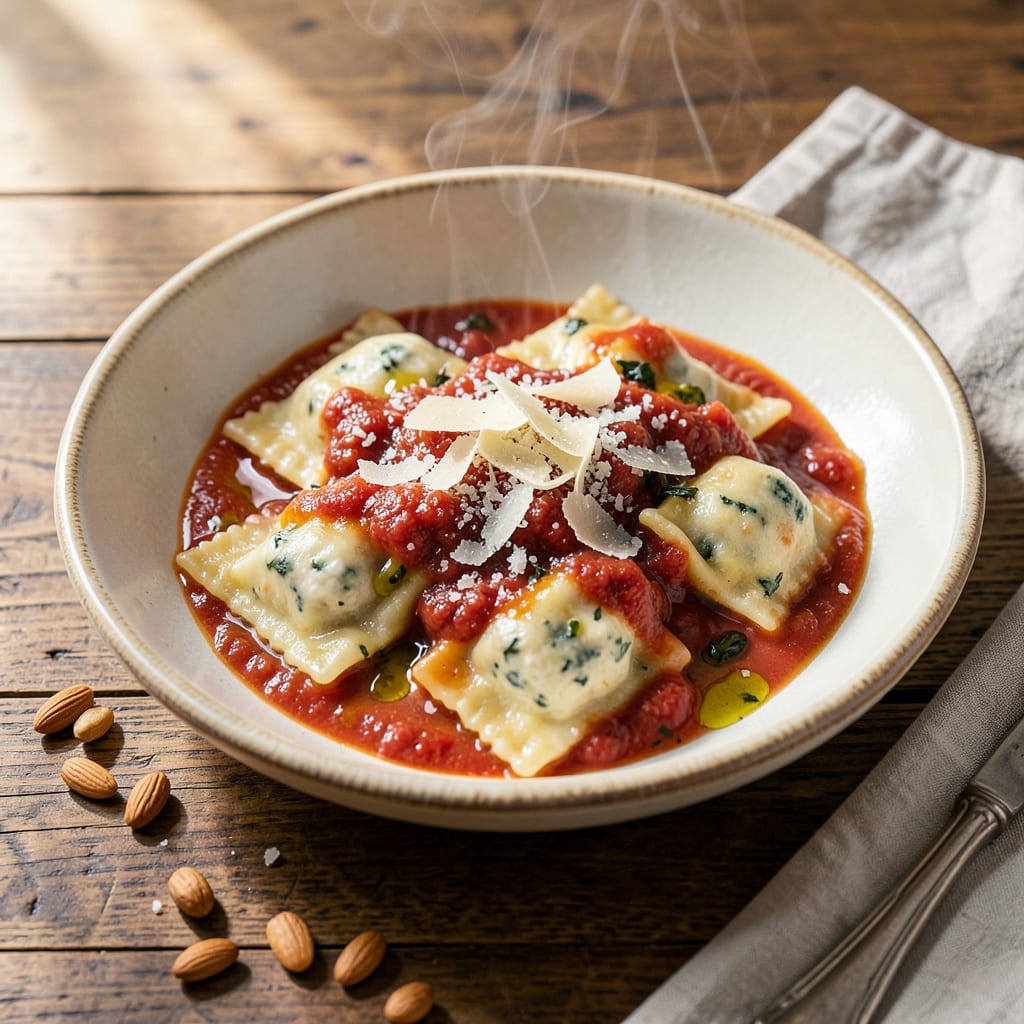
Fresh ravioli should float within 2-4 minutes of boiling, signaling it’s cooked through. If it sinks or stays submerged, it may need more time or could be overstuffed. Frozen ravioli may take slightly longer to rise.
This floating phenomenon happens because the pasta dough traps air that expands as it heats. 🔥 When the internal temperature reaches the perfect point, the ravioli becomes buoyant—like a little edible buoy signaling “I’m ready!” I always watch for this moment, but I also check for visual cues like slightly puffed edges and a tender texture when pressed gently. The filling plays a role too—cheese-based ravioli often rise faster than meat-filled ones because of their different densities.
💡 In This Article
- Why Ravioli Floats When Fully Cooked
- Perfect Ravioli Cooking Times and Techniques
Why Ravioli Floats When Fully Cooked
The floating magic happens because of basic physics and pasta chemistry. When ravioli dough hits boiling water (212°F), the moisture inside turns to steam, expanding trapped air pockets. This transformation reduces the pasta’s overall density—making it lighter than water. Think of it like a tiny edible hot air balloon!
Fresh ravioli typically contains more moisture than dried, so it responds faster to this process.
Here’s what’s actually happening inside the pot: The pasta sheets absorb water and soften, while the filling (especially cheese-based ones) heats and releases additional moisture. A standard cheese ravioli might float in 2-3 minutes, while denser meat-filled versions can take up to 4 minutes.
Frozen ravioli behaves differently because the ice crystals need to melt first, adding 1-2 extra minutes to the floating timeline. 🔥
The filling composition dramatically affects buoyancy. Ricotta or mozzarella fillings create more steam quickly due to their high moisture content (about 60-70% water). Meat fillings, being denser with only 50-60% moisture, take longer to heat through and become buoyant.
I’ve noticed homemade ravioli with egg-rich dough floats faster than commercial versions because the eggs add both moisture and structure.
What most people don’t realize is that the pasta’s thickness plays a crucial role. Traditional Italian ravioli uses paper-thin sheets (about 1mm thick), while store-bought versions often use thicker dough (1.5-2mm). This extra thickness means more dough to hydrate and heat, delaying the floating by 30-60 seconds.
The salt concentration in your water (ideal: 1-2 tablespoons per gallon) also affects the boiling point slightly, which can influence the timing.
There’s also the “overstuffing factor” to consider. When ravioli contains too much filling, the dough can’t properly seal, allowing water to seep in during cooking. This extra water weight prevents floating even when cooked through. I always recommend leaving a 1/4-inch border when sealing ravioli to prevent this issue.
The perfect ravioli should have just enough filling to be satisfying without compromising the dough’s integrity.
For frozen ravioli, the process involves an extra step: the ice crystals must melt before the pasta can begin absorbing water. This is why they often sink longer before rising.
A good test is to wait until the water returns to a full boil after adding frozen ravioli—this usually indicates the ice has melted and the cooking process has truly begun. ✨
The floating isn’t just about doneness—it’s also about texture. Properly cooked ravioli should feel tender but still hold its shape when lifted with a slotted spoon. If it floats but feels mushy, it’s overcooked. If it’s floating but the dough seems tough, your water might not be at a true rolling boil.
The perfect ravioli strikes that delicate balance between buoyant and al dente!

Trained in classic French technique but raised on slow-cooked ribs and spicy rubs, she blends culinary skill with smoke and soul.
- Recipe for Boneless Pork Chops in Cast Iron Skillet: Sear and Baste to Juicy Perfection - October 3, 2026
- Recipe for Boneless Cross Rib Roast: Slow-Roasted Beef with Herb Crust - October 3, 2026
- Hamburgers in Sauce Recipe Crock Pot: Slow-Cooked Savory Delight - October 3, 2026