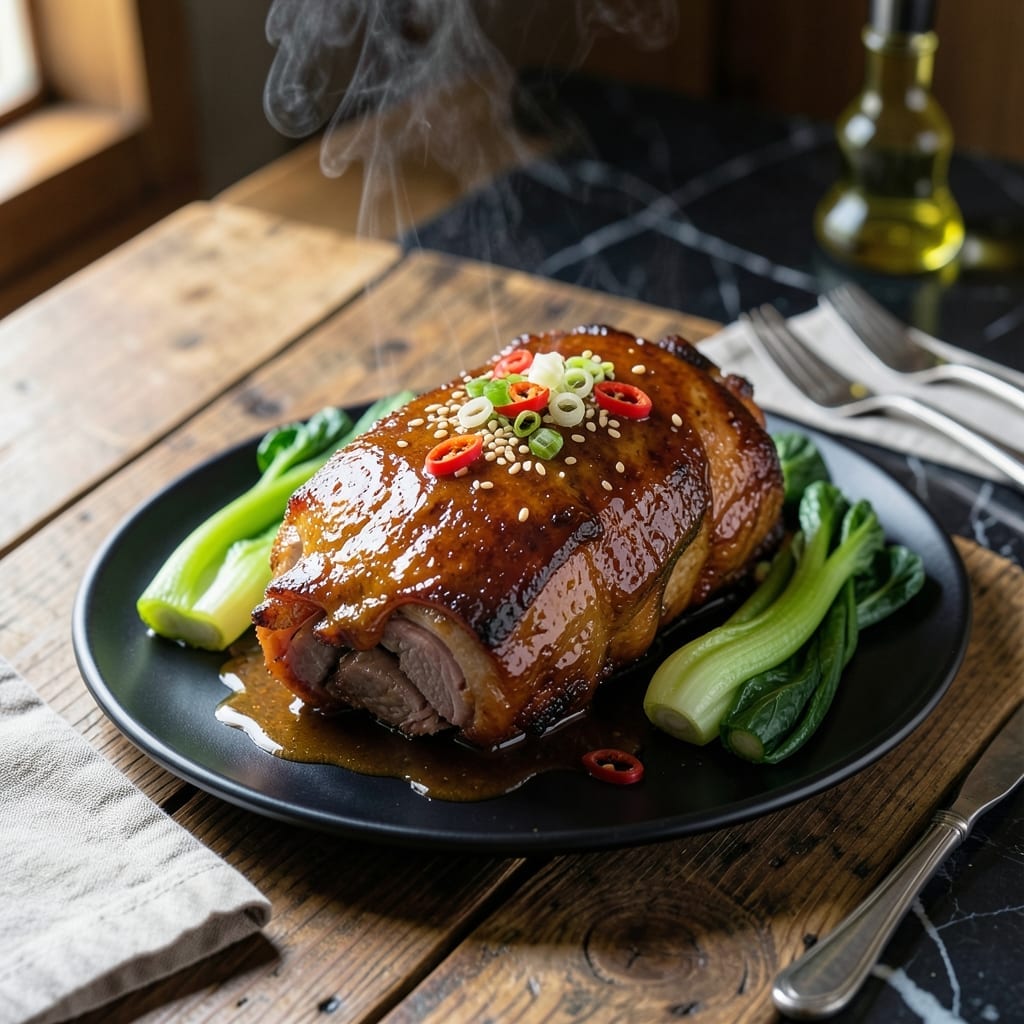
This Asian-inspired pork butt transforms tough cuts into melt-in-your-mouth tenderness with a sticky hoisin glaze that’s impossible to resist. The five-spice blend adds depth without overpowering the meat’s natural richness.
Slow-roasting at 325°F ensures the fat renders perfectly while the glaze caramelizes into a glossy finish. A quick sear before serving locks in juices and creates a crispy exterior contrast.
Every bite delivers sweet, savory, and aromatic layers that feel restaurant-worthy yet require minimal effort. The sauce thickens as it cooks, coating the pork in a glossy, flavor-packed finish.
Serve with steamed rice to soak up the extra sauce or pair with stir-fried vegetables for a complete meal. This dish balances bold flavors with simplicity.
Ingredients for Asian Pork Butt
Pantry staples plus a few specialty items create this bold, aromatic dish.
| Ingredient | Amount | Notes |
|---|---|---|
| Pork Butt 🥩 | 3 lb | Bone-in, skin-on for best flavor |
| Hoisin Sauce 🥫 | ¾ cup | Thick, authentic variety preferred |
| Soy Sauce 🫒 | ¼ cup | Low-sodium recommended |
| Honey 🍯 | 3 tbsp | For balancing sweetness |
| Rice Vinegar 🍶 | 2 tbsp | Adds tangy brightness |
| Chinese Five-Spice Powder 🌿 | 1 tsp | Freshly ground if possible |
| Garlic Cloves 🧄 | 6 cloves | Minced for maximum flavor |
| Fresh Ginger 🌱 | 1 tbsp | Peeled and finely grated |
| Brown Sugar 🍚 | 2 tbsp | Light or dark variety |
| Olive Oil 🫒 | 2 tbsp | For searing pork |
| Sesame Oil 🫒 | 1 tsp | Toasted for aroma |
| Green Onions 🧅 | 4 whole | Thinly sliced for garnish |
| Salt 🧂 | 1 tsp | Kosher or sea salt |
| Black Pepper 🌶️ | ½ tsp | Freshly ground preferred |
[recipe_ingredient_scaler]
The pork butt is key here. Bone-in, skin-on gives the best texture and flavor—most butchers will cut it to size if you ask. Asian markets often have pre-packaged five-spice powder, but Penzeys also carries a solid version. For the hoisin, Koon Chun or Lee Kum Kee are the brands I reach for (the glass jars, not the squeeze bottles). Look for hoisin without added preservatives if you’re being picky.
No five-spice? Mix equal parts cinnamon, cloves, fennel, star anise, and pepper—or just use what you’ve got. Out of hoisin? Substitute with oyster sauce plus a splash of honey, but know the flavor will shift slightly. Fresh ginger is ideal, but ground ginger at half the amount works in a pinch. The honey can be swapped for brown sugar if that’s what’s in the cupboard.
Pork butt keeps 3-4 days in the fridge, but I like to cook it fresh. The glaze thickens as it cools, so reheat gently with a splash of water. Leftovers? Perfect for 2-3 days of delicious sandwiches or rice bowls.
Why You’ll Love This Recipe
- Set It and Forget: I toss everything in the slow cooker before work and come home to fall-apart tender pork.
- Sweet & Sticky: The hoisin, honey, and soy sauce caramelize into this ridiculously good glaze that clings to every bite.
- Feeds the Crew: Between us, this makes enough for tacos tonight, rice bowls tomorrow, and a freezer meal for next week.
- Pantry Hero: I always have soy sauce and rice vinegar on hand, so this feels fancy without a special grocery trip.
Step-by-Step Instructions for Asian Pork Butt with Sticky Hoisin Glaze
This method delivers tender pork with a glossy, finger-licking good glaze every time.
Step 1: Sear and Season the Pork Butt
Pat the 3 lb pork butt dry with paper towels, then season generously with the 1 tsp salt and 0.5 tsp black pepper. Heat the 2 tbsp olive oil in a large Dutch oven over medium-high heat until shimmering.
Sear the pork butt on all sides for 8-10 minutes total, turning occasionally, until deeply browned. This creates a flavorful crust and renders some fat. Remove the pork and set aside—it doesn’t need to be fully cooked at this stage.
Step 2: Build the Aromatic Sauce Base
In the same pot, reduce heat to medium and add the minced 6 cloves garlic cloves and grated 1 tbsp fresh ginger. Sauté for 1-2 minutes until fragrant but not browned.
Pour in the 0.25 cup soy sauce, 0.75 cup hoisin sauce, 3 tbsp honey, 2 tbsp rice vinegar, 2 tbsp brown sugar, and 1 tsp Chinese five-spice powder. Stir well to combine, scraping up any browned bits from the bottom of the pot.
Step 3: Braise the Pork to Tenderness
Return the seared pork butt to the pot, spooning some of the sauce over the top. Add enough water to come about halfway up the pork (about 1 cup). Cover and bring to a simmer, then reduce heat to low.
Braise for 2.5 to 3 hours, turning the pork every 45 minutes, until it’s fork-tender and the internal temperature reaches 195°F. The pork should easily pull apart with a fork when done.
Step 4: Reduce the Glaze and Finish
Carefully transfer the pork to a cutting board. Skim excess fat from the surface of the sauce, then increase heat to medium-high and simmer for 8-10 minutes until the sauce thickens into a glossy glaze.
Stir in the 1 tsp sesame oil, then return the pork to the pot, turning to coat it thoroughly in the reduced sauce. Let it sit for 5 minutes to soak up the flavors.
Step 5: Serve with Fresh Garnish
Slice or shred the pork and arrange it on a serving platter. Spoon the thickened glaze over the top and garnish with the thinly sliced 4 whole green onions.
The pork should be fall-apart tender with a sticky, caramelized exterior. Serve immediately with steamed rice or noodles to soak up every bit of the rich, aromatic sauce.
Pro Tips For Making Asian Pork Butt
- Score the Fat Cap: Cut 1/4-inch crosshatches into the fat cap before marinating—I learned this the hard way after wondering why my pork butt never crisped up properly in the oven.
- Balance the Sauce: Hoisin is sweet, so add a splash of rice vinegar (about 1 tablespoon per 1/4 cup hoisin) to cut through the richness. My grandmother swore by this, and she was right.
- Don’t Rush the Marinate: Give it at least 4 hours, but overnight actually changes the outcome. I skip this when I’m lazy, but the flavor is noticeably deeper when I don’t.
- Use Low and Slow: Cook at 300°F for 3-4 hours, not higher—sounds weird, but it works for fall-apart tenderness without drying out the meat.
Regional Styles of This Recipe
Cantonese Char Siu
This style uses a red fermented bean curd in the marinade for its distinctive color and umami depth. I add 1 tbsp red bean curd paste to the hoisin glaze for authenticity. The pork is traditionally roasted on spits over charcoal, but your oven at 375°F works beautifully. 🗺️
Vietnamese Caramelized
Known as thịt kho, this version uses a caramel sauce made with ½ cup sugar melted until amber. Add 1 cup coconut water instead of plain water for braising. The result is a deeper, more complex sweetness that pairs perfectly with rice.
Korean Dakdori
Inspired by Korean flavors, I swap the hoisin for ½ cup gochujang and add 2 tbsp gochugaru for heat. The five-spice is replaced with 1 tbsp toasted sesame seeds for nuttiness. Braise at 300°F for a slightly chewier texture.
Japanese Kakuni
This soy-based braise uses 1 cup dashi stock and ¼ cup mirin along with the soy sauce. The pork is cut into 2-inch cubes before braising. I finish with a sprinkle of shichimi togarashi for a citrusy kick.
Thai Massaman
Infuse coconut milk into the braising liquid with 1 can (13.5 oz) of premium coconut milk. Add 1 tbsp Massaman curry paste and 1 cinnamon stick to the sauce. The result is creamy with warm, aromatic spices.
Remove the cinnamon stick before reducing the glaze. 🌟
Nutrition Facts
Frequently Asked Questions
Can I use pork shoulder instead of pork butt?
Yes! Pork shoulder and pork butt come from the same area and are often used interchangeably. The shoulder may have slightly more connective tissue, so braise for an extra 30 minutes to ensure tenderness.
How do I know when the pork is done?
The pork is ready when it reaches an internal temperature of 195°F and easily pulls apart with a fork. If it resists, let it braise longer—patience pays off here.
Can I make this in a slow cooker?
Sear the pork first, then transfer everything to the slow cooker. Cook on low for 6-8 hours or high for 4-5 hours until fork-tender.
What can I substitute for hoisin sauce?
Use oyster sauce plus 1 tbsp honey for a similar sweet-savory balance. Or, mix 2 tbsp soy sauce, 1 tbsp peanut butter, and 1 tbsp brown sugar for a quick DIY version.

Trained in classic French technique but raised on slow-cooked ribs and spicy rubs, she blends culinary skill with smoke and soul.
- Recipe for Boneless Pork Chops in Cast Iron Skillet: Sear and Baste to Juicy Perfection - October 3, 2026
- Recipe for Boneless Cross Rib Roast: Slow-Roasted Beef with Herb Crust - October 3, 2026
- Hamburgers in Sauce Recipe Crock Pot: Slow-Cooked Savory Delight - October 3, 2026