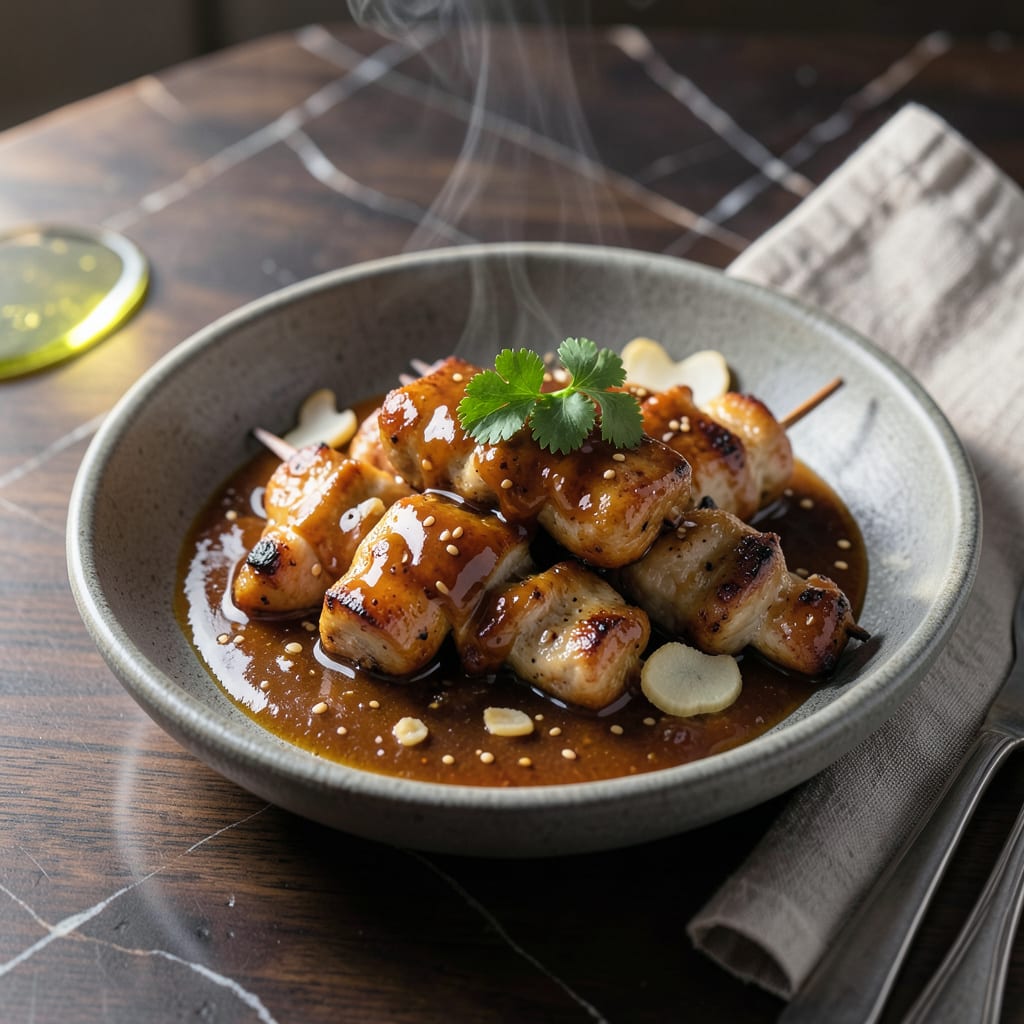
This sauce delivers a perfect balance of sweet, savory, and umami that transforms any grilled meat into a restaurant-quality dish. I developed it after years of experimenting with Japanese flavors at my smokehouse.
The glaze thickens beautifully on the grill, creating a glossy finish that locks in moisture. With just a few pantry staples, you’ll have a versatile sauce that elevates everything from ribs to chicken.
Ingredients for Bachman’s Japanese Bbq Sauce
A few pantry staples transform into this glossy, umami-packed glaze you’ll want on everything.
| Ingredient | Amount | Notes |
|---|---|---|
| Soy Sauce 🫚 | ½ cup | Low-sodium preferred for balance |
| Mirin 🍶 | ¼ cup | Sweet rice wine essential |
| Sake 🍶 | ¼ cup | Dry Japanese rice wine |
| Brown Sugar 🍚 | ¼ cup | Packed light or dark |
| Rice Vinegar 🍯 | 2 tbsp | Unseasoned for clean acidity |
| Fresh Ginger 🌿 | 1 tbsp | Finely grated for potency |
| Garlic Cloves 🧄 | 3 cloves | Minced for even distribution |
| Sesame Oil 🫒 | 1 tbsp | Toasted for depth of flavor |
| Gochujang 🌶️ | 1 tbsp | Korean chili paste for heat |
[recipeingredientscaler]
The soy sauce is the backbone here—Kikkoman or Yamasa for reliable quality, but any Japanese brand works. Mirin and sake are non-negotiable for authentic flavor; find them in the Asian aisle at Kroger or any H Mart. Brown sugar adds caramel depth, but coconut sugar works if you want a less refined option (worth the extra minute to measure).
No mirin? Sweet sherry or dry white wine plus a pinch of sugar gets you close. Short on sake? Dry vermouth works in a pinch. Want it thicker? Simmer longer. Less sweet? Reduce brown sugar by half. The gochujang adds subtle heat—Sambal Oelek if you can’t find it (or whatever chili paste you’ve got).
Keeps 2 weeks in the fridge in a sealed jar. Freeze for 3 months if making a big batch. Stir before using—the sugar settles (don’t skip this part).
Why You’ll Love This Recipe
- 5-Minute Magic: I just dump all the ingredients in a pot and let the mirin and sake work their magic—no chopping, no fuss.
- Umami Bomb: That first brush on grilled chicken? The soy sauce and brown sugar caramelize into this sticky, savory-sweet glaze I could drink straight.
- Weeknight Hero: Honestly, I slather this on salmon, tofu, even roasted veggies—same sauce, three totally different meals.
- Pantry Staples: Between us, I always have these ingredients on hand, so it’s my last-minute dinner savior without an extra grocery run.
Step-by-Step Instructions for Japanese BBQ Sauce
This method ensures a perfectly balanced glaze with layers of umami, sweetness, and subtle heat.
Step 1: Bloom Aromatics in Sesame Oil
Heat a medium saucepan over medium heat and add the 1 tbsp Sesame Oil. Once it shimmers, add the 1 tbsp Fresh Ginger and 3 cloves Garlic Cloves, stirring constantly. You want to cook these just until fragrant—about 30-45 seconds—without letting them brown.
This quick bloom releases the essential oils and builds the foundation of flavor. If the garlic starts to turn golden, remove the pan from heat immediately; burnt garlic will make the sauce bitter.
Step 2: Combine Liquids and Sweeteners
Pour in the 0.5 cup Soy Sauce, 0.25 cup Mirin, 0.25 cup Sake, 0.25 cup Brown Sugar, 2 tbsp Rice Vinegar, and 1 tbsp Gochujang. Stir well to dissolve the Brown Sugar completely—this ensures even sweetness throughout the sauce.
Use a whisk to break up any clumps of Gochujang, which can be thick and sticky. The mixture should look smooth and slightly glossy once everything is incorporated.
Step 3: Simmer to Achieve Ideal Consistency
Increase the heat to medium-high and bring the sauce to a gentle boil. Once boiling, reduce the heat to medium-low and let it simmer for 8-10 minutes. Stir occasionally to prevent sticking, especially as the sauce begins to thicken.
You’re aiming for a syrupy consistency that coats the back of a spoon. The sauce should reduce by about a third, intensifying the flavors while maintaining a glossy finish. If it thickens too quickly, reduce the heat slightly to prevent scorching.
Step 4: Cool and Store for Optimal Flavor
Remove the sauce from heat and let it cool to room temperature. As it cools, it will thicken slightly more—this is normal. Transfer to a clean jar or airtight container once fully cooled.
The flavors will deepen after 1-2 hours in the refrigerator, so I recommend making this a day ahead if possible. The sauce will keep for up to 2 weeks refrigerated, giving you plenty of time to enjoy it on grilled meats, tofu, or vegetables.
Pro Tips For Making Bachman’S Japanese Bbq Sauce
- Simmer, Don’t Boil: Keep the heat at a gentle simmer—boiling the soy sauce and mirin too hard will make the sauce bitter and reduce it too fast. I learned this the hard way after scorching a batch that tasted like regret.
- Dissolve Sugar First: Mix the brown sugar with a splash of warm sake before adding it to the pot. Sounds weird, but it works—prevents grainy texture and helps it blend smoothly into the sauce.
- Skip the Substitutes: Resist the urge to swap mirin for extra sugar or vinegar—it’s not just sweetness, it’s depth. After burning three batches with cheap mirin, I finally splurged on the real stuff and never looked back.
- Rest Before Using: Let the sauce cool and sit for 10 minutes before tasting or using. The flavors meld and mellow—my grandmother swore by this, and she was right.
Health Benefits of This Dish
Rich in Antioxidants
This glaze packs a punch with ginger and garlic, both known for their powerful antioxidant properties. Gingerol in ginger helps combat inflammation, while allicin in garlic supports immune function. A 1 tbsp serving delivers these benefits without overpowering your dish. 💪
Heart-Healthy Fats
Sesame oil brings heart-healthy unsaturated fats to the mix, which can help lower bad cholesterol levels. The 1 tbsp used here adds depth without excess calories. These fats also aid in the absorption of fat-soluble vitamins from your meal.
Low-Calorie Flavor Boost
At roughly 30-40 calories per tablespoon, this sauce adds bold flavor without significant calories. The brown sugar provides natural energy, while mirin and sake contribute minimal calories but maximum taste impact.
Gut-Friendly Fermented Ingredients
Soy sauce and rice vinegar are fermented, providing probiotics that support gut health. These ingredients also contain enzymes that may aid digestion, making your grilled meats easier to process.
Metabolism Support
The gochujang contains capsaicin, which can give your metabolism a slight boost. Combined with the warming properties of ginger, this sauce might just give your system a gentle, flavorful kick. ✨
Sodium Awareness
While soy sauce contributes sodium, using low-sodium versions helps keep levels in check. The balance of sweet and umami means you can use less sauce while still enjoying maximum flavor impact on your grilled favorites.
Nutrition Facts

Trained in classic French technique but raised on slow-cooked ribs and spicy rubs, she blends culinary skill with smoke and soul.
- Recipe for Boneless Pork Chops in Cast Iron Skillet: Sear and Baste to Juicy Perfection - October 3, 2026
- Recipe for Boneless Cross Rib Roast: Slow-Roasted Beef with Herb Crust - October 3, 2026
- Hamburgers in Sauce Recipe Crock Pot: Slow-Cooked Savory Delight - October 3, 2026