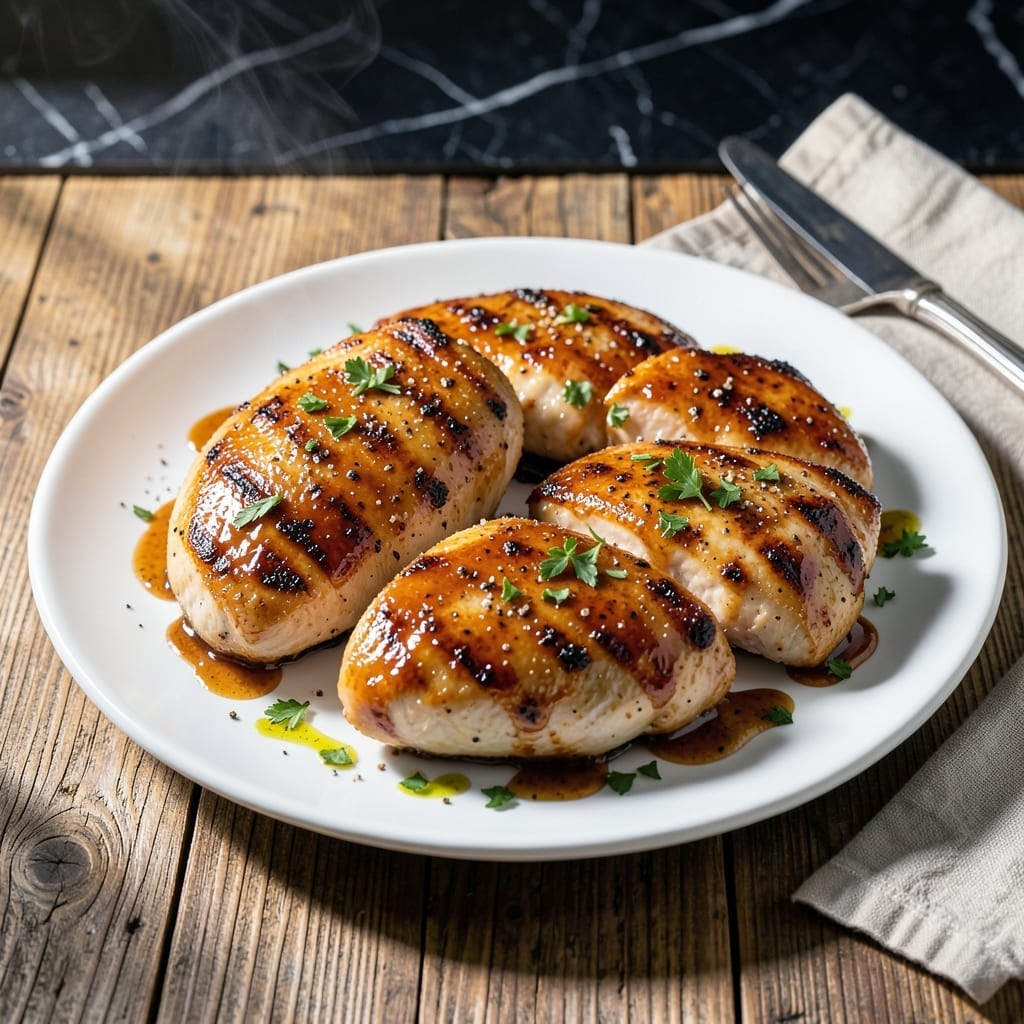
This baked barbecue chicken delivers sticky glaze and oven-charred edges without a grill. The high-heat method locks in moisture while creating that signature smoky-sweet crust.
I developed this technique to bring pitmaster results indoors. The secret is a two-stage baking process that caramelizes the sauce and ensures tender meat every time.
Ingredients for Baked Barbecue Boneless Chicken
Pantry staples and a few fresh items create this oven-baked barbecue chicken with signature caramelized edges.
| Ingredient | Amount | Notes |
|---|---|---|
| Boneless Skinless Chicken Breasts 🍗 | 2 lb | Pounded to even thickness |
| Barbecue Sauce 🍯 | 1 ½ cups | Divided for basting and serving |
| Olive Oil 🫒 | 2 tbsp | For coating chicken |
| Kosher Salt 🧂 | 1 ½ tsp | Diamond Crystal preferred |
| Freshly Ground Black Pepper 🌶️ | 1 tsp | Coarse grind ideal |
| Garlic Powder 🧄 | 1 tsp | Not garlic salt |
| Smoked Paprika 🌶️ | 1 tsp | For depth of flavor |
| Onion Powder 🧅 | 1 tsp | Balances sweetness |
| Apple Cider Vinegar 🍏 | 1 tbsp | Brightens sauce |
| Brown Sugar 🍚 | 2 tbsp | Light or dark |
| Worcestershire Sauce 🍶 | 1 tbsp | Adds umami depth |
| Liquid Smoke 🔥 | ½ tsp | Optional for smokiness |
[recipe_ingredient_scaler]
The chicken quality matters here. Boneless, skinless breasts from Whole Foods or Costco are consistently tender and uniform in size. Pound them to an even thickness (about 1 inch) for even cooking—this prevents dry edges while the center finishes. For the barbecue sauce, Stubb’s Original or Sweet Baby Ray’s deliver the right balance of sweet, tangy, and smoky without overpowering.
No liquid smoke? Increase smoked paprika to 1.5 tsp for similar depth. Swap apple cider vinegar for white vinegar in a pinch, though the flavor will be sharper. Brown sugar can be coconut sugar or maple syrup (reduce by 25% to account for liquid). For extra tenderness, brine the chicken in salted water for 30 minutes before seasoning.
Leftover chicken keeps 4-5 days refrigerated in airtight containers. Reheat in a 350°F oven for 15 minutes to restore the sticky glaze. The sauce can be made ahead and stored separately for up to 1 week.
Why You’ll Love This Recipe
- One Pan Wonder: I toss the chicken with olive oil, salt, and pepper, slather on the barbecue sauce, and let the oven do the rest.
- Smoky Sweet Bite: That first sticky, tangy bite of barbecue-glazed chicken never gets old.
- Meal Prep Hero: I make a double batch on Sunday and it’s ready for lunches or a quick dinner all week.
- Wallet-Friendly Win: Chicken breasts on sale plus my favorite BBQ sauce means a solid meal for under $10.
Step-by-Step Instructions for Baked Barbecue Boneless Chicken
This method delivers tender chicken with caramelized edges and a rich, sticky glaze.
Step 1: Season and Marinate the Chicken
Place the 2 lb Boneless Skinless Chicken Breasts between plastic wrap and pound to an even ¾-inch thickness using a meat mallet. This ensures uniform cooking throughout each piece.
In a bowl, whisk together the 2 tbsp Olive Oil, 1.5 tsp Kosher Salt, 1 tsp Freshly Ground Black Pepper, 1 tsp Garlic Powder, 1 tsp Smoked Paprika, and 1 tsp Onion Powder. Coat the chicken thoroughly with this mixture, pressing it into the surface for maximum adhesion.
Let the seasoned chicken rest at room temperature for 15-20 minutes while you preheat the oven. This allows the spices to penetrate and the meat to cook more evenly.
Step 2: Prepare the Enhanced Barbecue Glaze
In a small saucepan, combine the 1.5 cups Barbecue Sauce with the 1 tbsp Apple Cider Vinegar, 2 tbsp Brown Sugar, 1 tbsp Worcestershire Sauce, and 0.5 tsp Liquid Smoke.
Simmer over medium-low heat for 5-7 minutes, stirring frequently, until the mixture thickens slightly and the sugars dissolve completely. The glaze should coat the back of a spoon with a glossy sheen.
Remove from heat and reserve ½ cup of this enhanced sauce for serving. The remaining sauce will be used for basting during baking.
Step 3: Bake with Strategic Basting
Preheat your oven to 400°F and line a baking sheet with parchment paper. Arrange the seasoned chicken breasts on the prepared sheet, leaving space between each piece for even air circulation.
Bake for 15 minutes, then remove from oven and brush generously with the prepared barbecue glaze. Return to the oven and bake for another 10-12 minutes, or until the internal temperature reaches 165°F.
The edges should appear slightly charred and the glaze should be bubbling. For optimal caramelization, switch the oven to broil for the final 2-3 minutes, watching closely to prevent burning.
Step 4: Rest and Finish
Transfer the baked chicken to a serving platter and let rest for 5-10 minutes. This allows the juices to redistribute, ensuring moist, tender meat throughout.
Drizzle the reserved ½ cup of barbecue glaze over the chicken just before serving. The sauce should pool slightly at the edges of each breast, creating an appetizing presentation.
Garnish with additional Freshly Ground Black Pepper if desired. The chicken should have a deep mahogany color from the glaze, with slightly crisp edges and a sticky, finger-licking finish.
Pro Tips For Making Baked Barbecue Boneless Chicken
- Pound the Breasts: Boneless chicken breasts cook unevenly if thick in some spots. I pound them to an even 1-inch thickness with a rolling pin—saves me from dry edges and raw centers every time.
- Oil Before Sauce: Brush the chicken with olive oil before adding barbecue sauce, or it’ll stick to the pan and tear. The oil creates a barrier that keeps the sauce on the meat where it belongs.
- Don’t Sauce Too Soon: I learned this the hard way—slather the barbecue sauce on only during the last 10 minutes of baking. Any earlier and the sugars burn, leaving a bitter, blackened mess instead of a glossy finish.
- Rest Under Foil: Pull the chicken out at 160°F, tent it loosely with foil, and let it sit for 5-10 minutes. It’ll hit 165°F safely while the juices redistribute—no dry, stringy bites.
Common Mistakes When Making This Dish
Overcrowding the Pan
Resist the urge to fit all the chicken on one tray. Crowding causes steaming instead of baking, which prevents those coveted charred edges. I use two half-sheet pans for 2 lb of chicken, spacing pieces at least 1 inch apart. 🔥
Skipping the Pounding
Uneven thickness leads to dry spots and undercooked centers. Always pound the boneless, skinless chicken breasts to a uniform ¾-inch thickness. My trusty OXO meat mallet makes this quick and mess-free.
Cold Chicken in Hot Oven
Starting with fridge-cold chicken causes uneven cooking. Let it sit at room temperature for 15-20 minutes after seasoning. This small step ensures the meat cooks through without drying out the edges.
Over-Basting Too Soon
Basting immediately washes off your carefully applied seasoning. Wait until after the first 15 minutes of baking at 400°F. The initial dry heat helps set the spices before the glaze goes on.
Ignoring the Broil
For that authentic char, finish under the broiler for 2-3 minutes. Watch closely though—sugar burns quickly. I move the rack to the second position from the top to control the heat intensity.
Skipping the Rest
Cutting right after baking lets all those precious juices escape. Always rest the chicken for 5-10 minutes. The glaze will thicken slightly during this time, making it even stickier. ✨
Nutrition Facts
Frequently Asked Questions
Can I use chicken thighs instead of breasts?
Bone-in or boneless thighs work well and often stay juicier. Reduce baking time to 20-25 minutes total since dark meat cooks faster. The glaze will caramelize just as beautifully.
How do I prevent the glaze from burning?
Keep an eye during the final broil stage and position the rack in the middle. If the edges darken too quickly, tent loosely with foil. The sugar in barbecue sauce burns at high heat.
What’s the best way to reheat leftovers?
Warm in a 350°F oven for 10-15 minutes to restore the sticky texture. Microwaving makes the sauce watery. Add a splash of water to the pan to prevent drying.
Can I make this ahead of time?
Season and pound the chicken up to 1 day ahead. Store covered in the fridge. Bake and glaze just before serving for the best texture and freshest flavor.

Trained in classic French technique but raised on slow-cooked ribs and spicy rubs, she blends culinary skill with smoke and soul.
- Octopus Recipe Pan Fried: Crispy Edges With Tender Bites - October 3, 2026
- Recipe For Fried Pork Chops In An Iron Skillet: Crispy Crust With Juicy Centers - October 3, 2026
- Recipe for Fully Cooked Spiral Ham: Sweet Glaze and Effortless Elegance - October 3, 2026