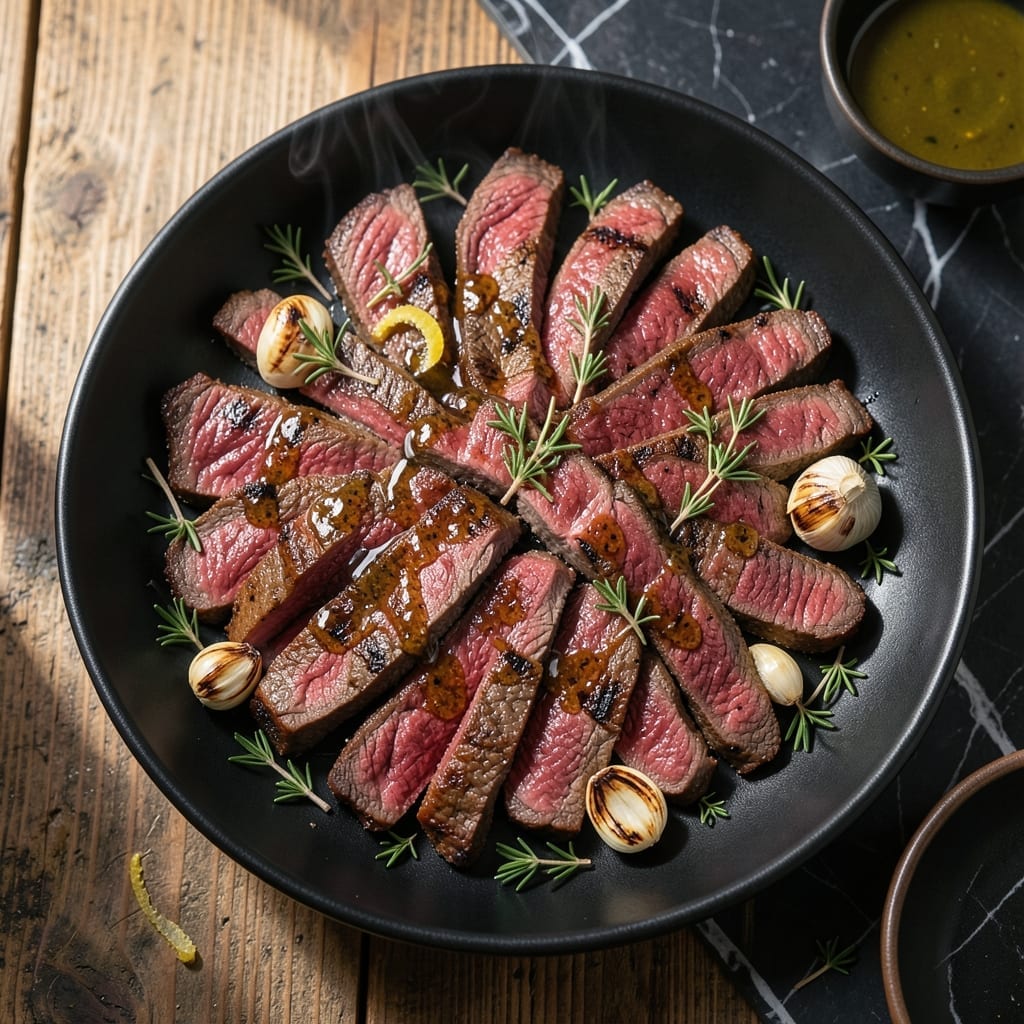
This French bistro classic delivers bold beef flavor with a tender, open-grained texture that soaks up marinades beautifully. Bavette steak, often called the butcher’s secret, offers impressive results without the premium price tag.
With high heat and proper timing, you’ll achieve charred edges and a perfect medium-rare center. The key is a hot grill, dry surface, and knowing exactly when to pull it off.
Ingredients for Bavette Steak Grill
Simple, bold ingredients for a French bistro classic at home.
| Ingredient | Amount | Notes |
|---|---|---|
| Bavette Steak 🥩 | 2 lb | About 1 inch thick |
| Kosher Salt 🧂 | 2 tsp | Divided for seasoning |
| Black Pepper 🌶️ | 1 tsp | Freshly ground preferred |
| Garlic Cloves 🧄 | 4 cloves | Smashed for marinade |
| Fresh Thyme Sprigs 🌿 | 4 pieces | Optional for aroma |
| Olive Oil 🫒 | ¼ cup | For brushing steak |
| Unsalted Butter 🧈 | 2 tbsp | For basting on grill |
| Red Wine Vinegar 💧 | 1 tbsp | For brightness in marinade |
| Dijon Mustard 🟡 | 1 tbsp | Optional for marinade depth |
| Shallot 🧅 | 1 whole | Minced for marinade |
| Vegetable Oil 🫒 | 1 tbsp | High smoke point for grill |
| Fresh Parsley 🌿 | ¼ cup | Chopped for garnish |
[recipe_ingredient_scaler]
The bavette steak is non-negotiable here—it’s the star. Ask your butcher for it by name (sometimes labeled as flank steak’s cousin). Look for good marbling and a deep red color. Whole Foods or a local butcher shop will have the best selection. I usually grab mine from Costco when they have it in stock. Thickness matters: aim for 1 to 1.25 inches for even cooking.
No bavette? Flank steak or skirt steak work in a pinch, but they’re leaner and can get tough if overcooked. Fresh thyme can be swapped for rosemary—same quantity. Out of red wine vinegar? Apple cider vinegar at the same amount does the trick. The shallot adds a subtle sweetness, but a small red onion works too if that’s what you’ve got.
Pat the steak dry before grilling—this gets you those charred edges mentioned in the intro. Leftovers? Slice thin against the grain and toss into salads or tacos. Keeps in the fridge for 3-4 days, but honestly, it’s best eaten fresh off the grill.
Why You’ll Love This Recipe
- Five-Ingredient Magic: I throw salt, pepper, garlic, and thyme on the bavette, grill it, and dinner’s done—no grocery list to stress over.
- Crispy Edges, Juicy Inside: The high-heat sear locks in the beefy richness, and that garlic-thyme crust? Ridiculously good.
- Weeknight Rescue: It’s my go-to when I’ve got 20 minutes and hungry kids circling the kitchen.
- Budget Steak Win: Bavette costs less than ribeye but tastes just as impressive—honestly, my wallet thanks me every time.
Step-by-Step Instructions for Bavette Steak on the Grill
Here’s your path to perfectly charred, French bistro-style steak with minimal effort.
Step 1: Create the Flavorful Marinade
In a bowl, whisk together the 0.25 cup Olive Oil, 1 tbsp Red Wine Vinegar, 1 tbsp Dijon Mustard, minced 1 whole Shallot, and 4 cloves Garlic Cloves (smashed). This combination delivers that classic French bistro brightness.
Add the 2 lb Bavette Steak to the marinade, turning to coat all sides. I always use a resealable bag for this step—it ensures every inch gets covered. Let it marinate at room temperature for 30 minutes while you prep the grill.
Step 2: Prep and Preheat the Grill
Clean your grill grates thoroughly, then oil them lightly with the 1 tbsp Vegetable Oil using a paper towel. This prevents sticking and creates beautiful grill marks. Heat your grill to high heat (about 450-500°F).
Remove the bavette steak from the marinade and pat it dry with paper towels. This step is crucial—excess moisture creates steam instead of sear. Season both sides generously with 2 tsp Kosher Salt and 1 tsp Black Pepper, pressing the seasoning into the meat.
Step 3: Grill to Medium-Rare Perfection
Place the bavette steak on the hot grill. For a 1-inch thick cut, sear for 4-5 minutes per side for medium-rare. I add the 4 pieces Fresh Thyme Sprigs directly to the coals during the last 2 minutes for a subtle aromatic touch.
About 1 minute before flipping, add the 2 tbsp Unsalted Butter to the steak and let it melt, basting the meat with the buttery juices. Watch for the edges to develop a dark crust—that’s your signal for perfect doneness.
Step 4: Rest and Serve with Fresh Garnish
Transfer the steak to a cutting board and let it rest for 10 minutes. This allows the juices to redistribute. Slice thinly against the grain—the bavette’s long fibers benefit from this technique.
Garnish with the 0.25 cup Fresh Parsley (chopped) before serving. The parsley adds freshness that cuts through the richness. Serve immediately while the edges are still crispy and the center is perfectly pink.
Pro Tips For Making Bavette Steak Grill
- Score the Fat: Bavette has a thick fat cap—make shallow cuts every inch to prevent curling on the grill. I learned this the hard way after watching my first attempt shrink into a sad little spiral.
- Salt Generously Early: Hit the steak with kosher salt at least 40 minutes before grilling. Sounds like overkill, but it draws out moisture then reabsorbs it, seasoning deep into the meat.
- High Heat Only: Bavette needs a screaming hot grill to get that crust without overcooking. If your flames aren’t roaring, wait—this cut turns tough fast when it’s just warm.
- Rest With Herbs: Toss the seared steak on a plate with crushed garlic and thyme sprigs, then tent with foil for 5-10 minutes. The steam infuses extra flavor while it rests—no extra effort, just better taste.
Regional Styles of bavette steak grill
French Bistro Style
In Paris, they grill bavette over wood fire for that signature smoky kiss. I learned this technique during my French training—use cherry or oak wood for authentic flavor. The steak is often served with shallot butter and a side of crispy fries. 🗺️
Argentinian Asado
Down in Argentina, they cook bavette over open flame on a parrilla. The key is a two-zone fire: sear over direct heat, then finish over indirect. I add chimichurri made with fresh parsley and oregano from my foraging spots.
Texas Smokehouse
Lone Star pitmasters give bavette a postoak smoke treatment. I’ve adapted this by adding 1-2 wood chunks to my grill. The result? Deep smoke flavor that pairs perfectly with a cold beer. The edges get an extra crust from the longer cook time.
Korean BBQ
For a Korean twist, marinate the steak in soy sauce, brown sugar, and sesame oil for 2 hours. Grill over high heat and serve with ssamjang and lettuce wraps. I picked up this method from a BBQ competition in Austin.
Coastal California
West Coast style means grilling over charcoal with a red wine reduction glaze. I use local Cabernet Sauvignon and reduce it by half before brushing on. The acidity cuts through the richness beautifully. 🌊
Nutrition Facts
Frequently Asked Questions
What’s the best way to slice bavette?
Always slice against the grain into thin strips. This shortens the muscle fibers for maximum tenderness. Use a sharp knife and cut at a slight angle for wider slices.
Can I cook it without a marinade?
Just pat it dry, season generously with salt and pepper, and brush with oil. The marinade adds flavor, but the steak’s natural richness shines through with simple seasoning.
How can I tell when it’s done?
Use a meat thermometer for accuracy: 130-135°F for medium-rare. Without one, press the center—it should feel like the base of your thumb when relaxed. Let it rest 10 minutes before serving.
Why does my steak get tough?
Overcooking or slicing with the grain causes chewiness. Bavette cooks fast—stick to the 4-5 minutes per side timing. Always slice across the grain for the most tender results.

Trained in classic French technique but raised on slow-cooked ribs and spicy rubs, she blends culinary skill with smoke and soul.
- Recipe for Boneless Pork Chops in Cast Iron Skillet: Sear and Baste to Juicy Perfection - October 3, 2026
- Recipe for Boneless Cross Rib Roast: Slow-Roasted Beef with Herb Crust - October 3, 2026
- Hamburgers in Sauce Recipe Crock Pot: Slow-Cooked Savory Delight - October 3, 2026