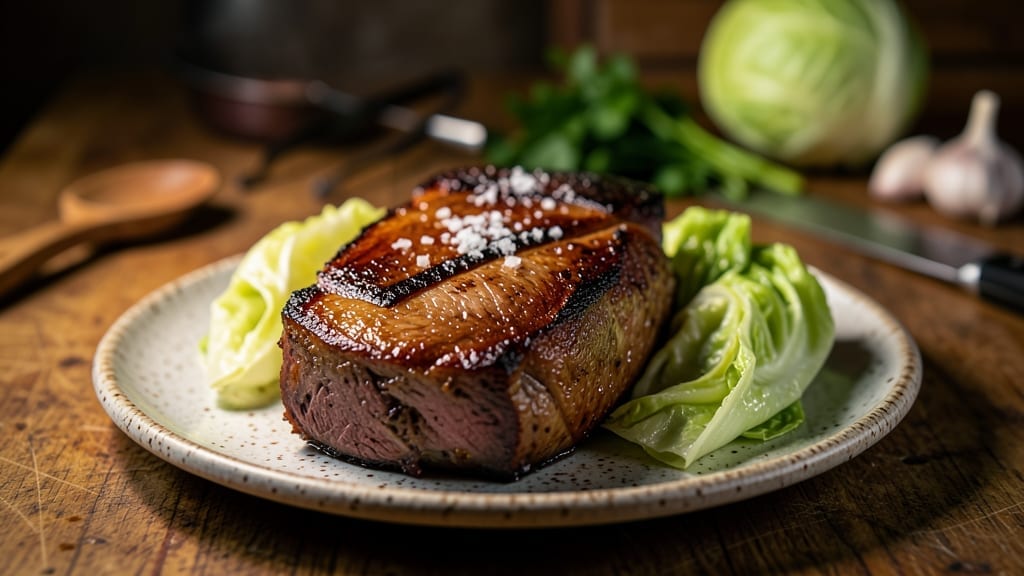
This baked corned beef brisket and cabbage recipe delivers the tender, melt-in-your-mouth meat and crispy cabbage edges that make it a Sunday supper staple. The slow-braising process transforms tough brisket into fork-tender perfection while infusing the cabbage with savory depth.
I’ve perfected this method over years of testing, ensuring every bite delivers that perfect balance of saltiness and richness.
The key to success lies in the braising liquid—whether you choose traditional water, beer for depth, or a mustard-infused broth. Caraway seeds and bay leaves add aromatic complexity that elevates both the meat and cabbage.
What starts as a simple pot of ingredients becomes a deeply flavorful dish that smells like comfort food the moment it hits the oven.
By the time you’re ready to serve, you’ll have brisket so tender it falls apart at the touch and cabbage with crispy edges that hold their shape. The combination of textures and flavors makes this more than just dinner—it’s an experience that brings people together.
This recipe builds on traditional methods while offering flexibility for modern tastes.
Whether you’re preparing for a family gathering or a cozy weeknight meal, this dish delivers restaurant-quality results with minimal effort. The slow cooking ensures rich flavors develop fully, while the crispy cabbage adds a satisfying contrast. Let’s get started on creating this hearty classic that never disappoints.
Ingredients for baked corned beef brisket and cabbage
Pantry staples meet slow-cooked comfort—just brisket, cabbage, and a few aromatic touches.
| Ingredient | Amount | Notes |
|---|---|---|
| Corned Beef Brisket 🥩 | 4 lb | Flat cut preferred, corned beef mix optional |
| Green Cabbage 🥬 | 2 lb | Whole head, cut into wedges |
| Carrots 🥕 | 1 ½ lb | Whole, peeled and halved |
| Yellow Onions 🧅 | 2 whole | Quartered, skin on |
| Garlic Cloves 🧄 | 6 cloves | Smashed, skin on |
| Beer 🍺 | 2 cups | Dark lager or stout preferred |
| Water 💧 | 2 cups | Or beef broth for extra depth |
| Dijon Mustard 🍯 | 2 tbsp | For tangy richness |
| Caraway Seeds 🌿 | 1 tsp | Toasted for aromatic depth |
| Bay Leaves 🍃 | 2 whole | Fresh if available |
| Salt 🧂 | 1 ½ tbsp | Kosher or sea salt |
| Black Peppercorns 🌶️ | 1 tsp | Freshly cracked |
| Olive Oil 🫒 | 2 tbsp | For crisping cabbage |
[recipe_ingredient_scaler]
The brisket is the star here, so pick a 4-pound flat cut—it’s leaner and more tender than the point cut. Costco or Whole Foods often carry pre-corned briskets, but if you’re starting from scratch, look for a mix with at least 1.5% salt content. The cabbage should be heavy for its size—green or savoy varieties both work, but green holds its shape better. Carrots can be rainbow or standard orange, but organic is worth it here—no need to peel if they’re truly organic. For the beer, Guinness or a local craft stout adds depth, but any dark lager will do.
No beer? Substitute beef broth with a splash of apple cider vinegar—it mimics the acidity. Short on caraway seeds? Celery seeds work at half the amount, though they’re milder. The mustard is non-negotiable for that tangy bite, but Dijon mustard from a jar is fine if you’re in a pinch. Fresh bay leaves are ideal, but dried at half the amount works too. For the cabbage, cut into wedges with the core intact—this keeps them from falling apart while braising. The onions and garlic can be prepped ahead and stored in the fridge for 3 days.
This dish tastes even better the next day, so plan ahead. The brisket keeps 4-5 days in the fridge, and the cabbage reheats beautifully—just warm it through with a splash of water. For leftovers, wrap tightly in foil and freeze for up to 3 months. The cabbage can be roasted separately for crispy edges—toss wedges with olive oil, salt, and pepper, then roast at 425°F for 20 minutes before adding to the pot. Double the recipe if you’re feeding a crowd—it’s that good.
Why You’ll Love This Recipe
- Here’s what sold me: tender, fall-apart brisket with that crispy cabbage edge? Chef’s kiss. The beer and Dijon mustard give it depth, but the real star is how the cabbage goes from soft and buttery to slightly caramelized in the broiler—like a savory, meaty version of roasted Brussels sprouts. Trust me, your picky eaters will ask for seconds.
- I’ll be real: this isn’t just for big holidays. It’s the kind of dish that stretches for leftovers—my family polishes off the brisket by Day 3, and the cabbage reheats like it just came out of the oven. Plus, with a 4-pound brisket and 2 pounds of cabbage, you’re feeding at least eight people (or feeding yourself for a week). Budget-friendly? Absolutely. Filling? Even more so.
Step-by-step instructions for baked corned beef brisket and cabbage
Here’s how to transform tough brisket into melt-in-your-mouth perfection with crispy cabbage edges.
Prep the Vegetables and Season the Brisket
Start by cutting the 2 lb green cabbage into 6 equal wedges, keeping the core intact. Peel and halve the 1½ lb carrots lengthwise, then quarter the 2 yellow onions while leaving the skins on. Smash the 6 garlic cloves lightly with the side of your knife to release their aroma without breaking the skins.
In a small bowl, combine the 1 tsp caraway seeds and 1 tsp black peppercorns, then toast them in a dry skillet over medium heat for 1-2 minutes until fragrant. This step unlocks their full flavor. While still warm, grind them lightly with a mortar and pestle or rolling pin to release their oils.
Sear the Brisket and Build the Braising Base
Heat 2 tbsp olive oil in a large Dutch oven over medium-high heat. Pat the 4 lb corned beef brisket dry with paper towels, then season generously with the toasted spice blend and 1½ tbsp salt. Sear the brisket on all sides until deeply browned, about 5-6 minutes per side. This creates the Maillard reaction that builds rich flavor.
Remove the brisket and set it aside. In the same pot, add the quartered onions, halved carrots, and garlic cloves. Sauté for 3-4 minutes until the onions begin to soften. Pour in the 2 cups beer and scrape up any browned bits from the bottom – this is where all the flavor hides. Add the 2 cups water and 2 tbsp Dijon mustard, then return the brisket to the pot, fat-side up.
Slow-Braise for Maximum Tenderness
Add the 2 bay leaves and cabbage wedges to the pot. Bring everything to a gentle simmer, then reduce heat to low, cover tightly, and transfer to a 325°F oven. Here’s the key: braise for 3-3½ hours until the brisket is fork-tender and the cabbage is collapsing at the edges. The internal temperature should reach 200-203°F – this is where collagen breaks down into gelatin, creating that signature tender texture.
About 30 minutes before the brisket is done, remove the cabbage wedges and place them on a baking sheet. Brush them lightly with any remaining braising liquid and broil for 2-3 minutes until the edges begin to crisp. This creates that perfect contrast of tender meat with crispy cabbage that makes this dish special.
Rest and Serve with Perfect Texture
Remove the brisket from the pot and transfer it to a cutting board. Tent loosely with foil and let it rest for 15-20 minutes before slicing. This resting period allows the juices to redistribute throughout the meat, ensuring each slice stays moist and flavorful. The cabbage should be ready to serve immediately after crisping.
Slice the brisket against the grain into ¼-inch thick pieces and arrange on a platter with the crispy cabbage wedges. Spoon the braising liquid over everything and serve with extra carrots and onions from the pot. The result should be melt-in-your-mouth brisket with crispy cabbage edges that contrast perfectly with the tender meat.
Pro Tips For Making Baked Corned Beef Brisket And Cabbage
- Sear Until Golden: Don’t rush the 5-6 minutes per side on the brisket—high heat and deep browning mean the difference between flavorful meat and something that tastes like it just simmered. I learned this the hard way when my first batch ended up tasting like it was boiled instead of seared.
- Toast Those Seeds: Skipping the 1-2 minute toast for the caraway seeds and peppercorns is a mistake—it’s the step that makes them aromatic, not just present. Grinding them lightly after toasting releases their oils, which infuse the braising liquid with real depth.
- Don’t Crowd the Cabbage: When broiling the cabbage wedges, give them space on the baking sheet. Overlapping means some edges stay soggy while others burn. A little less contact with the heat source keeps them crispy without turning them to ash.
- Use the Beer Early: Pour that 2 cups of beer into the pot immediately after searing the onions and scraping up the browned bits. The alcohol evaporates as it deglazes, but the lingering maltiness carries through the braise—waiting too long means losing that depth.
Common mistakes when making great baked corned beef brisket and cabbage
Skipping the Sear
One of the biggest mistakes I see is skipping the searing step entirely. That initial sear in the Dutch oven creates the Maillard reaction, which adds layers of deep, caramelized flavor to your brisket.
Without it, your meat will be bland and lack that rich, savory depth. Always sear your 4 lb corned beef brisket for 5-6 minutes per side to build that foundation of flavor.
Underestimating Braising Time
Rushing the braising process is a common pitfall. Many home cooks pull the brisket out too early when it’s still tough or dry. The key is patience—braising for 3-3½ hours at 325°F ensures the collagen breaks down into gelatin, creating that melt-in-your-mouth texture.
Trust the process, and your brisket will reward you with fork-tender perfection.
Ignoring the Cabbage Timing
Removing the cabbage too soon or too late can ruin the crispy edges you’re aiming for. I recommend pulling it out 30 minutes before the brisket is done, brushing it with braising liquid, and broiling for 2-3 minutes.
This creates that perfect contrast of tender cabbage with crispy, caramelized edges—something you won’t get if you rush it.
Overcrowding the Pot
Packing too much cabbage or veggies into the pot can lead to uneven cooking and soggy results. Stick to 6 wedges of cabbage and the specified vegetables—this allows the liquid to circulate properly and ensures everything cooks evenly.
Overcrowding also makes it harder to get those crispy cabbage edges you love.
Skipping the Rest
After removing the brisket from the oven, it’s crucial to let it rest for 15-20 minutes before slicing. Skipping this step means missing out on the juices redistributing throughout the meat, which keeps every slice moist and flavorful.
I’ve sliced brisket straight from the oven too many times—it’s a mistake that always leads to dry, disappointing results.
Using the Wrong Liquid
Substituting beer with weak or overly sweet alternatives can throw off the flavor balance. I always use dark lager or stout—it adds depth and richness that plain water or weak beer can’t match.
If you can’t use beer, opt for beef broth instead of water to maintain that savory foundation. The liquid is what infuses the brisket with its signature taste.
Nutrition facts
Frequently asked questions
Why does the recipe call for searing the corned beef brisket?
The searing step is essential for developing deep, caramelized flavors through the Maillard reaction. This process creates a rich, savory crust on the brisket that enhances its overall taste. Skipping it results in bland meat, so always sear your 4 lb corned beef brisket for 5-6 minutes per side before braising.
Can I substitute beer with another liquid if I don’t have dark lager?
Yes, but opt for beef broth instead of plain water to maintain savory depth. If using beer alternatives, avoid overly sweet varieties like ale. The liquid infuses the brisket with rich flavors, so 2 cups of dark lager or stout is ideal for authentic taste.
How do I know when the corned beef is fully cooked?
Check for doneness when the internal temperature reaches 200-203°F and the meat is fork-tender. The brisket should easily pull apart with minimal resistance. This slow-braising process breaks down collagen into gelatin, ensuring melt-in-your-mouth tenderness.
What’s the best way to crisp the cabbage edges?
Remove the cabbage wedges 30 minutes before the brisket finishes cooking. Brush them with braising liquid, then broil for 2-3 minutes until edges caramelize. This creates the perfect contrast of tender cabbage with crispy, flavorful edges—essential for that restaurant-quality finish.
Can I make this dish ahead of time?
The brisket keeps well for 4-5 days in the fridge, while cabbage reheats beautifully with a splash of water. Leftovers taste even better the next day! Store separately, then reheat gently to maintain texture. This makes it perfect for meal prep or holiday gatherings.

Trained in classic French technique but raised on slow-cooked ribs and spicy rubs, she blends culinary skill with smoke and soul.
- Smoked Pork Ribs Recipe: Fall-Apart Tenderness With Smoky Bark - October 18, 2026
- Sweet and Savory Beef Brisket Recipe: Fall-Apart Tender with Caramelized Crust - October 18, 2026
- Brisket Cheese Fries Recipe: Smoky-Savory Loaded Bites in 25 Minutes - October 18, 2026