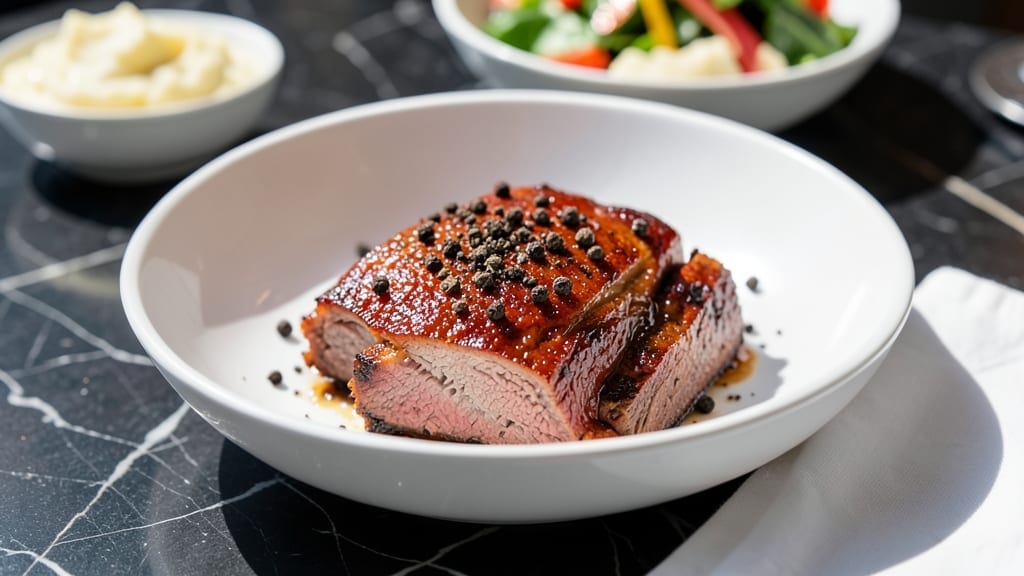
Sweet and savory beef brisket transforms tough cuts into melt-in-your-mouth perfection through a carefully balanced marinade and slow-cooking process. The secret lies in combining rich, caramelized flavors with tender, fall-apart texture—something that elevates this dish from ordinary to extraordinary. With just a few key ingredients and patience, you’ll achieve restaurant-quality results that impress even the most discerning guests.
This method begins with a 3-day dry brine, which ensures deep flavor penetration and unmatched tenderness. The brisket then slow-cooks until it reaches 203°F internal temperature, where the connective tissue breaks down into silky richness.
A honey-brown sugar glaze adds the perfect sweetness, caramelizing into a glossy crust that seals in all those juices.
What you’ll end up with is a brisket so tender it practically falls apart at the touch, with a caramelized exterior that’s irresistibly sticky. The balance of sweet and savory flavors—thanks to garlic, Worcestershire, and a touch of molasses—creates a depth that’s hard to resist.
Serve it sliced thick over creamy mashed potatoes or alongside buttery cornbread for the ultimate comfort meal.
Perfect for holiday gatherings or a special weekend dinner, this brisket delivers foolproof results with minimal effort after the initial prep. The slow-cooking process means you can focus on other dishes while the brisket does all the work. Let’s get started on creating your most tender, flavorful brisket yet.
Ingredients for sweet and savory beef brisket
Sweet caramelized crust meets fall-apart tenderness—this brisket recipe delivers restaurant-quality results with minimal effort.
| Ingredient | Amount | Notes |
|---|---|---|
| Beef Brisket (whole packer cut) 🥩 | 8 lb | Fat cap trimmed to 1/4 inch |
| Kosher Salt 🧂 | 3 tbsp | Diamond Crystal preferred |
| Black Pepper (freshly ground) 🌶️ | 2 tbsp | Coarsely ground for texture |
| Brown Sugar (light or dark) 🍚 | 1 cup | Packed for density |
| Garlic Cloves 🧄 | 8 cloves | Roasted for depth |
| Worcestershire Sauce 🍶 | ½ cup | High-quality brand like Lea & Perrins |
| Molasses (unsulphured) 🍯 | ¼ cup | Pure, not cooked |
| Olive Oil (extra-virgin) 🫒 | ¼ cup | For searing and basting |
| Onion (yellow, whole) 🧅 | 2 whole | Sliced thick for caramelization |
| Apple Cider Vinegar 🍎 | ¼ cup | For tenderizing |
| Butter (unsalted) 🧈 | ½ lb | For basting and glaze |
| Fresh Rosemary 🌿 | ¼ cup | Stems removed, chopped |
| Fresh Thyme 🍃 | ¼ cup | Leaves only, chopped |
[recipe_ingredient_scaler]
The brisket is your star—look for packer cut with good marbling at Costco or a trusted butcher. Trim that fat cap to 1/4 inch for even cooking, but leave enough to render for flavor. Diamond Crystal kosher salt dissolves better than table salt for that perfect crust. I always buy my Worcestershire from the refrigerated section—it’s thicker and richer than the shelf-stable stuff. The molasses should be pure, unsulphured—McCormick or Anthony’s are solid choices. Don’t skip the garlic roasting—it’s what gives the marinade that deep, aromatic base.
No apple cider vinegar? White wine vinegar at half the amount works in a pinch, but it’s sharper—balance it with an extra tablespoon of brown sugar. Fresh herbs are ideal, but dried rosemary and thyme at one-third the amount will still give you great flavor. Short on time? Pre-trimmed brisket from Whole Foods saves hours, but you’ll pay for it. The butter for basting should be unsalted—you’re controlling the saltiness here. And if you can’t find unsulphured molasses, regular molasses plus a pinch of baking soda mimics the flavor profile.
This brisket needs that 3-day dry brine—don’t skip it. Store it uncovered in the fridge, flipping halfway through. The glaze keeps beautifully for 5 days in the fridge, but the brisket itself is best eaten within 4 days of cooking. For leftovers, slice against the grain and freeze portions in airtight containers. Reheat in a low oven at 250°F with a splash of broth to restore tenderness. The caramelized onions can be made ahead and stored in olive oil for up to 2 weeks—just reheat before using.
Why You’ll Love This Recipe
- 24-Hour Prep Pays Off: Honestly, the 24-hour dry-brine with that mix of brown sugar, Worcestershire, and molasses is the secret sauce here. I promise you’ll forget about it until you pull it out—then the aroma? Game-changer. No last-minute stress, just pure flavor development while you sleep.
- Crispy Outside, Creamy Inside: That caramelized crust from the sear and basting with rosemary-butter? Chef’s kiss. But the real magic’s in the fall-apart tenderness—thanks to the apple cider vinegar and slow cook at 275°F. One bite and you’ll understand why people fight over brisket at tailgates.
- Leftovers That Shine: Between us, this brisket is that dish. Sandwiches for lunch, tacos for dinner, or just reheated with a drizzle of that leftover glaze. The caramelized onions keep for weeks, so you’re never stuck with dry meat. My kids even ask for seconds—proof it’s worth the effort.
- Budget-Friendly Feast: An 8-pound brisket feeds a crowd without breaking the bank, especially when you’re using pantry staples like brown sugar and Worcestershire. Plus, that 24-hour prep? You’re already saving time by not having to babysit it. Solid return on investment.
Step-by-step instructions for sweet and savory beef brisket
This method transforms tough brisket into melt-in-your-mouth perfection with a caramelized crust you’ll want to lick off your fingers.
Prepare the Brisket for Maximum Flavor
Begin by trimming the fat cap of the 8 lb beef brisket down to ¼-inch thickness using a sharp boning knife. Leave the fat on the edges for moisture during cooking. In a small bowl, combine the 3 tbsp kosher salt, 2 tbsp black pepper, 1 cup brown sugar, 8 minced garlic cloves, ½ cup Worcestershire sauce, ¼ cup molasses, and ¼ cup apple cider vinegar to create the rub. The molasses and vinegar work together to tenderize while adding depth.
Generously coat the brisket with this mixture, pressing it into every crevice. Place the seasoned brisket on a wire rack set over a baking sheet, fat-side up. Refrigerate uncovered for 24 hours. This dry-brining process ensures deep flavor penetration and that coveted caramelized crust. Don’t skip this step—it’s what makes the difference between good and extraordinary.
Sear and Caramelize the Brisket
Preheat your oven to 275°F. Remove the brisket from the fridge and let it sit at room temperature for 1 hour. Heat a Dutch oven over medium-high heat and add ¼ cup olive oil. Once shimmering, carefully place the brisket fat-side down in the pot. Sear undisturbed for 8-10 minutes until the fat renders and the bottom develops a deep mahogany crust. Flip and sear the other side for another 8-10 minutes.
Remove the brisket and place it on a cutting board. Add the 2 sliced yellow onions to the Dutch oven and cook for 10 minutes until caramelized. This step builds layers of flavor that will infuse into your brisket during the long cook. The onions should be golden brown with sweet, jammy edges—this is your signal they’re ready.
Low and Slow Cooking with Basting
Return the brisket to the Dutch oven with the caramelized onions. Pour in 1 cup water to create steam and prevent drying. Cover tightly with the lid and transfer to the preheated oven. Cook for 6 hours, then check the internal temperature. You’re aiming for 195-203°F in the thickest part—this is when the collagen breaks down into gelatin, creating that legendary fall-apart tenderness.
Every 90 minutes, remove the brisket and baste it with melted butter (from the ½ lb unsalted butter) mixed with ¼ cup chopped fresh rosemary and ¼ cup chopped fresh thyme. This basting creates a glossy, caramelized crust while infusing the meat with herbal aromatics. The butter should be melted but not hot—you want to glaze, not scorch. Return the brisket to the oven after each basting.
Rest and Slice for Maximum Juiciness
Once the brisket reaches the target temperature, remove it from the oven and transfer to a cutting board. Tent loosely with foil and let it rest for 30 minutes. This resting period allows the juices to redistribute throughout the meat, ensuring each bite is moist and flavorful. Don’t skip this crucial step—cutting into the brisket too soon will cause all those precious juices to run out onto your board instead of staying in the meat.
Slice the brisket against the grain into ½-inch thick slices. Each slice should pull apart with minimal resistance, revealing that beautiful pink smoke ring just beneath the caramelized crust. The combination of sweet brown sugar, savory Worcestershire, and herbal aromatics creates a symphony of flavors in every bite. Serve immediately with the caramelized onions from the Dutch oven for a complete experience.
Pro Tips For Making Sweet And Savory Beef Brisket
- Roast Garlic First: I used to skip roasting the garlic cloves, thinking mincing would be enough—until I tasted the difference. Wrap the 8 cloves in foil with a drizzle of olive oil, roast at 400°F for 15 minutes, then mash them into the rub. That caramelized depth turns a good brisket into an unforgettable one.
- Don’t Rush the Sear: Medium-high heat isn’t fast enough for that mahogany crust. Crank your Dutch oven to high and let the fat sizzle aggressively for those 8-10 minutes—no peeking or moving the brisket. If the oil smokes wildly, it’s working. A rushed sear means flavor stuck in the pan, not the meat.
- Pack That Sugar: Light or dark brown sugar? Doesn’t matter—what matters is packing it tightly into the rub. Use a spoon to press it into every crevice of the brisket, especially the flat. Loose sugar burns and clumps; packed sugar caramelizes into a sticky, flavor-packed crust that clings like a second skin.
- Baste with Warm Butter: Cold butter pools on the brisket; hot butter burns. Melt the ½ lb butter just until it turns liquid, then stir in the rosemary and thyme. Brush it on when it’s warm enough to coat a spoon but cool enough to glaze—not drip. The herbs release their oils best at this temperature, and the butter won’t scorch into smoke.
Regional styles of this sweet and savory beef brisket
Texas-Style Smoked Brisket
The Texas method turns this brisket into a smoky, sweet-savory masterpiece. I start with a 3-day dry brine using 1 cup brown sugar and ½ cup Worcestershire sauce—the sugar caramelizes beautifully over the smoker.
After searing, I wrap it in butcher paper during the final hours to create that signature Texas crust. The result? A brisket so tender it practically falls apart with just a touch. 🔥
Appalachian Wood-Fired Brisket
In the Appalachian mountains, they slow-cook brisket over hardwood fire for hours, relying on the natural smoke for flavor. I use ½ cup apple cider vinegar and ¼ cup molasses in the rub to tenderize, then baste with melted butter mixed with fresh rosemary and thyme every 90 minutes.
The wood smoke adds a deep, earthy note that balances the sweetness perfectly.
Kansas City BBQ Style
Kansas City takes sweet and savory to another level with a honey-brown sugar glaze brushed on during the last 30 minutes of cooking. I mix ¼ cup molasses with ½ cup brown sugar and a splash of apple cider vinegar for a sticky, caramelized finish.
The brisket cooks low and slow in a smoker until it hits 203°F internal temperature, then rests for 2 hours before slicing.
Southern Carolina Brisket
Down South, they keep it simple but bold—using coarsely ground black pepper and roasted garlic cloves in the rub for a peppery kick. After searing, they wrap the brisket in foil with sliced onions and butter for the final 2 hours of cooking.
The result is a brisket with a smoky, peppery crust that’s irresistibly sticky. This style is all about bold flavors and minimal fuss.
German-Inspired Brisket
For a twist, I borrow from German traditions by adding ½ cup unsulphured molasses and ¼ cup apple cider vinegar to tenderize, then searing over an open flame for extra char. The brisket cooks in a Dutch oven at 275°F for 6 hours, basted with melted butter and herbs.
The German influence shines in the deep, caramelized crust and rich, savory-sweet flavor profile—perfect for those who love a touch of European flair.
Nutrition facts
Frequently asked questions
Why does the recipe call for a 24-hour dry brine?
The 24-hour dry brine is critical for developing deep flavor and that perfect caramelized crust. This long resting period allows the kosher salt, brown sugar, and Worcestershire sauce to penetrate the meat, breaking down fibers and enhancing tenderness. Skipping this step means you’ll miss out on the rich, sticky texture that makes this brisket legendary.
Can I substitute dried herbs for fresh rosemary and thyme?
Yes, but use one-third the amount of dried herbs compared to fresh. For example, replace ¼ cup fresh rosemary with 1 tablespoon dried. Dried herbs are more concentrated, so reduce accordingly. The flavor will still be delicious, though slightly more muted.
What if my brisket isn’t tender enough after 6 hours?
If the internal temperature hasn’t reached 195–203°F, continue cooking for another 1–2 hours, checking every 30 minutes. The key is patience—brisket needs that low-and-slow process to break down collagen. Overcooking can dry it out, so use a meat thermometer to avoid going past the target.
How do I store leftovers without drying them out?
Slice the brisket against the grain and store portions in airtight containers within 4 days. Reheat in a low oven at 250°F with a splash of beef broth to restore moisture. Avoid microwaving directly—it can make the meat tough. The caramelized onions keep well in olive oil for up to 2 weeks if stored properly.

Trained in classic French technique but raised on slow-cooked ribs and spicy rubs, she blends culinary skill with smoke and soul.
- Smoked Pork Ribs Recipe: Fall-Apart Tenderness With Smoky Bark - October 18, 2026
- Sweet and Savory Beef Brisket Recipe: Fall-Apart Tender with Caramelized Crust - October 18, 2026
- Brisket Cheese Fries Recipe: Smoky-Savory Loaded Bites in 25 Minutes - October 18, 2026