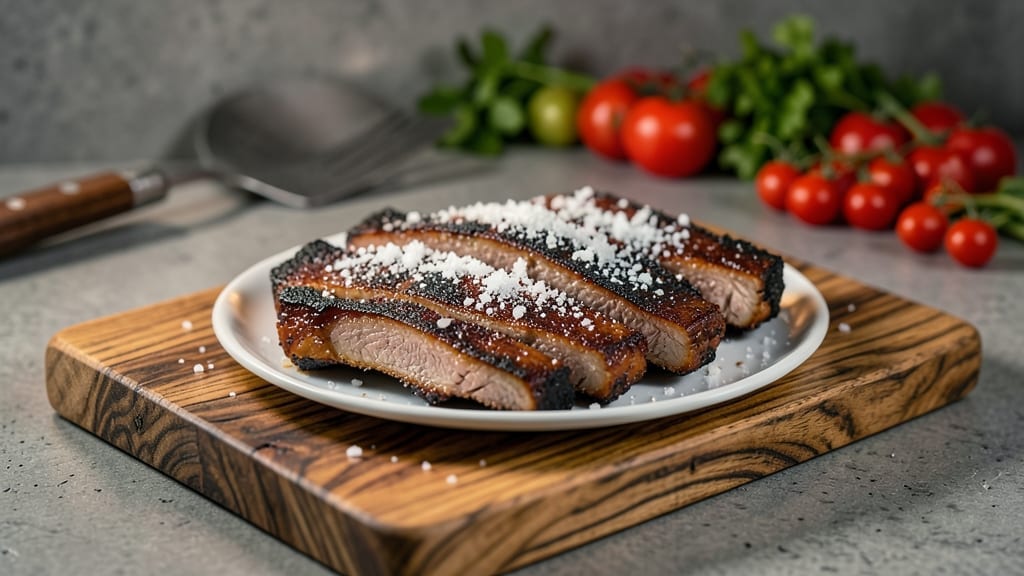
Mastering smoked pork ribs with fall-apart tenderness and a perfect smoky bark transforms a simple meal into an unforgettable experience. This recipe delivers restaurant-quality results using precise techniques I’ve refined over years of smoking competitions and family gatherings.
The key lies in proper preparation—brining for moisture retention and a well-balanced dry rub that creates that coveted bark.
What sets this recipe apart is the slow-and-low approach, where ribs smoke at a steady 225°F for hours until they reach an internal temperature of 195°F.
Using hickory wood adds that classic smoky depth, while wrapping in butcher paper during the last hour locks in moisture without overpowering the flavor. The result? Ribs so tender they pull apart with minimal effort, coated in a glossy, caramelized crust.
By the time you’re done, you’ll have ribs that taste like they came from a pitmaster’s competition table—juicy, flavorful, and packed with that irresistible smoky aroma. Serve them on toasted buns with tangy coleslaw or classic mac and cheese for a meal that brings everyone to the table.
This method ensures consistent results, whether you’re feeding a crowd or treating yourself to a weekend project.
For those new to smoking, don’t let the process intimidate you—this recipe breaks down each step with clear timing and temperature guidelines. The payoff? Ribs that are worth every minute of patience, delivering a flavor experience that’s hard to match.
Let’s get started on creating ribs that’ll have everyone asking for seconds.
Ingredients for smoked pork rib’s
Pantry staples meet competition-level technique for ribs that pull apart with a whisper of smoke.
| Ingredient | Amount | Notes |
|---|---|---|
| Pork Baby Back Ribs 🥓 | 4 lb | Bone-in, meaty sections preferred |
| Kosher Salt 🧂 | 1 ½ cups | For brining, coarse grain preferred |
| Brown Sugar 🍚 | ½ cup | Light or dark, packed tightly |
| Smoked Paprika 🌶️ | ¼ cup | High quality for bark development |
| Chili Powder 🌶️ | 2 tbsp | Medium heat preferred |
| Ground Black Pepper 🌶️ | 1 tbsp | Freshly ground for best flavor |
| Garlic Powder 🧄 | 1 tbsp | Not garlic salt |
| Onion Powder 🧅 | 1 tbsp | For depth of flavor |
| Mustard Powder 🍯 | 1 tsp | Adds subtle tanginess |
| Hickory Wood Chips 🌳 | 2 packages | Unsoaked, for classic smoke flavor |
| Butcher Paper 📄 | 1 sheet | For moisture retention |
| Yellow Mustard 🍯 | ½ cup | For bark enhancement |
| Apple Cider Vinegar 🍎 | ¼ cup | For brining acidity |
| Water 💧 | 4 cups | For brining solution |
[recipe_ingredient_scaler]
The ribs themselves are non-negotiable—baby back delivers the best meat-to-bone ratio, and Costco or Whole Foods carry high-quality cuts. Look for vibrant color and good marbling; the meat should feel firm but yield slightly when pressed. For the dry rub, Penzeys or McCormick smoked paprika adds that authentic bark, while Diamond Crystal kosher salt ensures proper brining. Hickory wood chips from Traeger or Pit Boss deliver consistent smoke flavor, and butcher paper from Amazon is a game-changer for moisture retention during the wrap.
No smoked paprika? Regular paprika plus a pinch of liquid smoke works in a pinch, though the bark won’t be as developed. Substitute apple cider vinegar with white vinegar or lemon juice, but reduce to 1/4 cup—too much acidity can toughen the meat. For the brining solution, use ice water if your fridge can’t hold the ribs submerged for 24 hours. The mustard powder is crucial for that subtle tang; if unavailable, dijon mustard at half the amount provides a similar kick. Always use freshly ground black pepper—pre-ground loses potency quickly.
Brined ribs keep in the fridge for 2 days before smoking, though they’re best used immediately. The dry rub stays potent for 3 months in an airtight container, away from light. Smoked ribs reheat beautifully—350°F for 10 minutes revives their tenderness. For leftovers, store in the fridge for 4 days or freeze for 3 months. I always wrap portions in butcher paper before freezing to preserve moisture, and thaw overnight in the fridge for even cooking.
Why You’ll Love This Recipe
- I’ll be real: feeding a crowd doesn’t have to mean a 10-hour commitment. These ribs take 12-24 hours of brining (which you can do while you sleep) and then just 6-8 hours on the smoker. By the time you’re ready to eat, they’re ready to go.
- No-Fuss Flavor Bomb: Honestly, the brining with 1.5 cups of kosher salt and ½ cup brown sugar makes the ribs fall-apart tender with zero extra effort. Just dump everything in a container, let it sit overnight, and you’ve got meat that’s practically begging to be smoked.
- Smoky-Sweet Perfection: That ¼ cup smoked paprika and 2 tbsp chili powder rub? It’s the secret to that perfect smoky-sweet bark you can’t resist. The yellow mustard finish takes it over the top—creamy, tangy, and just a little bit dangerous.
- Weeknight Hero: I’ll be real: feeding a crowd doesn’t have to mean a 10-hour commitment. These ribs take 12-24 hours of brining (which you can do while you sleep) and then just 6-8 hours on the smoker. By the time you’re ready to eat, they’re ready to go.
Step-by-step instructions for smoked pork ribs recipe
Here’s the method for ribs that pull apart with minimal effort and develop that prized smoky bark.
Prepare the Brine for Maximum Tenderness
In a large non-reactive container, combine the 4 cups water, 1½ cups kosher salt, ½ cup brown sugar, ¼ cup apple cider vinegar, and 1 tsp mustard powder. Stir until the salt and sugar completely dissolve. This brine solution should be fully saturated—you’ll see undissolved salt at the bottom, which is normal.
Submerge the 4 lb pork baby back ribs in the brine, ensuring they’re fully covered. Place a weight on top if needed to keep them submerged. Refrigerate for 12-24 hours, turning the ribs once halfway through. This extended brining breaks down connective tissue and infuses flavor deep into the meat. The ribs should emerge noticeably heavier and more pliable than when you started.
Create the Dry Rub and Smoke the Ribs
In a small bowl, thoroughly mix the ¼ cup smoked paprika, 2 tbsp chili powder, 1 tbsp ground black pepper, 1 tbsp garlic powder, and 1 tbsp onion powder. This dry rub is the foundation for that signature smoky bark. Pat the brined ribs completely dry with paper towels—wet surfaces prevent proper rub adhesion and bark formation.
Generously coat all surfaces of the ribs with the dry rub mixture, pressing it into the meat so it adheres well. Let the ribs sit at room temperature for 30 minutes before smoking to allow the rub to penetrate slightly. Meanwhile, set up your smoker to maintain a steady 225°F temperature using the 2 packages hickory wood chips. The smoke should be clean and blue, not thick and white.
Smoke the Ribs Low and Slow
Place the rubbed ribs on the smoker grates, bone-side down if possible, to maximize surface area exposure to the smoke. Close the lid and smoke undisturbed for 6-8 hours, maintaining that 225°F temperature. This long, slow process is crucial—it allows collagen to break down while developing that coveted bark. Resist the urge to peek or move the ribs during this time as temperature fluctuations will extend cooking time.
After 6-8 hours, the ribs will hit “the stall” where their internal temperature plateaus around 170°F. This is normal and indicates moisture evaporation. Once stalled, wrap the ribs tightly in the 1 sheet butcher paper (not aluminum foil) and return them to the smoker. The paper allows some moisture to escape while retaining enough to keep the meat tender. Continue smoking until the ribs reach an internal temperature of 203°F and probe-tender texture.
Apply the Mustard Bark and Finish
Remove the ribs from the smoker and let them rest for 10 minutes. In a small bowl, mix the ½ cup yellow mustard with 1 tablespoon of the rendered fat from the smoker (if available) to create a thin coating. Brush this mustard mixture generously over all surfaces of the ribs. The mustard acts as a natural glaze that enhances bark formation and adds subtle tanginess.
Return the ribs to the smoker and cook for an additional 30-45 minutes at 250°F to develop the mustard bark. The exterior should become glossy and dark mahogany in color. Once the bark is fully developed, remove the ribs and let them rest for 15 minutes before serving. This resting period allows juices to redistribute, ensuring each bite is moist and flavorful.
Pro Tips For Making Smoked Pork Rib’S
- Weigh Down the Brine: That undissolved salt at the bottom isn’t laziness—it’s proof the brine is strong. Use a plate or small weight to fully submerge the ribs, or you’ll end up with uneven flavor and texture. I learned this after my first batch came out with dry spots, and trust me, you don’t want to repeat that.
- Paper Towel Dry Run: Skimping on drying the ribs after brining is the fastest way to a weak bark. Pat them thoroughly with paper towels—no wet spots, no excuses. I used to rush this, and the rub just slid off like it was greasing itself.
- Stall Before You Wrap: The ribs won’t hit 203°F until they’ve stalled at 170°F—don’t wrap them early. Wrapping too soon traps steam and turns your bark into sad, soggy paper. Wait for that plateau, then wrap tight with butcher paper, not foil.
- Mustard Fat Hack: Mix that ½ cup yellow mustard with a tablespoon of rendered fat from the smoker (or even a little bacon grease if you’re short). It thins the mustard just enough to brush on smoothly—no gloppy mess, just a glossy, sticky bark that actually sticks.
Flavor customization for smoked pork rib’s
Sweet and Smoky Fusion
I love adding a touch of sweetness to balance the smoky depth—mix 2 tbsp brown sugar with 1 tbsp apple cider vinegar and brush it over the ribs after the mustard glaze step. This creates a caramelized crust that contrasts beautifully with the tangy mustard.
The sugar also helps develop a glossy finish while keeping the meat moist. Let it smoke for 20 minutes at 250°F before resting—it’s worth every bite! 🍯
Spicy Heat Kick
For those who love a little fire, sprinkle 1 tbsp chili flakes or ½ tsp cayenne pepper over the ribs after applying the mustard glaze. I recommend Penzeys chili flakes for authentic heat.
The heat pairs perfectly with the smoky bark, creating a complex flavor profile that’ll wake up your palate. Let it smoke for 15-20 minutes longer to let the spices meld. Watch your guests’ eyes light up when they take that first bite! 🌶️
Herbal Infusion
Infuse the ribs with fresh herbs by adding 4 sprigs of rosemary and 4 sprigs of thyme to the smoker box or directly onto the grill grates. The herbs release their aromatic oils as they smoke, adding a subtle herbal note that complements the smoky flavor.
I like to tuck the herbs between the rib racks for even distribution. Remove them before the final mustard glaze step to avoid overpowering the dish. It’s a simple trick that elevates the ribs to the next level! 🌿
Apple Cider Glaze
Swap the mustard glaze for an apple cider glaze by simmering ½ cup apple cider, 2 tbsp brown sugar, and 1 tbsp Dijon mustard until thickened. Brush this glossy glaze over the ribs after the initial smoking phase and let it caramelize at 250°F for 30 minutes.
The natural sweetness of the cider pairs wonderfully with the smoky ribs, creating a balanced and refreshing finish. It’s a favorite at my family gatherings! 🍎
BBQ Rub Twist
For a Southern-inspired twist, replace the dry rub with a mix of 2 tbsp BBQ rub (like St. Joseph brand), 1 tbsp smoked paprika, and 1 tsp garlic powder. The sweet and tangy notes of BBQ rub add a whole new dimension to the ribs.
Smoke them as usual, but increase the temperature to 275°F for the final 30 minutes to let the rub caramelize. Serve with a side of pickles to cut through the sweetness—it’s a match made in heaven! 🍖
Nutrition facts
Frequently asked questions
Why does the recipe call for brining the ribs?
Brining transforms the ribs by tenderizing the meat and infusing flavor deep into the flesh. The 12-24 hours in the saltwater solution breaks down connective tissue, ensuring fall-apart tenderness. This step is especially important for bone-in ribs, which benefit from the moisture retention throughout the smoking process.
What’s the best way to handle the “stall” during smoking?
When ribs hit the stall around 170°F, resist the urge to raise the temperature. Instead, wrap them tightly in butcher paper (not foil) and return them to the smoker. This allows controlled moisture release while maintaining tenderness. The paper creates a steamy environment without trapping too much moisture, balancing bark development and juiciness.
Can I substitute regular mustard for the yellow mustard glaze?
Yes, but the flavor will differ slightly. Yellow mustard provides a milder tang that pairs perfectly with the smoky bark. If using Dijon or whole-grain mustard, thin it with a little water to avoid clumping. The key is to brush it thinly over the ribs after smoking to create a glossy finish.
How do I know when the ribs are done?
Check for an internal temperature of 203°F using a meat thermometer inserted into the thickest part of the meat. The ribs should also pull apart easily when probed. If they’re still tough, return them to the smoker for another 30 minutes before checking again. Patience pays off for that perfect texture!
What if I don’t have a smoker?
Use your oven’s broiler on low with a tray of water below to mimic smoke. Place the ribs on a rack over the tray, cover loosely with foil, and cook at 250°F for 2-3 hours, basting occasionally. While not identical, this method still delivers tender, flavorful ribs.

Trained in classic French technique but raised on slow-cooked ribs and spicy rubs, she blends culinary skill with smoke and soul.
- Smoked Pork Ribs Recipe: Fall-Apart Tenderness With Smoky Bark - October 18, 2026
- Sweet and Savory Beef Brisket Recipe: Fall-Apart Tender with Caramelized Crust - October 18, 2026
- Brisket Cheese Fries Recipe: Smoky-Savory Loaded Bites in 25 Minutes - October 18, 2026