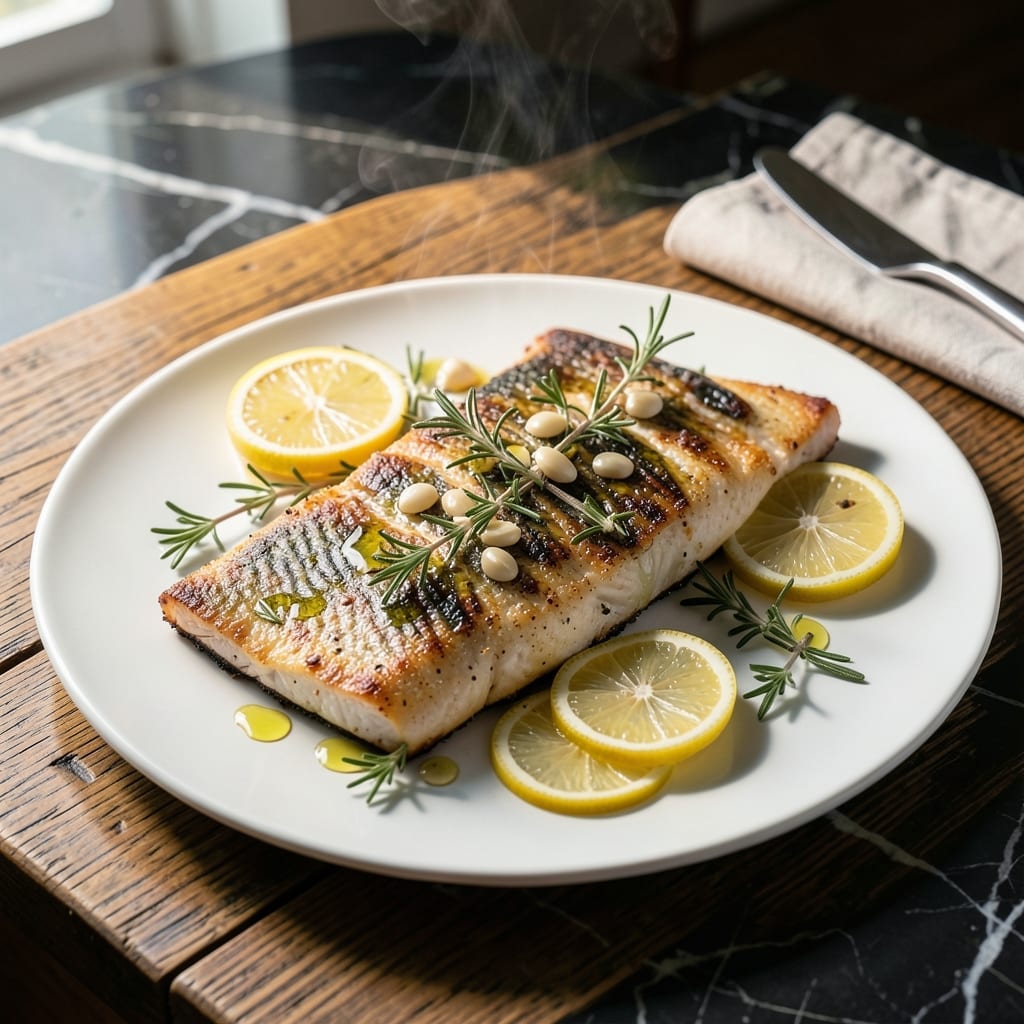
Oven-roasting largemouth bass brings out its delicate, flaky texture with minimal effort. This method preserves the fish’s natural sweetness while allowing herbs and garlic to infuse every bite.
I developed this technique after years of experimenting with different cooking methods. The key is a high-heat start to seal in moisture, followed by gentle roasting to perfectly cook the fish through.
The result is tender, moist bass with a golden crust, elevated by fresh garlic and herbs. It’s a simple yet impressive dish that lets the fish shine.
Serve it with lemon wedges and a sprinkle of fresh parsley for a meal that feels restaurant-worthy. This approach works every time.
Ingredients for Baked Largemouth Bass
Fresh bass, bright herbs, and citrus come together for an elegant oven-roasted dish.
| Ingredient | Amount | Notes |
|---|---|---|
| Largemouth Bass Fillets 🐟 | 1 ½ lb | Skin-on, deboned, about 4 fillets |
| Extra-Virgin Olive Oil 🫒 | 3 tbsp | Divided for coating and finishing |
| Garlic Cloves 🧄 | 6 cloves | Thinly sliced, not minced |
| Fresh Thyme Sprigs 🌿 | 4 sprigs | Leaves stripped from stems |
| Fresh Rosemary Sprigs 🌿 | 2 sprigs | Leaves stripped, finely chopped |
| Lemon 🍋 | 1 whole | Zested and juiced, plus wedges for serving |
| Kosher Salt 🧂 | 1 ½ tsp | Diamond Crystal preferred for even seasoning |
| Freshly Ground Black Pepper 🌶️ | ½ tsp | Coarse grind for texture |
| Dry White Wine 🍷 | ¼ cup | Sauvignon Blanc or Pinot Grigio recommended |
| Unsalted Butter 🧈 | 2 tbsp | Melted for basting |
| Fresh Flat-Leaf Parsley 🌿 | ¼ cup | Chopped, for garnish |
| Shallot 🧅 | 1 whole | Finely minced for aromatic base |
[recipe_ingredient_scaler]
The bass fillets must be ultra-fresh—look for clear, glossy eyes and a mild ocean scent at Whole Foods or a trusted seafood counter. Skin-on fillets hold their shape better during roasting. If your market only carries whole fish, ask the fishmonger to fillet and debone it for you (worth the extra 5 minutes). For herbs, organic thyme and rosemary from the refrigerated section pack more flavor than dried.
No white wine? Dry vermouth works in a pinch, or use low-sodium chicken broth with a splash of lemon juice. Fresh herbs are ideal, but dried at one-third the amount can substitute—just rehydrate them in the wine first. If you can’t find largemouth bass, striped bass or branzino are excellent alternatives with similar texture. The butter can be omitted for a lighter version, but it adds richness to the crust.
This dish is best served immediately, but leftovers keep for 1-2 days in the fridge. Reheat gently in a 300°F oven to avoid overcooking. The herbs and lemon zest can be prepped a day ahead—store them in airtight containers with damp paper towels to maintain freshness.
Why You’ll Love This Recipe
- One Pan Wonder: I toss the fillets with olive oil, garlic, and herbs, then let the oven do the work—one dish, minimal cleanup.
- Herb-Infused Magic: The thyme and rosemary release their oils into the bass, creating a fragrant, savory crust that’s hard to resist.
- Dinner in 25: From prep to plate in under a half hour, making it my go-to for busy weeknights (yes, even on a Tuesday night).
- Budget-Friendly Feast: Largemouth bass is often more affordable than other fish, so I get a restaurant-worthy meal without the price tag.
Step-by-Step Instructions for Oven-Roasted Largemouth Bass
This method ensures perfectly flaky fish with a fragrant herb crust every time.
Step 1: Prepare the Fillets and Aromatics
Pat the 1.5 lb largemouth bass fillets thoroughly dry with paper towels to ensure proper browning. Season both sides evenly with the 1.5 tsp kosher salt and 0.5 tsp freshly ground black pepper, pressing gently so the seasoning adheres.
Finely mince the 1 whole shallot and thinly slice the 6 cloves garlic cloves. Strip the leaves from the 4 sprigs fresh thyme and 2 sprigs fresh rosemary, then finely chop the rosemary. This preparation ensures even distribution of flavors throughout the dish.
Step 2: Sear the Fillets for Crispy Skin
Heat 2 tbsp extra-virgin olive oil in a large oven-safe skillet over medium-high heat. Once the oil shimmers, add the fillets skin-side down. Press gently with a fish spatula for 10 seconds to prevent curling, then cook undisturbed for 3-4 minutes until the skin is golden brown and crisp.
Carefully flip the fillets and cook for an additional 1-2 minutes until the edges appear opaque. The skin should release easily from the pan when properly crisped. Transfer the fillets to a plate, leaving the rendered oil in the skillet.
Step 3: Build the Herb and Wine Sauce
Reduce the heat to medium and add the remaining 1 tbsp extra-virgin olive oil to the skillet. Sauté the minced shallot for 1 minute until translucent, then add the sliced garlic, chopped rosemary, and thyme leaves. Cook for 30 seconds until fragrant, stirring constantly to prevent burning.
Deglaze the pan with the 0.25 cup dry white wine, scraping up any browned bits from the bottom. Simmer for 2 minutes until the liquid reduces by half. Stir in the zest of 1 whole lemon and the 2 tbsp unsalted butter until fully melted and emulsified.
Step 4: Finish in the Oven
Preheat the oven to 375°F. Return the fillets to the skillet, skin-side down, and spoon the herb-wine mixture over them. Transfer the skillet to the oven and bake for 6-8 minutes until the fish is opaque throughout and flakes easily with a fork.
The internal temperature should reach 145°F. Baste the fillets with the pan sauce once halfway through baking to enhance flavor and moisture. The herbs will infuse into the fish, creating a fragrant, cohesive dish.
Step 5: Garnish and Serve
Squeeze the juice of 1 whole lemon over the fillets and sprinkle with the 0.25 cup chopped fresh flat-leaf parsley. Drizzle any remaining pan sauce over the top for added richness and presentation.
Serve immediately with lemon wedges on the side. The fish should be moist and tender, with a crisp, golden skin and a bright, herbaceous sauce that complements the delicate flavor of the largemouth bass.
Pro Tips For Making Baked Largemouth Bass
- Preheat the Pan: Get your baking dish hot in the oven for 5 minutes before adding the bass—it helps the skin crisp up instead of sticking.
- Pat Fillets Dry: I learned this the hard way: blot the bass fillets with a paper towel before oiling, or they’ll steam instead of sear.
- Don’t Overcrowd: Leave space between fillets on the baking dish, or they’ll poach in their own juices instead of baking evenly.
- Crush the Garlic: Smash the garlic cloves lightly with the side of your knife before adding them—it releases way more flavor into the oil.
Regional Styles of baked largemouth bass
Southern Style
In the Carolinas, we often bake bass with a cornmeal crust for extra crunch. Mix ½ cup cornmeal with 1 tsp paprika and ½ tsp cayenne, then press the fillets into the mixture before searing. The cornmeal adds a delightful texture that pairs perfectly with the fish’s flakiness.
Mediterranean Approach
For a taste of the Mediterranean, add ½ cup cherry tomatoes and ¼ cup Kalamata olives to the skillet before baking. I also love tossing in 2 tbsp capers for a briny kick. The acidity balances the richness of the fish beautifully.
Asian Fusion Twist
Swap the white wine for ¼ cup soy sauce and add 1 tbsp grated ginger and 1 minced red chili to the aromatics. Garnish with sliced green onions and a drizzle of sesame oil after baking. This version is inspired by my coastal rides through Chinatown. 🗺️
French Technique
For a classic French touch, deglaze with ¼ cup dry vermouth instead of wine and add 2 tbsp chopped tarragon to the herb mix. Finish with a splash of heavy cream for a velvety sauce. This reminds me of my training days in Paris.
Cajun Spice Rub
Create a Cajun dry rub with 1 tbsp smoked paprika, 1 tsp garlic powder, and ½ tsp cayenne. Coat the fillets before searing for a bold, spicy kick. This style brings a taste of Louisiana to your table. 🔥
Lemon-Herb Butter
For a richer finish, mix 4 tbsp softened butter with 1 tbsp lemon zest and 1 tbsp chopped parsley. Dollop on top of the fillets before serving. This simple addition elevates the dish with minimal effort.
Nutrition Facts
Frequently Asked Questions
What oven temperature works best?
Use 375°F for even cooking. This lets the fish cook through while keeping the skin crisp.
Can I use frozen fillets?
Thaw overnight in the fridge first. Pat completely dry before seasoning to ensure proper browning.
How do I know when it’s done?
The fish should flake easily with a fork and reach 145°F internally. Opaque flesh means it’s ready.
What if the skin sticks to the pan?
Make sure your pan is hot enough and don’t move the fillets too soon. A well-seasoned cast iron skillet helps.

Trained in classic French technique but raised on slow-cooked ribs and spicy rubs, she blends culinary skill with smoke and soul.
- Recipe for Boneless Pork Chops in Cast Iron Skillet: Sear and Baste to Juicy Perfection - October 3, 2026
- Recipe for Boneless Cross Rib Roast: Slow-Roasted Beef with Herb Crust - October 3, 2026
- Hamburgers in Sauce Recipe Crock Pot: Slow-Cooked Savory Delight - October 3, 2026