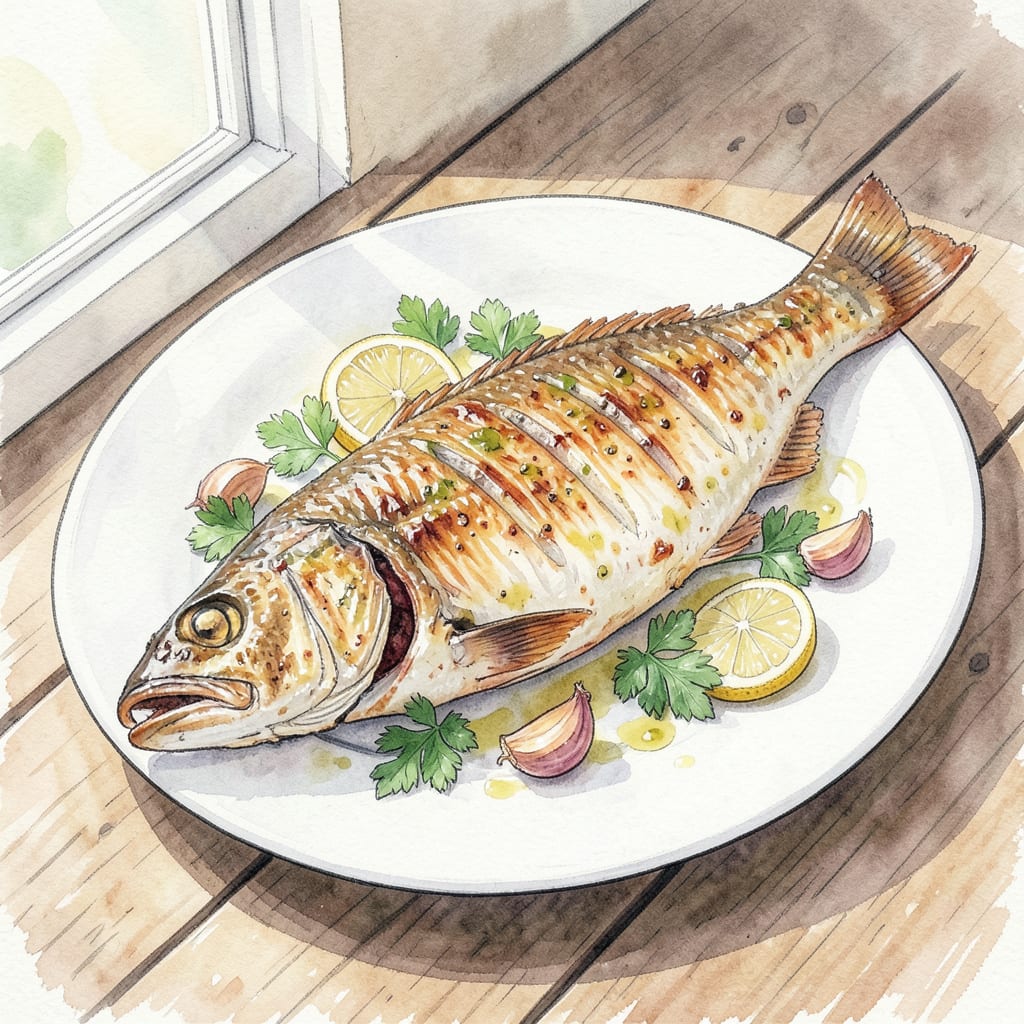
Baking a whole flounder is a game-changer for seafood lovers. I’ve perfected this technique to achieve flaky, tender perfection every time. The key is simple preparation and precise temperature control.
By baking at 400°F, you’ll get a perfectly cooked fish with a delicate crust. Serve with lemon wedges and your favorite sides for a restaurant-quality meal. Let’s get started!
Ingredients for Baked Whole Flounder
Simple ingredients for a show-stopping seafood dish that’s both elegant and easy.
| Ingredient | Amount | Notes |
|---|---|---|
| Whole Flounder 🐟 | 1 whole | Fresh, scaled and gutted |
| Olive Oil 🫒 | 2 tbsp | Extra-virgin for richness |
| Lemon 🍋 | 1 whole | Sliced, for serving |
| Fresh Parsley 🌿 | ¼ cup | Chopped, for garnish |
| Garlic Cloves 🧄 | 4 cloves | Minced, for flavor |
| Salt 🧂 | 1 tsp | Kosher or sea salt |
| Black Pepper 🌶️ | ½ tsp | Freshly ground preferred |
| Fresh Thyme 🌿 | 2 sprigs | For aromatic flavor |
| Lemon Juice 🍋 | 2 tbsp | Freshly squeezed |
| White Wine 🍷 | ¼ cup | Dry white wine for moisture |
| Butter 🧈 | 2 tbsp | Unsalted, melted |
[recipe_ingredient_scaler]
The flounder is the star here—look for fresh, sustainably sourced fish. If your market doesn’t have whole flounder, ask them to scale and gut it for you. I usually grab mine from Whole Foods or my local fish market. Fresh parsley and thyme add brightness, while good quality white wine keeps everything moist.
No white wine? Fish stock or chicken broth works as a substitute. Fresh thyme is ideal, but you can use dried thyme at one-third the amount. Lemon juice is crucial—don’t skip it. For an extra burst of flavor, try adding some lemon zest on top before baking.
Store leftover flounder in an airtight container in the fridge for up to 2 days. Reheat gently in the oven with a squeeze of fresh lemon. You can also freeze it for up to 3 months—just thaw and reheat.
Step-by-Step Instructions for Baked Whole Flounder
Here’s the method that guarantees perfectly baked whole flounder every time.
Step 1: Prepare the Flounder for Baking
Preheat your oven to 400°F. Rinse the 1 whole Whole Flounder under cold water and pat it completely dry with paper towels, both inside and out. I make sure to get into the cavity and under the gills to remove any excess moisture. Season the cavity with the 1 tsp Salt, 0.5 tsp Black Pepper, and stuff it with the 2 sprigs Fresh Thyme. The thyme will infuse the fish with aromatic flavor as it bakes.
Place the flounder on a large baking sheet or roasting pan that has been drizzled with the 2 tbsp Olive Oil. I like to use a pan that’s large enough to hold the fish without crowding. Drizzle a bit more olive oil over the fish if needed, then sprinkle the 4 cloves Garlic Cloves (minced) evenly over the top.
Step 2: Bake to Flaky Perfection
Bake the flounder in the preheated oven for 12-15 minutes per pound, or until it reaches an internal temperature of 145°F at the thickest part. For this recipe, that translates to about 20-25 minutes total baking time. You’ll know it’s done when the flesh flakes easily with a fork and appears opaque throughout.
While the fish is baking, mix the 2 tbsp Lemon Juice and 0.25 cup White Wine in a small bowl. After the flounder has baked for 10 minutes, baste it with this lemon-wine mixture every 5 minutes until it’s done. This keeps the fish moist and adds flavor.
Step 3: Finish with Butter and Serve
Once the flounder is cooked through, remove it from the oven and brush it with the 2 tbsp melted Butter. The butter will add richness and help keep the fish moist. Garnish with the 0.25 cup Fresh Parsley (chopped) and serve with sliced 1 whole Lemon on the side.
Transfer the baked whole flounder to a serving platter or individual plates. The flesh should be flaky and tender, with a delicate flavor enhanced by the garlic, thyme, and lemon. Serve immediately and enjoy the perfect, tender result.
Perfect Pairings for This Recipe
Classic Side Dishes
A simple roasted asparagus with olive oil, salt, and pepper complements the flounder beautifully. For a heartier side, try garlic mashed potatoes or lemon quinoa. I often serve it with a fresh mixed greens salad and a light vinaigrette. The key is to keep the sides light and balanced. 🌿
Wine Pairing Suggestions
A dry Sauvignon Blanc or Pinot Grigio pairs nicely with baked flounder. These crisp whites complement the delicate flavors without overpowering them. For a more budget-friendly option, look for Kim Crawford or La Vieille Ferme. If you prefer red, a light Pinot Noir works well. 🍷
Beer Pairing Options
For beer lovers, a crisp Pilsner or light lager cleanses the palate nicely. I recommend Pilsner Urquell or Corona. If you prefer craft beer, try a Belgian Witbier for its citrus and spice notes. Avoid heavy IPAs or stouts as they can overwhelm the fish. 🍺
Garnishing Ideas
Fresh lemon wedges are a must-have on the side. I like to garnish with chopped fresh parsley or chopped chives for a pop of color. For a more elegant presentation, add a few slices of lemon on top of the fish before serving. A sprinkle of capers can add a nice salty kick. The visual appeal makes the dish more inviting.
Additional Flavors
Consider adding some herbs de Provence or Italian seasoning to the cavity for extra depth. You can also stuff the fish with slices of lemon and orange for a different citrus twist. For a Mediterranean flair, add some chopped kalamata olives or sun-dried tomatoes around the fish on the baking sheet.
Nutrition Facts

Trained in classic French technique but raised on slow-cooked ribs and spicy rubs, she blends culinary skill with smoke and soul.
- Recipe for Boneless Pork Chops in Cast Iron Skillet: Sear and Baste to Juicy Perfection - October 3, 2026
- Recipe for Boneless Cross Rib Roast: Slow-Roasted Beef with Herb Crust - October 3, 2026
- Hamburgers in Sauce Recipe Crock Pot: Slow-Cooked Savory Delight - October 3, 2026