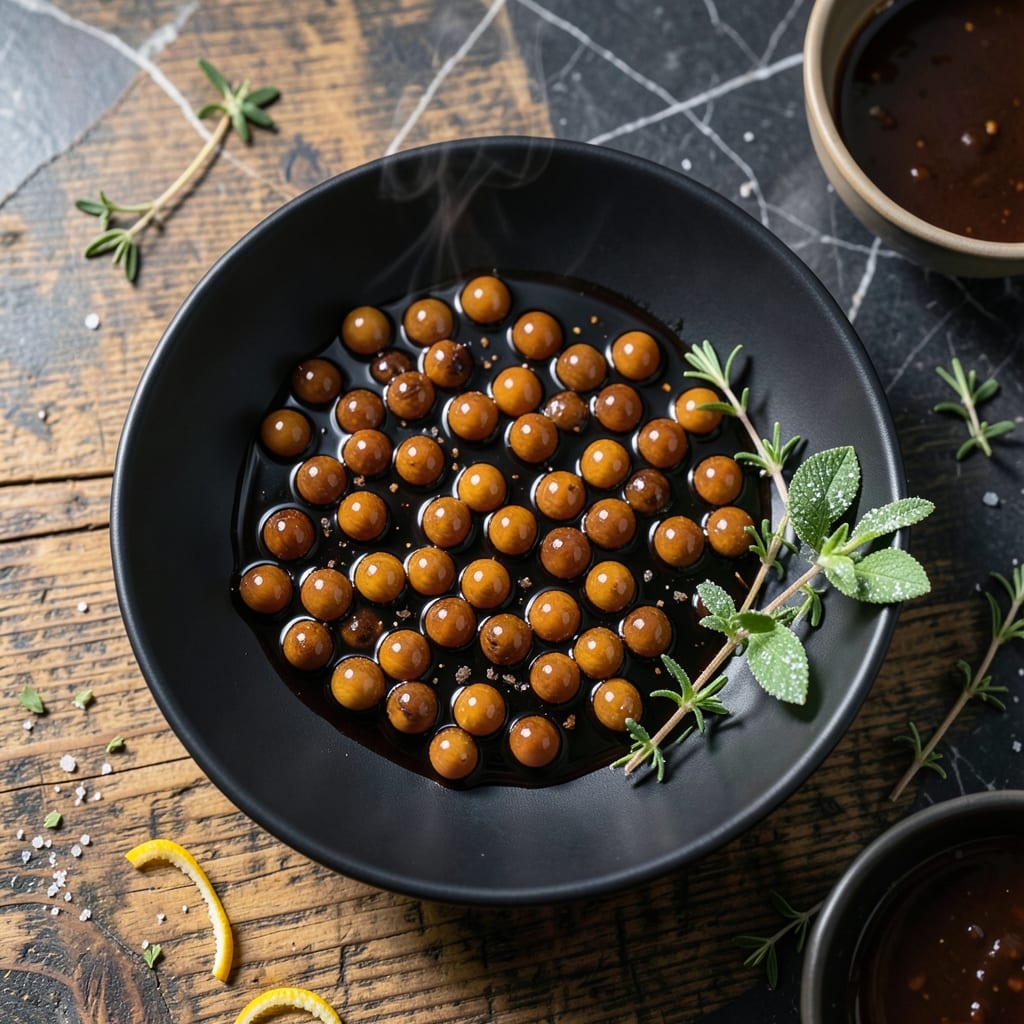
These glossy spheres transform ordinary balsamic vinegar into an elegant garnish that elevates any dish. I developed this method after seeing molecular gastronomy techniques in high-end restaurants, then adapted it for home kitchens.
The process relies on sodium alginate to create stable pearls that burst with tangy sweetness. A calcium bath sets the exterior while keeping the center liquid, achieving that signature pop-in-your-mouth texture.
What you get are perfectly round, jewel-like pearls that add visual drama and concentrated flavor to salads, appetizers, or desserts. They keep for up to a week in the fridge, ready to impress whenever needed.
One batch makes dozens, so you will have enough for multiple dishes. This is restaurant-quality presentation made simple.
Ingredients for Balsamic Pearls
A few specialized ingredients create those mesmerizing liquid-filled balsamic pearls everyone will notice.
| Ingredient | Amount | Notes |
|---|---|---|
| Balsamic Vinegar 🍷 | 1 cup | Aged for best depth of flavor |
| Sodium Alginate ⚗️ | ½ tsp | Food-grade, essential for spherification |
| Calcium Chloride ⚗️ | ½ tsp | Food-grade, creates the setting bath |
| Water 💧 | 2 cups | Filtered for best results |
| Granulated Sugar 🍚 | 2 tbsp | Balances acidity, optional |
| Vanilla Extract 🌿 | ½ tsp | Pure extract for subtle sweetness |
| Lemon Juice 🍋 | 1 tsp | Freshly squeezed for brightness |
[recipe_ingredient_scaler]
Sodium alginate and calcium chloride are the magic here—Modernist Pantry is my go-to for both. They’re food-safe chemicals used in molecular gastronomy, so don’t be intimidated. The balsamic vinegar should be good quality (nothing cheap or flavored) since it’s the star. I grab mine from Trader Joe’s or a specialty store. The water needs to be filtered to avoid any off-flavors interfering with the pearls.
No sodium alginate? You can’t really fake this one—it’s the only way to get the pearl texture. Swap calcium chloride for calcium lactate if that’s what you have. The sugar is optional but helps balance the tang; agave or maple syrup work too. For the balsamic, avoid white or flavored varieties—they won’t give you that deep, rich color and taste you want.
Pearls keep in their setting bath for 5-7 days in the fridge. Don’t rinse them until ready to use, or they’ll pop early. Make a big batch—they freeze well for 1 month (thaw in the fridge, still in the bath). Use them straight from the fridge for the best texture.
Why You’ll Love This Recipe
- 5-Minute Magic: I mix the sodium alginate with balsamic and water, drop it in the calcium bath, and—poof—pearls form right before my eyes.
- Sweet-Tart Burst: The balsamic’s deep tang gets a subtle sweetness from sugar, and each pearl pops with a vibrant flavor hit.
- Dinner Party Star: I sprinkle these over caprese or seared scallops, and guests always ask what that little burst of flavor is.
Step-by-Step Instructions for Balsamic Pearls
Here’s the spherification method that turns vinegar into elegant, burstable pearls with professional results.
Step 1: Prepare the Balsamic Vinegar Mixture
In a small saucepan, combine the 1 cup Balsamic Vinegar, 2 tbsp Granulated Sugar, 0.5 tsp Vanilla Extract, and 1 tsp Lemon Juice. Heat over medium-low heat just until the sugar fully dissolves—you don’t want this to simmer or boil.
Once dissolved, remove from heat and let cool to room temperature. This cooling step is crucial because adding sodium alginate to hot liquid can cause premature gelation. I like to give it a quick stir occasionally to help it cool evenly. The mixture should look glossy and smell like a sophisticated reduction.
Step 2: Create the Sodium Alginate Solution
Measure the 0.5 tsp Sodium Alginate into a small bowl. Add about 2 tablespoons of the cooled balsamic mixture and whisk vigorously to create a smooth slurry. This prevents clumping when you add it to the remaining vinegar.
Pour the slurry back into the remaining balsamic mixture and whisk thoroughly for 1-2 minutes until completely smooth. The sodium alginate needs to be fully dispersed—any lumps will create uneven pearls. Let this mixture rest for 15 minutes to allow any air bubbles to dissipate, which ensures perfectly round pearls.
Step 3: Prepare the Calcium Chloride Bath
In a separate bowl, combine the 2 cups Water with the 0.5 tsp Calcium Chloride. Stir until the calcium chloride is completely dissolved. This creates your setting bath where the magic happens.
I use filtered water here because any impurities can affect the spherification process. The water should be at room temperature—cold water slows down the reaction, while warm water can make the pearls form too quickly, resulting in uneven textures. You’ll want at least 2 inches of depth in your bath container to allow the pearls to form properly.
Step 4: Form the Pearls
Fill a syringe or dropper with the balsamic-sodium alginate mixture. Hold it about 2 inches above the calcium chloride bath and slowly drip the mixture into the water. You’ll see the pearls form instantly as they hit the bath.
Let the pearls sit in the bath for 2-3 minutes to fully set. You’ll notice they become firm to the touch and develop a glossy sheen. Don’t leave them in too long or they’ll continue to gel and become too firm. Use a slotted spoon to gently remove them from the bath.
Step 5: Rinse and Serve
Transfer the pearls to a bowl of clean, cold water to rinse off any excess calcium chloride. This stops the spherification process and removes any bitter taste. Let them soak for 1-2 minutes.
Drain the pearls on paper towels and use immediately. They’re best served fresh but can be stored in clean water in the refrigerator for up to 24 hours. The pearls should have a delicate, thin membrane that bursts in your mouth, releasing that perfect balance of tangy balsamic, subtle sweetness, and bright citrus notes. Serve them as a garnish for caprese salad, atop a charcuterie board, or as an elegant finishing touch to any dish.
Pro Tips For Making Balsamic Pearls
- Chill the Balsamic: Reduce the balsamic vinegar first, then let it cool completely before adding sodium alginate—I learned this the hard way after my first batch turned into a lumpy mess from heat activating the alginate too early.
- Use Distilled Water: Tap water’s minerals can interfere with the calcium chloride bath, so stick to distilled water for both the alginate mixture and the setting bath to guarantee clean, firm pearls.
- Avoid Overmixing Alginate: Whisk the sodium alginate into the balsamic just until dissolved, about 2-3 minutes max—overmixing introduces air bubbles that ruin the pearls’ smooth texture.
- Strain the Mixture: Run the final alginate-balsamic blend through a fine-mesh sieve to remove any undissolved bits, which would otherwise create weird tails or uneven shapes in your pearls.
Health Benefits of These Flavors
Rich in Antioxidants
Balsamic vinegar is packed with polyphenols—powerful antioxidants that help combat oxidative stress. One tablespoon contains more antioxidants than a ½ cup of blueberries. These compounds support heart health and may reduce inflammation, which I’ve noticed helps with my joint comfort. 💪
Low Calorie Flavor Boost
Each pearl delivers intense flavor with minimal calories—about 5 calories per teaspoon of balsamic mixture. This means you can add sophisticated taste to dishes without worrying about calorie counts. Perfect for anyone watching their intake but still wanting bold flavors.
Gut Health Support
The acetic acid in balsamic vinegar promotes healthy gut bacteria, aiding digestion. I love that these pearls give me a probiotic boost in a fun, elegant form. This is especially helpful after heavier meals, something we often enjoyed in my Irish-Italian family gatherings.
Blood Sugar Benefits
Studies suggest balsamic vinegar may help regulate blood sugar levels, particularly after meals. The low glycemic index means it won’t spike your glucose. I’ve found adding these pearls to dishes helps me feel more balanced throughout the day.
Natural Electrolytes
Balsamic vinegar contains small amounts of potassium, calcium, and magnesium, which support muscle function and hydration. These pearls are a tasty way to sneak in extra minerals, especially during those busy days in my Boston kitchen. ✨
Versatile Nutrition
Since these pearls are used as a garnish, they add nutrition without overwhelming your dish. A single serving of 10-12 pearls contributes to your daily nutrient needs while keeping portions controlled. It’s an easy way to elevate both flavor and nutrition simultaneously.
Nutrition Facts
Frequently Asked Questions
Where can I find sodium alginate and calcium chloride?
Check specialty baking stores or online retailers like Modernist Pantry. These molecular gastronomy ingredients are becoming more common in well-stocked grocery stores too.
Can I make these without a syringe?
Yes! A dropper or even a teaspoon works, though pearls may vary in size. For consistent results, a syringe gives the best control over droplet size.
Why did my pearls dissolve in the fridge?
They need to stay in their setting bath until ready to use. Rinse only right before serving, or the calcium reaction continues and breaks them down.
What dishes pair well with these?
Try them on caprese salad, bruschetta, or even vanilla ice cream. Their tangy pop complements both savory and sweet dishes beautifully.

Trained in classic French technique but raised on slow-cooked ribs and spicy rubs, she blends culinary skill with smoke and soul.
- Recipe for Boneless Pork Chops in Cast Iron Skillet: Sear and Baste to Juicy Perfection - October 3, 2026
- Recipe for Boneless Cross Rib Roast: Slow-Roasted Beef with Herb Crust - October 3, 2026
- Hamburgers in Sauce Recipe Crock Pot: Slow-Cooked Savory Delight - October 3, 2026