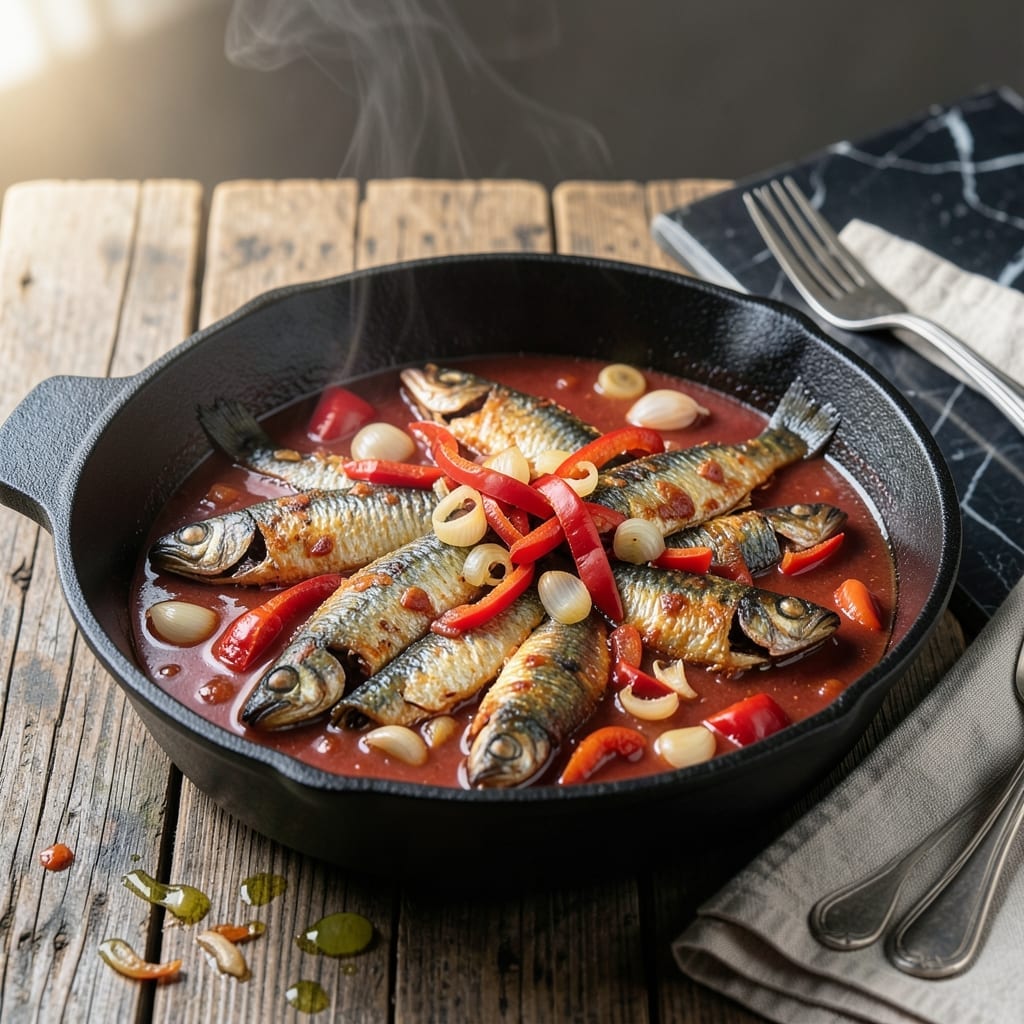
This Filipino-style dish transforms humble sardines into a rich, savory simmer that’s both comforting and deeply flavorful. The combination of tangy tomato sauce and aromatic spices creates a perfect balance of tastes.
I developed this recipe to honor traditional flavors while keeping the process simple. The sardines absorb the tomato-based sauce beautifully, making every bite packed with flavor. It’s a dish that proves great meals don’t need expensive ingredients.
The cooking method is straightforward but delivers impressive results. Simmering the sardines in the sauce allows them to become tender while soaking up all the aromatic spices and tomatoes.
Serve this over steamed rice to soak up every last bit of the delicious sauce. The result is a meal that’s hearty, satisfying, and full of authentic Filipino character.
Ingredients for Bangus Sardines
Canned sardines meet bold Filipino flavors in this tomato-based simmer with aromatic spices and fresh herbs.
| Ingredient | Amount | Notes |
|---|---|---|
| Bangus Sardines 🐟 | 2 cans | In oil or tomato sauce, drained |
| Tomato Sauce 🍅 | 2 cups | Thick and smooth variety |
| Onion 🧅 | 1 whole | Medium, finely chopped |
| Garlic Cloves 🧄 | 4 cloves | Minced for depth |
| Ginger 🌿 | 1 tbsp | Fresh, grated |
| Red Bell Pepper 🌶️ | 1 whole | Diced for color |
| Green Chili Pepper 🌶️ | 1 piece | Sliced, optional for heat |
| Soy Sauce 💧 | 2 tbsp | All-purpose variety |
| Calamansi Juice 🍋 | 2 tbsp | Or lime juice substitute |
| Bay Leaf 🍃 | 1 piece | Dried, for aroma |
| Ground Black Pepper 🌶️ | ½ tsp | Freshly ground preferred |
| Salt 🧂 | 1 tsp | Adjust to taste |
| Sugar 🍚 | 1 tsp | Balances acidity |
| Olive Oil 🫒 | 2 tbsp | For sautéing aromatics |
| Fresh Cilantro 🌿 | ¼ cup | Chopped, for garnish |
[recipe_ingredient_scaler]
The sardines are the foundation here. Filipino brands like Mega or Ligo work best if you can find them at an Asian market. Look for bangus packed in oil or tomato sauce—avoid water-packed as they lack richness. The tomato sauce should be thick and smooth; San Marzano if you’re splurging, but any good quality brand will deliver authentic flavor. Fresh ginger is non-negotiable for that zingy depth.
No calamansi juice? Lime or lemon juice works at a 1:1 ratio. Can’t find green chili? Jalapeño or serrano brings similar heat. The soy sauce adds umami—tamari for gluten-free. If using fresh sardines (rare but possible), reduce cooking time by half. The bay leaf is subtle but worth it—don’t skip unless you’re truly out of options.
This dish tastes even better the next day as flavors meld. Keeps 3-4 days in the fridge, but the sauce thickens—add a splash of water when reheating. Freezes well for up to 2 months (without cilantro garnish). Serve with steamed rice to soak up every last bit.
Why You’ll Love This Recipe
- One Pot Meal: I love how everything—sardines, tomato sauce, and aromatics—cooks together in a single pan.
- Garlic-Ginger Depth: The garlic and ginger simmered in tomato sauce give it this rich, warm backbone that’s just right.
- Feeds Many: Honestly, it’s my go-to for big family lunches or potlucks.
- Pantry Staples: Between us, I always have these ingredients on hand, so it’s a lifesaver on busy nights.
Step-by-Step Instructions for Filipino-Style Sardines in Tomato Sauce
This method ensures rich, balanced flavors with every spoonful of your creation.
Step 1: Sauté the Aromatics Foundation
Heat the 2 tbsp Olive Oil in a deep skillet over medium heat. Add the finely chopped 1 whole Onion and sauté for 3-4 minutes until translucent and just beginning to caramelize at the edges.
Stir in the minced 4 cloves Garlic Cloves and 1 tbsp Ginger, cooking for an additional 1-2 minutes until the garlic turns light golden and releases its aroma. This base builds the depth of flavor for the entire dish.
Add the diced 1 whole Red Bell Pepper and sliced 1 piece Green Chili Pepper, cooking for 2 minutes until the bell pepper softens slightly but retains its vibrant color.
Step 2: Build the Sauce Base
Pour in the 2 cups Tomato Sauce, stirring to combine with the sautéed aromatics. Add the 1 piece Bay Leaf, 1 tsp Salt, 0.5 tsp Ground Black Pepper, and 1 tsp Sugar.
Bring the mixture to a gentle simmer over medium-low heat. The sugar balances the acidity of the tomato sauce, while the bay leaf infuses subtle earthy notes. Simmer uncovered for 5 minutes to meld the flavors.
Stir in the 2 tbsp Soy Sauce and 2 tbsp Calamansi Juice. The soy sauce adds umami depth, while the calamansi juice brightens the sauce with a tangy citrus note. Simmer for another 2 minutes.
Step 3: Incorporate the Sardines
Drain the 2 cans Bangus Sardines (reserving any oil if desired for extra richness) and add them to the skillet. Gently fold the sardines into the sauce, being careful not to break them apart too much—you want visible chunks for texture.
Reduce the heat to low and let the dish simmer for 8-10 minutes. This allows the sardines to absorb the flavors of the sauce while contributing their own briny richness. The sauce should thicken slightly and become deep red in color.
Taste and adjust seasoning if needed, though the combination of soy sauce, calamansi, and sardines should provide a well-balanced flavor profile.
Step 4: Finish and Garnish
Remove the skillet from heat and discard the bay leaf. Let the dish sit for 2-3 minutes to allow the flavors to settle. The sauce should cling to the sardines with a glossy, thick consistency.
Sprinkle the 0.25 cup Fresh Cilantro over the top just before serving. The cilantro adds a fresh, herbal contrast to the rich, savory sauce. Serve hot over steamed rice to soak up every last bit of the flavorful sauce.
Pro Tips For Making Bangus Sardines
- Bloom the Aromatics: Sauté the onions, garlic, and ginger in oil first until fragrant—about 3 minutes on medium heat. I learned this the hard way: raw-tasting garlic ruins the dish.
- Drain the Sardines: Rinse the bangus sardines and pat them dry before cooking. Skipping this leaves the sauce watery and dilutes the tomato flavor.
- Simmer, Don’t Boil: Once the sardines are in the tomato sauce, keep it at a gentle simmer. Boiling hard breaks them apart—I’ve turned too many into mushy bits.
- Add Sauce Last: Stir in the tomato sauce only after the sardines have browned slightly. Sounds weird, but it works: prevents them from steaming into a sad, pale mess.
Wine and Beer Pairings for This Recipe
Filipino Beer Pairings
This dish’s bold, tangy flavors pair beautifully with San Miguel Pale Pilsen—the Philippines’ most popular beer. Its crisp, clean finish cuts through the richness while complementing the tomato base. I always keep a few bottles chilled for this exact meal. 🍺
Light Lager Options
For a universal crowd-pleaser, try Red Horse Beer or any light lager. The mild bitterness balances the savory-sweet sauce, and the carbonation refreshes your palate between bites. Serve ice-cold in frosted mugs for the full experience.
White Wine Choices
A chilled Pinot Grigio works surprisingly well with this creation. Its citrus notes echo the calamansi in the sauce, while the acidity stands up to the tomato base. I prefer Italian bottles like Santa Margherita for their consistent quality.
Rosé Surprise
Don’t overlook a dry rosé—it’s my secret weapon for this meal. The berry notes complement the tomato, and the crisp finish handles the sardines’ brininess beautifully. Whispering Angel from Provence is an excellent choice.
Non-Alcoholic Pairings
For a zero-proof option, try calamansi iced tea with a touch of honey. The citrus mirrors the sauce while the sweetness balances the savory notes. Sparkling water with a lime wedge also works well.
Nutrition Facts
Frequently Asked Questions
Can I use fresh sardines instead of canned?
Yes, but reduce cooking time by half. Fresh sardines cook faster and can become tough if overdone.
What if I can’t find calamansi juice?
Lime or lemon juice works perfectly at a 1:1 ratio. The citrus brightness is essential for balancing the rich sauce.
How long can I store leftovers?
Refrigerated, it keeps for 3-4 days. The sauce thickens when chilled—just add a splash of water when reheating.
Can I freeze this dish?
Freezes well for up to 2 months without cilantro garnish. Thaw overnight in the fridge before reheating.

Trained in classic French technique but raised on slow-cooked ribs and spicy rubs, she blends culinary skill with smoke and soul.
- Recipe for Boneless Pork Chops in Cast Iron Skillet: Sear and Baste to Juicy Perfection - October 3, 2026
- Recipe for Boneless Cross Rib Roast: Slow-Roasted Beef with Herb Crust - October 3, 2026
- Hamburgers in Sauce Recipe Crock Pot: Slow-Cooked Savory Delight - October 3, 2026