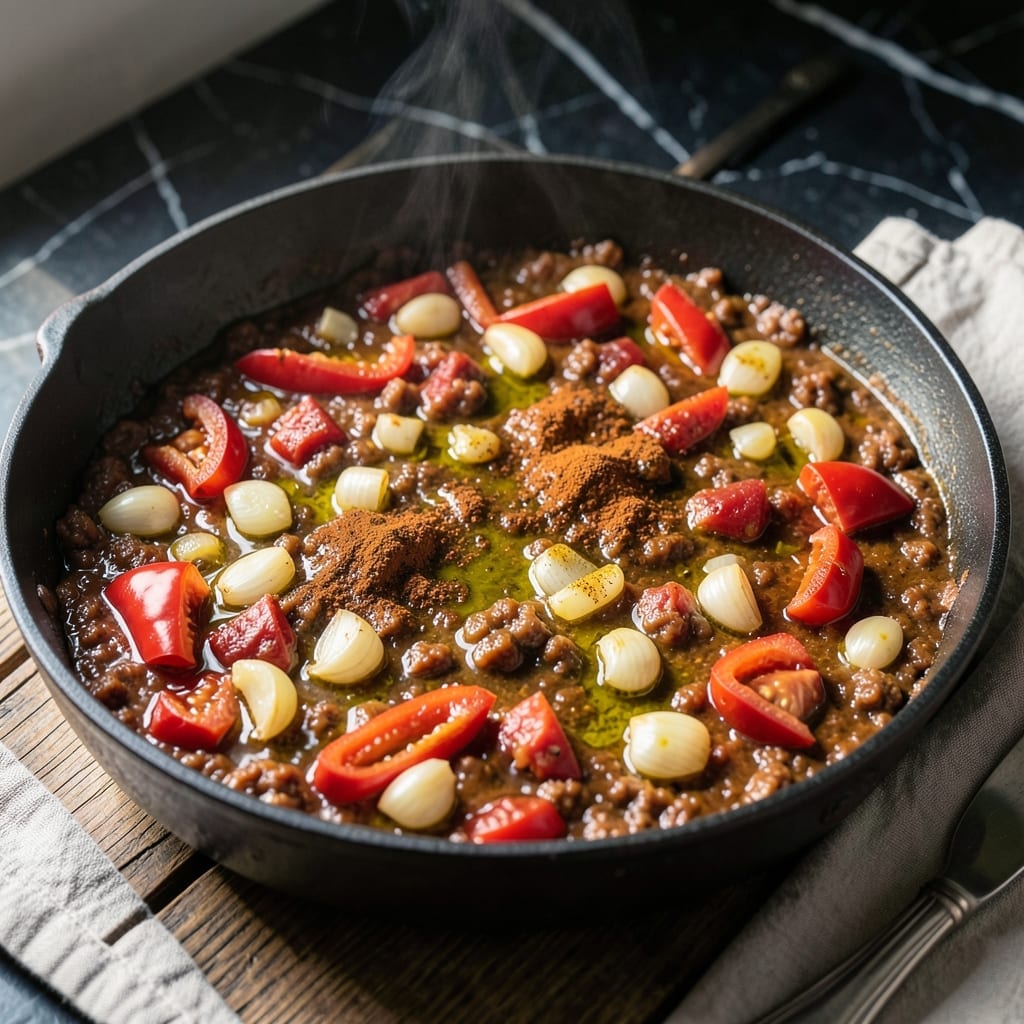
This authentic Spanish sofrito forms the flavor foundation for any traditional paella, bringing depth that defines the dish. I developed this method after studying under a Valencia chef who insisted on slow-cooked onions, tomatoes, and peppers.
The key is patience—cooking the vegetables low and slow until they break down into a rich, concentrated paste. This creates a restaurant-quality base that infuses every grain of rice with complex, savory notes.
What emerges is a deeply aromatic mixture that transforms simple ingredients into something extraordinary. The colors darken, the flavors meld, and your kitchen fills with the scent of Spain.
Use this as your starting point for seafood, chicken, or mixed paella variations. The technique ensures authentic results every time.
Ingredients for Paella Sofrito
These authentic ingredients create the rich, aromatic base essential for traditional Spanish paella.
| Ingredient | Amount | Notes |
|---|---|---|
| Extra-Virgin Olive Oil 🫒 | ½ cup | Spanish variety preferred |
| Yellow Onions 🧅 | 2 whole | Finely diced for even cooking |
| Red Bell Peppers 🌶️ | 2 whole | Seeds removed, finely diced |
| Garlic Cloves 🧄 | 6 cloves | Minced to paste consistency |
| Ripe Tomatoes 🍅 | 4 whole | Peeled, seeded, grated |
| Smoked Paprika 🌶️ | 1 tsp | Sweet Spanish pimentón |
| Ground Cumin 🌿 | ½ tsp | Freshly toasted and ground |
| Bay Leaves 🍃 | 2 pieces | Dried, whole leaves |
| Sea Salt 🧂 | 1 tsp | Fine grain, to taste |
| Fresh Flat-Leaf Parsley 🌿 | ¼ cup | Finely chopped for garnish |
[recipe_ingredient_scaler]
The onions are the foundation—use yellow onions for their natural sweetness as they caramelize. Spanish extra-virgin olive oil (like Picual or Arbequina) provides the authentic flavor profile that defines this sofrito. Source your tomatoes from a farmers market if possible; they should be deeply ripe and fragrant. The peppers add sweetness and color—red bell peppers are traditional.
No fresh tomatoes? Canned San Marzano tomatoes (drained and grated) work beautifully. For a deeper flavor, add 1 tbsp tomato paste. Short on time? Use pre-diced onions and peppers (fresh only, not frozen). The smoked paprika is non-negotiable—it delivers the signature Spanish smokiness. If you can’t find pimentón, regular smoked paprika is acceptable.
This sofrito base keeps for 1 week refrigerated in an airtight container. For longer storage, freeze in ice cube trays for up to 3 months. The flavors intensify over time, making it even more aromatic. Always bring to room temperature before using in your paella.
Why You’ll Love This Recipe
- One-Pan Magic: I toss everything into a single skillet—olive oil, onions, peppers, garlic, tomatoes—and let it simmer while I set the table.
- Rich Base Flavor: The slow-cooked tomatoes and garlic create a deep, sweet sofrito that makes the paella taste like it’s been cooking all day.
- Meal Prep Hero: I make a big batch on Sunday and use it for paella, rice, or even as a pasta sauce later in the week.
- Budget Stretch: Five simple ingredients, minimal cost, and it feeds my family for days. Honestly, it’s my wallet’s best friend.
Step-by-Step Instructions for Paella Sofrito
This authentic method builds deep, layered flavors essential for traditional Spanish rice dishes.
Step 1: Sauté Aromatic Vegetables in Olive Oil
Heat the 0.5 cup Extra-Virgin Olive Oil in a wide, heavy-bottomed pan over medium-low heat. Add the 2 whole Yellow Onions and 2 whole Red Bell Peppers, both finely diced, and cook slowly for 8-10 minutes until softened and translucent.
This gentle cooking process coaxes out the natural sweetness of the vegetables without browning them. The onions should become glassy and the peppers tender, with no raw bite remaining. Stir occasionally to prevent sticking and ensure even cooking.
Step 2: Incorporate Garlic and Tomato Base
Add the 6 cloves Garlic Cloves, minced to a paste consistency, and cook for 1-2 minutes until fragrant. Be careful not to let the garlic brown—it should just become aromatic and slightly golden at the edges.
Immediately add the 4 whole Ripe Tomatoes, peeled, seeded, and grated. Cook this mixture for 10-12 minutes over medium heat, stirring frequently, until the tomatoes break down completely and the mixture reduces to a thick, jam-like consistency.
Step 3: Toast Spices and Develop Depth
Reduce the heat to low and add the 1 tsp Smoked Paprika, 0.5 tsp Ground Cumin, and 2 pieces Bay Leaves. Stir constantly for 30-45 seconds to bloom the spices in the hot oil and tomato mixture.
This brief toasting intensifies the spices’ flavors and ensures they infuse the sofrito completely. The mixture should darken slightly and become incredibly fragrant, with the paprika lending its characteristic sweet smoke and the cumin adding earthy depth.
Season with the 1 tsp Sea Salt, adjusting to taste, and cook for an additional 2 minutes to meld all the flavors together.
Step 4: Finish and Store for Optimal Flavor
Remove the pan from heat and let the sofrito cool to room temperature. The bay leaves may remain in the mixture for now—they’ll continue to infuse flavor as it cools. The sofrito should be thick enough to hold a spoon upright when inserted.
Once cooled, transfer to an airtight container and refrigerate for at least 1 hour (or up to 3 days) to allow the flavors to mature and deepen. When ready to use, remove the bay leaves and stir in the 0.25 cup Fresh Flat-Leaf Parsley just before incorporating into your paella.
Pro Tips For Making Paella Sofrito
- Cook Low and Slow: I learned this the hard way—rushing the sofrito over high heat gives you burnt garlic and raw-tasting peppers. Keep it at medium-low and let those onions and peppers melt down for at least 20 minutes.
- Grater for Tomatoes: Skip the knife and use a box grater for the ripe tomatoes—you’ll get all the juicy pulp without the skins, and it blends into the sofrito like it was born there.
- Don’t Crowd the Pan: Sounds obvious, but I used to dump everything in at once and end up with steamed veggies instead of a deep, caramelized base. Cook onions first, then add peppers, then garlic—give each its own space to shine.
- Use Stale Bread: My grandmother swore by this: toss a slice of stale bread into the sofrito while it cooks. It soaks up the flavors, thickens the mix slightly, and disappears by the end—no one will know, but everyone will taste it.
Regional Styles of This paella sofrito
Valencian Tradition
In Valencia, this base is sacred—they cook it in a paella pan over open fire until the vegetables nearly dissolve. The smoked paprika is often replaced with fresh ñora peppers for authentic regional flavor. I learned this method from a local abuela who swore by 30 minutes of slow cooking. 🌶️
Catalan Approach
Catalonia adds roasted garlic and hazelnuts to their sofrito, creating a nuttier profile. They also include 1 tsp saffron threads steeped in warm water. The result is richer, with a golden hue that defines their seafood paellas.
Andalusian Variation
Southern Spain incorporates green olives and capers for briny depth. I’ve seen cooks add 1 tbsp sherry vinegar at the end for brightness. This version pairs beautifully with chicken and chorizo paella.
Murcian Style
Murcia favors a sweeter sofrito with grated carrot and zucchini. They cook it longer—45 minutes—until it’s almost jam-like. The addition of 1 cinnamon stick during cooking adds warmth.
Balearic Islands
Here, they use sobrasada (a cured sausage) to enrich the base. The sofrito often includes 1 tbsp honey for balance. I tried this on a coastal ride through Mallorca—it’s unforgettable. 🗺️
Nutrition Facts
Frequently Asked Questions
Can I use green bell peppers instead of red?
Yes, but red peppers add natural sweetness that balances the acidity. Green peppers will work but may taste slightly more bitter. For best results, use a mix of red and green for complexity.
Why cook the sofrito so slowly?
Slow cooking at medium-low heat caramelizes the vegetables, developing deep, sweet flavors. Rushing it results in raw-tasting, watery sofrito that won’t properly infuse your paella.
Can I make this ahead and freeze it?
It freezes beautifully for up to 3 months. Portion into ice cube trays for easy use later. Thaw overnight in the fridge before using.
What if my sofrito turns out too thin?
Simmer it uncovered for an additional 5-10 minutes to reduce. If still thin, mash the vegetables with a potato masher to break them down further.

Trained in classic French technique but raised on slow-cooked ribs and spicy rubs, she blends culinary skill with smoke and soul.
- Recipe for Boneless Pork Chops in Cast Iron Skillet: Sear and Baste to Juicy Perfection - October 3, 2026
- Recipe for Boneless Cross Rib Roast: Slow-Roasted Beef with Herb Crust - October 3, 2026
- Hamburgers in Sauce Recipe Crock Pot: Slow-Cooked Savory Delight - October 3, 2026