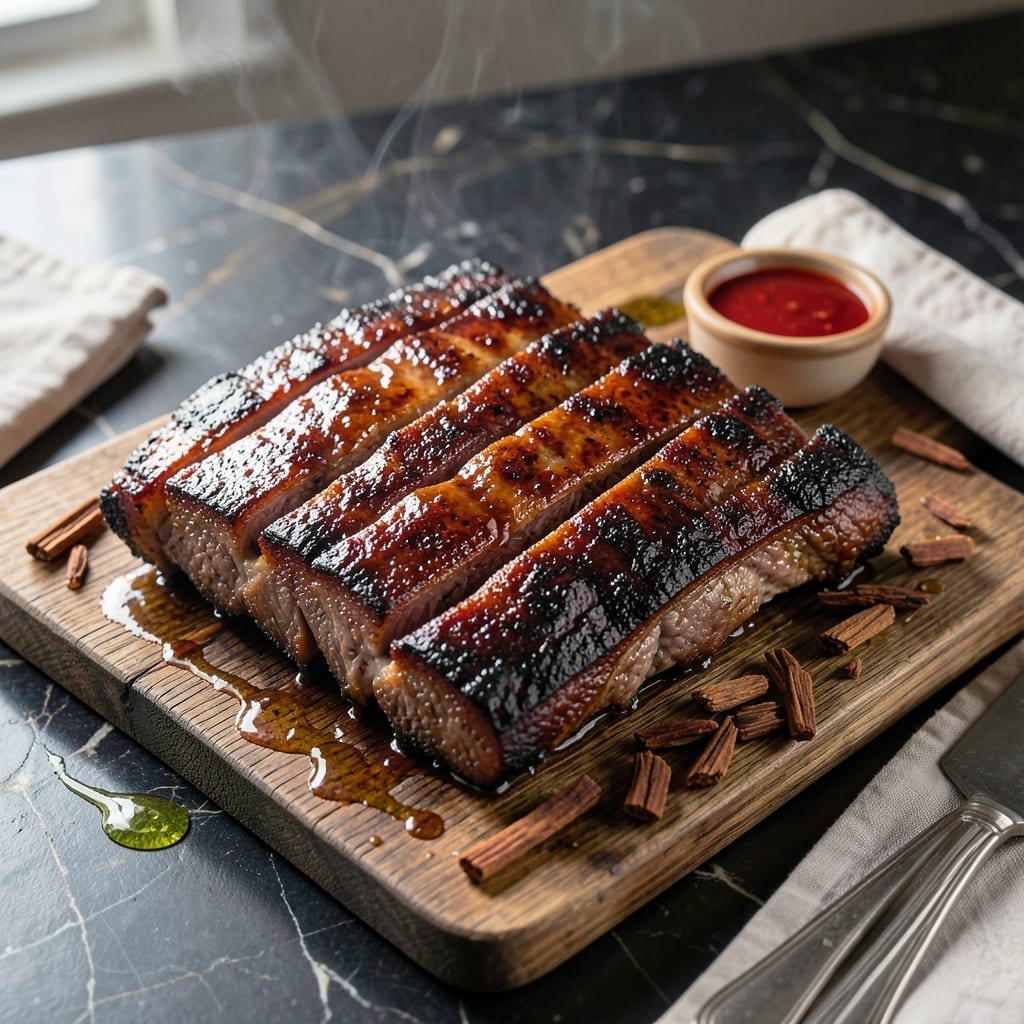
Getting my first whiff of hickory smoke at my family backyard cookout inspired this tender rib recipe. It’s the perfect blend of tradition and technique.
These ribs deliver smoke-kissed flavor with fall-off-the-bone texture. The slow cooking process ensures every bite is packed with rich, barbecue goodness.
Ingredients for Barbecue Beef Back Ribs
These carefully selected ingredients create ribs with smoke-kissed flavor and fall-off-the-bone texture.
| Ingredient | Amount | Notes |
|---|---|---|
| Beef Back Ribs 🥩 | 2 lb | Full rack, membrane removed |
| Hickory Wood Chips 🪵 | 2 cups | Soaked in water 30 minutes |
| Barbecue Sauce 🍯 | 1 ½ cups | Kansas City style preferred |
| Brown Sugar 🏝️ | ¼ cup | Light or dark variety |
| Kosher Salt 🧂 | 2 tbsp | Diamond Crystal preferred |
| Black Pepper 🌶️ | 2 tsp | Freshly ground coarse |
| Smoked Paprika 🌶️ | 1 tbsp | Spanish variety if available |
| Garlic Powder 🧄 | 1 tbsp | Not garlic salt |
| Onion Powder 🧅 | 1 tbsp | Dehydrated preferred |
| Apple Cider Vinegar 🍏 | ¼ cup | Raw unfiltered for tang |
| Yellow Mustard 🟡 | 2 tbsp | Dijon acceptable substitution |
| Worcestershire Sauce 🍶 | 2 tbsp | Anchovy-free if preferred |
| Butter 🧈 | 4 tbsp | Unsalted, for mopping |
[recipe_ingredient_scaler]
The ribs are everything here. Beef back ribs (not baby backs) provide the richest flavor and meatiest bite. Source from Costco or Whole Foods for consistent quality—look for racks with good marbling and at least 1 inch of meat between bones. The membrane removal is non-negotiable; leaving it on creates a chewy barrier between seasoning and meat. Hickory wood chips deliver that authentic smoke profile discussed in the intro.
Short on time? Pre-made rubs work fine, but make your own with the spices listed. No Kansas City sauce? Sweet Baby Ray’s or Stubb’s are solid store-bought options. For a tangier profile, add half the amount of apple cider vinegar. The Worcestershire can be swapped for soy sauce at one-to-one ratio, though the flavor will differ slightly.
Rubbed ribs keep refrigerated for 24 hours before cooking. Cooked ribs stay fresh for 3-4 days or freeze for 3 months. Always wrap tightly in foil, then plastic. The wood chips? Store dry in an airtight container for up to 1 year.
Why You’ll Love This Recipe
- Set It and Forget: The ribs just need a low-and-slow smoke with hickory chips—minimal hands-on time.
- Smoky Sweet Balance: Brown sugar caramelizes with the barbecue sauce, and the hickory adds that deep woodsy note I crave.
- Feeds the Gang: One rack of beef back ribs easily serves four, and honestly, it’s the only thing my picky uncle asks for at cookouts.
- Leftovers? Rare: Between us, these never last past the first meal—but if they did, they reheat beautifully for next-day sandwiches.
Step-by-Step Instructions for Barbecue Beef Back Ribs
Master these techniques for competition-level ribs with perfect bark and fall-apart texture.
Step 1: Prepare the Ribs and Dry Rub
Pat the 2 lb Beef Back Ribs completely dry with paper towels and remove any remaining membrane. The drier the surface, the better your bark will form during smoking. Combine the 2 tbsp Kosher Salt, 2 tsp Black Pepper, 1 tbsp Smoked Paprika, 1 tbsp Garlic Powder, and 1 tbsp Onion Powder in a small bowl.
Massage this rub mixture generously over all surfaces of the ribs, pressing it into the meat. The rub should form a visible crust. Let the seasoned ribs sit at room temperature for 30 minutes while you prepare your smoker, allowing the salt to begin penetrating the meat.
Step 2: Set Up the Smoker and Soak Wood Chips
Soak the 2 cups Hickory Wood Chips in water for 30 minutes to ensure they produce clean, steady smoke rather than burning too quickly. Meanwhile, preheat your smoker to 225°F using indirect heat.
Once soaked, drain the wood chips and add them to the smoker’s wood box or create a foil pouch with holes poked in it if your smoker doesn’t have a dedicated wood chip holder. You want thin blue smoke—not thick white smoke—which indicates proper combustion and the best flavor.
Step 3: Smoke the Ribs Low and Slow
Place the ribs bone-side down on the smoker grates. Maintain a consistent 225°F temperature throughout the cook. Smoke undisturbed for 3 hours, allowing the collagen to begin breaking down and the bark to form.
After 3 hours, check the ribs. The surface should be developing a deep mahogany color. At this point, mix the 0.25 cup Brown Sugar, 0.25 cup Apple Cider Vinegar, 2 tbsp Yellow Mustard, and 2 tbsp Worcestershire Sauce to create a mopping sauce. This will enhance the bark formation.
Step 4: Wrap and Continue Cooking
Lay out a large sheet of heavy-duty aluminum foil and place the ribs meat-side down on it. Distribute the 4 tbsp Butter evenly over the ribs, then pour half of the mopping sauce over them. Wrap tightly in the foil, creating a steam environment that will tenderize the meat.
Return the wrapped ribs to the smoker and cook for another 2 hours. This wrapped phase is crucial for breaking down the connective tissue. The ribs should now be probe-tender, with the meat starting to pull back from the bones.
Step 5: Glaze and Finish
Carefully unwrap the ribs and place them back on the smoker grates, meat-side up. Brush generously with the 1.5 cups Barbecue Sauce. This final glazing step creates that signature sticky, caramelized finish.
Return to the smoker for a final 30-45 minutes to set the sauce. The ribs are done when the meat between the bones has pulled back about ¼ inch and a toothpick slides in like butter. Remove from the smoker and let rest for 10 minutes before slicing between the bones to serve.
Pro Tips For Making Barbecue Beef Back Ribs
- Prep Ribs Overnight: I learned this the hard way—dry-brine the ribs with kosher salt and brown sugar at least 12 hours before cooking. It pulls moisture to the surface, then reabsorbs it with the seasoning for deeper flavor and better bark.
- Soak Wood Chips: Skip the bitter smoke by soaking hickory chips in water for 30 minutes before adding to the grill. Sounds weird, but it works: they’ll smolder instead of flare up, giving you that slow, steady smoke.
- Low and Slow: Resist the urge to crank the heat—keep your grill between 225°F and 250°F. After burning a few racks too fast, I finally figured out that patience is what turns tough ribs into fall-off-the-bone perfection.
- Sauce Last: My grandmother swore by this, and she was right: only brush on barbecue sauce in the final 15-20 minutes. Any earlier and the sugars burn, leaving you with a charred, bitter mess instead of sticky, sweet ribs.
Common Mistakes When Making Great barbecue beef back ribs
Skipping the Membrane
I can’t stress this enough—always remove the tough membrane on the bone side of the 2 lb Beef Back Ribs. Leaving it on creates a rubbery barrier that prevents your rub from penetrating. Use a butter knife to lift it, then grab with a paper towel for grip and pull cleanly in one motion. 💡
Inconsistent Temperature
Your smoker must stay at a steady 225°F. Fluctuations cause uneven cooking and can dry out the meat. I use a digital probe thermometer to monitor both the smoker and the ribs’ internal temp. Avoid opening the lid unnecessarily—every peek lets heat escape.
If your smoker runs hot, add water pans to stabilize the temperature. This also adds humidity to keep the ribs moist during the long cook.
Rushing the Process
Low and slow is the mantra. These ribs need 5-6 hours total to break down the collagen properly. Cutting time short results in tough, chewy meat. Trust the process—good things take time, especially with beef back ribs.
Over-Saucing Too Early
Don’t drown the ribs in 1.5 cups Barbecue Sauce during the first few hours. The sugar in the sauce can burn at smoking temperatures. Wait until the final 30-45 minutes to brush on the sauce, allowing it to caramelize perfectly without charring.
Neglecting the Rest
After all that work, don’t skip the 10-minute rest. This lets the juices redistribute through the meat. Slicing too soon causes all those beautiful juices to spill out onto the cutting board. Patience here makes the difference between good ribs and great ones.
Nutrition Facts
Frequently Asked Questions
Should I remove the membrane before cooking?
Always remove it first. Use a butter knife to lift, then pull with a paper towel for grip. Leaving it creates a rubbery barrier that blocks seasoning.
What’s the ideal smoking temperature?
Maintain a steady 225°F for perfect results. Use a digital probe thermometer to monitor and avoid fluctuations that can dry out the meat.
How do I know when they’re done?
The meat should pull back about ¼ inch from bones and a toothpick slides in easily. Total cook time is typically 5-6 hours.
Can I use a different wood for smoking?
Yes, but hickory gives the classic flavor. Apple or cherry wood work well for a sweeter profile. Avoid soft woods like pine that create bitter smoke.

Trained in classic French technique but raised on slow-cooked ribs and spicy rubs, she blends culinary skill with smoke and soul.
- Recipe for Boneless Pork Chops in Cast Iron Skillet: Sear and Baste to Juicy Perfection - October 3, 2026
- Recipe for Boneless Cross Rib Roast: Slow-Roasted Beef with Herb Crust - October 3, 2026
- Hamburgers in Sauce Recipe Crock Pot: Slow-Cooked Savory Delight - October 3, 2026