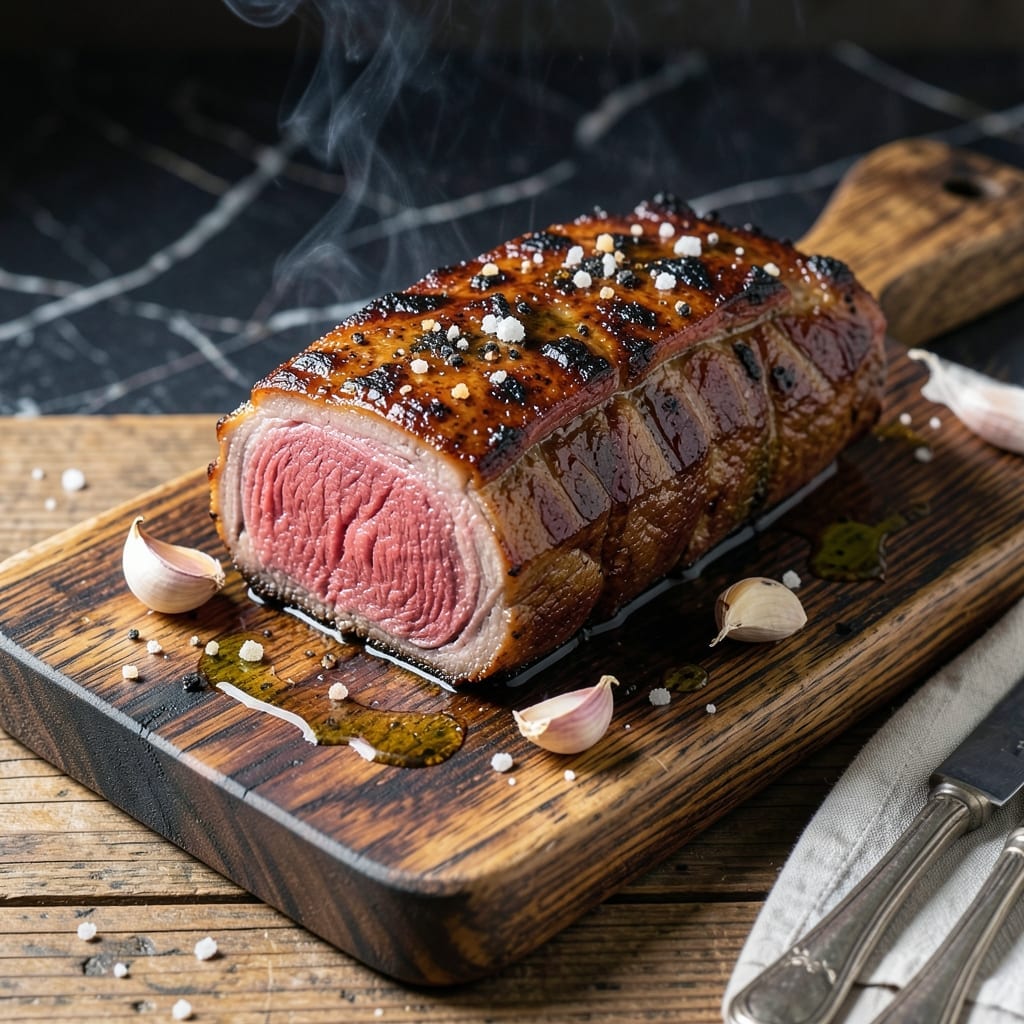
This barbecue method transforms beef tenderloin with smoky char and a velvety center that melts in your mouth.
My pitmaster training meets French technique in this recipe, ensuring every bite delivers perfect tenderness with minimal effort.
Ingredients for Barbecue Beef Tenderloin
Prime beef tenderloin plus bold seasonings create a dish worthy of a pitmaster’s table.
| Ingredient | Amount | Notes |
|---|---|---|
| Beef Tenderloin 🥩 | 2 lb | Center-cut, trimmed of excess fat |
| Coarse Kosher Salt 🧂 | 1 ½ tbsp | Diamond Crystal preferred for even seasoning |
| Freshly Ground Black Pepper 🌶️ | 1 tbsp | Coarsely ground for texture |
| Garlic Cloves 🧄 | 4 cloves | Minced to paste consistency |
| Dijon Mustard 🟡 | 2 tbsp | Whole grain preferred for depth |
| Worcestershire Sauce 🫒 | 2 tbsp | Lea & Perrins recommended |
| Olive Oil 🫒 | ¼ cup | Extra-virgin for finishing only |
| Unsalted Butter 🧈 | 4 tbsp | European-style for richer flavor |
| Fresh Rosemary Sprigs 🌿 | 2 whole | Stems removed, finely chopped |
| Fresh Thyme Sprigs 🍃 | 4 whole | Leaves stripped from stems |
| Hickory Wood Chips 🪵 | 2 cups | Soaked in water for 30 minutes |
| Red Wine 🍷 | ½ cup | Dry variety like Cabernet Sauvignon |
[recipe_ingredient_scaler]
The beef tenderloin is non-negotiable here. Center-cut pieces from a reputable butcher ensure even cooking and that buttery texture we’re after. Look for USDA Prime grade if available—it’s what professional kitchens use. Costco carries excellent whole tenderloins at a fraction of specialty shop prices. Avoid end pieces, as they taper and cook unevenly. The fat cap should be trimmed to about 1/4 inch for optimal char.
No hickory chips? Apple or cherry wood will provide a milder, fruity smoke profile. Lea & Perrins Worcestershire is the benchmark, but Annie’s organic version works acceptably. The butter can be substituted with duck fat for a richer finish, though it’s not strictly necessary. Fresh herbs are mandatory—dried simply won’t deliver the aromatic punch required for this caliber of dish.
The trimmed tenderloin can be dry-brined overnight for enhanced flavor penetration. Store uncooked meat on a wire rack over a tray in the fridge for up to 3 days. Once cooked, rest at room temperature for 20 minutes before slicing to preserve those precious juices. Leftovers, if any, keep 4 days refrigerated.
Why You’ll Love This Recipe
- Five-Ingredient Magic: The whole recipe just needs beef, salt, pepper, garlic, and mustard—no grocery-store scavenger hunt.
- Smoky Garlic Crust: I slather it in Dijon and crushed garlic before grilling, and the charred edges taste like a steakhouse special.
- Feeds a Fancy Crowd: Honestly, it’s my go-to for birthdays or Sunday suppers—looks impressive but comes together on one grill.
- Leftovers Level Up: Cold slices make killer sandwiches the next day, so I always cook extra.
Step-by-Step Instructions for Barbecue Beef Tenderloin
Master these techniques to achieve perfectly charred exterior with a tender, juicy interior every time.
Step 1: Prepare and Season the Beef Tenderloin
Begin by patting the 2 lb Beef Tenderloin completely dry with paper towels. This crucial step ensures a perfect sear. Rub the entire surface with the 2 tbsp Dijon Mustard and 2 tbsp Worcestershire Sauce to create a flavorful base layer.
In a small bowl, combine the 1.5 tbsp Coarse Kosher Salt, 1 tbsp Freshly Ground Black Pepper, finely chopped 2 whole Fresh Rosemary Sprigs, and leaves from the 4 whole Fresh Thyme Sprigs. Press this herb mixture generously onto all sides of the beef, ensuring it adheres well to the mustard coating.
Let the seasoned tenderloin sit at room temperature for 30-45 minutes while you prepare your grill. This resting period allows the salt to begin penetrating the meat for even seasoning.
Step 2: Set Up Your Grill for Indirect Heat
Soak the 2 cups Hickory Wood Chips in water for 30 minutes to prevent them from burning too quickly. Drain them just before use. Set up your grill for indirect heat: for charcoal, bank the coals to one side; for gas, turn off the center burners and leave the outer ones on.
Add the soaked wood chips directly to the coals or in a smoker box for gas grills. Preheat the grill to 375-400°F. You want to see a steady stream of smoke before adding the meat. Place a drip pan with 0.5 cup Red Wine in the center of the grill to catch drippings and add moisture to the cooking environment.
Step 3: Sear and Smoke to Perfection
Place the beef tenderloin on the grill grates over direct heat. Sear for 3-4 minutes per side until you achieve a deep, rich brown crust. This high-heat sear creates the signature charred exterior while locking in juices.
Move the tenderloin to the indirect heat side of the grill, positioning it over the drip pan. Close the lid and maintain the temperature between 325-350°F. Cook for 25-35 minutes with the lid closed, adding more wood chips as needed to maintain smoke.
Baste the beef with 0.25 cup Olive Oil and 4 tbsp Unsalted Butter every 10 minutes during cooking. The beef is done when an instant-read thermometer inserted into the thickest part registers 125-130°F for medium-rare.
Step 4: Rest and Slice for Optimal Tenderness
Transfer the beef tenderloin to a cutting board and tent loosely with foil. Let it rest for 15-20 minutes before slicing. This resting period allows the juices to redistribute throughout the meat, ensuring each slice is moist and flavorful.
The internal temperature will rise by 5-10°F during resting (carryover cooking). Slice the tenderloin against the grain into 1-inch thick medallions. The beef should have a beautiful smoke ring just beneath the surface and a velvety texture throughout.
Pro Tips For Making Barbecue Beef Tenderloin
- Sear Before Slow Cook: I learned this the hard way—always sear the beef tenderloin over high heat first to lock in juices, then move to indirect heat for even cooking. A quick 2-3 minutes per side gives that perfect crust.
- Use Room-Temp Meat: Sounds weird, but it works: take the tenderloin out of the fridge 30-60 minutes before cooking. Cold meat cooks unevenly, and you’ll end up with dry edges before the center’s done.
- Don’t Over-Salt Early: Coarse kosher salt is great, but resist the urge to salt the meat too far in advance. The salt can draw out moisture, leaving your tenderloin dry—just season right before cooking.
- Brush With Mustard: My grandmother swore by this, and she was right: a light coat of Dijon mustard on the tenderloin before seasoning helps the salt, pepper, and garlic stick better and adds a subtle tang.
Common Mistakes When Making This Dish
Skipping the Dry Pat
Never skip drying the Beef Tenderloin thoroughly with paper towels. Moisture on the surface prevents proper browning and creates a steamed texture instead of that coveted smoky char. I learned this the hard way at my first backyard cookout. 🔥
Uneven Seasoning
Press the herb and spice mixture firmly onto every surface of the beef. Light dusting leads to bland bites. Use your hands to ensure even coverage—the Dijon Mustard base helps it stick beautifully.
Rushing the Grill Prep
Your grill must reach 375-400°F before adding the meat. Adding beef to a lukewarm grill causes uneven cooking and poor smoke absorption. I always wait for that steady stream of hickory smoke first.
Overcrowding the Grates
Leave space between the tenderloin and any other items. Crowding lowers the temperature and prevents proper air circulation. This is especially true for charcoal grills where heat control is more delicate.
Neglecting the Thermometer
Guessing doneness by time alone is risky. The 125-130°F internal temperature for medium-rare is non-negotiable for that velvety texture. I keep my ThermoWorks thermometer handy at all times.
Slicing Too Soon
The 15-20 minute rest is crucial for juice redistribution. Cutting too early sends all that beautiful moisture onto your cutting board. Tent with foil to keep it warm during this final step. ✨
Nutrition Facts
Frequently Asked Questions
What temperature should the grill be?
Preheat your grill to 375-400°F before adding the meat. Maintain 325-350°F during indirect cooking and sear over direct heat for 3-4 minutes per side for best results.
How do I know when it’s done?
Use an instant-read thermometer. The beef is ready at 125-130°F internal temperature for medium-rare. Remember it will rise 5-10°F during resting.
Can I use a different wood for smoking?
Yes! Apple or cherry wood chips create a milder, fruity smoke profile. Soak any wood chips for 30 minutes before use to prevent burning too quickly.
Why rest the meat after cooking?
Resting for 15-20 minutes lets juices redistribute. Slicing too soon causes moisture loss, leaving the meat dry instead of velvety.

Trained in classic French technique but raised on slow-cooked ribs and spicy rubs, she blends culinary skill with smoke and soul.
- Recipe for Boneless Pork Chops in Cast Iron Skillet: Sear and Baste to Juicy Perfection - October 3, 2026
- Recipe for Boneless Cross Rib Roast: Slow-Roasted Beef with Herb Crust - October 3, 2026
- Hamburgers in Sauce Recipe Crock Pot: Slow-Cooked Savory Delight - October 3, 2026