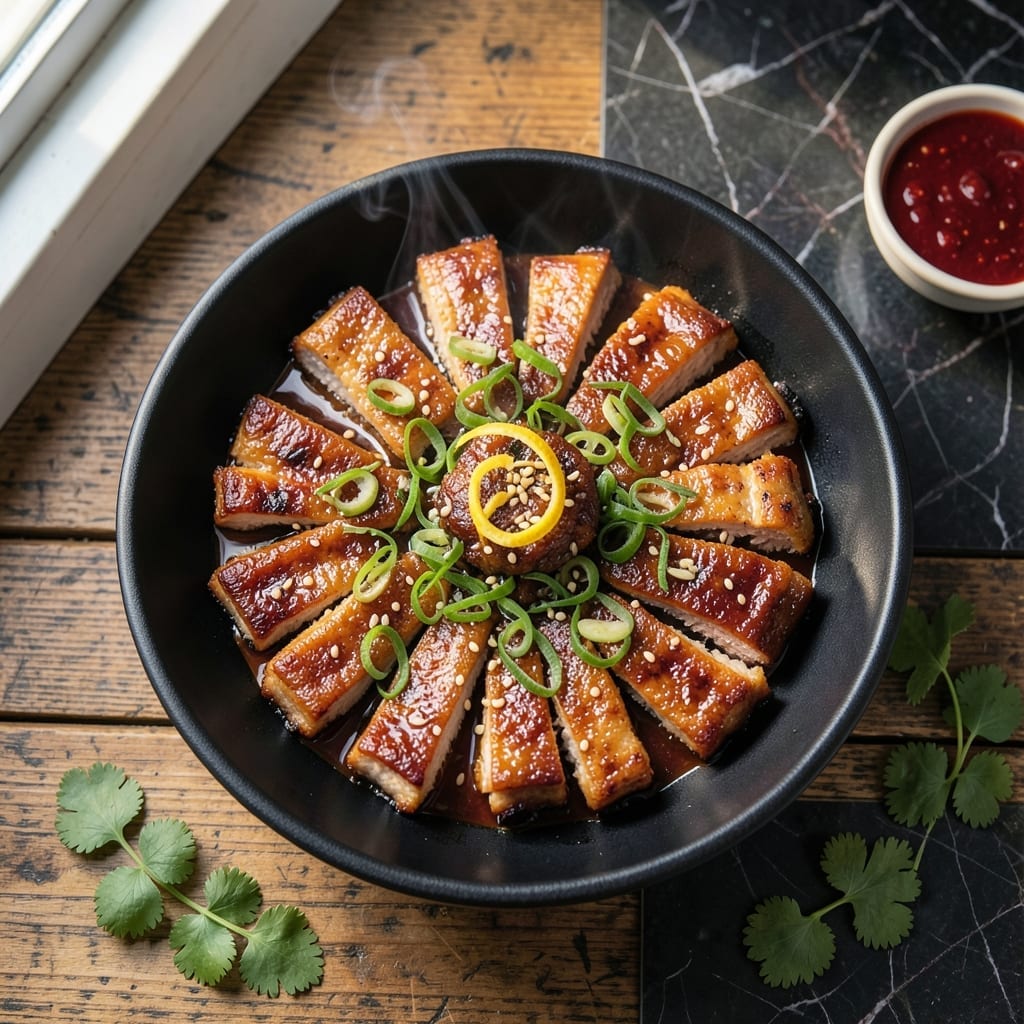
These pork ribs deliver sticky Korean BBQ flavor with perfectly charred edges every time. My pitmaster training meets traditional Asian techniques in this foolproof method.
Marinated in a sweet-savory glaze, the ribs develop a caramelized crust while staying tender inside. The secret is balancing heat and timing for that authentic smoky finish.
Ingredients for Korean Barbecue Pork Ribs
These ribs start with a bold marinade and finish with caramelized, charred perfection.
| Ingredient | Amount | Notes |
|---|---|---|
| Pork Baby Back Ribs 🥩 | 3 lb | Trimmed of excess fat |
| Gochujang 🌶️ | ½ cup | Korean red pepper paste |
| Soy Sauce 🫒 | ½ cup | Low-sodium preferred |
| Brown Sugar 🍚 | ½ cup | Light or dark variety |
| Honey 🍯 | ¼ cup | For sweetness and shine |
| Rice Vinegar 💧 | ¼ cup | Balances sweet and spicy |
| Sesame Oil 🫒 | 2 tbsp | Toasted for depth |
| Garlic Cloves 🧄 | 6 cloves | Minced for marinade |
| Fresh Ginger 🌿 | 2 tbsp | Grated, peeled |
| Green Onions 🧅 | 4 whole | Thinly sliced for garnish |
| Sesame Seeds 🌾 | 2 tbsp | Toasted for garnish |
| Black Pepper 🌶️ | 1 tsp | Freshly ground preferred |
| Kosher Salt 🧂 | 1 tbsp | For seasoning ribs |
[recipe_ingredient_scaler]
The ribs are everything here. Baby back ribs deliver the best meat-to-bone ratio and stay tender through long cooking. Look for well-marbled cuts with some fat cap—this renders down for flavor. Costco or a trusted butcher are ideal sources. Avoid pre-trimmed racks if possible; the fat contributes to that sticky glaze.
No gochujang? Sriracha mixed with a bit of miso paste can work in a pinch, though the flavor won’t be identical. Tamari substitutes for soy sauce at a 1:1 ratio. Brown sugar can be swapped for coconut sugar, but expect a slight caramel note difference. The honey is key for that glossy finish—agave or maple syrup are the closest vegan alternatives.
Marinated ribs improve overnight but can sit in the glaze for 4-12 hours minimum. Cooked ribs keep 3-4 days refrigerated or freeze for 3 months. Reheat gently in the oven to preserve the charred edges. Always toast sesame seeds fresh—they lose aroma quickly.
Why You’ll Love This Recipe
- I’ll be real: even my pickiest nephew asks for seconds when I serve these at BBQs.
- Set It and Forget: Honestly, the ribs do most of the work in the oven while I prep sides or just relax.
- Sticky Sweet Heat: That gochujang and honey glaze caramelizes into this ridiculously good, finger-licking coating.
- Crowd Pleaser: I’ll be real: even my pickiest nephew asks for seconds when I serve these at BBQs.
Step-by-Step Instructions for Korean Barbecue Pork Ribs
Master the technique of balancing sweet, spicy, and umami flavors with this method.
Step 1: Prepare and Season the Ribs
Start by patting the 3 lb Pork Baby Back Ribs completely dry with paper towels. This step is crucial for achieving a good sear and allowing the marinade to adhere properly. Remove any excess fat or membrane from the bone side of the ribs to ensure even cooking.
Season both sides generously with the 1 tbsp Kosher Salt and 1 tsp Black Pepper. I prefer to let the ribs sit with this dry rub for 15-20 minutes while I prepare the marinade, as this helps the seasoning penetrate the meat.
Step 2: Create the Korean Barbecue Marinade
In a large bowl, combine the 0.5 cup Gochujang, 0.5 cup Soy Sauce, 0.5 cup Brown Sugar, 0.25 cup Honey, 0.25 cup Rice Vinegar, and 2 tbsp Sesame Oil. Whisk vigorously until the mixture is smooth and the brown sugar is fully dissolved.
Add the 6 cloves Garlic Cloves (minced) and 2 tbsp Fresh Ginger (grated) to the bowl. Stir well to incorporate these aromatic ingredients evenly throughout the marinade. The combination of gochujang and soy sauce creates a deep umami base, while the brown sugar and honey provide the signature sticky sweetness.
Step 3: Marinate the Ribs
Place the seasoned ribs in a large, resealable plastic bag or a shallow dish. Pour the prepared marinade over the ribs, ensuring they are completely coated. I like to massage the marinade into the meat to ensure every surface is covered.
Seal the bag or cover the dish and refrigerate for at least 4 hours, or preferably overnight. This extended marinating time allows the flavors to deeply penetrate the ribs, resulting in a more flavorful and tender final product. Turn the ribs occasionally to ensure even marinating.
Step 4: Cook the Ribs to Perfection
Preheat your oven to 375°F. Remove the ribs from the marinade (reserve the marinade for basting) and place them on a foil-lined baking sheet, meat-side up. Cover the ribs loosely with foil and bake for 1 hour.
After the initial hour, remove the foil and increase the oven temperature to 425°F. Baste the ribs with the reserved marinade and return them to the oven, uncovered. Bake for an additional 15-20 minutes, basting and turning the ribs every 5 minutes, until the edges are charred and the meat is tender.
Step 5: Rest and Garnish
Once the ribs are cooked to your desired doneness, remove them from the oven and let them rest for 10 minutes. This resting period allows the juices to redistribute, ensuring the ribs remain moist and flavorful when served.
While the ribs rest, toast the 2 tbsp Sesame Seeds in a dry skillet over medium heat for 1-2 minutes until fragrant. Thinly slice the 4 whole Green Onions. Garnish the ribs with the toasted sesame seeds and sliced green onions before serving. The contrast of the charred edges with the fresh garnishes creates a visually appealing and delicious dish.
Pro Tips For Making Korean Barbecue Pork Ribs
- Parboil First: I learned this the hard way—boil the ribs for 20-30 minutes before marinating to remove impurities and help the gochujang-soy glaze penetrate deeper.
- Balance the Sweet Heat: Gochujang can overpower, so cut the brown sugar to 2 tablespoons if your paste is extra spicy—my first batch was inedibly sweet.
- Don’t Rush the Marinade: Give the ribs at least 4 hours in the fridge with the gochujang-honey mix, or the flavors won’t stick—yes, even if you’re impatient like me.
- Broil at the End: After grilling, a 3-minute broil with extra honey brushed on top gives that sticky, glossy finish everyone expects from Korean BBQ.
Pro Cooking Tips for Great korean barbecue pork ribs
Marinade Penetration
For maximum flavor, score the meat side of the ribs in a crosshatch pattern before marinating. This creates small channels for the gochujang and soy sauce mixture to penetrate deeper. I use a sharp utility knife for clean cuts.
Temperature Control
Maintain 375°F for the first hour to cook the ribs gently. Then crank it to 425°F for the final char. An oven thermometer is essential—home ovens often run 25-50°F off. 🌡️
Basting Technique
Baste every 5 minutes during the final phase, but don’t drown the ribs. Use a silicon brush for even coverage. The sugars in the marinade will caramelize quickly at high heat, creating that sticky glaze.
Charred Edges Trick
For extra char, broil for 2-3 minutes at the end, watching closely. The brown sugar and honey in the marinade will create a beautiful crust. I learned this trick at a local BBQ competition.
Resting Importance
Let the ribs rest 10 minutes before cutting. This allows the juices to redistribute. If you cut too soon, you’ll lose that tenderness. I always set a timer to avoid the temptation.
Garnish Timing
Toast the sesame seeds and slice the green onions during the rest period. This ensures they’re fresh when served. The contrast of fresh garnishes with charred meat is what makes this dish special. 💛
Nutrition Facts
Frequently Asked Questions
Can I use a different cut of pork?
Baby back ribs work best, but spare ribs are a good alternative. They’re meatier but need 30 minutes extra cooking time. Avoid country-style ribs as they lack the right texture.
How spicy is the gochujang glaze?
Gochujang adds moderate heat, but the sweetness balances it. For milder flavor, reduce to 1/4 cup and add 1 tbsp extra honey. For more heat, include 1 tsp gochugaru (Korean chili flakes).
Can I grill these instead of baking?
Use indirect heat at 375°F for 1 hour, then move to direct heat for charring. Baste frequently to prevent burning from the sugars.
How do I store leftovers?
Keep in an airtight container for up to 4 days. Reheat in the oven at 350°F for 10-15 minutes to maintain tenderness. Avoid microwaving, as it can make the meat tough.

Trained in classic French technique but raised on slow-cooked ribs and spicy rubs, she blends culinary skill with smoke and soul.
- Recipe for Boneless Pork Chops in Cast Iron Skillet: Sear and Baste to Juicy Perfection - October 3, 2026
- Recipe for Boneless Cross Rib Roast: Slow-Roasted Beef with Herb Crust - October 3, 2026
- Hamburgers in Sauce Recipe Crock Pot: Slow-Cooked Savory Delight - October 3, 2026