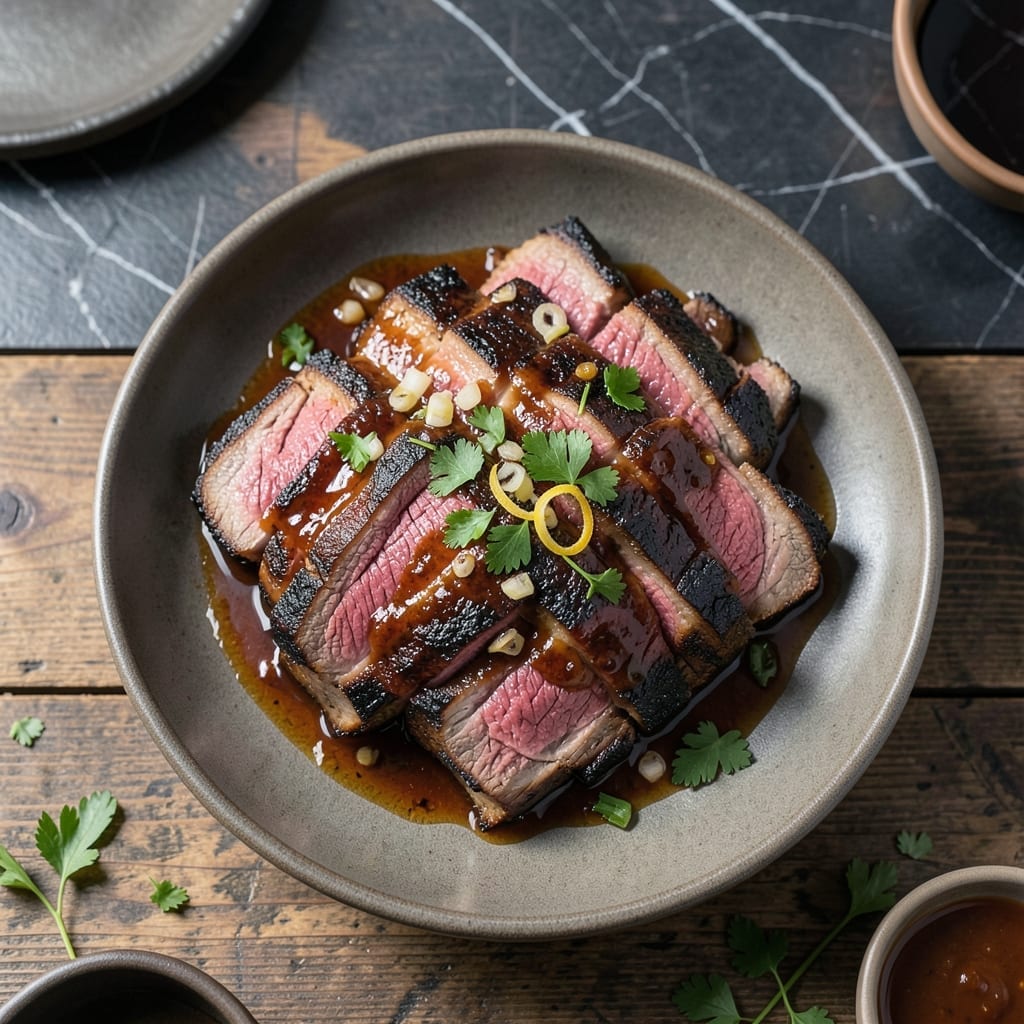
Low and slow is the only way to achieve that tender, fall-apart texture that defines great barbecue brisket. This method transforms tough cuts into smoky, juicy perfection.
I’ve spent years refining my approach, combining classic pitmaster techniques with a few professional tricks. The result is brisket with a rich bark and melt-in-your-mouth slices every time.
Ingredients for Barbecue Brisket
This is the short list for brisket that’s worth the wait. Smoky, tender, perfect every time.
| Ingredient | Amount | Notes |
|---|---|---|
| Beef Brisket 🥩 | 4 lb | Whole packer cut preferred |
| Kosher Salt 🧂 | ¼ cup | Coarse grain for bark formation |
| Black Pepper 🌶️ | ¼ cup | Freshly ground coarse |
| Garlic Powder 🧄 | 2 tbsp | Granulated for even coating |
| Onion Powder 🧅 | 2 tbsp | Fine powder for rub |
| Paprika 🌶️ | 2 tbsp | Smoked or sweet variety |
| Brown Sugar 🍚 | ¼ cup | Light or dark for bark |
| Mustard Powder 🟡 | 1 tbsp | For rub adhesion |
| Cayenne Pepper 🔥 | 1 tsp | Adjust for heat preference |
| Apple Cider Vinegar 🍏 | ½ cup | For spritzing during cook |
| Hickory Wood Chunks 🪵 | 4 pieces | For smoking, soaked if needed |
| Beef Broth 🥩 | 2 cups | Low-sodium preferred |
| Barbecue Sauce 🍯 | 1 ½ cups | For mopping and serving |
| Yellow Mustard 🟡 | ¼ cup | Binder for rub application |
[recipe_ingredient_scaler]
The brisket itself is non-negotiable. Whole packer cut (point and flat together) from a trusted butcher gives you that perfect fat marbling—Costco has great pre-trimmed options if you’re short on time. Look for USDA Choice or Prime grade, and don’t trim the fat cap yourself unless you’re experienced. The rub ingredients are pantry staples, but freshly ground black pepper makes a noticeable difference in the bark.
Out of brown sugar? White sugar plus a touch of molasses gets close. No apple cider vinegar? White vinegar with a teaspoon of sugar works in a pinch. For the wood, hickory or oak are classic, but pecan or mesquite add nice variations. If you can’t find wood chunks, wood chips in a smoker box do the job—just soak them first. The barbecue sauce is flexible: store-bought or homemade both shine here.
The rub keeps in an airtight container for 6 months, but the brisket needs cooking within 2-3 days of purchase. Leftovers? They freeze beautifully for up to 3 months. Slice before freezing for easy portioning later. Always let the brisket rest (wrapped in towels) for at least 1 hour before slicing.
Why You’ll Love This Recipe
- Set It and Forget: I rub the brisket with salt, pepper, and those powders the night before, then let the smoker do all the work.
- Smoky Depth: That garlic and onion powder crust forms the most ridiculous bark—sweet, spicy, and worth every minute.
- Feeds the Gang: One brisket, one smoke session, and suddenly I’ve got sandwiches, tacos, and leftovers for the whole block.
- Budget Hero: Honestly, a big cut of brisket is cheaper per pound than steaks, and it stretches for days.
Step-by-Step Instructions for Texas-Style Barbecue Brisket
This method delivers fall-apart tender brisket with a deep mahogany bark every time.
Step 1: Prepare and Season the Beef Brisket
Pat the 4 lb Beef Brisket completely dry with paper towels to ensure the rub adheres properly. Trim any excess fat, leaving about ¼ inch for flavor and moisture. In a bowl, combine the 0.25 cup Kosher Salt, 0.25 cup Black Pepper, 2 tbsp Garlic Powder, 2 tbsp Onion Powder, 2 tbsp Paprika, 0.25 cup Brown Sugar, 1 tbsp Mustard Powder, and 1 tsp Cayenne Pepper.
Brush the 0.25 cup Yellow Mustard thinly over the entire surface of the brisket—this acts as a binder for the rub. Generously coat all sides with the spice mixture, pressing firmly so it sticks. Let the seasoned brisket sit at room temperature for 1 hour to allow the flavors to penetrate.
Step 2: Set Up the Smoker for Low and Slow Cooking
Preheat your smoker to 225-250°F using the 4 pieces Hickory Wood Chunks for a rich, smoky flavor. Soak the wood chunks in water for 30 minutes before use to ensure steady smoke. Place a water pan in the smoker to maintain humidity, which is crucial for keeping the brisket moist during the long cook.
Once the smoker reaches the target temperature and produces thin, blue smoke, place the brisket fat-side up on the grill grates. The fat cap will render down, basting the meat as it cooks. Close the lid and avoid opening it unnecessarily—every peek releases heat and extends the cooking time.
Step 3: Smoke and Spritz for Maximum Flavor
Smoke the brisket undisturbed for 4-5 hours until it develops a dark crust, or bark. Every 1-2 hours, spritz the brisket with the 0.5 cup Apple Cider Vinegar mixed with an equal amount of water in a spray bottle. This keeps the surface moist and enhances bark formation.
After the initial smoke phase, check the internal temperature with a meat thermometer. When it reaches 165-170°F, you’ll hit the stall—a plateau where the temperature stops rising. Wrap the brisket tightly in butcher paper to power through this phase, then return it to the smoker.
Step 4: Finish to Perfection and Rest
Continue cooking until the internal temperature reaches 200-205°F and a probe slides in like butter. This usually takes another 3-4 hours, but rely on tenderness rather than time. During the last hour, mop the brisket with 1.5 cups Barbecue Sauce for added flavor and moisture.
Once done, transfer the brisket to a cutting board and let it rest, wrapped in a towel, for at least 1 hour. This resting period allows the juices to redistribute, ensuring every slice is moist and tender. Serve with the remaining barbecue sauce and additional beef broth on the side if desired.
Pro Tips For Making Barbecue Brisket
- Start Low and Slow: I learned this the hard way—cook at 225°F for at least 8-10 hours, or the brisket will come out tough instead of fall-apart tender.
- Trim the Fat Cap: Leave about 1/4 inch of fat to protect the meat, but trim any thick chunks, or they’ll never render down properly.
- Don’t Rush the Rest: After pulling it off the smoker, let it rest wrapped in foil for a full hour—this keeps all the juices inside where they belong.
- Season Overnight: Sounds weird, but dusting the brisket with salt, pepper, garlic, and onion powder the night before actually lets the flavors sink in deeper.
Troubleshooting Perfect Results
Stall Plateaus
If your brisket temperature stalls around 165°F, don’t panic—this is normal. The moisture on the surface evaporates, cooling the meat. I wrap mine in pink butcher paper to push through. It’ll save 2-3 hours of cook time. 💡
Bark Too Dark
If the bark darkens too quickly, lower your smoker temp to 225°F and spritz more often with apple cider vinegar. Too much direct heat can burn the sugars in your rub. I always keep a spray bottle handy.
Dry Texture
Dry brisket usually means it cooked too hot or too fast. Stick to 225-250°F and spritz every 1-2 hours. If it’s already dry, serve with extra barbecue sauce or beef broth to add moisture back.
Uneven Cooking
The flat cooks faster than the point. If one side is ahead, rotate the brisket 180 degrees halfway through. I also check the thicker point with my thermometer to ensure even doneness.
Tough Slices
Toughness means it didn’t cook long enough. Brisket needs to reach 200-205°F internally for collagen to break down. Probe it—it should slide in like butter. If not, wrap and return it to the smoker for another 1-2 hours. 🔥
Weak Smoke Flavor
Use dry wood chunks instead of soaked for stronger smoke. Soaked wood creates steam, not smoke. I prefer hickory or oak for bold flavor. Also, avoid opening the smoker too often—keep that smoke trapped inside.
Nutrition Facts
Frequently Asked Questions
What’s the ideal internal temperature for doneness?
Aim for 200-205°F internally. At this range, collagen melts into gelatin, making the meat tender. Always use a probe thermometer for accuracy.
Can I use an oven instead of a smoker?
Yes, but you’ll miss the smoky flavor. Set your oven to 225°F and use a roasting pan with a rack. Add 1-2 drops of liquid smoke to the rub for a hint of that classic taste.
How long should it rest before slicing?
Rest for at least 1 hour, wrapped in towels. This lets juices redistribute for moist, even slices. Slicing too soon causes dryness.
Why does the temperature stall during cooking?
The stall happens around 165°F as moisture evaporates. Wrap in butcher paper to push through faster, saving 2-3 hours of cook time.

Trained in classic French technique but raised on slow-cooked ribs and spicy rubs, she blends culinary skill with smoke and soul.
- Recipe for Boneless Pork Chops in Cast Iron Skillet: Sear and Baste to Juicy Perfection - October 3, 2026
- Recipe for Boneless Cross Rib Roast: Slow-Roasted Beef with Herb Crust - October 3, 2026
- Hamburgers in Sauce Recipe Crock Pot: Slow-Cooked Savory Delight - October 3, 2026