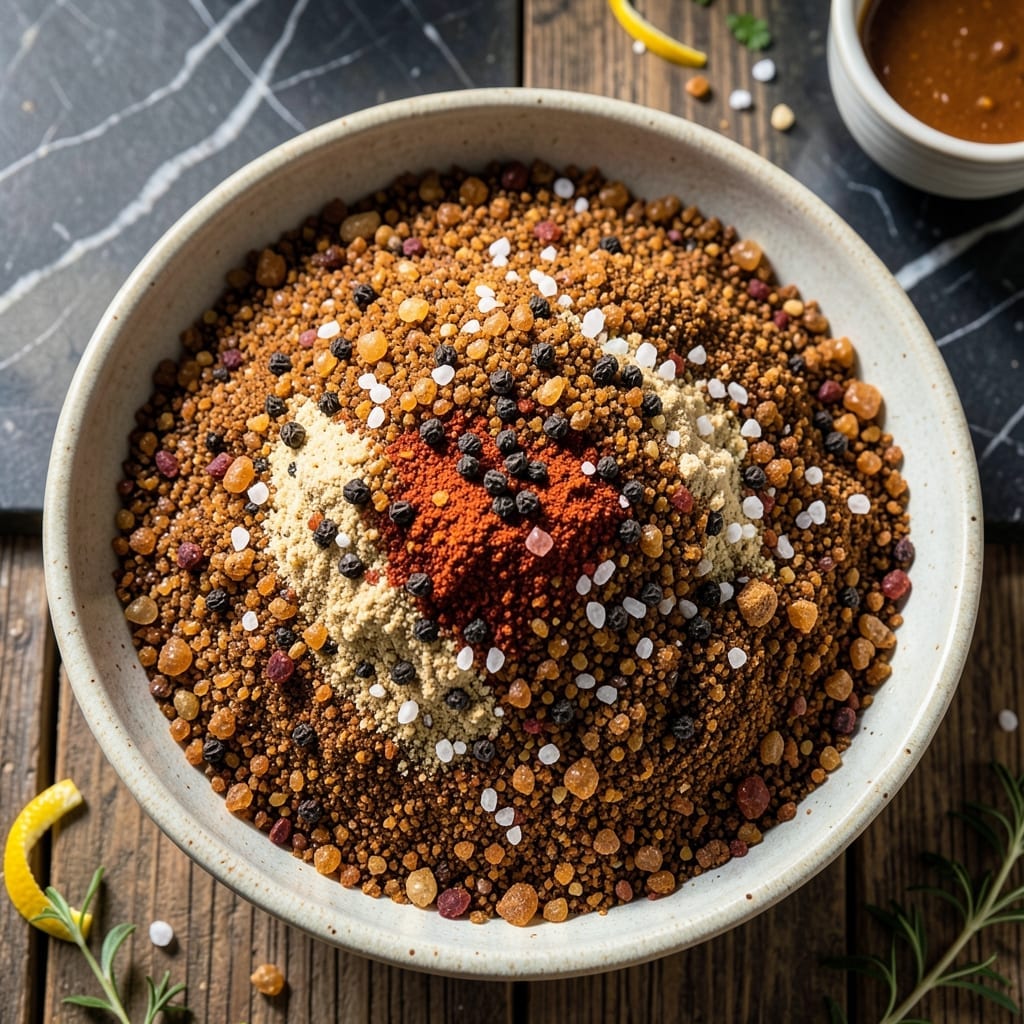
This bold spice blend transforms any protein with its balanced mix of smoky, sweet, and spicy notes. I developed it after years of perfecting my competition-style rubs.
Make a big batch and keep it on hand—it lasts 6 months in an airtight container and works on everything from ribs to chicken.
Ingredients for Barbecue Rub Seasoning
Nine spices. One perfect blend. Works on absolutely everything.
| Ingredient | Amount | Notes |
|---|---|---|
| Brown Sugar 🍚 | ½ cup | Light or dark variety |
| Smoked Paprika 🌶️ | 3 tbsp | Essential for smoky depth |
| Ground Black Pepper 🌶️ | 2 tbsp | Freshly ground preferred |
| Kosher Salt 🧂 | 2 tbsp | Diamond Crystal preferred |
| Garlic Powder 🧄 | 2 tbsp | Not garlic salt |
| Onion Powder 🧅 | 2 tbsp | Fresh ground ideal |
| Chili Powder 🌶️ | 1 tbsp | Mild or hot variety |
| Ground Cumin 🌿 | 1 tbsp | Toasted for deeper flavor |
| Cayenne Pepper 🔥 | 1 tsp | Adjust for heat preference |
[recipe_ingredient_scaler]
The smoked paprika is non-negotiable here—it’s doing the heavy lifting for that competition-level depth. Penzeys or Spicewalla have the best quality, but McCormick from the grocery store works fine if it’s fresh. Brown sugar adds caramelization, so don’t skip it. I always use light brown for a milder molasses note, but dark brown gives a deeper flavor (your call).
No brown sugar? White sugar plus a splash of molasses gets you close. Out of smoked paprika? Use regular paprika plus a pinch of chipotle powder. The cayenne can be scaled back if you’re heat-sensitive, or boosted if you like it fiery. This blend tastes even better after sitting for 24 hours—the spices meld together.
Store in an airtight container in a cool, dark place. Stays potent for 6 months—trust me, you’ll use it all before then. I keep mine in a mason jar by the grill so it’s always ready. Doubling the batch is a smart move (you’ll wish you had more).
Why You’ll Love This Recipe
- 5-Minute Mix: I dump all five ingredients in a bowl, stir, and boom—ready to use. Honestly, it’s faster than waiting in the spice aisle.
- Smoky Sweet Balance: That brown sugar caramelizes while the smoked paprika adds depth, so every bite has that classic BBQ taste without being overpowering.
- Rub for Anything: I’ve used it on ribs, chicken, even roasted nuts. Between us, it might be the most versatile thing in my kitchen.
- Stays Fresh: One batch lasts me months in the pantry. I’ll be real: it saves me money compared to buying those tiny pre-made jars.
Step-by-Step Instructions for Barbecue Rub Seasoning
Here’s the method I use to create this flavor-packed blend that transforms any protein.
Step 1: Combine the Sweet and Spicy Base
Start by adding the 0.5 cup Brown Sugar to a medium bowl. I prefer light brown sugar for a milder molasses flavor, but dark works if you want deeper caramel notes. The sugar forms the foundation of this rub, creating that signature caramelized crust on grilled meats.
Add the 3 tbsp Smoked Paprika and 1 tbsp Chili Powder to the bowl. These two spices provide the essential smoky backbone and warm, slightly earthy heat that defines great barbecue rub. The smoked paprika is non-negotiable—it delivers that authentic pit-smoked flavor without needing a smoker.
Step 2: Layer in the Savory Elements
Now incorporate the 2 tbsp Kosher Salt, 2 tbsp Ground Black Pepper, 2 tbsp Garlic Powder, and 2 tbsp Onion Powder. These four ingredients create the savory depth that balances the sweetness. I always use Diamond Crystal kosher salt because it adheres better to meat and seasons more evenly.
Mix these with the sugar and paprika combination. The garlic and onion powders might seem like a lot, but they mellow during cooking and create that classic barbecue flavor profile we all crave. Freshly ground black pepper makes a noticeable difference here—its sharp, pungent aroma cuts through the richness.
Step 3: Add the Finishing Touches
Sprinkle in the 1 tbsp Ground Cumin and 1 tsp Cayenne Pepper. The cumin adds an earthy warmth that complements the smoked paprika beautifully, while the cayenne brings just enough heat to keep things interesting. If you’re sensitive to spice, you can reduce the cayenne to ½ tsp.
This is where the magic happens. The cumin might seem like a small amount, but it’s powerful—just enough to add complexity without overpowering. The cayenne should provide a gentle background warmth rather than an aggressive burn. You can always adjust the heat level to your preference.
Step 4: Blend and Store for Maximum Flavor
Using a whisk or fork, thoroughly combine all the ingredients until evenly distributed. The mixture should look uniform with no visible streaks of individual spices. I like to press the spices into the sugar slightly to help them adhere when applied to meat.
Transfer the rub to an airtight container. For best results, let it sit for at least 24 hours before using. This resting time allows the flavors to meld together. Stored in a cool, dark place, this rub will keep its potency for up to 6 months. The flavors actually improve over the first week as the spices continue to blend.
Pro Tips For Making Barbecue Rub Seasoning
- Toast Your Spices: Lightly toast the smoked paprika and black pepper in a dry skillet for 30 seconds—I learned this the hard way after wondering why my rub tasted flat.
- Break Up Sugar: Press the brown sugar with the back of a spoon to eliminate clumps, or you’ll end up with uneven sweet spots in every bite.
- Skip Table Salt: Use kosher salt instead of table salt, as it dissolves better and won’t leave grainy bits on your meat.
- Rest Before Rubbing: Apply the rub at least 30 minutes before cooking—sounds weird, but it works to let the flavors actually penetrate.
Best Sauces and Condiments for This Recipe
Classic BBQ Sauce
A tangy ketchup-based sauce with 2 tbsp apple cider vinegar and 1 tbsp brown sugar complements this rub perfectly. I like Stubb’s Original for its balanced sweetness. Brush it on ribs during the last 30 minutes of cooking.
White Vinegar Mop
For pulled pork, a simple mop of 1 cup white vinegar, ½ cup water, and 1 tbsp rub keeps the meat moist. I learned this trick at local BBQ competitions—it adds a bright contrast to the rich spice blend.
Alabama White Sauce
This mayonnaise-based sauce with ¼ cup apple cider vinegar and 1 tbsp horseradish is perfect for smoked chicken. The creamy texture balances the rub’s boldness beautifully. 💫
Spicy Mustard Glaze
Mix ½ cup Dijon mustard with 2 tbsp honey and 1 tsp rub for a tangy glaze. It works especially well on grilled pork chops, adding a sweet-spicy crust. I always keep Grey Poupon on hand for this.
Butter Baste
For steaks, melt 4 tbsp butter with 1 tsp rub and baste while cooking. This technique, inspired by my French training, creates an incredible crust. The butter helps the rub caramelize beautifully.
Cooling Dips
Serve with ranch or blue cheese dressing to balance the heat. The cool creaminess is the perfect foil for the rub’s smoky spice. I prefer Hidden Valley for its classic flavor. 🔥
Nutrition Facts
Frequently Asked Questions
Can I use white sugar instead of brown?
Yes, but add 1 tsp molasses per ½ cup for similar depth. Brown sugar’s molasses adds moisture and caramelization that white sugar lacks.
How do I adjust the heat level?
Reduce cayenne to ½ tsp for mild heat or increase to 2 tsp for fiery kick. You can also swap in chipotle powder for smoky heat instead.
Can this rub be used on vegetables?
It works wonderfully on grilled corn, portobello mushrooms, or cauliflower steaks. The sugar helps caramelize veggies beautifully.
What’s the best way to apply it?
Pat meat dry first, then coat generously (1-2 tbsp per pound). Press it in firmly and let sit for 30 minutes before cooking.

Trained in classic French technique but raised on slow-cooked ribs and spicy rubs, she blends culinary skill with smoke and soul.
- Recipe for Boneless Pork Chops in Cast Iron Skillet: Sear and Baste to Juicy Perfection - October 3, 2026
- Recipe for Boneless Cross Rib Roast: Slow-Roasted Beef with Herb Crust - October 3, 2026
- Hamburgers in Sauce Recipe Crock Pot: Slow-Cooked Savory Delight - October 3, 2026