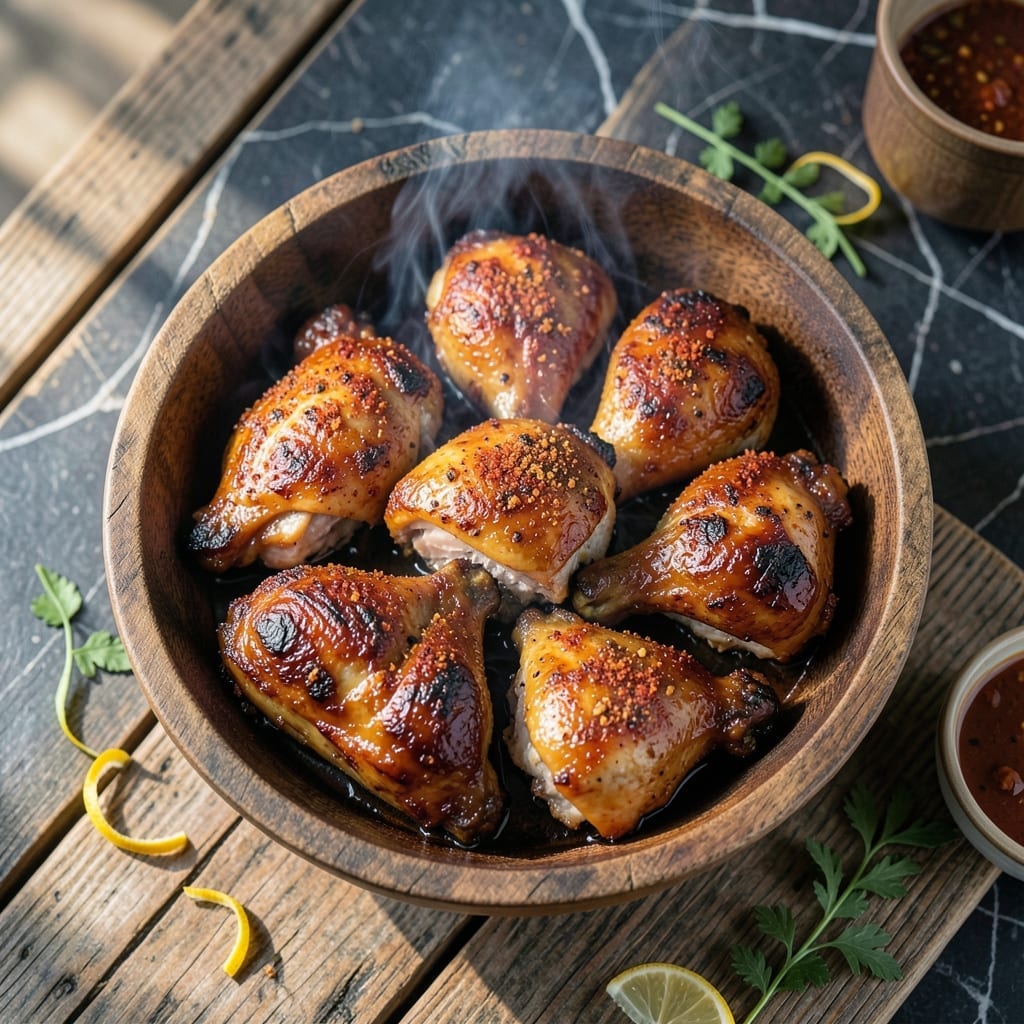
There’s something primal about the first whiff of hickory smoke curling from the grill as chicken sizzles. This method delivers tender meat with caramelized sauce clinging to every bite.
I’ve refined this technique through years of backyard cookouts and local BBQ competitions. The secret lies in a balanced rub and a sauce applied at the perfect moment to prevent burning.
You’ll achieve juicy, saucy chicken with distinct grill marks, proving that great barbecue isn’t just for pitmasters. The process is straightforward but demands attention to detail.
Serve this crowd-pleaser with classic sides like coleslaw and cornbread. The results speak for themselves.
Ingredients for Barbecued Chicken
Quality chicken and a well-balanced rub create juicy, grill-marked results every time.
| Ingredient | Amount | Notes |
|---|---|---|
| Chicken Thighs and Drumsticks 🍗 | 3 ½ lb | Bone-in, skin-on for flavor |
| Hickory Wood Chips 🪵 | 2 cups | Soaked in water 1 hour |
| Brown Sugar 🍚 | ½ cup | Light or dark variety |
| Paprika 🌶️ | 2 tbsp | Sweet or smoked variety |
| Garlic Powder 🧄 | 2 tsp | Not garlic salt |
| Onion Powder 🧅 | 2 tsp | Fresh ground preferred |
| Kosher Salt 🧂 | 2 tbsp | Diamond Crystal preferred |
| Black Pepper 🌶️ | 1 ½ tsp | Freshly ground preferred |
| Cayenne Pepper 🔥 | ½ tsp | Adjust for heat preference |
| Ketchup 🍅 | 2 cups | High-quality for depth |
| Apple Cider Vinegar 🍏 | ¼ cup | Balances sweetness in sauce |
| Worcestershire Sauce 🫒 | 2 tbsp | Lea & Perrins recommended |
| Molasses 🫙 | 2 tbsp | Adds depth to sauce |
| Butter 🧈 | ¼ cup | Unsalted, for sauce richness |
| Olive Oil 🫒 | 2 tbsp | For brushing grill grates |
[recipe_ingredient_scaler]
The chicken is critical here. Bone-in, skin-on thighs and drumsticks deliver superior flavor and juiciness—boneless dries out too quickly. Source from Whole Foods or local butchers for the best texture. Hickory chips should be 100% natural (no lighter fluid additives). Soak them for at least an hour; this prevents flare-ups and ensures steady smoke.
No hickory chips? Apple or cherry wood work beautifully too. For the rub, freshly toasted spices elevate the flavor, but pre-ground is perfectly acceptable. If molasses is unavailable, honey or maple syrup can substitute (though it’ll be slightly sweeter). Anchovy-free Worcestershire is available if you’re avoiding fish products—Annie’s makes a solid version.
Store raw chicken in the coldest part of your fridge and use within 2 days. The rub keeps indefinitely in an airtight container. Sauce can be refrigerated for up to 1 week or frozen for 3 months—perfect for making ahead.
Why You’ll Love This Recipe
- I’ll be real: chicken thighs and drumsticks are cheap, and this recipe turns them into something ridiculously good.
- One Pan Wonder: I toss the thighs and drumsticks with the spice rub, then let the smoker do the rest—no flipping, no fuss.
- Smoky Sweet Kick: Honestly, that hickory smoke with the brown sugar glaze? It’s the reason I make this every weekend.
- Feeds a Hungry Crowd: Between us, it’s my go-to for summer potlucks—always disappears first, and the leftovers (if any) taste even better cold.
Step-by-Step Instructions for Barbecued Chicken
Master the grill with this precise method for fall-off-the-bone tenderness and bold flavor.
Step 1: Prepare and Season the Chicken
Pat the chicken thighs and drumsticks completely dry with paper towels. This ensures the dry rub adheres properly and promotes even browning. In a bowl, combine the brown sugar, paprika, garlic powder, onion powder, kosher salt, black pepper, and cayenne pepper to create your rub.
Generously coat all sides of the chicken with the spice mixture, pressing it into the skin so it forms an even layer. I find using about 2 tablespoons of the rub per pound of chicken gives the perfect intensity. Let the seasoned chicken rest at room temperature for 30 minutes while you prepare the grill.
Step 2: Set Up the Grill for Indirect Cooking
Soak the hickory wood chips in water for 1 hour before grilling. Drain them and place in a smoker box or wrap in foil with holes poked through. Preheat your grill to 350-375°F for indirect cooking—this means the coals or burners are on one side and the chicken cooks on the other.
Brush the grill grates with olive oil to prevent sticking. When the grill reaches temperature, add the wood chips to create smoke. Place the chicken on the cool side of the grill, skin-side up. Close the lid and maintain a consistent temperature throughout cooking.
Step 3: Grill and Baste with Barbecue Sauce
Grill the chicken for 25-30 minutes with the lid closed, turning occasionally for even cooking. While it cooks, prepare the barbecue sauce by combining ketchup, apple cider vinegar, Worcestershire sauce, molasses, and butter in a saucepan. Simmer over medium heat for 5 minutes, stirring until smooth and slightly thickened.
During the last 10-15 minutes of grilling, move the chicken to the direct heat side and begin basting with the sauce. Turn frequently and baste each time to build up layers of flavor. The chicken is done when it reaches an internal temperature of 165°F and the juices run clear.
Step 4: Rest and Serve
Transfer the barbecued chicken to a cutting board or serving platter. Tent loosely with foil and let it rest for 5-10 minutes. This resting period allows the juices to redistribute throughout the meat, ensuring maximum tenderness.
Serve the chicken with any remaining barbecue sauce on the side. The skin should be caramelized and slightly sticky from the sauce, while the meat inside remains moist and flavorful. For best results, serve immediately while still warm.
Pro Tips For Making Barbecued Chicken
- Pre-Soak the Wood: Soak hickory chips in water for at least 30 minutes before smoking—dry chips burn too fast and can bitter the chicken.
- Score the Skin: Lightly slash the skin on thighs and drumsticks so the brown sugar and paprika rub penetrates deeper and forms a better crust.
- Skip High Heat: I learned this the hard way—barbecue chicken needs steady medium heat (around 275°F) to cook through without drying out.
- Rest Before Serving: Pull the chicken off 5°F before target temp and let it rest 10 minutes under foil—keeps the juices where they belong.
Dietary Considerations for These Flavors
Gluten-Free Adaptation
This dish is naturally gluten-free as long as you verify your Worcestershire sauce and ketchup. I recommend Annie’s for both—their versions are certified gluten-free. Always check labels, as some brands add wheat-based thickeners. 💪
Lower Sugar Option
To reduce sugar, cut the brown sugar in the rub by half and replace the molasses in the sauce with 1 tbsp sugar-free maple syrup. The apple cider vinegar helps balance any sweetness without adding sugar.
Dairy-Free Modification
Simply swap the butter in the sauce for olive oil or coconut oil. I’ve tested both, and they maintain the sauce’s richness. Coconut oil adds a subtle depth that pairs well with the hickory smoke.
Lower Sodium Version
Reduce the kosher salt in the rub to 1 tbsp and use low-sodium Worcestershire sauce. Boost flavor with 1 tsp smoked paprika and fresh herbs from my coastal foraging spots. The smoke and spices still deliver big taste.
You can also skip salting the chicken before cooking and let the sauce provide the seasoning. 🌿
Keto-Friendly Adjustments
Replace the brown sugar with a keto-friendly sweetener like allulose or erythritol—use ¼ cup instead of ½ cup. The sauce will thicken differently, so simmer it a few minutes longer.
Nutrition Facts
Frequently Asked Questions
What’s the best wood for smoking?
Hickory delivers classic bold flavor, but apple or cherry wood work beautifully too. Soak chips for 1 hour before use to prevent flare-ups and ensure steady smoke.
Can I use chicken breasts instead?
Yes, but reduce cooking time to 20-25 minutes. Breasts dry out faster, so monitor internal temperature closely—it should reach 165°F.
Why do I need indirect heat first?
Indirect cooking ensures even doneness without burning the sauce. The 350-375°F range cooks the meat through before caramelizing the exterior with direct heat.
How do I prevent the sauce from burning?
Wait until the last 10-15 minutes to baste. Keep a spray bottle of water nearby for flare-ups and turn pieces frequently to distribute heat evenly.

Trained in classic French technique but raised on slow-cooked ribs and spicy rubs, she blends culinary skill with smoke and soul.
- Recipe for Boneless Pork Chops in Cast Iron Skillet: Sear and Baste to Juicy Perfection - October 3, 2026
- Recipe for Boneless Cross Rib Roast: Slow-Roasted Beef with Herb Crust - October 3, 2026
- Hamburgers in Sauce Recipe Crock Pot: Slow-Cooked Savory Delight - October 3, 2026