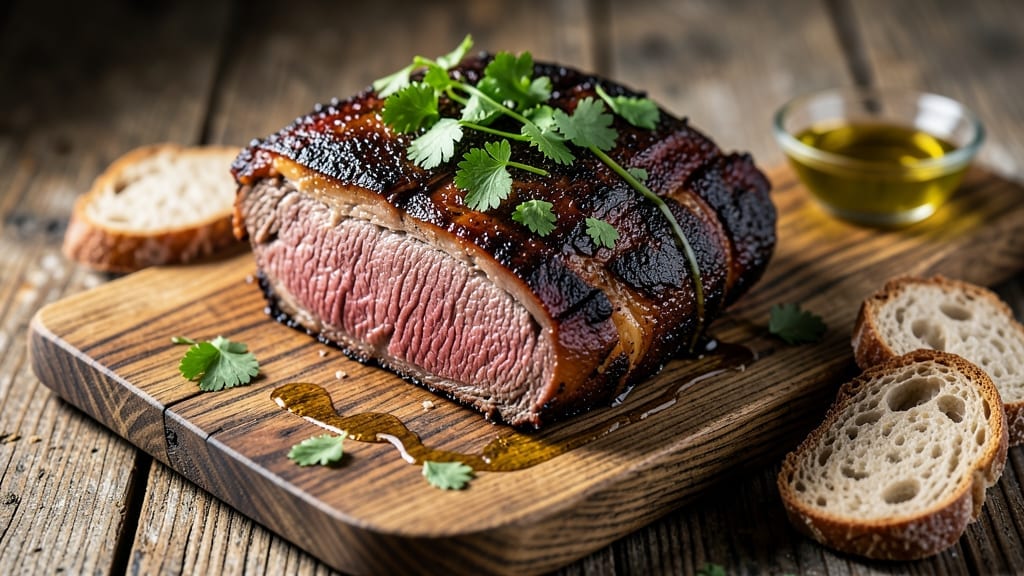
Transforming barbecue corned beef brisket into a showstopper requires patience and precision, but the result—a tender, smoky masterpiece with layers of sweet and savory—is worth every minute. 💛 The secret lies in soaking the brisket overnight to melt away excess salt, then slow-cooking it until it practically falls apart, all while building deep, caramelized flavors through careful temperature control.
This recipe bridges two beloved traditions: the tender, spiced richness of corned beef with the bold, smoky depth of barbecue. Whether you’re using a smoker, grill, or oven, the low-and-slow method ensures a perfectly cooked brisket with a bark that’s both crisp and flavorful.
The brisket rests after cooking, allowing the juices to redistribute for maximum tenderness—no dry bites here.
By the time you serve it, you’ll have a brisket so rich and flavorful it becomes the centerpiece of any meal. The smoky-sweet glaze ties everything together, while classic sides like pickles, coleslaw, or roasted potatoes complete the dish.
This is comfort food at its finest—professional results with a home-cooked touch.
Ready to master this technique? Let’s break down each step to ensure your brisket turns out perfectly every time, from soaking to serving.
Ingredients for barbeque corned beef brisket
Six essential components blend corned beef tradition with barbecue artistry for a brisket with unmatched depth.
| Ingredient | Amount | Notes |
|---|---|---|
| Beef Brisket 🥩 | 4 lb | Flat cut, well-marbled, 1.5-inch thickness |
| Corned Beef Spice Mix 🧂 | 4 tbsp | Diamond Crystal kosher salt blend |
| Brown Sugar 🍯 | ½ cup | Light or dark, packed |
| Black Peppercorns 🌶️ | 1 ½ tbsp | Freshly cracked, coarse grind |
| Garlic Cloves 🧄 | 8 cloves | Whole, peeled, smashed |
| Onion Powder 🧅 | 1 tbsp | Freshly ground preferred |
| Mustard Seeds 🌾 | 1 tsp | Yellow or brown, whole |
| Bay Leaves 🍃 | 2 whole | Fresh, preferably |
| Apple Cider Vinegar 🍎 | ½ cup | Raw, unfiltered preferred |
| Beef Broth 🥫 | 2 cups | Low-sodium, high-quality |
| Yellow Mustard 🍯 | ¼ cup | Prepared, smooth variety |
| Smoked Paprika 🌶️ | 1 tbsp | High-quality, Spanish preferred |
| Honey 🍯 | ¼ cup | Wildflower or clover |
| Molasses 🍯 | ¼ cup | Unsulphured, dark |
| Chipotle Peppers in Adobo 🌶️ | 2 whole | Mild or hot, minced |
[recipe_ingredient_scaler]
The brisket selection is non-negotiable. Whole Muscle or Packer’s Prime from USDA Choice or higher delivers the marbling needed for tenderness. For optimal results, source from local butchers or specialty markets like D’Artagnan—their vacuum-sealed briskets maintain freshness longer. Look for a 1.5-inch thickness to ensure even cooking. If purchasing pre-corned, verify the spice mix contains no added MSG—authentic corned beef relies on natural flavor development. The corned beef spice mix should include black peppercorns, mustard seeds, and bay leaves; Diamond Crystal kosher salt is preferred for its coarse texture and superior dissolution rate during soaking.
Substitutions require precision to maintain flavor balance. For the apple cider vinegar, white vinegar or lemon juice work in a pinch, though they lack the subtle sweetness. The chipotle peppers can be swapped for ancho chiles or smoked paprika at double the amount, but expect a milder heat profile. If yellow mustard isn’t available, Dijon mustard provides a similar tang. For the smoked paprika, regular paprika plus a pinch of liquid smoke mimics the smokiness, though the flavor won’t be identical. The brown sugar can be omitted entirely if you prefer a less sweet profile, but the honey and molasses combination is critical for the caramelized bark—substitute with maple syrup at a 1:1 ratio if needed. Always use low-sodium beef broth to control seasoning intensity.
Proper storage begins with the brisket. After purchase, vacuum-seal the untrimmed brisket and freeze for up to 6 months to preserve freshness. For the corned beef spice mix, store in an airtight container away from light and heat for up to 1 year. The glaze ingredients (honey, molasses, mustard) should be kept in separate containers in the pantry; once mixed, the glaze will last 3 months refrigerated. For leftovers, slice against the grain and store in portioned containers for up to 5 days. Reheat slowly in the oven at 300°F to maintain moisture—microwaving risks drying out the meat.
Why You’ll Love This Recipe
- No-Fuss Smoking: I love that this recipe turns a big, intimidating brisket into something manageable—just a dry rub, a little patience, and a smoker. No fancy prep, no chopping mountains of veggies, just slapping that spice mix (with its perfect blend of corned beef spices and brown sugar) onto the meat and letting the smoker do the work.
- Sweet-Smoky Surprise: Between the smoky chipotle peppers in adobo and that sticky-sweet glaze (honey, molasses, and apple cider vinegar), every bite is a flavor explosion. The garlic cloves and bay leaves add depth, but honestly, the crispy bark from the smoked paprika and black peppercorns? That’s the star of the show—crunchy outside, tender inside, with that sauce clinging like a second skin.
- Feeds a Crowd (or Your Pickle): This isn’t just for holidays—it’s my go-to for game days, potlucks, or even a lazy Sunday lunch. Slice it up, and you’ve got enough for sandwiches, tacos, or just plopping it on a plate with some pickles and cornbread. Leftovers? Even better the next day—just reheat gently and add a drizzle of that leftover sauce.
- Budget-Friendly Luxury: A 4-pound brisket isn’t cheap, but it’s a steal when you consider how much you get out of it. That corned beef spice mix and smoked paprika make it feel fancy, but the real win is how far this goes—feed four people easily, with enough leftovers to freeze for later. Plus, the ingredients you already have (like yellow mustard or honey) keep costs low.
Step-by-step instructions for perfectly smoked corned beef brisket
Here’s the method that marries traditional corned beef techniques with barbecue precision.
👨🍳 Step 1: Create the Dry Rub and Prepare the Brisket
In a small bowl, combine the 4 tbsp corned beef spice mix, ½ cup brown sugar, 1½ tbsp freshly cracked black peppercorns, 1 tbsp onion powder, 1 tsp mustard seeds, and 2 minced chipotle peppers in adobo. Mix thoroughly until the spices are evenly distributed and the sugar begins to dissolve slightly from the moisture in the peppers.
Pat the 4 lb beef brisket dry with paper towels, focusing on the fat cap and any moisture pockets. This drying step is critical—it ensures a proper bark develops during smoking. Apply the spice mixture generously to all sides, pressing firmly so it adheres. For extra flavor penetration, rub the mixture into the meat’s surface, including the fat cap. Place the brisket on a wire rack set over a baking sheet, fat-side up, and refrigerate uncovered for at least 4 hours or up to 24 hours. This resting period allows the rub to form a crust and the meat to dry slightly, both essential for that signature barbecue bark.
🔥 Step 2: Smoke the Brisket Low and Slow
Preheat your smoker to 225°F using hickory or oak wood. Once the smoker reaches temperature and you see clean, blue smoke (not thick white vapor), place the brisket inside. Position it fat-side up so the rendered fat bastes the meat as it cooks. Close the lid and resist the urge to open it—each time you peek, you lose heat and moisture, extending cook time.
Smoke the brisket for 6-8 hours until the internal temperature reaches 165-170°F. This is when you’ll encounter “the stall,” a natural pause in temperature rise as moisture evaporates. Don’t panic; this is normal. At this point, remove the brisket from the smoker and wrap it tightly in butcher paper (not aluminum foil). Return it to the smoker and continue cooking until the internal temperature reaches 203-205°F, typically another 4-6 hours. The butcher paper allows the bark to remain crisp while the meat tenderizes further.
🥘 Step 3: Prepare the Barbecue Sauce
While the brisket smokes, prepare the barbecue sauce by combining ½ cup apple cider vinegar, 2 cups beef broth, ¼ cup yellow mustard, ¼ cup honey, ¼ cup molasses, and the 8 smashed garlic cloves in a saucepan. Add the 2 bay leaves and bring to a simmer over medium heat. Reduce the heat to low and let the mixture simmer uncovered for 30-40 minutes, stirring occasionally, until it thickens slightly and reduces by about one-third. The sauce should coat the back of a spoon and have a glossy, syrupy consistency. Strain out the bay leaves and set the sauce aside.
For added depth, stir in 1 tbsp onion powder during the last 5 minutes of simmering. Taste and adjust the seasoning with salt and black pepper if needed. The sauce should balance sweet, tangy, and smoky flavors—this is the soul of your barbecue-corned beef fusion.
⏰ Step 4: Rest and Glaze the Brisket
Once the brisket reaches 203-205°F, remove it from the smoker and let it rest in the butcher paper for 1-2 hours. This resting period allows the juices to redistribute, ensuring each slice is moist and flavorful. Unwrap the brisket and transfer it to a cutting board. Using a sharp carving knife, slice the brisket against the grain into ¼-inch thick slices. Arrange the slices on a serving platter.
Brush each slice generously with the prepared barbecue sauce, allowing the sauce to penetrate the meat for 5-10 minutes before serving. The sauce should glaze the brisket, adding a sticky, flavorful coating that complements the smoky bark. Serve immediately with the remaining sauce on the side for dipping.
Pro Tips For Making Barbeque Corned Beef Brisket
- Crack Those Peppers: I used to skip mincing the chipotle peppers and just toss them in whole—big mistake. Those little peppers pack serious heat and smokiness, so give them a proper chop with a knife (or pulse briefly in a food processor) to release their flavor into the rub. Trust me, your brisket will thank you with a deeper, more complex taste.
- Skip the Foil Trap: Wrapping your brisket in aluminum foil during the stall might save time, but it’ll soften that prized bark you worked so hard to build. Butcher paper is the golden middle ground—it traps moisture while letting the crust stay crisp. I learned this after my first attempt turned out soggy and sad.
- Vinegar First, Then Sweeten: When making the sauce, add the apple cider vinegar first and let it simmer until it mellows out before tossing in the honey and molasses. Starting with the acid keeps the sauce from turning cloyingly sweet too soon. I once rushed this and ended up with a syrup that tasted like candy, not barbecue.
- Probe Like a Pro: Use a meat thermometer to check the brisket’s internal temp, but don’t just shove it in—wiggle it around to avoid a false reading from the fat cap. Hit the thickest part of the muscle, and wait a full 10 seconds before pulling it out. I’ve overcooked briskets by 10 minutes just because I didn’t give the thermometer enough time to settle.
Creative variations of barbeque corned beef brisket
Irish-Style Corned Beef Dinner
Take this brisket to St. Patrick’s Day glory by serving it with classic Irish sides. I recommend a boiled potato salad with celery and mustard dressing, and corned beef hash made with diced potatoes, onions, and a sprinkle of 2 tsp smoked paprika for extra depth.
The combination of tender brisket, creamy potatoes, and crispy hash creates a hearty, comforting meal that feels like a true Irish feast. 🍀
Caribbean Jerk-Inspired Brisket
Add a tropical twist by incorporating 2 tbsp Jamaican jerk seasoning into your dry rub. Mix it with the existing spices before applying to the brisket.
After smoking, glaze with a sweet-savory jerk sauce made from ¼ cup brown sugar, 2 tbsp soy sauce, 1 tbsp lime juice, and 1 minced Scotch bonnet pepper. This fusion brings bold, spicy heat that pairs perfectly with the smoky brisket. 🌶️
Korean BBQ Brisket
For an Asian-inspired variation, swap the barbecue sauce for a Korean gochujang glaze. Mix ¼ cup gochujang, 2 tbsp honey, 1 tbsp soy sauce, 1 tbsp sesame oil, and 2 minced garlic cloves.
Brush it on the sliced brisket after resting. Serve with kimchi and steamed rice for a flavor-packed meal that’s both bold and balanced. 💛
Breakfast-Inspired Brisket Hash
Turn leftover brisket into a breakfast sensation by making a brisket hash. Dice the cooked brisket into ½-inch cubes and pan-fry with 1 cup diced potatoes, ½ cup diced onions, and 1 tbsp olive oil until crispy.
Top with 2 fried eggs and a sprinkle of crumbled feta cheese. This savory, handheld dish is perfect for brunch or a late-night snack. 🍳
Smoked Brisket Sandwiches
For a casual yet impressive meal, serve the sliced brisket in soft pretzel buns with sauerkraut and a drizzle of spicy mustard. I like to add a layer of caramelized onions for extra sweetness.
Wrap it in foil and let it sit for 5 minutes before eating to let the flavors meld. This handheld version is ideal for picnics or game day gatherings. 🥪
Nutrition facts
Frequently asked questions
Why does the recipe call for refrigerating the brisket after applying the rub?
Refrigerating the brisket for 4-24 hours after applying the rub is essential for two reasons. First, it helps the spices adhere better to the meat, creating a stronger flavor profile. Second, the cold environment promotes a slight drying of the surface, which is critical for developing a perfect bark during smoking. This step ensures your brisket gets that signature crispy exterior while staying tender inside.
What’s the difference between wrapping in butcher paper vs. aluminum foil?
Butcher paper is the key here! It allows moisture to escape while keeping the bark intact, unlike aluminum foil, which traps steam and can make the bark soggy. Wrapping in butcher paper during the final cooking stage lets the brisket finish tenderizing while maintaining that crispy exterior. This technique is a game-changer for achieving the perfect texture.
How do I know when the brisket is done?
Use a meat thermometer to check the internal temperature—aim for 203-205°F. The “stall” (when the temperature pauses around 165°F) is normal, so don’t rush it. The brisket will finish cooking once wrapped and returned to the smoker. Patience pays off with ultra-tender results!
Can I use a grill instead of a smoker?
Just set your grill to 225°F and use indirect heat. Add wood chips (hickory or oak) to the hot coals for smoky flavor. Keep the lid closed and monitor the temperature closely. Grilling works well, but a smoker provides more consistent results for that authentic low-and-slow experience.
Why should I slice the brisket against the grain?
Slicing against the grain shortens the muscle fibers, making each bite more tender and easier to chew. For brisket, this means a much more enjoyable texture. Always slice ¼-inch thick for the best results—it’s a simple trick that transforms tough cuts into melt-in-your-mouth perfection!

Trained in classic French technique but raised on slow-cooked ribs and spicy rubs, she blends culinary skill with smoke and soul.
- Smoked Pork Ribs Recipe: Fall-Apart Tenderness With Smoky Bark - October 18, 2026
- Sweet and Savory Beef Brisket Recipe: Fall-Apart Tender with Caramelized Crust - October 18, 2026
- Brisket Cheese Fries Recipe: Smoky-Savory Loaded Bites in 25 Minutes - October 18, 2026