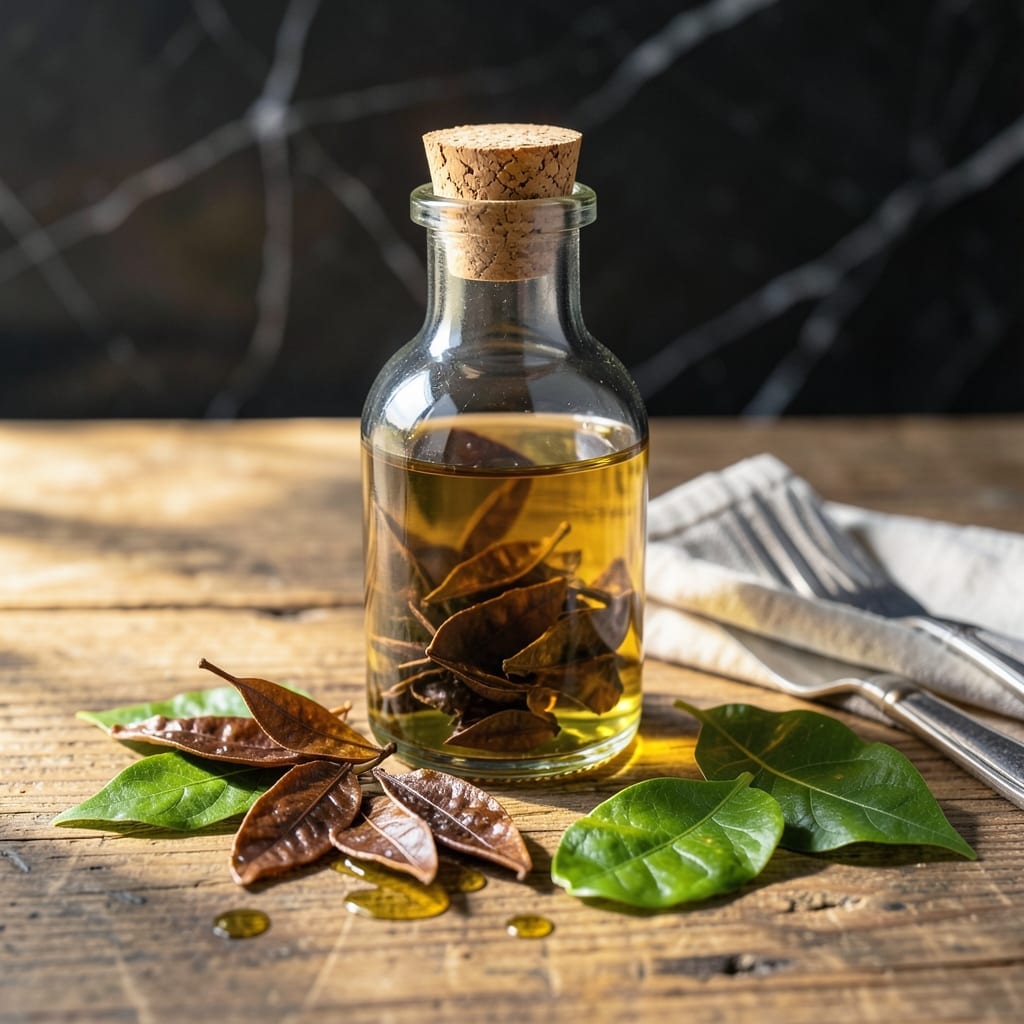
This simple infusion transforms neutral oil into a flavor powerhouse with just one ingredient. I discovered its potential while foraging wild herbs, and it quickly became a kitchen staple.
Bay leaves release their earthy, slightly floral essence when warmed in oil, creating a versatile base for cooking. The process requires patience but rewards with depth most store-bought oils lack.
Use this aromatic oil to finish soups, drizzle over roasted vegetables, or enhance marinades. It keeps well for months, ready to elevate any dish with its subtle complexity.
One batch makes enough to experiment with different applications. You’ll notice the difference immediately.
Ingredients for Bay Leaf Oil
Just three ingredients transform plain oil into something extraordinary with earthy depth.
| Ingredient | Amount | Notes |
|---|---|---|
| Dried Bay Leaves 🍃 | 10 pieces | Whole, uncrushed, high quality |
| Neutral-Flavored Oil 🫒 | 2 cups | Avocado or light olive oil preferred |
| Fresh Bay Leaves 🌿 | 15 pieces | Optional for stronger aroma |
[recipe_ingredient_scaler]
Bay leaves are the soul here—dried Turkish bay leaves have the best flavor, but fresh works too if you’ve got access to a tree. Skip the ancient dusty ones in your spice cabinet (they won’t infuse much). I grab mine from Penzeys or Mountain Rose Herbs online. The oil needs to be neutral, so avocado oil or light olive oil are ideal—skip extra-virgin as it’s too strong.
No bay leaves? Honestly, this won’t work with substitutes—it’s the star. But if you’re in a pinch, a single fresh rosemary sprig plus a dried thyme sprig can mimic the earthy vibe (remove after infusing). For oil, any neutral type works—grapeseed, sunflower, or even refined coconut oil (tastes neutral when refined).
Store in a dark glass bottle away from light and heat. Keeps 3-6 months at room temperature (the flavor intensifies over time). If using fresh bay leaves, strain within 2 weeks to avoid bitterness.
Why You’ll Love This Recipe
- Five Minute Infusion: I just warm the oil with the bay leaves, let it steep, and it’s done—no fancy steps.
- Rich Earthy Depth: The dried leaves give this oil a warm, almost peppery kick that’s so much more than plain oil.
- Endless Uses: I drizzle it on soups, roast veggies, even brush it on bread before toasting.
- Pantry Staple: One batch lasts weeks, and I save money skipping store-bought flavored oils.
Step-by-Step Instructions for Bay Leaf Oil
Here’s the method. Straightforward, tested, works every time.
Step 1: Select and Prepare the Bay Leaves
Begin by inspecting your 10 pieces Dried Bay Leaves and 15 pieces Fresh Bay Leaves. For the dried leaves, ensure they are whole and uncrushed to prevent bitterness. If using fresh, gently bruise them by pressing between your fingers to release their essential oils without tearing.
This step is crucial because damaged leaves can impart a harsh flavor to your infusion. I always take a moment to smell the leaves—they should have a strong, aromatic scent that promises a flavorful result.
Step 2: Combine Leaves with Neutral-Flavored Oil
In a clean, dry saucepan, combine the prepared bay leaves with 2 cups Neutral-Flavored Oil. I prefer avocado or light olive oil for their high smoke points and neutral profiles, which allow the bay leaf’s subtle pine and floral notes to shine without competition.
Use a pan large enough to accommodate the oil with some room to spare—this prevents spills as the oil heats. The ratio of leaves to oil here is intentional; too many leaves can make the oil bitter, while too few won’t provide enough flavor.
Step 3: Heat Gently to Infuse
Place the saucepan over low heat and warm the oil gently. The goal is to reach 180-200°F—this is the sweet spot where the oil extracts the bay leaves’ aromatic compounds without scorching them or the oil itself.
Use a kitchen thermometer to monitor the temperature. You’ll notice tiny bubbles forming around the leaves as the oil begins to infuse. This process should take about 5-7 minutes. If the oil starts to smoke, remove it from heat immediately—you’ve exceeded the ideal temperature.
Step 4: Cool and Strain the Infusion
Once the oil is infused, remove the saucepan from heat and let it cool to room temperature. This resting period allows the flavors to meld fully. As it cools, the oil will take on a subtle golden hue and a noticeable bay leaf fragrance.
After cooling, strain the oil through a fine-mesh sieve or cheesecloth into a clean, dry bottle or jar. Press the leaves gently with a spoon to extract any remaining oil, but don’t squeeze too hard—this can release bitter compounds. Discard the leaves.
Step 5: Store Properly for Long-Lasting Flavor
Seal your bay leaf oil in an airtight container and store it in a cool, dark place, such as a pantry. Properly stored, it will keep for up to 3 months. For longer storage, refrigerate the oil, where it will last up to 6 months.
Label your container with the date to keep track of freshness. Over time, the flavor will mellow, but the oil will retain its aromatic qualities. Use it to finish dishes, drizzle over soups, or add depth to marinades.
Pro Tips For Making Bay Leaf Oil
- Heat Gently: Keep the oil between 160-180°F—any hotter and the bay leaves will scorch, turning the oil bitter. I learned this the hard way after ruining a batch with impatience.
- Crush the Leaves: Lightly crushing dried bay leaves before adding them releases more aromatic oils, giving your infusion a deeper flavor in half the time.
- Skip the Fresh: Fresh bay leaves contain more moisture and can introduce mold risk in oil infusions—stick to dried for safety and longer shelf life.
- Strain Twice: After the first strain, line a fine-mesh sieve with cheesecloth for a second pass to catch every last tiny leaf fragment. Sounds tedious, but it prevents off flavors later.
Essential Equipment for Great bay leaf oil
Quality Saucepan
Invest in a heavy-bottomed saucepan for even heat distribution—I swear by my All-Clad 3-quart for infusions. A thick base prevents hot spots that could scorch your 2 cups Neutral-Flavored Oil or the delicate bay leaves. 🔥
Precision Thermometer
A kitchen thermometer is non-negotiable for maintaining 180-200°F. I use a ThermoWorks Classic for its accuracy and quick response time. Without it, you risk overheating, which destroys the subtle flavors of the 10 pieces Dried Bay Leaves.
Fine-Mesh Sieve
Straining requires a fine-mesh sieve to catch all leaf particles. I pair mine with cheesecloth for crystal-clear oil. Press the leaves gently with a spoon to extract maximum flavor without releasing bitter compounds from the 15 pieces Fresh Bay Leaves.
Dark Glass Bottles
Store your oil in dark glass bottles to protect it from light degradation. Amber or cobalt blue 16-ounce Boston round bottles from Uline work perfectly. They’re airtight and preserve the aromatic qualities of your infusion for up to 3-6 months.
Long-Handled Tongs
Use 12-inch stainless steel tongs to remove bay leaves from hot oil safely. I prefer OXO Good Grips for their comfortable handles and precise control. This small tool prevents burns while ensuring you extract every last drop of fragrant oil.
Labeling System
Label your bottles with the date and contents. I use chalkboard labels from Amazon—they’re reusable and look great in my pantry. Accurate labeling helps you track freshness and avoid mixing up your infused oils. 💡
Nutrition Facts
Frequently Asked Questions
What’s the best oil to use?
Use a neutral oil with a high smoke point like avocado or light olive oil. Avoid extra-virgin olive oil as its strong flavor competes with the bay leaf’s subtle aroma.
How long does it take to infuse?
Gentle heating at 180-200°F takes 5-7 minutes. Let it cool completely before straining to avoid bitterness.
Can I use fresh bay leaves?
Yes, but use 15 fresh leaves for stronger flavor. Strain within 2 weeks to prevent bitterness. Dried leaves last longer in the oil.
How should I store the oil?
Keep it in a dark glass bottle in a cool, dark place. It stays fresh for 3 months at room temp or 6 months refrigerated.

Trained in classic French technique but raised on slow-cooked ribs and spicy rubs, she blends culinary skill with smoke and soul.
- Recipe for Boneless Pork Chops in Cast Iron Skillet: Sear and Baste to Juicy Perfection - October 3, 2026
- Recipe for Boneless Cross Rib Roast: Slow-Roasted Beef with Herb Crust - October 3, 2026
- Hamburgers in Sauce Recipe Crock Pot: Slow-Cooked Savory Delight - October 3, 2026