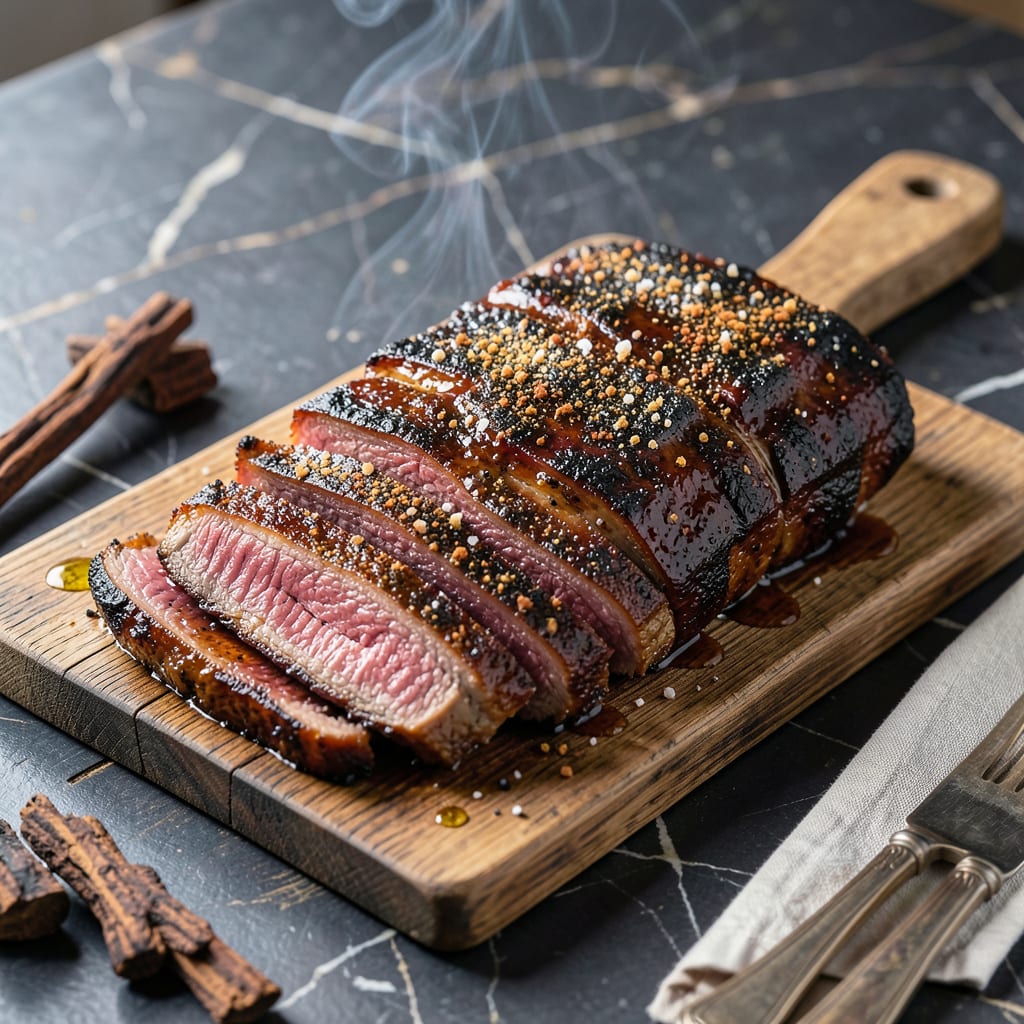
There’s nothing like the first whiff of hickory smoke hitting that brisket on the grill. I’ve spent years perfecting this low and slow method to get fall-apart tender results.
This technique blends my pitmaster roots with French precision—simple ingredients, careful timing, and a dry rub that builds flavor with every hour it spends on the smoker.
Ingredients for Bbq Beef Brisket Recipe Grill
Simple ingredients, careful timing, and a dry rub that builds flavor with every hour.
| Ingredient | Amount | Notes |
|---|---|---|
| Beef Brisket 🥩 | 5 lb | Full packer cut, untrimmed |
| Coarse Kosher Salt 🧂 | ¼ cup | Diamond Crystal preferred |
| Coarse Black Pepper 🌶️ | ¼ cup | Freshly ground for best flavor |
| Garlic Powder 🧄 | 2 tbsp | High-quality, no additives |
| Onion Powder 🧅 | 2 tbsp | Freshly ground preferred |
| Smoked Paprika 🌶️ | 2 tbsp | Sweet or hot variety |
| Brown Sugar 🍚 | ¼ cup | Light or dark, packed |
| Mustard Powder 🟡 | 1 tbsp | For dry rub binding |
| Hickory Wood Chunks 🪵 | 4 pieces | Soaked in water 1 hour |
| Apple Cider Vinegar 🍏 | ½ cup | For spritzing during cook |
| Water 💧 | ½ cup | For spritz bottle |
| Yellow Mustard 🟡 | ¼ cup | Binder for dry rub |
[recipeingredientscaler]
The brisket quality is paramount. Full packer cut with good marbling ensures tenderness. Source from Costco or a trusted butcher—USDA Choice grade or higher. The fat cap should be at least 1/4-inch thick (it renders down beautifully). For the wood, hickory provides classic BBQ flavor, but oak or pecan work well too. Avoid softwoods like pine.
No hickory? Apple or cherry wood adds a milder, sweeter smoke. Short on time? Pre-mixed BBQ rubs can substitute, but make your own for better control. Brown sugar can be swapped for turbinado sugar if you prefer coarser texture. The vinegar spritz keeps the surface moist—apple juice works too (don’t skip this part).
Unused brisket can be frozen for up to 12 months. The dry rub keeps indefinitely in an airtight container. Leftovers reheat beautifully—slice and warm in beef broth to maintain moisture. Best consumed within 5 days of cooking.
Why You’ll Love This Recipe
- I’ll be real: the sandwiches I make with the leftovers taste even better the next day.
- Low-Effort Rub: That coarse salt and pepper mix with garlic and onion powder means I’m done prepping in five minutes flat.
- Smoky Depth: The grill turns that simple rub into a crust so rich and savory it makes the brisket taste like it’s been smoking all day.
- Feeds a Party: One brisket on the grill and suddenly I’ve got enough for a backyard full of happy, meat-loving friends.
Step-by-Step Instructions for BBQ Beef Brisket on the Grill
This method delivers competition-quality results with precise temperature control and patience.
Step 1: Prepare the Brisket and Apply the Rub
Trim the 5 lb Beef Brisket fat cap to ¼ inch thickness, leaving enough to protect the meat during the long cook. I use a sharp boning knife for clean, controlled cuts. Pat the entire surface dry with paper towels—this ensures the rub adheres properly.
In a bowl, combine the 0.25 cup Coarse Kosher Salt, 0.25 cup Coarse Black Pepper, 2 tbsp Garlic Powder, 2 tbsp Onion Powder, 2 tbsp Smoked Paprika, 0.25 cup Brown Sugar, and 1 tbsp Mustard Powder. Spread the 0.25 cup Yellow Mustard thinly over the brisket as a binder, then apply the rub generously, pressing it into the meat. Let it rest at room temperature for 1 hour.
Step 2: Set Up the Grill for Indirect Heat
Soak the 4 pieces Hickory Wood Chunks in water for 1 hour before use. Configure your grill for indirect cooking by banking coals to one side or using burners on one half if using a gas grill. Maintain a consistent temperature of 225-250°F—this low-and-slow approach is critical for breaking down the collagen.
Place a disposable aluminum pan filled with water on the indirect side to stabilize temperature and add moisture. Add the soaked hickory chunks directly onto the coals or in a smoker box for gas grills. You want thin, blue smoke—not thick white smoke, which can impart a bitter flavor.
Step 3: Smoke the Brisket to Perfection
Place the brisket fat-side up on the grill grate over the indirect heat. Insert a meat probe into the thickest part of the flat, avoiding the point. Smoke undisturbed for 4-5 hours until the internal temperature reaches 165-170°F and the bark begins to darken.
Combine the 0.5 cup Apple Cider Vinegar and 0.5 cup Water in a spray bottle. Every 1-2 hours, spritz the brisket lightly to keep the surface moist and enhance bark formation. Avoid opening the grill too frequently—each peek lets heat and smoke escape.
Step 4: Wrap and Finish the Cook
When the brisket hits 170°F internally, remove it from the grill and wrap it tightly in pink butcher paper. This “Texas crutch” method helps power through the stall while preserving the bark. Return the wrapped brisket to the grill.
Continue cooking until the internal temperature reaches 200-205°F and a probe slides in like butter with no resistance. This typically takes another 3-4 hours, but trust the probe test over time. The brisket is done when it feels like it’s melting in your hand when picked up with tongs.
Step 5: Rest and Slice for Maximum Tenderness
Transfer the wrapped brisket to a cooler or warm oven (170°F) and let it rest for at least 1 hour, preferably 2 hours. This resting period allows the juices to redistribute, ensuring every slice is moist and tender.
Unwrap the brisket and locate the grain direction—the lines you see running through the meat. Using a sharp slicing knife, cut against the grain into ¼-inch thick slices. The flat and point have different grain directions, so rotate the brisket and adjust your cutting angle accordingly. Serve immediately.
Pro Tips For Making Bbq Beef Brisket Recipe Grill
- Trim the Fat: Leave about 1/4 inch of fat on the brisket for flavor, but trim any thick chunks—otherwise they won’t render properly and you’ll end up with chewy bites.
- Season Overnight: I learned this the hard way—coat the brisket with salt, pepper, garlic and onion powder the night before so the flavors actually penetrate the meat, not just sit on the surface.
- Low and Slow: Keep your grill between 225-250°F and resist the urge to crank it up, or the outside will burn before the inside gets tender.
- Rest Before Slicing: After pulling it off the grill, wrap the brisket in foil and let it rest for at least 30 minutes—slicing too soon sends all the juices running onto the cutting board.
Regional Styles of This Recipe
Texas Style
In the Lone Star State, we keep it simple with a salt and pepper dominant rub. The focus is on the beef quality and smoke flavor. I use post oak wood for a cleaner burn that lets the meat shine. The bark forms a beautiful mahogany crust after 12-14 hours at 225°F. 🔥
Kansas City Style
This version adds sweetness with brown sugar in the rub and often finishes with a tomato-based sauce. The brisket gets wrapped in foil during the cook to tenderize faster. I like adding 2 tbsp molasses to my rub for that signature KC flavor profile.
Memphis Style
Memphis pitmasters use a dry rub with more paprika and cumin for depth. The brisket is typically served sliced with sauces on the side. I’ve found that adding 1 tsp cayenne gives it that perfect Memphis kick without overpowering the beef.
Carolina Style
Eastern Carolina favors a vinegar-based approach, but for brisket, we adapt with a vinegar-heavy mop sauce. I apply a mixture of apple cider vinegar, water, and red pepper flakes every hour. The result is tangy with just enough heat to make it interesting.
California Style
West Coast brisket often incorporates Asian influences. I love adding 1 tbsp five-spice powder to my rub and using cherry wood for a milder smoke. The fusion of flavors reflects our diverse culinary landscape here. 💛
Competition Style
For local BBQ competitions, I go all out with a complex rub featuring 10+ spices and inject the brisket with a beef broth mixture. The key is maintaining 250°F consistently and wrapping in pink butcher paper when the bark sets. Every detail matters when you’re going for first place.
Nutrition Facts

Trained in classic French technique but raised on slow-cooked ribs and spicy rubs, she blends culinary skill with smoke and soul.
- Recipe for Boneless Pork Chops in Cast Iron Skillet: Sear and Baste to Juicy Perfection - October 3, 2026
- Recipe for Boneless Cross Rib Roast: Slow-Roasted Beef with Herb Crust - October 3, 2026
- Hamburgers in Sauce Recipe Crock Pot: Slow-Cooked Savory Delight - October 3, 2026