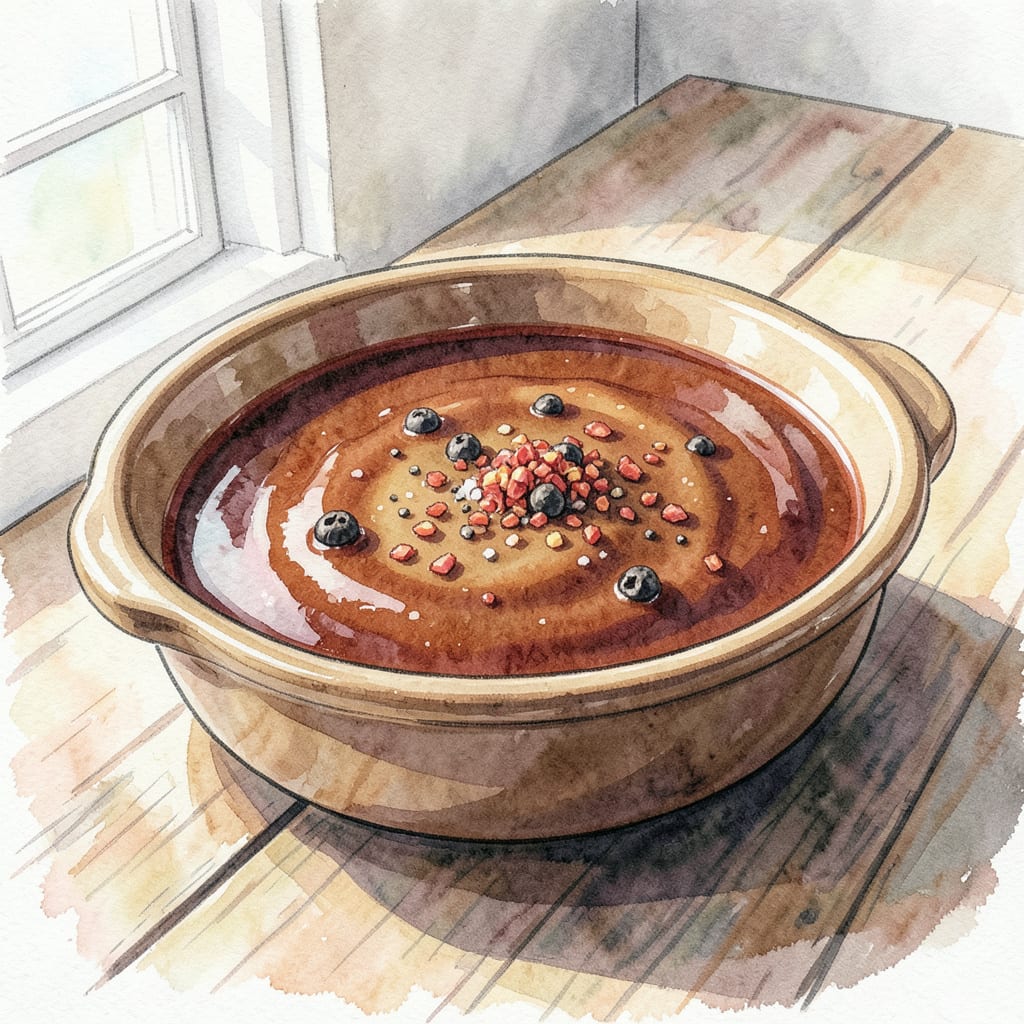
I’ve spent years perfecting my Eastern Carolina BBQ sauce recipe, and I’m excited to share this tangy, vinegar-based classic with you. As a pitmaster with French technique training, I’ve combined traditional smoke-cooking methods with precise ingredient ratios to create a sauce that elevates any BBQ.
This vinegar-based sauce is a staple in Eastern Carolina BBQ culture, and its simplicity is part of its charm. With just a few ingredients, you’ll create a condiment that adds depth and complexity to pulled pork, chicken, or even vegetables. Let’s get started!
Ingredients for Eastern Carolina Bbq Sauce
Simple ingredients make this tangy vinegar-based BBQ sauce shine. Quality matters here.
| Ingredient | Amount | Notes |
|---|---|---|
| Apple Cider Vinegar 🍎 | 1 cup | High-quality, unfiltered for best flavor |
| Water 💧 | ½ cup | Filtered or bottled |
| Kosher Salt 🧂 | 2 tbsp | Diamond Crystal preferred for texture |
| Black Pepper 🌶️ | 1 tsp | Freshly ground for best flavor |
| Red Pepper Flakes 🔥 | ½ tsp | Adjust for desired heat level |
| Brown Sugar 🍮 | 1 tbsp | Dark or light brown works |
| Smoked Paprika 🌿 | ¼ tsp | For authentic smoky flavor |
[recipe_ingredient_scaler]
For the best flavor, choose unfiltered apple cider vinegar—it has a richer, more complex taste. I’ve tried various brands, but Bragg’s is my go-to. If you’re using a different brand, make sure it’s 5% acidity. The water should be filtered or bottled to prevent any off-flavors. I usually grab mine from Whole Foods or my local health food store.
No smoked paprika? You can substitute with regular paprika plus liquid smoke (start with a few drops and taste as you go). Want more heat? Increase the red pepper flakes gradually—you can always add more, but you can’t take it away once it’s added. For a slightly sweeter sauce, add another tablespoon of brown sugar.
This sauce keeps for 2 weeks in the fridge—it’s actually better after a day or two when the flavors meld. Store it in a glass jar with a tight-fitting lid. If you’re making it ahead, give it a good stir before using. It’ll thicken a bit in the fridge, so you might need to whisk in a little water before using.
Step-by-Step Instructions for Eastern Carolina BBQ Sauce
Creating this tangy vinegar-based BBQ sauce is straightforward and rewarding.
Step 1: Combine Ingredients
In a medium saucepan, combine 1 cup of Apple Cider Vinegar, 0.5 cup of Water, 2 tbsp of Kosher Salt, 1 tsp of Black Pepper, 0.5 tsp of Red Pepper Flakes, 1 tbsp of Brown Sugar, and 0.25 tsp of Smoked Paprika. Whisk the mixture until the salt and sugar are fully dissolved, ensuring a smooth consistency. This initial whisking is crucial as it prevents any grainy texture from the salt and sugar.
The mixture might look a bit harsh at this stage due to the vinegar, but don’t worry—the flavors will meld together beautifully during cooking. I like to use a balloon whisk for this step as it allows me to reach into the corners of the pan easily.
Step 2: Simmer the Mixture
Place the saucepan over medium heat and bring the mixture to a gentle simmer. Once it starts to bubble, reduce the heat to low and let it simmer for 5-7 minutes. You’ll know it’s ready when the sauce has slightly thickened and reduced by about 1/4 cup. Keep an eye on it, as the reduction can happen quickly, and you don’t want it to become too thick.
During this simmering process, the flavors will meld together, and the sauce will develop a harmonious balance between tangy and sweet. The aroma will also become more complex and inviting, filling your kitchen with the scent of vinegar, spices, and a hint of smokiness from the smoked paprika.
Step 3: Cool and Store
Remove the saucepan from the heat and let the BBQ sauce cool to room temperature. This cooling step is essential as it allows the flavors to further integrate and the sauce to thicken to the perfect consistency. Once cooled, transfer the sauce to an airtight container, such as a glass jar with a tight-fitting lid.
Store the BBQ sauce in the refrigerator for up to 2 weeks. Before using, give it a good stir or shake to recombine any ingredients that may have settled. The sauce will thicken further in the fridge, so you might need to give it a gentle stir or thin it with a little water if it becomes too thick.
Health Benefits of This Dish
Nutritional Benefits
Eastern Carolina BBQ sauce offers several health benefits despite being a condiment. The apple cider vinegar provides potential blood sugar control and digestive benefits. Smoked paprika contains antioxidants that may help reduce inflammation. This sauce is also relatively low in calories compared to sweeter BBQ sauces. 🔥
Digestive Health
The apple cider vinegar in this BBQ sauce may help support digestive health by promoting a healthy gut microbiome. Some studies suggest that vinegar can help slow down gastric emptying, which may improve digestion. I find that a small amount of this tangy sauce can help stimulate digestion after a large meal.
Antioxidant Properties
Smoked paprika is rich in antioxidants, which can help protect cells from damage caused by free radicals. While the amount used in this recipe is relatively small (0.25 tsp), it still contributes to the overall antioxidant intake. Combining this sauce with other antioxidant-rich foods can enhance its benefits.
Lower Sugar Content
Unlike many commercial BBQ sauces, this Eastern Carolina version contains only 1 tablespoon of brown sugar. The vinegar base allows for a tangy flavor without relying on heavy sugar content. This makes it a better choice for those watching their sugar intake. For an even lower sugar version, you can reduce the brown sugar to 1 teaspoon.
Potential Anti-Inflammatory Effects
The combination of apple cider vinegar and smoked paprika may offer anti-inflammatory properties. Some studies suggest that compounds in vinegar can help reduce inflammation in the body. The antioxidants in smoked paprika may also contribute to this effect, potentially supporting overall health.
Portion Control
While this BBQ sauce is healthier than many commercial versions, it’s still important to use it in moderation. A typical serving size is about 2 tablespoons per serving. Using it sparingly can help balance flavor with nutritional considerations. I like to mix it with other ingredients to create a dressing or marinade for added versatility.

Trained in classic French technique but raised on slow-cooked ribs and spicy rubs, she blends culinary skill with smoke and soul.
- Recipe for Boneless Pork Chops in Cast Iron Skillet: Sear and Baste to Juicy Perfection - October 3, 2026
- Recipe for Boneless Cross Rib Roast: Slow-Roasted Beef with Herb Crust - October 3, 2026
- Hamburgers in Sauce Recipe Crock Pot: Slow-Cooked Savory Delight - October 3, 2026