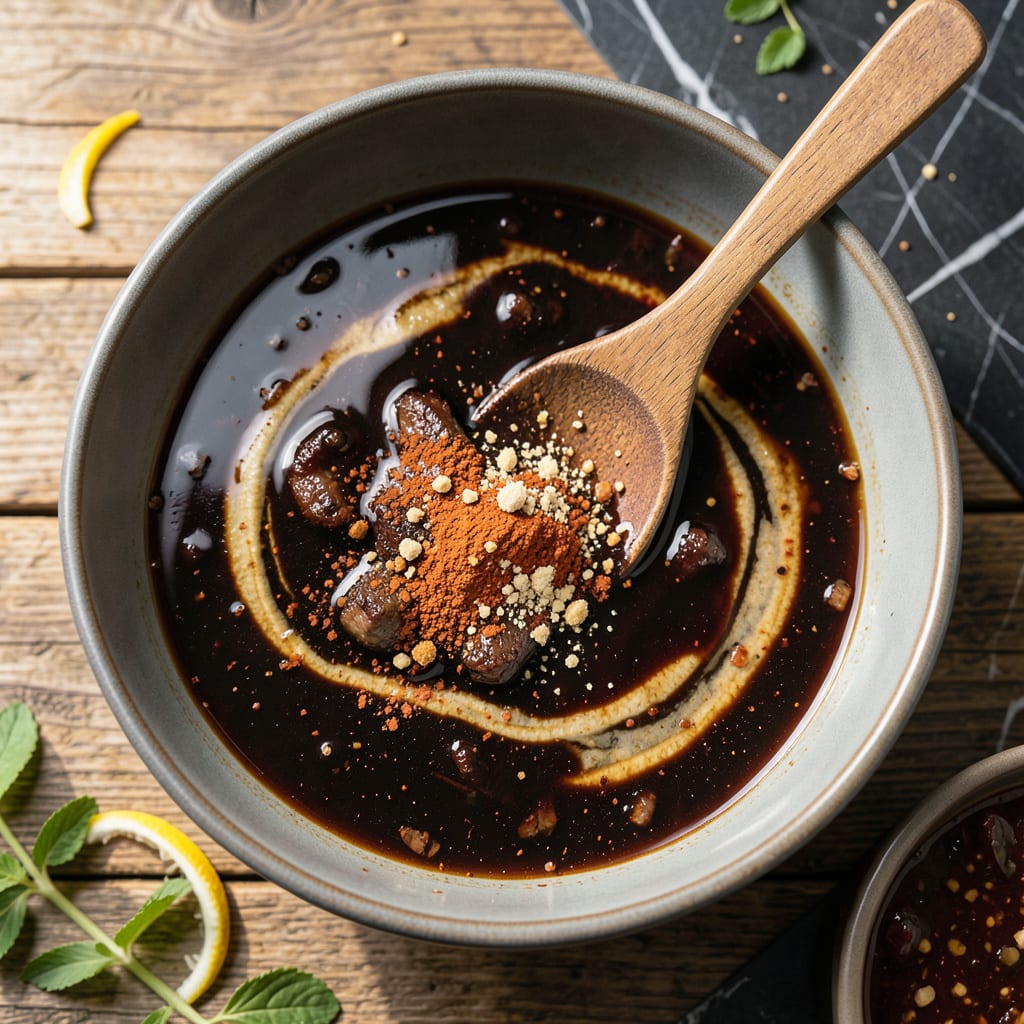
Getting my first whiff of hickory smoke at a family cookout inspired this tender marinade. It blends bold flavors to transform beef ribs into melt-in-your-mouth perfection.
This proven technique uses simple ingredients to infuse deep smoky character. Let the ribs soak overnight for maximum flavor penetration and tender results every time.
Ingredients for Bbq Beef Rib Marinade
Ten bold ingredients create this smoky, tender marinade for beef ribs.
| Ingredient | Amount | Notes |
|---|---|---|
| Apple Cider Vinegar 🍏 | ½ cup | Balances sweet and smoky flavors |
| Worcestershire Sauce 🫒 | ¼ cup | Adds umami depth to marinade |
| Soy Sauce 🫒 | ¼ cup | Low-sodium preferred for control |
| Brown Sugar 🍚 | ½ cup | Packed, for caramelization |
| Smoked Paprika 🌶️ | 2 tbsp | Essential for hickory smoke flavor |
| Garlic Powder 🧄 | 1 tbsp | Freshly ground if possible |
| Onion Powder 🧅 | 1 tbsp | Complements smoked paprika well |
| Ground Black Pepper 🌶️ | 1 tbsp | Coarsely ground for texture |
| Liquid Smoke 🔥 | 1 tbsp | Hickory flavor for authentic BBQ |
| Olive Oil 🫒 | ¼ cup | Helps distribute all flavors evenly |
[recipe_ingredient_scaler]
The smoked paprika is non-negotiable here—Penzeys or McCormick both offer excellent quality with genuine hickory notes. Liquid smoke can be polarizing, but Wright’s brand delivers consistent, balanced flavor without bitterness. For the brown sugar, Domino or C&H are reliable choices. Most grocery stores carry these, but specialty BBQ shops often have superior versions with deeper smoke profiles.
No liquid smoke? Increase smoked paprika to 3 tbsp for similar depth. Out of apple cider vinegar? White vinegar with 1 tsp sugar works in a pinch. For a less sweet profile, reduce brown sugar by half. The Worcestershire can be replaced with extra soy sauce plus 1 tsp fish sauce (though this alters the flavor slightly).
This marinade keeps 1 week in the fridge. For longer storage, freeze in airtight containers for up to 3 months. Always shake well before using, as spices tend to settle. Best used within 24 hours for optimal freshness of flavors.
Why You’ll Love This Recipe
- Five-Minute Mix: I just dump everything in a bowl—vinegar, sauces, sugar, paprika—and stir. Honestly, it’s faster than my morning coffee.
- Smoky Sweet Symphony: The brown sugar caramelizes while the smoked paprika adds that deep, campfire-like flavor to every bite.
- Weekend or Wednesday: I’ve used this for summer cookouts and for a random Tuesday dinner. It works for both.
- Meat for Days: Leftovers taste even better the next day, and it’s cheap enough to feed a hungry crowd without breaking the bank.
Step-by-Step Instructions for BBQ Beef Rib Marinade
This method ensures maximum flavor penetration while maintaining the meat’s natural tenderness.
Step 1: Combine Liquid Components for Foundation
In a large mixing bowl, whisk together the 0.5 cup Apple Cider Vinegar, 0.25 cup Worcestershire Sauce, and 0.25 cup Soy Sauce until fully integrated. The vinegar’s acidity will help break down surface proteins, allowing deeper marinade absorption.
Add the 0.5 cup Brown Sugar and stir vigorously until completely dissolved. This sweet element balances the acidity and creates the base for caramelization during cooking. The mixture should appear glossy with no visible sugar granules.
Step 2: Incorporate Spice and Smoke Elements
Measure in the 2 tbsp Smoked Paprika, 1 tbsp Garlic Powder, and 1 tbsp Onion Powder. These dry spices need thorough distribution to prevent clumping. I use a small fine-mesh strainer for the paprika to break up any potential lumps.
Add the 1 tbsp Ground Black Pepper and 1 tbsp Liquid Smoke, stirring until the liquid smoke appears fully emulsified. The liquid smoke should not separate or pool on the surface—this indicates proper incorporation.
Step 3: Emulsify with Olive Oil for Even Coating
Slowly drizzle in the 0.25 cup Olive Oil while whisking continuously. This creates a stable emulsion that will cling to the beef ribs rather than pooling at the bottom of the container. The final mixture should have a thick, pourable consistency.
The oil serves a dual purpose: it helps distribute all the water-soluble and fat-soluble flavors evenly, and it creates a barrier that locks moisture into the meat during cooking. The marinade is now ready for application.
Step 4: Apply and Marinate for Optimal Absorption
Place your beef ribs in a resealable plastic bag or non-reactive container and pour the marinade over them, ensuring all surfaces are coated. Massage the marinade into the meat for 1-2 minutes, paying special attention to any bone-in areas where flavor absorption might be less efficient.
Refrigerate for a minimum of 4 hours, though 12-24 hours yields superior results. The extended time allows the vinegar and enzymes to begin tenderizing the meat while the sugars and spices infuse deep flavor. For best results, turn the ribs occasionally during marination.
Pro Tips For Making Bbq Beef Rib Marinade
- Marinate Overnight: I learned this the hard way—less than 4 hours and the smoked paprika and brown sugar won’t penetrate deep enough into the beef ribs. Give it a full 12-24 hours for the apple cider vinegar to really tenderize the meat.
- Balance the Sugar: Brown sugar can overpower the marinade if you’re heavy-handed. Stick to a 1:1 ratio with the soy sauce—about 1/4 cup each—to keep the sweetness in check without losing that caramelized crust.
- Skip the Metal Bowl: Sounds weird, but it works: Use glass or plastic for marinating. The apple cider vinegar and Worcestershire can react with metal, giving your ribs a tinny aftertaste.
- Reserve Some Marinade: Before adding the ribs, set aside 1/4 cup of the marinade for basting. It’s the easiest way to layer extra flavor while grilling without cross-contaminating with raw meat.
Serving Suggestions for This Recipe
Plating the Ribs
Arrange the marinated and cooked beef ribs on a large wooden cutting board or slate serving platter. I like to stack them 3-4 high for visual impact at local BBQ competitions. Brush any leftover marinade (boiled for 3 minutes to kill bacteria) as a final glaze. 🔥
Garnish for Color
Sprinkle with 2 tbsp chopped fresh parsley for a pop of green against the dark, caramelized exterior. Thinly sliced green onions add another layer of color and mild onion flavor. I forage wild chives sometimes for a unique touch.
Side Pairings
Serve with classic cornbread to soak up the juices. My go-to is a cast iron skillet version with 1 cup cornmeal and ½ cup buttermilk. For freshness, pick up cornmeal from your local farmers market.
Sauce Options
Offer a small bowl of additional BBQ sauce on the side for dipping. I prefer a vinegar-based sauce from my coastal rides to North Carolina—it cuts through the richness beautifully. Warm the sauce slightly before serving.
Serving Temperature
Let the ribs rest for 10-15 minutes after cooking before serving. This allows the juices to redistribute. Serve while still warm, ideally at 140-150°F internal temperature for perfect tenderness.
Table Presentation
Line your table with butcher paper for a rustic, competition-style feel. Provide plenty of napkins—this is messy, finger-licking food. I always set out wet wipes for my guests too. ✨
Nutrition Facts

Trained in classic French technique but raised on slow-cooked ribs and spicy rubs, she blends culinary skill with smoke and soul.
- Recipe for Boneless Pork Chops in Cast Iron Skillet: Sear and Baste to Juicy Perfection - October 3, 2026
- Recipe for Boneless Cross Rib Roast: Slow-Roasted Beef with Herb Crust - October 3, 2026
- Hamburgers in Sauce Recipe Crock Pot: Slow-Cooked Savory Delight - October 3, 2026