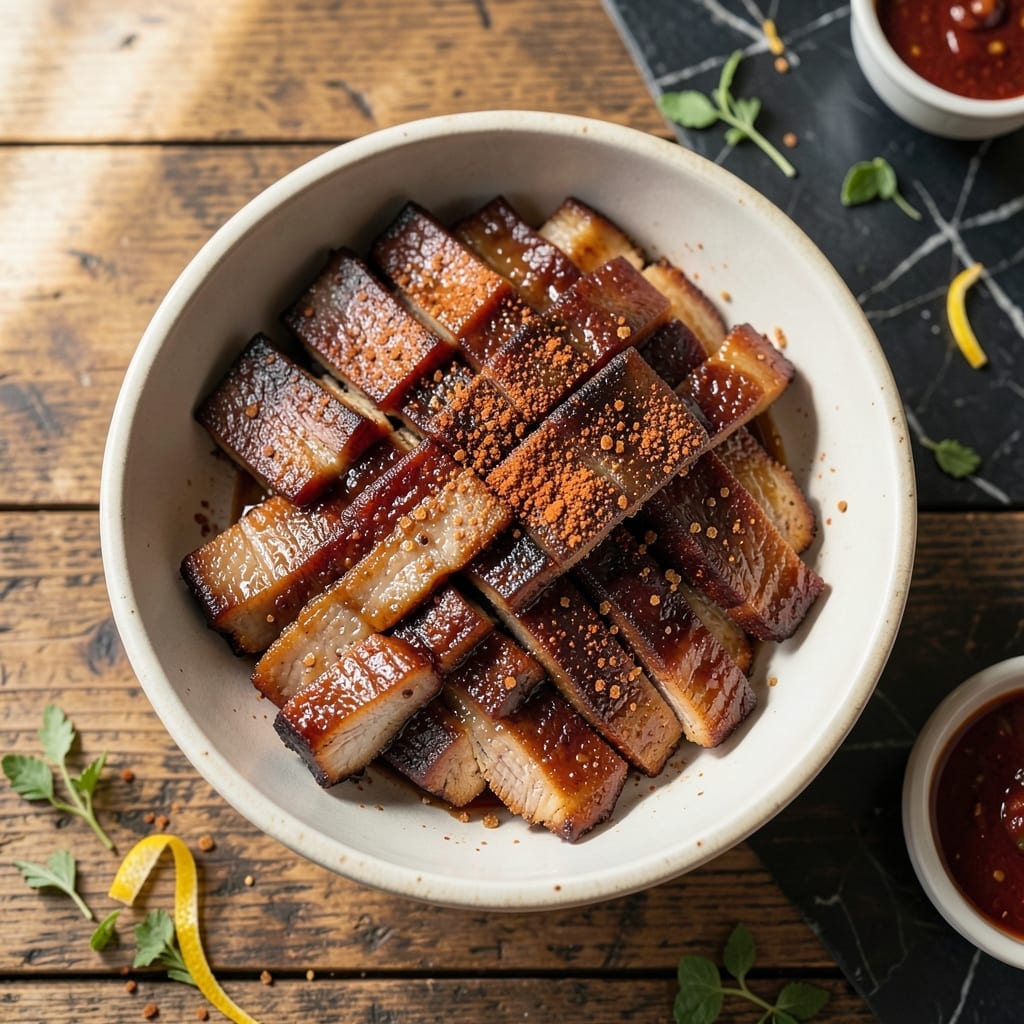
This recipe transforms lean pork into tender, smoky-sweet jerky with a perfect chew. The marinade blends traditional BBQ flavors with a touch of my French training for depth.
After marinating, the pork dehydrates into concentrated chewy bites with a smoky finish. Perfect for snacking or trail mix, this method ensures consistent results every time.
Ingredients for Bbq Pork Jerky
Lean pork and bold marinade ingredients create these concentrated smoky-sweet chewy bites every time.
| Ingredient | Amount | Notes |
|---|---|---|
| Pork Loin 🐷 | 1 ½ lb | Lean, sliced into 1/4-inch strips |
| Soy Sauce 🫒 | ½ cup | Low-sodium preferred for balance |
| Brown Sugar 🍚 | ⅓ cup | Light or dark for sweetness |
| Apple Cider Vinegar 🍏 | 2 tbsp | Adds tangy depth to marinade |
| Smoked Paprika 🌶️ | 1 tbsp | Essential for smoky flavor profile |
| Garlic Powder 🧄 | 1 tbsp | Uniform flavor distribution |
| Onion Powder 🧅 | 1 tbsp | Complements garlic in marinade |
| Black Pepper 🌶️ | 1 tsp | Freshly ground for best results |
| Liquid Smoke 🔥 | 1 tsp | For authentic smokiness |
| Worcestershire Sauce 🫒 | 1 tbsp | Adds umami complexity |
| Cayenne Pepper 🔥 | ¼ tsp | Adjust for heat preference |
| Salt 🧂 | 1 tsp | Kosher salt for even seasoning |
| Water 💧 | ¼ cup | To thin marinade consistency |
[recipe_ingredient_scaler]
The pork loin must be lean—look for minimal marbling to prevent spoilage during dehydration. Most butchers will slice it thin for you if asked. Whole Foods and Costco carry quality pork loin suitable for jerky. For the smoked paprika, Penzeys offers exceptional depth, but grocery store brands work in a pinch (just check the expiration date).
No liquid smoke? Increase smoked paprika to 2 tablespoons for similar flavor. Brown sugar can be substituted with coconut sugar, though the flavor profile will shift slightly. For a gluten-free version, tamari instead of soy sauce works perfectly. The apple cider vinegar is non-negotiable for both safety and flavor—don’t omit it (white vinegar lacks the necessary fruitiness).
Marinated pork keeps in the fridge for 3-4 days before dehydrating. Completed jerky stores in an airtight container at room temperature for 2 weeks, or freeze for 6 months. Always check for moisture before storing—any dampness risks spoilage.
Why You’ll Love This Recipe
- Set It and Forget: I mix the pork loin with soy sauce, brown sugar, and a splash of apple cider vinegar, then the dehydrator does all the work.
- Sweet and Smoky: The brown sugar caramelizes with the smoked paprika for that perfect balance of sweet heat in every bite.
- Trail or Tailgate: I pack this jerky for hiking trips or serve it at backyard BBQs—it’s a hit both ways.
- Pantry Friendly: Pork loin on sale? This recipe turns a budget cut into a snack that keeps for weeks.
Step-by-Step Instructions for BBQ Pork Jerky
Follow this method precisely to achieve tender, flavorful jerky with the ideal balance of smoky and sweet notes.
Step 1: Slice and Prepare the Pork Loin
Begin by partially freezing the 1.5 lb Pork Loin for 30-45 minutes to firm it up. This makes slicing into consistent 1/4-inch strips much easier. Cut against the grain for the most tender result—this shortens the muscle fibers so your jerky won’t be tough.
Trim any visible fat or connective tissue from the strips, as fat doesn’t dehydrate well and can cause spoilage. Pat the strips dry with paper towels to help the marinade adhere better. This preparation step is crucial for even drying and optimal texture in the finished product.
Step 2: Create the BBQ Marinade
In a large bowl, combine the 0.5 cup Soy Sauce, 0.33 cup Brown Sugar, 2 tbsp Apple Cider Vinegar, 1 tbsp Smoked Paprika, 1 tbsp Garlic Powder, and 1 tbsp Onion Powder. Whisk until the brown sugar begins to dissolve.
Add the 1 tsp Black Pepper, 1 tsp Liquid Smoke, 1 tbsp Worcestershire Sauce, 0.25 tsp Cayenne Pepper, 1 tsp Salt, and 0.25 cup Water. Stir thoroughly to create a smooth, well-balanced marinade that delivers both depth of flavor and the perfect consistency to coat the pork strips evenly.
Step 3: Marinate the Pork for Maximum Flavor
Place the pork strips in a large resealable plastic bag or shallow dish and pour the marinade over them. Ensure all pieces are fully submerged. I use a bag and gently massage it to remove air bubbles and distribute the marinade.
Refrigerate for 8-12 hours, or ideally overnight. This extended marinating time allows the flavors to penetrate deeply and the soy sauce to begin tenderizing the meat. For best results, stir or flip the pork strips halfway through the marinating period.
Step 4: Dehydrate to Perfection
Preheat your dehydrator to 160°F. Remove the pork strips from the marinade, allowing excess to drip off, and arrange them on dehydrator trays in a single layer without touching. This spacing ensures proper air circulation for even drying.
Dehydrate for 4-6 hours, checking periodically after the 4-hour mark. The jerky is done when it’s dry to the touch but still slightly pliable—it should bend without snapping. For food safety, ensure the internal temperature of the pork reaches 160°F during the drying process.
Step 5: Cool and Store Properly
Allow the jerky to cool completely on a wire rack before testing. This cooling step is essential as the pieces will continue to dry slightly as they come to room temperature. The finished jerky should be chewy with a slightly tacky surface.
Store in an airtight container in the refrigerator for up to 2 weeks, or freeze for longer storage. For the best texture, let the jerky come to room temperature before serving. This final step ensures your jerky maintains its ideal chewiness and flavor intensity.
Pro Tips For Making Bbq Pork Jerky
- Slice Against Grain: Cut the pork loin into thin strips against the grain—this makes the jerky easier to chew and prevents tough, stringy texture.
- Marinate Overnight: Let the pork soak in the soy sauce, brown sugar, and apple cider vinegar mixture for at least 12 hours; I learned this the hard way—shorter marinating just doesn’t pack the same flavor punch.
- Pat Dry Before Drying: After marinating, blot the pork strips with a paper towel to remove excess moisture—this helps the jerky dry evenly and develop that sticky, caramelized coating.
- Use Low Heat: Keep your oven or dehydrator between 160-175°F; higher temps cook the pork too fast and can leave the inside underdone or the outside burnt.
Dietary Considerations for This bbq pork jerky
Gluten-Free Option
For a gluten-free version, simply swap the soy sauce with tamari. I prefer San-J brand for its rich flavor. This substitution maintains the umami depth without compromising safety for those avoiding gluten.
Sugar Reduction
To cut sugar, replace brown sugar with 1/4 cup erythritol or monk fruit sweetener. The texture may be slightly less sticky, but the smoky-sweet balance remains. I’ve tested this with Lakanto with great results.
Sodium Control
Use low-sodium soy sauce and reduce added salt by half. This brings sodium per serving down to about 300mg. Remember, some sodium is essential for both flavor and preservation during dehydration. 💪
Spice Adjustments
For sensitive palates, eliminate the cayenne pepper entirely. The smoked paprika and black pepper still provide plenty of depth. I often make a mild batch for friends with spice aversions.
Protein Alternatives
Turkey breast or lean beef (like top round) work beautifully with this marinade. Slice beef against the grain into 1/4-inch strips. Turkey dehydrates faster, so start checking at 3 hours.
Allergen Notes
This recipe contains no dairy, eggs, or nuts. However, always check your Worcestershire sauce label—some brands contain fish. I use Annie’s for its clean ingredient list.
Nutrition Facts

Trained in classic French technique but raised on slow-cooked ribs and spicy rubs, she blends culinary skill with smoke and soul.
- Recipe for Boneless Pork Chops in Cast Iron Skillet: Sear and Baste to Juicy Perfection - October 3, 2026
- Recipe for Boneless Cross Rib Roast: Slow-Roasted Beef with Herb Crust - October 3, 2026
- Hamburgers in Sauce Recipe Crock Pot: Slow-Cooked Savory Delight - October 3, 2026