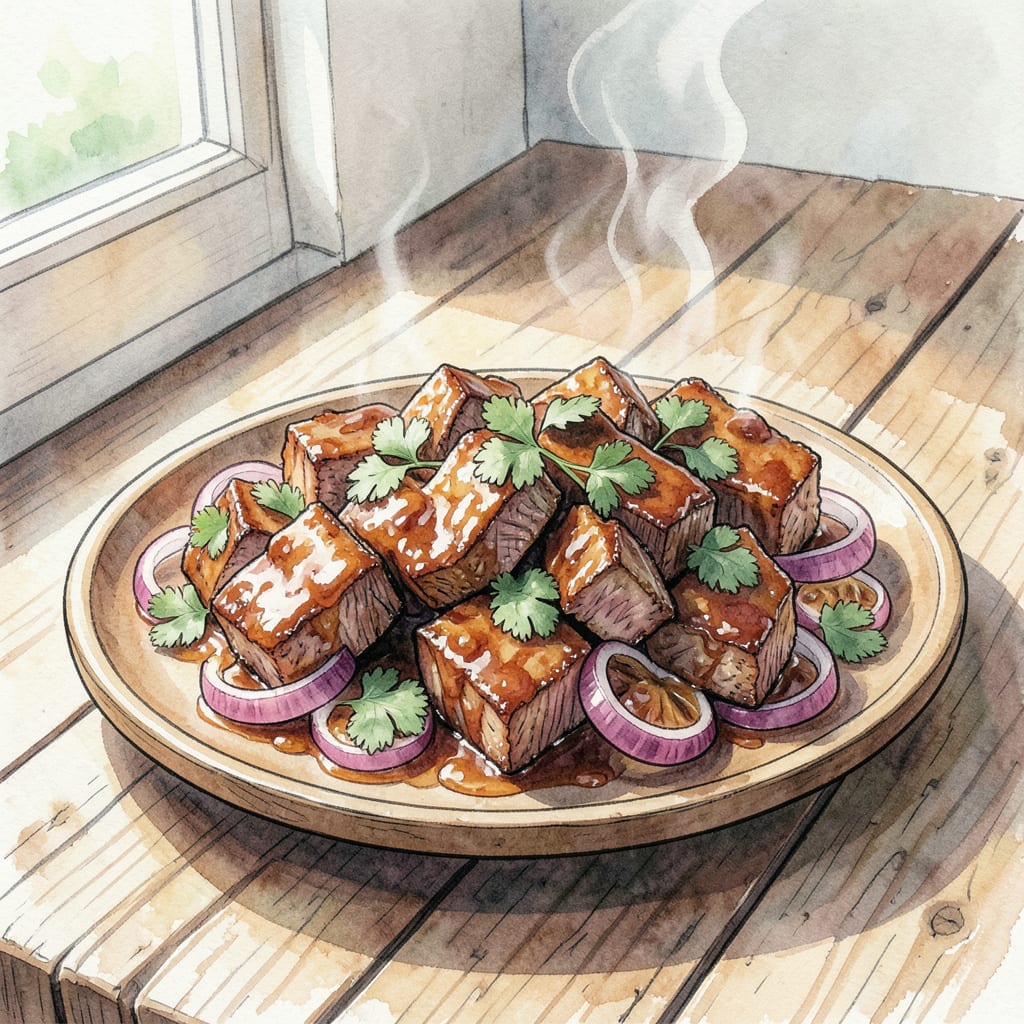
I’ve perfected a tender Poor Man’s Burnt Ends BBQ recipe that’s big on flavor but easy on the wallet. Using affordable beef brisket, we’ll create tender, smoky burnt ends that rival traditional BBQ joints.
This recipe requires just 2 hours of prep and cook time, using simple ingredients like chili powder, brown sugar, and smoked paprika. The result is tender, juicy burnt ends perfect for serving on a bun or with your favorite sides. Let’s get started!
Ingredients for Poor Man’s Burnt Ends Bbq
Simple, budget-friendly ingredients come together for tender, smoky BBQ in just 2 hours.
| Ingredient | Amount | Notes |
|---|---|---|
| Beef Brisket 🥩 | 2 lb | Trimmed of excess fat |
| Chili Powder 🌶️ | 2 tbsp | Smoked variety preferred |
| Brown Sugar 🍮 | 1 tbsp | Packed, not loose |
| Smoked Paprika 🌿 | 1 tbsp | For smoky depth |
| Garlic Powder 🧄 | 1 tsp | Not garlic salt |
| Onion Powder 🧅 | 1 tsp | Fresh ground preferred |
| Salt 🧂 | 1 tsp | Kosher salt preferred |
| Black Pepper 🌶️ | ½ tsp | Freshly ground |
| Beef Broth 🍜 | 1 cup | Low sodium recommended |
| BBQ Sauce 🍯 | ½ cup | Sweet or spicy variety |
| Apple Cider Vinegar 🍎 | 2 tbsp | For tanginess |
| Worcestershire Sauce 💧 | 1 tbsp | Adds depth, optional |
[recipe_ingredient_scaler]
The beef brisket is key here. Look for flat cut at your local butcher or Costco for the best results. Trim any excess fat if needed, but leave a good layer for tenderness. If you can’t find brisket, chuck roast is a decent substitute.
No smoked paprika? Regular paprika with liquid smoke gets you close. For the BBQ sauce, Kansas City-style gives that thick, sweet coating. If using store-bought, check the ingredients list for added sugars. The apple cider vinegar adds a nice tang—don’t skip it.
These burnt ends keep beautifully. Store leftovers in an airtight container in the fridge for up to 4 days. Reheat gently with a splash of beef broth to keep them moist. You can also freeze them for 3 months—just thaw overnight in the fridge.
Step-by-Step Instructions for Poor Man’s Burnt Ends BBQ
Here’s the method for achieving tender, smoky burnt ends on a budget. Let’s get started!
Step 1: Prepare the Brisket for Smoking
Start by trimming any excess fat from the 2 lb Beef Brisket, leaving about ¼ inch of fat on one side. This helps with even cooking and better bark formation. Next, mix together the dry rub ingredients: 2 tbsp Chili Powder, 1 tbsp Brown Sugar, 1 tbsp Smoked Paprika, 1 tsp Garlic Powder, 1 tsp Onion Powder, 1 tsp Salt, and 0.5 tsp Black Pepper. Apply this spice mixture evenly to both sides of the brisket, making sure to coat it thoroughly. Let the brisket sit at room temperature for 30 minutes before smoking to allow the meat to relax and absorb the flavors.
The dry rub creates a flavorful crust on the brisket while the sugar helps with browning. I like to press the spices into the meat gently to ensure they stick during the long cook. Make sure your smoker is preheated to 225-250°F using your preferred type of wood – I recommend post oak or a mix of hickory and oak for that authentic Texas-style flavor.
Step 2: Smoke the Brisket to Perfection
Place the seasoned brisket in the smoker fat-side up. Close the lid and let it cook undisturbed for 4-5 hours until it reaches an internal temperature of 160-170°F. During this time, you’ll start to see the brisket develop a beautiful bark on the outside while staying tender within. I like to spritz the brisket with 1 cup Beef Broth every hour to keep it moist and enhance the flavor.
After 4-5 hours, check the brisket’s temperature and texture. When it’s ready, it should be probe-tender but not falling apart. If it’s not quite there, give it another 30 minutes to an hour and check again. Once it’s done, remove it from the smoker and let it rest for 15-20 minutes before cubing.
Step 3: Cube and Sauce the Burnt Ends
Cut the rested brisket into ½-inch cubes. These will become your burnt ends. Place the cubes in a foil pan or disposable aluminum pan and toss them with 0.5 cup BBQ Sauce, 2 tbsp Apple Cider Vinegar, and 1 tbsp Worcestershire Sauce until they’re evenly coated. The BBQ sauce adds sweetness while the vinegar provides tanginess – this combination creates a perfect balance of flavors.
Return the pan to the smoker and continue cooking at 225-250°F for another 1-2 hours, stirring occasionally, until the burnt ends are caramelized and tender. You’ll know they’re done when they’re nicely browned on the outside and have a rich, BBQ flavor. Serve them hot, garnished with chopped fresh parsley if desired.
Essential Equipment for Perfect Results
Essential Smoker Equipment
A good smoker is the backbone of this recipe. I recommend either an offset smoker or a pellet smoker for temperature control. Offset smokers give that authentic Texas-style flavor, while pellet smokers offer convenience. Make sure your smoker can maintain 225-250°F consistently. 🔥
Meat Preparation Tools
You’ll need a few basic tools to prepare your brisket. A sharp boning knife helps trim excess fat, while a meat mallet can tenderize the meat if needed. I prefer using a cutting board with a juice groove to catch any escaping juices during preparation.
Temperature Control
Accurate temperature monitoring is crucial. I use a dual-probe thermometer – one probe for the smoker temperature and another for the brisket’s internal temperature. This ensures you don’t overcook or undercook your meat. Look for thermometers with wireless connectivity for remote monitoring.
Smoking Wood
The right wood adds depth to your burnt ends. I prefer post oak or a mix of hickory and oak for that authentic BBQ flavor. Make sure you have enough wood chips or chunks to last throughout the cook. Some smokers use wood pellets – those work too.
Additional Accessories
A few other tools make the process smoother. Heavy-duty aluminum pans or foil pans are perfect for holding the burnt ends during saucing. You’ll also need tongs or a spatula for handling the meat. I like to have gloves on hand when handling hot pans or brisket.
Optional but Helpful
Some additional equipment can enhance your experience. A meat injector can add extra flavor to the brisket, while a smoke generator can provide more consistent smoke. These aren’t necessary but can improve results if you’re serious about your BBQ. 💡
Nutrition Facts
420kcal

Trained in classic French technique but raised on slow-cooked ribs and spicy rubs, she blends culinary skill with smoke and soul.
- Recipe for Boneless Pork Chops in Cast Iron Skillet: Sear and Baste to Juicy Perfection - October 3, 2026
- Recipe for Boneless Cross Rib Roast: Slow-Roasted Beef with Herb Crust - October 3, 2026
- Hamburgers in Sauce Recipe Crock Pot: Slow-Cooked Savory Delight - October 3, 2026