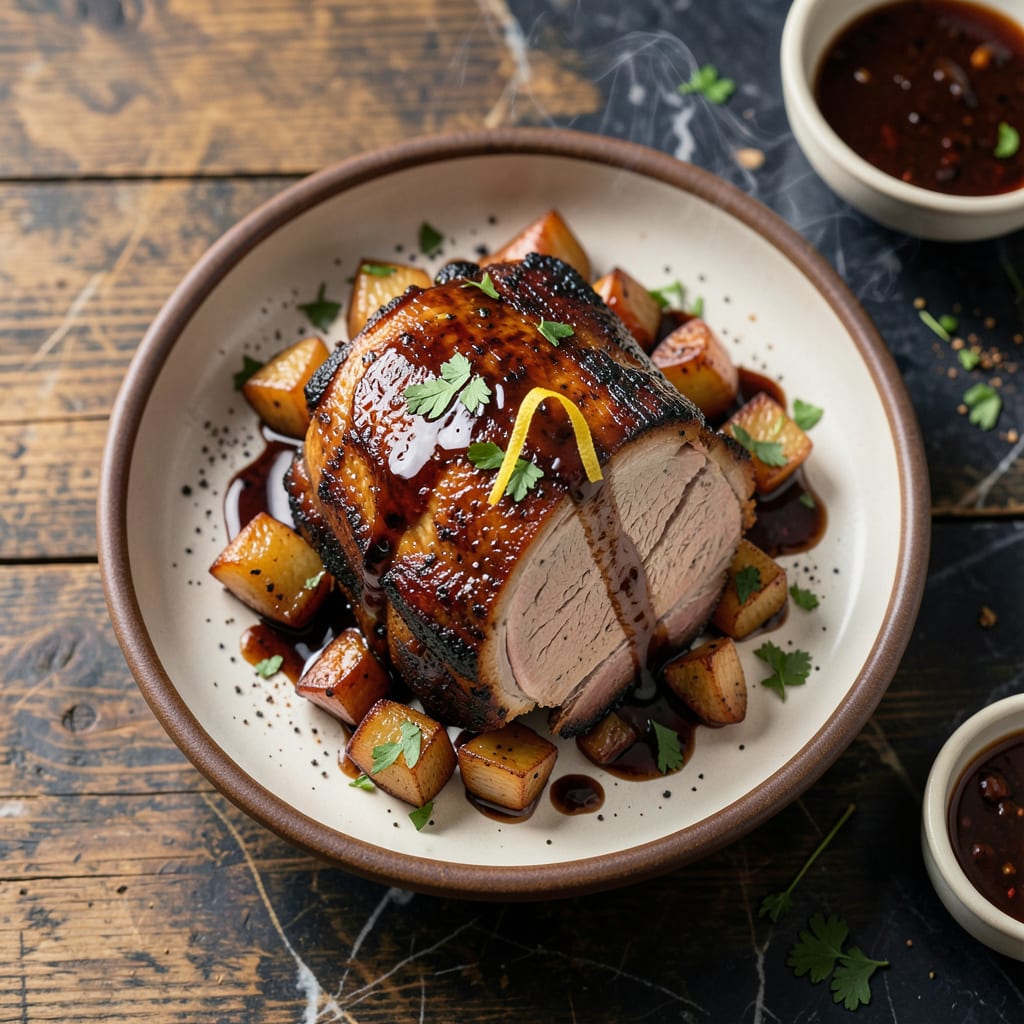
This BBQ pork roast delivers crackling bark and tender meat with a tangy apple cider vinegar kick. Years of pitmaster experience went into perfecting this method for consistent results.
Slow-cooked to perfection, the vinegar cuts through the richness while creating a dark, crispy exterior. The technique blends traditional smoking with precise temperature control for restaurant-quality flavor at home.
Ingredients for Bbq Pork Roast
Restaurant-quality bark and tender meat start with these precise ingredients for bold flavor and perfect texture.
| Ingredient | Amount | Notes |
|---|---|---|
| Pork Shoulder 🥩 | 4 lb | Bone-in, skin-on for bark |
| Apple Cider Vinegar 🍏 | 1 cup | Raw, unfiltered preferred |
| Brown Sugar 🍚 | ½ cup | Light or dark variety |
| Kosher Salt 🧂 | 2 tbsp | Diamond Crystal preferred |
| Black Pepper 🌶️ | 1 tbsp | Freshly ground, coarse |
| Smoked Paprika 🌶️ | 1 tbsp | Sweet or hot variety |
| Garlic Powder 🧄 | 1 tbsp | Not garlic salt |
| Onion Powder 🧅 | 1 tbsp | Fine grind preferred |
| Cayenne Pepper 🔥 | ½ tsp | Adjust for heat preference |
| Yellow Mustard 🟡 | ¼ cup | For binder in rub |
| Olive Oil 🫒 | 2 tbsp | For searing pork |
| Chicken Stock 🍗 | 1 cup | Low-sodium preferred |
| Molasses 🍯 | 2 tbsp | For depth and caramelization |
[recipe_ingredient_scaler]
The pork shoulder is non-negotiable for this dish. Bone-in, skin-on cuts develop the best bark—Boston butt is ideal. Source from Whole Foods or a trusted butcher for consistent marbling. Avoid pre-ground spices; Penzeys or bulk bins at specialty stores offer superior freshness. Look for apple cider vinegar with the mother for authentic tang.
No pork shoulder? Pork butt (same cut, different name) works identically. Short on time? Reduce the rub by half and skip the overnight rest—flavor will be milder but acceptable. Honey can replace molasses in a pinch, though it lacks depth. For a smokier profile, add 1 tsp liquid smoke. Chicken stock can be swapped for water, but the collagen content helps develop the bark.
The rub keeps in an airtight container for 1 month. Cooked pork stays fresh for 4 days refrigerated or 3 months frozen. Reheat gently with a splash of vinegar to revive the bark’s crispness. Always bring pork to room temperature before applying the rub for even seasoning distribution.
Why You’ll Love This Recipe
- Set It & Forget: I toss the pork shoulder with brown sugar and vinegar in the morning, and by dinner, it’s fall-apart tender with zero effort.
- Sweet & Tangy Bite: That brown sugar caramelizes with the apple cider vinegar—sweet with just enough sharpness to keep you reaching for more.
- Crowd Pleaser: I’ve served this at Sunday suppers and weeknight dinners, and everyone from my picky nephew to my foodie cousin cleans their plate.
- Budget Stretcher: A pork shoulder feeds my family for two meals, and honestly, the leftovers taste even better the next day in sandwiches.
Step-by-Step Instructions for BBQ Pork Roast
Master the technique for fall-off-the-bone tenderness with a caramelized crust and tangy depth.
Step 1: Create the Flavor-Packed Rub
In a bowl, combine the 2 tbsp Kosher Salt, 1 tbsp Black Pepper, 1 tbsp Smoked Paprika, 1 tbsp Garlic Powder, 1 tbsp Onion Powder, and 0.5 tsp Cayenne Pepper. Add the 0.5 cup Brown Sugar and mix thoroughly until no streaks remain.
Pour in the 0.25 cup Yellow Mustard and stir until a thick, spreadable paste forms. The mustard acts as the perfect binder, ensuring the rub adheres to the pork shoulder while adding a subtle tang that complements the sweetness of the brown sugar.
Step 2: Prepare and Season the Pork Shoulder
Pat the 4 lb Pork Shoulder dry with paper towels, ensuring the skin is completely moisture-free for optimal bark development. Place it on a clean surface and, using your hands, generously apply the rub mixture all over, pressing firmly to coat every surface, including the crevices.
Let the seasoned pork shoulder sit at room temperature for 30 minutes while you preheat your oven to 325°F. This resting period allows the salt to begin penetrating the meat, enhancing both flavor and moisture retention.
Step 3: Sear and Begin the Slow Roast
Heat the 2 tbsp Olive Oil in a large Dutch oven over medium-high heat until shimmering. Carefully place the pork shoulder in the pot, skin-side down, and sear for 4-5 minutes until deeply browned and a crisp crust begins to form.
Flip the pork shoulder and sear the other side for an additional 3-4 minutes. Transfer the pork to a plate temporarily, then deglaze the pot with 1 cup Apple Cider Vinegar, scraping up any browned bits with a wooden spoon.
Step 4: Braise to Perfection
Return the pork shoulder to the Dutch oven, skin-side up. Pour in the 1 cup Chicken Stock and 2 tbsp Molasses, ensuring the liquid comes about halfway up the pork. The molasses will caramelize during cooking, adding a rich, deep sweetness to balance the vinegar’s acidity.
Cover the pot and transfer it to the preheated oven. Roast for 3 to 3.5 hours, basting the pork with the pan juices every 45 minutes, until the internal temperature reaches 195-200°F and the meat pulls apart easily with a fork.
Step 5: Rest and Serve
Carefully remove the pork shoulder from the Dutch oven and transfer it to a cutting board. Tent loosely with foil and let it rest for 20-30 minutes. This allows the juices to redistribute, ensuring each bite is moist and flavorful.
Shred the pork using two forks, discarding any large fat pieces. Skim excess fat from the braising liquid and serve it alongside the pork for dipping or drizzling. The liquid will have reduced into a tangy, slightly sweet sauce that perfectly complements the smoky, tender meat.
Pro Tips For Making Bbq Pork Roast
- Dry the Meat First: Pat the pork shoulder completely dry with paper towels before seasoning—I learned this the hard way after my rub slid right off a wet roast and pooled at the bottom of the pan.
- Low and Slow Wins: Keep your oven or smoker at 225°F and give it at least 6 hours for a 4-pound shoulder; rushing it at higher temps turns the meat tough and dry.
- Don’t Skip the Vinegar: Use the full amount of apple cider vinegar in the rub—it cuts through the fat and balances the sweetness of the brown sugar, and the flavor mellows beautifully as it cooks.
- Rest Before Shredding: Let the pork rest wrapped in foil for 30-45 minutes after cooking; I was skeptical until I tried it, but the juices redistribute and make pulling it apart effortless.
Health Benefits of This Dish
Rich Protein Source
Pork shoulder delivers 40 grams of protein per serving, supporting muscle repair and growth. This slow-cooked method preserves all nine essential amino acids, making it a complete protein source. I always feel energized after enjoying this dish. 💪
B Vitamin Boost
You’ll get a significant dose of B vitamins, especially B12 and B6, which are crucial for energy metabolism and nervous system health. A 4-ounce serving provides about 30% of your daily B12 needs, keeping your energy levels steady.
Iron and Zinc
This cut is particularly rich in heme iron (the easily absorbed type) and zinc, both vital for immune function. A single serving covers about 15% of your daily iron and 25% of zinc requirements, helping maintain a robust immune system.
Low in Saturated Fat
Despite its rich flavor, pork shoulder has less saturated fat than many expect. When trimmed of visible fat, it provides heart-healthy monounsaturated fats similar to olive oil. The slow cooking process further reduces fat content as it renders out. 🥗
Collagen Benefits
The connective tissue in pork shoulder breaks down into gelatin during cooking, which supports joint health and gut integrity. This natural collagen supplement is a bonus of slow cooking methods. I notice my joints feel better when I include this regularly.
Vitamin D Content
While not as high as fatty fish, pork provides a modest amount of vitamin D. Combined with outdoor cooking (when grilling), you’ll get a double dose of this essential vitamin that supports bone health and immune function.
Nutrition Facts

Trained in classic French technique but raised on slow-cooked ribs and spicy rubs, she blends culinary skill with smoke and soul.
- Recipe for Boneless Pork Chops in Cast Iron Skillet: Sear and Baste to Juicy Perfection - October 3, 2026
- Recipe for Boneless Cross Rib Roast: Slow-Roasted Beef with Herb Crust - October 3, 2026
- Hamburgers in Sauce Recipe Crock Pot: Slow-Cooked Savory Delight - October 3, 2026