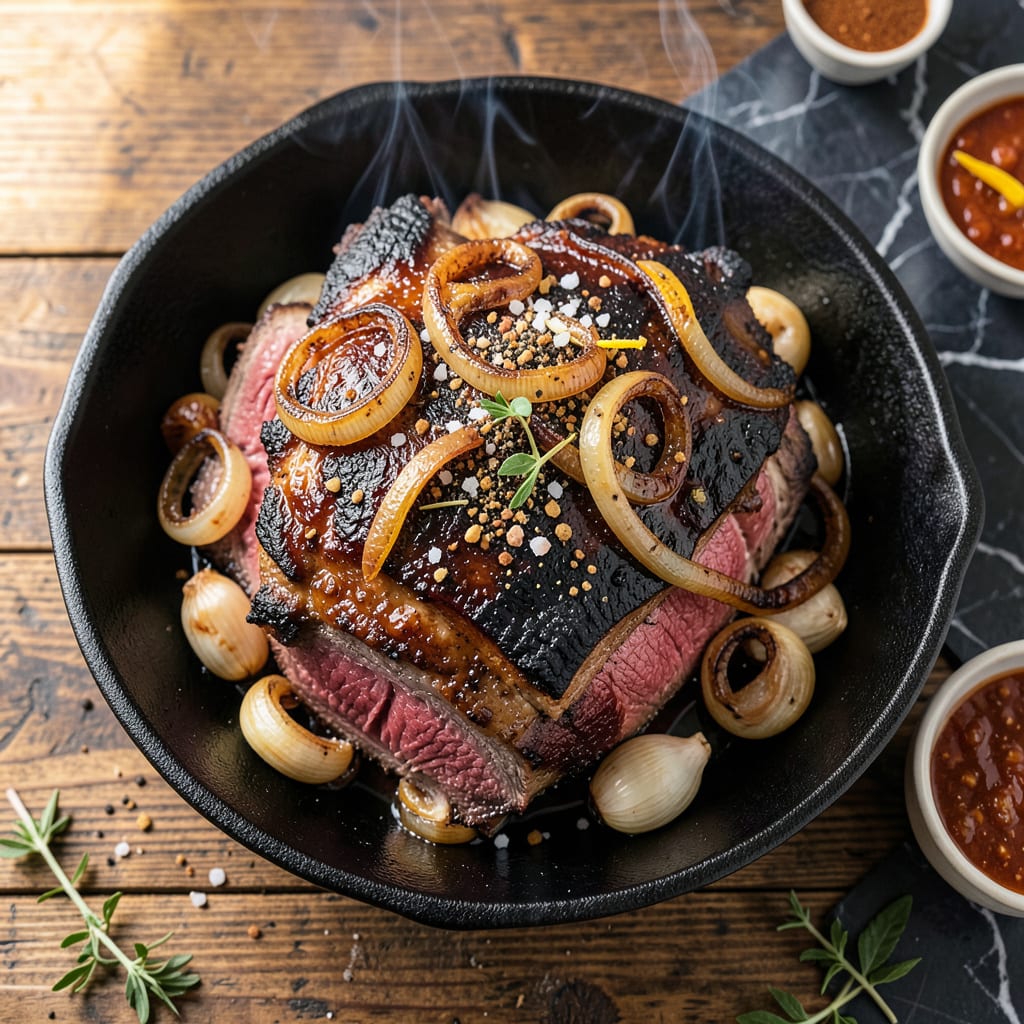
Getting my first whiff of hickory smoke at a family cookout inspired this slow-smoked roast beef method. Years of perfecting the technique now deliver melting tenderness every time.
This approach combines classic French precision with traditional smoke cooking. The low-and-slow process transforms tough cuts into buttery, fall-apart beef with a rich bark.
Ingredients for Bbq Roast Beef
Slow-smoked perfection starts with quality beef and a bold dry rub. Nothing less will do.
| Ingredient | Amount | Notes |
|---|---|---|
| Beef Chuck Roast 🥩 | 4 lb | Well-marbled, trimmed of excess fat |
| Hickory Wood Chips 🪵 | 2 cups | Soaked in water for 30 minutes |
| Coarse Kosher Salt 🧂 | 2 tbsp | Diamond Crystal preferred for texture |
| Freshly Ground Black Pepper 🌶️ | 1 tbsp | Coarse grind for bark formation |
| Garlic Powder 🧄 | 1 tbsp | Not garlic salt substitute |
| Onion Powder 🧅 | 1 tbsp | Enhances depth of flavor |
| Smoked Paprika 🌶️ | 1 tbsp | Sweet or hot variety acceptable |
| Brown Sugar 🍚 | ¼ cup | Light or dark for caramelization |
| Worcestershire Sauce 💧 | ¼ cup | Anchovy-free version if preferred |
| Apple Cider Vinegar 🍏 | 2 tbsp | Balances richness of beef |
| Olive Oil 🫒 | 2 tbsp | For binding rub ingredients |
| Beef Broth 🥣 | 2 cups | Low-sodium for controlled seasoning |
| Yellow Mustard 🟡 | 2 tbsp | Forms base layer for rub |
[recipe_ingredient_scaler]
The beef selection is paramount for this method. Chuck roast provides the ideal fat-to-meat ratio for low-and-slow cooking, resulting in that signature melting tenderness. Source from Costco or Whole Foods for consistent marbling. For hickory wood chips, Western BBQ or Camerons brands offer reliable quality. Always soak wood chips for 30 minutes before use to prevent bitter smoke.
For the rub, Diamond Crystal kosher salt is the professional choice due to its texture and purity. No Worcestershire sauce? Soy sauce with a dash of lemon juice works in a pinch. Brown sugar can be substituted with turbinado sugar for a coarser texture. The vinegar is non-negotiable—it tenderizes and balances the richness. If you must skip the mustard, use Dijon for a sharper profile.
The dry rub can be prepared 24 hours ahead and stored in an airtight container. Smoked roast beef keeps in the fridge for 4-5 days or can be frozen for 3 months. For best results, slice against the grain just before serving (worth the extra minute).
Why You’ll Love This Recipe
- Set It and Forget: That chuck roast goes in the smoker with hickory chips, then I just let the low heat do its magic for hours.
- Smoky, Garlicky Depth: The hickory smoke wraps around the beef while the garlic powder, salt, and pepper form the most crave-worthy crust.
- Feeds the Week: I make a big roast on Sunday, then we’re pulling it apart for sandwiches, tacos, and salads till Wednesday.
- Budget-Friendly Centerpiece: A chuck roast is cheap, and with just salt, pepper, and garlic, it turns into a showstopper that stretches far.
Step-by-Step Instructions for BBQ Roast Beef
Master the slow-smoking technique that transforms tough cuts into buttery, fall-apart perfection.
Step 1: Prepare the Roast with a Flavorful Rub
Begin by combining the 2 tbsp Coarse Kosher Salt, 1 tbsp Freshly Ground Black Pepper, 1 tbsp Garlic Powder, 1 tbsp Onion Powder, 1 tbsp Smoked Paprika, and 0.25 cup Brown Sugar in a bowl. This blend creates the perfect bark and deep flavor penetration.
Pat the 4 lb Beef Chuck Roast completely dry with paper towels to ensure the rub adheres properly. Brush the entire surface with 2 tbsp Yellow Mustard—this acts as a binder. Then, massage the rub mixture into every surface of the roast, pressing firmly to create a thick, even coating. Let it sit at room temperature for 30-45 minutes while you prepare the smoker.
Step 2: Set Up Your Smoker for Low and Slow Cooking
Soak the 2 cups Hickory Wood Chips in water for 30 minutes to ensure a steady, smoldering smoke. Preheat your smoker to 225°F using indirect heat. Once at temperature, add the soaked wood chips to the coals or smoker box. You’re aiming for thin, blue smoke—not thick, white smoke, which can impart a bitter flavor.
Place a drip pan filled with 2 cups Beef Broth, 0.25 cup Worcestershire Sauce, and 2 tbsp Apple Cider Vinegar beneath the cooking grate. This mixture will catch drippings and create a steamy environment, keeping the meat moist during the long cook. The tangy liquid also enhances the overall flavor profile.
Step 3: Smoke the Roast to Perfection
Place the seasoned 4 lb Beef Chuck Roast on the smoker grate, fat-side up. Insert a meat probe into the thickest part of the roast to monitor the internal temperature. Smoke undisturbed for 4-5 hours, maintaining a steady 225°F throughout.
After the first 4 hours, check the roast. You’ll want to see a dark, mahogany bark forming on the exterior. Spritz the roast lightly with the 2 tbsp Olive Oil mixed with a bit of the broth from the drip pan to keep the surface moist. Continue smoking until the internal temperature reaches 195-203°F—this is the sweet spot for beef chuck roast to become fork-tender.
Step 4: Rest and Shred for Maximum Tenderness
Once the roast reaches the desired internal temperature, carefully remove it from the smoker and transfer it to a large cutting board or serving tray. Tent loosely with foil and let it rest for 30-45 minutes. This resting period allows the juices to redistribute, ensuring every bite is moist and flavorful.
Using two forks, shred the roast into large chunks. The meat should pull apart effortlessly, revealing the melt-in-your-mouth texture you’ve achieved. Serve immediately with some of the au jus from the drip pan for an extra layer of flavor.
Pro Tips For Making Bbq Roast Beef
- Preheat the Smoker: I learned this the hard way—get your smoker to 225°F before the beef goes in, or you’ll waste wood chips and get uneven cooking.
- Dry the Meat: Pat the chuck roast bone-dry with paper towels before seasoning; it’s the only way to get that crusty bark everyone raves about.
- Skip the Fresh Garlic: Sounds weird, but garlic powder sticks better to the meat and won’t burn like fresh cloves can during the long smoke.
- Rest Under Foil: Give it a solid 30 minutes wrapped in foil after smoking—this keeps all the juices from running out when you slice it.
Wine and Beer Pairings for This bbq roast beef
Bold Red Wines
Nothing complements the smoky richness of this dish like a bold red wine. I recommend a Cabernet Sauvignon from Napa Valley—its dark fruit flavors and firm tannins stand up beautifully to the beef’s intensity. A Zinfandel with its peppery notes also pairs wonderfully. 🍷
Lighter Red Options
For those who prefer something a bit softer, try a Pinot Noir from Oregon’s Willamette Valley. Its bright acidity and red fruit flavors cut through the smoke while still harmonizing with the beef. I find the contrast delightful.
White Wine Surprise
Don’t overlook white wines entirely. A full-bodied Chardonnay with oak aging can work surprisingly well. The buttery notes complement the beef’s tenderness, while the acidity cleanses your palate. I was skeptical at first, but it won me over.
Craft Beer Pairings
Beer lovers should try a Robust Porter or Stout—the roasted malt flavors mirror the smoky notes of the beef. I’m partial to Guinness or Deschutes Black Butte Porter. The carbonation helps cut through the richness. 🍺
Hoppy Alternatives
If you prefer hops, go for a Double IPA with its bold bitterness to balance the dish’s sweetness. Pliny the Elder is a favorite at our local BBQ competitions. Just be prepared for the high ABV.
Non-Alcoholic Options
For non-drinkers, I suggest a smoked black tea like Russian Caravan. The smokiness echoes the beef’s flavor, while the tannins provide a similar mouthfeel to red wine. Serve it iced for a refreshing contrast.
Nutrition Facts

Trained in classic French technique but raised on slow-cooked ribs and spicy rubs, she blends culinary skill with smoke and soul.
- Recipe for Boneless Pork Chops in Cast Iron Skillet: Sear and Baste to Juicy Perfection - October 3, 2026
- Recipe for Boneless Cross Rib Roast: Slow-Roasted Beef with Herb Crust - October 3, 2026
- Hamburgers in Sauce Recipe Crock Pot: Slow-Cooked Savory Delight - October 3, 2026