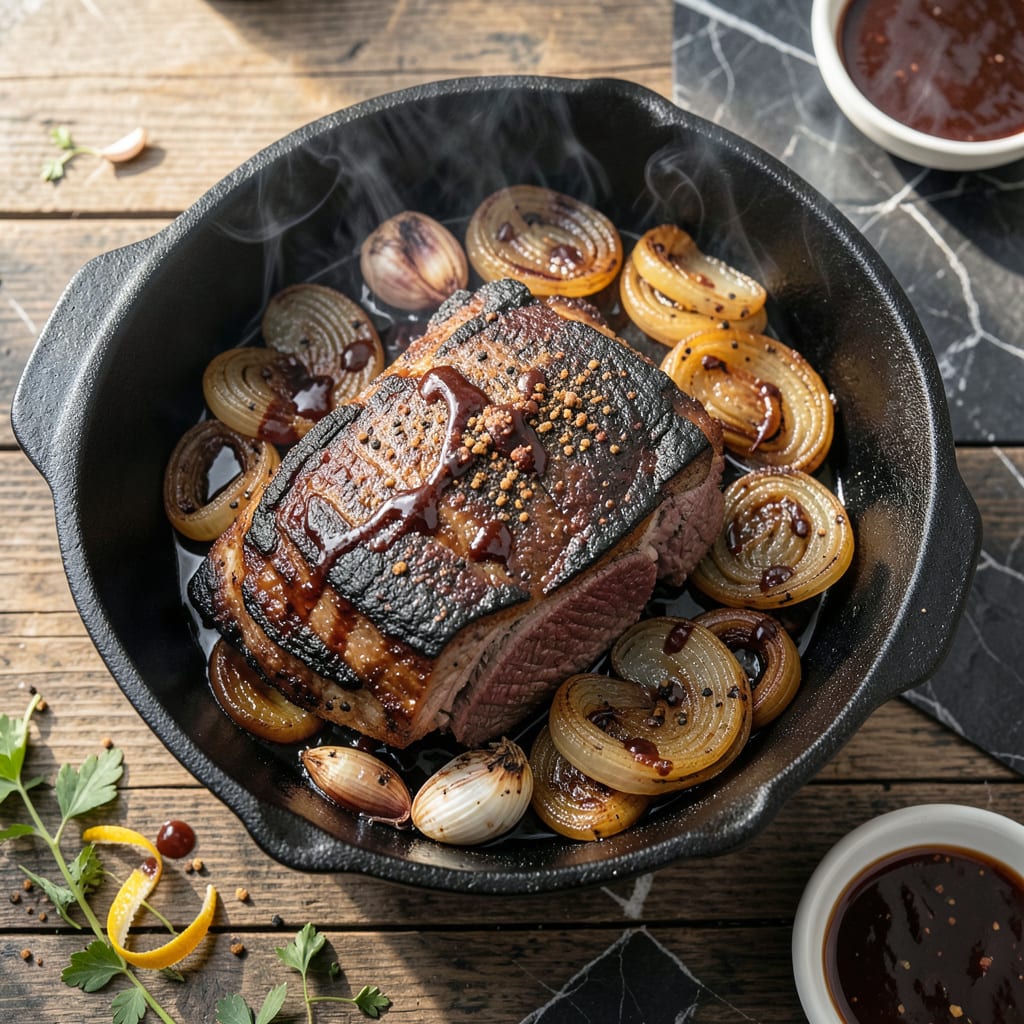
There’s nothing quite like a properly smoked BBQ roast that falls apart at the touch of a fork. This method transforms tough cuts into tender, flavorful perfection through low and slow cooking.
I’ve spent years refining this technique, blending my French training with traditional pitmaster skills. The result is meat so tender it practically dissolves, with a smoky depth that can’t be rushed.
Ingredients for Bbq Roast
Transform tough cuts into fall-apart perfection with these essential BBQ ingredients.
| Ingredient | Amount | Notes |
|---|---|---|
| Beef Chuck Roast 🥩 | 4 lb | Well-marbled, bone-in preferred |
| Kosher Salt 🧂 | 2 tbsp | Diamond Crystal preferred |
| Coarse Black Pepper 🌶️ | 1 tbsp | Freshly ground for best results |
| Garlic Powder 🧄 | 1 tbsp | Not garlic salt substitute |
| Onion Powder 🧅 | 1 tbsp | Granulated consistency ideal |
| Smoked Paprika 🌶️ | 1 tbsp | Spanish variety recommended |
| Brown Sugar 🫙 | ½ cup | Light or dark acceptable |
| Apple Cider Vinegar 🍏 | ¼ cup | Raw, unfiltered preferred |
| Worcestershire Sauce 🫒 | ¼ cup | Lea & Perrins standard |
| Hickory Wood Chips 🪵 | 4 cups | Soaked in water 1 hour |
| Yellow Mustard 🟡 | 2 tbsp | For binder in dry rub |
| Olive Oil 🫒 | 2 tbsp | For searing preparation |
[recipeingredientscaler]
The beef chuck roast is non-negotiable here. USDA Choice grade with visible marbling ensures the tender result promised. Source from a reputable butcher or Whole Foods for consistent quality. Bone-in pieces add depth to the final product, though boneless works in a pinch. Avoid lean cuts like sirloin—they lack the fat content needed for proper breakdown during the long cook.
No hickory chips? Mesquite or applewood provide complementary smoke profiles. Brown sugar can be substituted with turbinado sugar at a 1:1 ratio. If avoiding gluten, verify your Worcestershire sauce—Annie’s makes a gluten-free version. The apple cider vinegar adds necessary acidity; white vinegar in equal measure works but lacks complexity.
Store the raw roast in its original packaging on the bottom shelf of the refrigerator for up to 5 days. The dry rub can be pre-mixed and kept in an airtight container for 6 months. Soaked wood chips must be used immediately or they’ll develop mold.
Why You’ll Love This Recipe
- Set It and Forget: I rub the chuck with salt, pepper, garlic and onion powders, then let the oven do the work—zero babysitting required.
- Smoky Depth: The dry rub forms a crust that locks in juices while adding that BBQ pit flavor without a smoker.
- Feeds the Squad: One roast becomes sandwiches tonight, tacos tomorrow, and a hearty soup the next day.
- Budget Hero: A chuck roast stretches further than pricier cuts, and those five pantry staples cost pennies.
Step-by-Step Instructions for Slow-Smoked BBQ Roast
Master the technique for fall-apart tenderness with this precise low-and-slow smoking process.
Step 1: Prepare the Dry Rub and Season the Roast
In a bowl, combine 2 tbsp Kosher Salt, 1 tbsp Coarse Black Pepper, 1 tbsp Garlic Powder, 1 tbsp Onion Powder, 1 tbsp Smoked Paprika, and 0.5 cup Brown Sugar. I use a whisk to break up any clumps in the brown sugar for even distribution.
Pat the 4 lb Beef Chuck Roast completely dry with paper towels—moisture prevents the rub from adhering properly. Brush the entire surface with 2 tbsp Yellow Mustard to create a tacky base for the rub. This doesn’t add mustard flavor; it simply helps the seasoning stick.
Apply the rub generously to all sides of the roast, pressing firmly to ensure it adheres. The meat should be completely coated with no bare spots. Let it sit at room temperature for 30-45 minutes while you prepare the smoker.
Step 2: Set Up the Smoker for Indirect Heat
Soak 4 cups Hickory Wood Chips in water for at least 1 hour to prevent them from burning too quickly. Fill your smoker’s water pan to maintain moisture during the long cook—this is crucial for preventing the roast from drying out.
Preheat your smoker to 225°F using indirect heat. Once it reaches temperature, add a handful of drained wood chips directly to the coals or to the smoker box. You want a steady stream of thin blue smoke, not thick white smoke, which can impart bitter flavors.
Place the roast on the grate opposite the heat source, fat-side up. This positioning allows the fat to baste the meat as it renders. Insert a meat thermometer into the thickest part of the roast, avoiding bone if present.
Step 3: Smoke the Roast to Perfection
Smoke the roast undisturbed for 4-5 hours until the internal temperature reaches 165°F. This is when the “stall” occurs—moisture evaporates from the surface, causing the temperature to plateau. Resist the urge to increase the heat; patience is key here.
Prepare a spray bottle with equal parts 0.25 cup Apple Cider Vinegar and 0.25 cup Worcestershire Sauce. Every 45-60 minutes, lightly spritz the roast to keep the surface moist and enhance bark formation. The vinegar also helps tenderize the meat over time.
Continue smoking until the internal temperature reaches 200-205°F and the roast is probe-tender—when a thermometer slides in like butter with no resistance. This typically takes 8-10 hours total, depending on your smoker and the roast’s size.
Step 4: Rest and Slice the Roast
Remove the roast from the smoker and transfer it to a cutting board. Tent it loosely with foil and let it rest for 30-45 minutes. This rest period allows the juices to redistribute throughout the meat, ensuring every bite is moist and flavorful.
While the roast rests, the internal temperature will rise a few degrees due to carryover cooking. The ideal serving temperature is 203°F for optimal tenderness. Use this time to prepare your side dishes or make a quick sauce from the drippings.
Slice the roast against the grain into ½-inch thick pieces. The grain runs in one direction through the meat; cutting perpendicular to it shortens the muscle fibers, resulting in a more tender bite. Serve immediately while still warm.
Pro Tips For Making Bbq Roast
- Sear the Chuck First: I learned this the hard way—skipping the sear gives you a pale, sad roast. Crank the heat to medium-high and get that chuck roast deeply browned on all sides before slow cooking.
- Season Overnight: Sounds like overkill, but rubbing the kosher salt, coarse pepper, garlic powder, and onion powder into the beef the night before actually changes the outcome. The flavors sink in deeper.
- Skip the Cold Roast: Resist the urge to throw it straight from the fridge into the heat. Let the chuck sit out for 30-45 minutes first—this guarantees even cooking, no tough edges.
- Use a Meat Thermometer: After burning three batches, I finally figured out that guessing doneness is a gamble. Pull it at 195°F internal temp for that perfect fall-apart texture.
Essential Equipment for bbq roast
Smoker Selection
For this low-and-slow cook, I swear by my Weber Smokey Mountain—it maintains 225°F effortlessly for hours. Pellet smokers like Traeger work too, but I prefer the hands-on control of charcoal. A built-in thermometer is non-negotiable for monitoring internal temps. 🔥
Thermometer Essentials
Invest in a dual-probe thermometer like the ThermoWorks Smoke—one probe for the smoker, one for the meat. The instant-read thermometer is your backup for spot-checking. I check temps every 2 hours during the cook.
Fuel and Smoke
Use lump charcoal over briquettes for cleaner heat and less ash. For wood, hickory is classic, but apple or cherry add sweeter notes. Always soak chips for 1 hour to prevent flare-ups. A chimney starter gets coals ready in 15-20 minutes.
Tools for Handling
Long heat-resistant gloves protect your hands when adjusting vents or adding wood. I also keep a spray bottle handy for taming flare-ups. A meat injector can add moisture to larger roasts, though this recipe doesn’t require it.
Resting Setup
A large cutting board with a juice groove catches drippings while resting. Tent with foil and wrap in a towel to retain heat. I rest mine on the counter, not in the oven—carryover cooking does the rest. 💡
Slicing Equipment
A 12-inch slicing knife with a granton edge glides through meat cleanly. Keep a steel honing rod nearby to maintain sharpness. Slice against the grain in ½-inch pieces for maximum tenderness.
Nutrition Facts

Trained in classic French technique but raised on slow-cooked ribs and spicy rubs, she blends culinary skill with smoke and soul.
- Recipe for Boneless Pork Chops in Cast Iron Skillet: Sear and Baste to Juicy Perfection - October 3, 2026
- Recipe for Boneless Cross Rib Roast: Slow-Roasted Beef with Herb Crust - October 3, 2026
- Hamburgers in Sauce Recipe Crock Pot: Slow-Cooked Savory Delight - October 3, 2026