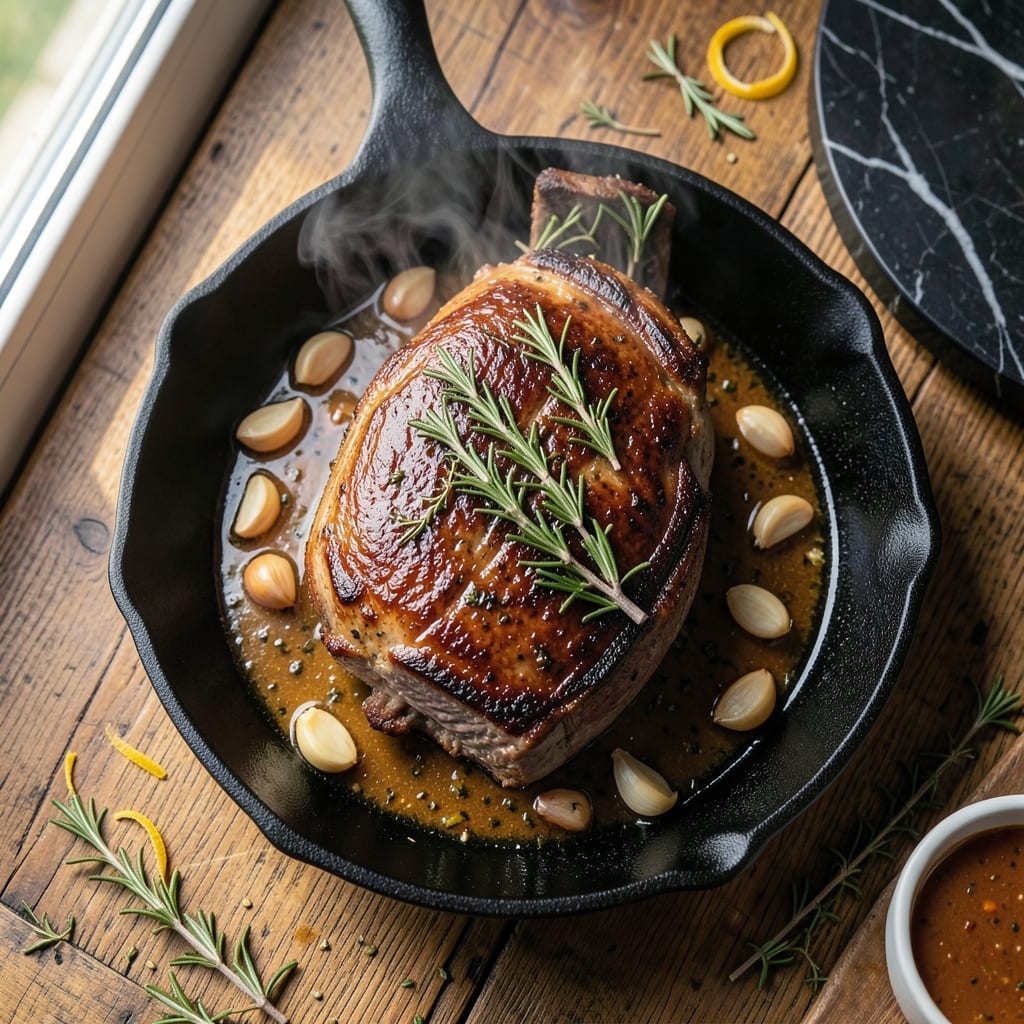
This slow-roasted beef blade roast transforms a humble cut into melt-in-your-mouth perfection with minimal effort. My grandmother’s handwritten notes simply said “low and slow,” advice I’ve since perfected through years of trial and error.
The secret lies in the marinade—a blend of fresh herbs, garlic, and olive oil that infuses the meat with flavor before it even hits the oven. A 3-hour roast at 300°F breaks down the tough fibers, creating a dish that rivals any Sunday supper from my childhood.
What emerges is a roast with a deeply browned crust and interior so tender it falls apart at the touch of a fork. The herb crust forms a flavorful seal that locks in juices while adding aromatic complexity to each bite.
Serve with roasted root vegetables or mashed potatoes to soak up the rich pan juices. This method proves that extraordinary results don’t require extraordinary effort.
Ingredients for Beef Blade Roast Recipe Oven
Pantry staples plus fresh herbs and a good cut of beef. Simple enough.
| Ingredient | Amount | Notes |
|---|---|---|
| Beef Blade Roast 🥩 | 3 lb | Well-marbled for tenderness |
| Fresh Rosemary 🌿 | 2 tbsp | Chopped, stems removed |
| Fresh Thyme 🍃 | 2 tbsp | Chopped, stems removed |
| Garlic Cloves 🧄 | 6 cloves | Minced for marinade |
| Extra-Virgin Olive Oil 🫒 | ½ cup | For marinade and searing |
| Kosher Salt 🧂 | 2 tsp | Diamond Crystal preferred |
| Black Pepper 🌶️ | 1 ½ tsp | Freshly ground for crust |
| Red Wine 🍷 | 1 cup | Dry, for deglazing |
| Beef Broth 🥣 | 1 cup | Low-sodium preferred |
| Carrots 🥕 | 3 whole | Peeled, cut into chunks |
| Yellow Onion 🧅 | 1 whole | Large, quartered |
| Celery Stalks 🥬 | 2 whole | Cut into large pieces |
| Tomato Paste 🍅 | 2 tbsp | For depth of flavor |
[recipe_ingredient_scaler]
The beef blade roast is key here—look for good marbling at the butcher counter. I usually grab mine at Costco or Whole Foods (they’ve got consistent quality). The herbs need to be fresh (the good stuff, not the dried kind in jars)—farmers market is ideal, but grocery store works too. Don’t skip the marinade time; it’s what makes the crust so flavorful.
No red wine? Beef broth with a splash of balsamic vinegar gets you close. Swap fresh herbs for dried at one-third the amount. If you’re out of tomato paste, Trader Joe’s has those handy squeeze tubes. The carrots and onions can be swapped for any root veggies you’ve got lying around (parsnips or potatoes work great).
Leftovers keep beautifully—4-5 days in the fridge, 3 months frozen. I always make extra for sandwiches the next day (shred it and pile it high). The pan juices freeze well too for quick gravy later.
Why You’ll Love This Recipe
- Set It and Forget It: I rub the roast with olive oil, garlic, and herbs, pop it in the oven, and let the heat do all the work.
- Herb Crust Heaven: The rosemary and thyme form this insane crust with the garlic that’s ridiculously good with every bite.
- Feeds the Crew: One blade roast serves my whole family with leftovers for sandwiches the next day.
- Budget Friendly: I get a big flavor payoff from an affordable cut, and it stretches for multiple meals.
Step-by-Step Instructions for Beef Blade Roast
Here’s my foolproof method for transforming this cut into fall-apart tender perfection every time.
Step 1: Create the Herb Marinade
In a bowl, combine the 0.5 cup extra-virgin olive oil, 2 tbsp fresh rosemary, 2 tbsp fresh thyme, 6 cloves minced garlic, 2 tsp kosher salt, and 1.5 tsp black pepper. The herbs should release their fragrance as you mix them into the oil.
This isn’t just flavoring—it’s insurance against dryness. The oil carries the herbs into every crevice of the meat, while the salt begins breaking down proteins for that melt-in-your-mouth texture we’re after. Let the mixture sit for 10 minutes to let the flavors meld.
Step 2: Sear the Beef Blade Roast
Pat the 3 lb beef blade roast dry with paper towels, then rub the marinade all over its surface, pressing it into every nook. The meat should glisten with the herb mixture. Let it sit at room temperature for 30 minutes while your oven preheats.
Heat a large Dutch oven over medium-high heat. Sear the roast on all sides for about 3-4 minutes per side until deeply browned. You’ll see the crust forming—that’s the Maillard reaction creating complex flavors. Don’t rush this; a good sear means better flavor.
Step 3: Build the Braising Liquid
Remove the roast and set it aside. In the same pot, add the 1 whole yellow onion, 3 whole carrots, and 2 whole celery stalks. Cook for 5 minutes until the vegetables start to soften and brown slightly around the edges.
Stir in the 2 tbsp tomato paste and cook for 1 minute until it darkens slightly. Pour in the 1 cup red wine and scrape up all the browned bits from the bottom—this is pure flavor. Let it simmer for 2 minutes until reduced by half, then add the 1 cup beef broth.
Step 4: Slow-Roast to Tenderness
Return the roast to the pot, spooning some of the vegetables and liquid over the top. Cover and transfer to a 325°F oven. Roast for 3 to 3.5 hours, turning the roast every 45 minutes to ensure even cooking.
You’ll know it’s done when a fork slides in with almost no resistance. The vegetables will have broken down into the liquid, creating a rich sauce. If the liquid level gets low, add a splash of water, but don’t drown the roast—we want that concentrated flavor.
Remove from the oven and let the roast rest in the liquid for 20 minutes before serving. This resting period allows the muscle fibers to relax and reabsorb the juices, making each bite incredibly moist.
Pro Tips For Making Beef Blade Roast Recipe Oven
- Sear Before Roasting: Sear the beef blade roast in a hot pan with olive oil until deeply browned on all sides before transferring to the oven. I learned this the hard way—skipping this step gives you a pale, flavorless crust.
- Use Room-Temp Meat: Take the roast out of the fridge 1-2 hours before cooking. After burning three batches, I finally figured out that cold meat cooks unevenly and dries out.
- Don’t Skip the Herb Paste: Mash the garlic, rosemary, thyme, and olive oil into a paste and rub it all over the roast. Sounds weird, but it works—way better than just tossing whole herbs on top.
- Rest Under Foil: Let the roast rest covered with foil for at least 15 minutes after removing it from the oven. My grandmother swore by this, and she was right: it keeps the juices inside where they belong.
Dietary Considerations for beef blade roast recipe oven
Gluten-Free Friendly
This dish is naturally gluten-free as long as you use certified gluten-free beef broth and avoid cross-contamination. I always check labels at the grocery store—Pacific Foods and Imagine brands are reliable. The red wine is typically safe, but verify with your wine merchant if you have celiac disease. 💪
Dairy-Free and Nut-Free
The recipe contains no dairy or nuts, making it safe for those with allergies. Just ensure your olive oil and other ingredients haven’t been processed in facilities with allergens. I’ve served this to friends with nut allergies without any issues.
Low-Carb and Keto Adaptation
For a keto-friendly version, simply omit the carrots and onions or replace them with low-carb alternatives like celery and mushrooms. The beef and marinade remain perfectly compliant. This adaptation keeps the rich flavor while reducing net carbs to under 5g per serving. ✨
Sodium Considerations
To reduce sodium, use low-sodium beef broth and cut the kosher salt in half. The herbs and garlic still provide plenty of flavor. I often make this adjustment when cooking for my parents, who watch their salt intake.
Paleo and Whole30 Friendly
This recipe aligns perfectly with Paleo and Whole30 guidelines—just ensure your wine and broth meet the program’s standards. Skip the tomato paste if on Whole30, as it’s technically a nightshade, though many followers include it.
Nutrition Facts
Frequently Asked Questions
How do I know when the roast is done?
Use a fork test—it should slide in with almost no resistance. For precision, aim for an internal temperature of 195-205°F for fall-apart tenderness.
Can I cook this in a slow cooker instead?
Yes! Sear the roast first, then transfer to your slow cooker with all liquids and vegetables. Cook on low for 8-10 hours or high for 5-6 hours for similar results.
Why did my roast turn out dry?
This usually happens if the temperature was too high or it didn’t cook long enough. Always use low heat (325°F) and give it the full 3-3.5 hours to break down properly.
What’s the best way to slice it?
Always slice against the grain for maximum tenderness. Look for the natural muscle fibers running through the meat and cut perpendicular to them. Let it rest 20 minutes first.

Trained in classic French technique but raised on slow-cooked ribs and spicy rubs, she blends culinary skill with smoke and soul.
- Recipe for Boneless Pork Chops in Cast Iron Skillet: Sear and Baste to Juicy Perfection - October 3, 2026
- Recipe for Boneless Cross Rib Roast: Slow-Roasted Beef with Herb Crust - October 3, 2026
- Hamburgers in Sauce Recipe Crock Pot: Slow-Cooked Savory Delight - October 3, 2026