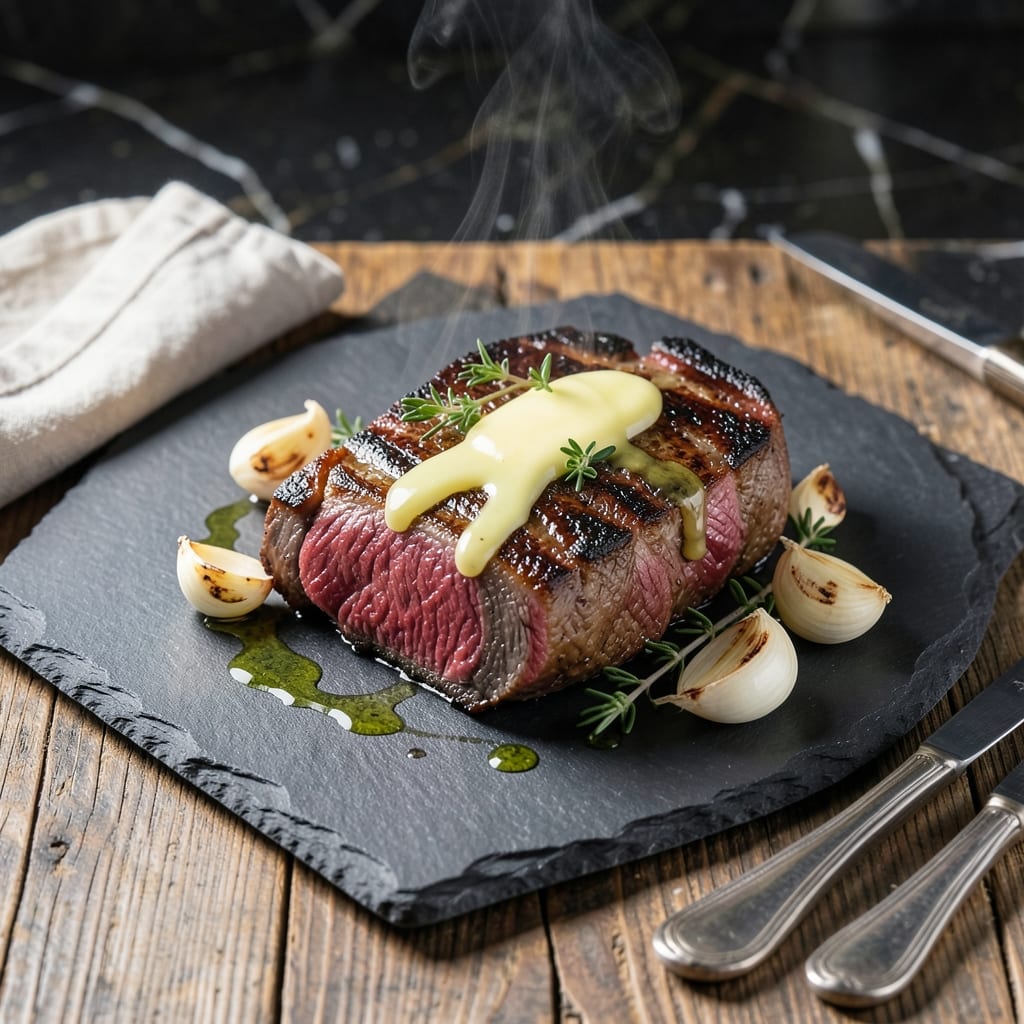
Pan-searing transforms beef blade steak into a restaurant-quality meal with minimal effort. This cut, also known as flat iron, delivers rich beefy flavor and tender texture when cooked properly.
The technique is simple but precise: high heat creates a perfect crust while butter basting adds depth. I’ve tested this method repeatedly to ensure consistent, juicy results every time.
You’ll achieve a golden-brown sear with a buttery, garlicky finish that enhances the steak’s natural richness. The process takes under 20 minutes, making it ideal for weeknight dinners.
Serve with roasted vegetables or mashed potatoes to complete the meal. This dish proves that exceptional flavor doesn’t require complicated steps.
Ingredients for Beef Blade Steak
Restaurant-quality beef blade steak requires simple, high-quality ingredients for perfect pan-searing results every time.
| Ingredient | Amount | Notes |
|---|---|---|
| Beef Blade Steak 🥩 | 2 lb | Flat iron cut, about 1-inch thick |
| Kosher Salt 🧂 | 2 tsp | Diamond Crystal preferred for even seasoning |
| Freshly Ground Black Pepper 🌶️ | 1 tsp | Coarse grind for texture |
| Unsalted Butter 🧈 | 4 tbsp | European-style for richer flavor |
| Garlic Cloves 🧄 | 4 cloves | Lightly crushed, peeled |
| Fresh Thyme Sprigs 🌿 | 4 sprigs | Optional but recommended for aroma |
| Fresh Rosemary Sprigs 🌿 | 2 sprigs | Optional but recommended for aroma |
| Olive Oil 🫒 | 2 tbsp | High smoke point, neutral flavor |
| Shallot 🧅 | 1 whole | Minced, for basting sauce |
| Red Wine 🍷 | ¼ cup | Dry variety like Cabernet Sauvignon |
| Dijon Mustard 🟡 | 1 tsp | For finishing sauce |
[recipe_ingredient_scaler]
The beef blade steak, also known as flat iron, is the foundation. Look for well-marbled cuts at Whole Foods or Costco—the marbling ensures tenderness. USDA Choice or Prime grades are ideal. Let the steak sit at room temperature for 30 minutes before cooking; this ensures even cooking. A heavy cast-iron skillet is essential for achieving the proper sear.
No fresh herbs? Dried thyme or rosemary at one-third the amount works in a pinch, though fresh is preferred for basting. Swap red wine for beef broth with a splash of balsamic vinegar if needed. For a dairy-free version, ghee or high-smoke-point oil can replace butter, though the flavor profile will differ slightly. Shallots can be substituted with half a small onion, finely minced.
Store uncooked steaks in the fridge for up to 3 days or freeze for 6-12 months. Leftover cooked steak keeps for 3-4 days refrigerated. For best results, slice against the grain before storing to maintain tenderness. Reheat gently in a skillet to preserve texture.
Why You’ll Love This Recipe
- One Pan Wonder: Honestly, I just sear the blade steak in butter, toss in crushed garlic, and let the salt and pepper do their magic—cleanup’s a breeze.
- Buttery Garlic Bomb: That first bite with the crispy edges and garlic-infused butter dripping? I’ll be real: it’s why I make this weekly.
- Feeds My Crowd: Between us, this steak stretches beautifully—slice thin for sandwiches or cube for salads, and everyone’s happy.
- Budget Steak Win: I get that rich beefy flavor without the ribeye price tag, and leftovers taste even better the next day.
Step-by-Step Instructions for Pan-Seared Beef Blade Steak
Master the technique for achieving a perfect crust and juicy interior with this straightforward method.
Step 1: Season and Rest the Beef Blade Steak
Pat the 2 lb Beef Blade Steak thoroughly dry with paper towels—this is essential for achieving a proper sear. Season both sides generously with the 2 tsp Kosher Salt and 1 tsp Freshly Ground Black Pepper, pressing the seasoning into the meat to ensure it adheres.
Let the steak rest at room temperature for 30-45 minutes before cooking. This step ensures even cooking throughout the steak, preventing a cold center and promoting a uniform crust. The flat iron cut, about 1-inch thick, benefits particularly from this resting period.
Step 2: Sear the Steak to Develop a Crust
Heat the 2 tbsp Olive Oil in a heavy skillet (cast iron preferred) over medium-high heat until it shimmers. Place the steak in the pan and sear undisturbed for 4-5 minutes per side until a deep, golden-brown crust forms.
Use tongs to flip the steak only once to avoid breaking the crust. For even cooking, sear the edges of the steak for 1 minute per edge by holding it with tongs. The steak is ready for basting when it releases easily from the pan.
Step 3: Baste with Garlic, Thyme, and Rosemary Butter
Reduce the heat to medium and add the 4 tbsp Unsalted Butter, 4 cloves Garlic Cloves (lightly crushed), 4 sprigs Fresh Thyme Sprigs, and 2 sprigs Fresh Rosemary Sprigs to the skillet.
Tilt the pan slightly and spoon the melted butter continuously over the steak for 2-3 minutes. This basting technique infuses the steak with aromatic flavors and enhances the crust. The garlic should turn light golden brown but not burn, and the herbs will release their fragrance into the butter.
Step 4: Create the Red Wine Pan Sauce
Transfer the steak to a cutting board to rest and immediately add the 1 whole Shallot (minced) to the skillet. Sauté for 1-2 minutes until softened. Deglaze the pan with the 0.25 cup Red Wine, scraping up all the browned bits with a wooden spoon.
Let the wine reduce by half, about 2-3 minutes, then stir in the 1 tsp Dijon Mustard. Simmer for an additional 1 minute until the sauce thickens slightly. The sauce should coat the back of a spoon and have a glossy, rich appearance.
Step 5: Rest, Slice, and Serve
Let the steak rest for 10 minutes before slicing to allow the juices to redistribute. Slice thinly against the grain for maximum tenderness. Pour the pan sauce over the sliced steak or serve it on the side.
Each slice should showcase a perfectly seared exterior with a juicy, pink interior. The flavors of garlic, thyme, and rosemary will be pronounced, complemented by the tangy depth of the red wine sauce.
Pro Tips For Making Beef Blade Steak
- Dry the Steak: Pat the blade steak dry with paper towels before seasoning—this guarantees a proper sear instead of steaming. I learned this the hard way after wondering why my crust was always pale.
- Start Hot: Crank the pan to high heat before adding the steak; resist the urge to adjust the temperature until it’s time to baste with butter and garlic.
- Rest It Properly: Let the steak rest for 5-10 minutes under foil after cooking. Sounds obvious, but I used to skip this and my juices ended up on the cutting board, not the meat.
- Sear the Edges: After flipping, hold the steak with tongs to sear the fat cap for 20-30 seconds—it adds a ton of flavor and renders some of that rich marbling.
Dietary Considerations for This Recipe
Gluten-Free Friendly
This dish is naturally gluten-free as written, making it safe for those with celiac disease or gluten sensitivity. The red wine used in the pan sauce is typically gluten-free, but always verify the label to be certain. 💪
Dairy Substitutions
To make this recipe dairy-free, replace the 4 tbsp unsalted butter with an equal amount of ghee or a high-smoke-point oil like avocado oil. The flavor will be slightly different but still delicious.
Low-Carb Option
This creation fits perfectly into a low-carb or keto diet, with only trace carbohydrates from the shallot and red wine. Skip the side of mashed potatoes and opt for roasted asparagus or a fresh green salad instead.
Sodium Awareness
For those monitoring sodium intake, reduce the 2 tsp kosher salt by half or use a low-sodium seasoning blend. The natural beef flavors will still shine, especially with the aromatic butter basting.
Allergen Notes
This recipe contains no common allergens like nuts, eggs, or shellfish. However, always check your Dijon mustard label for potential additives. The beef blade steak itself is allergen-free, making this a safe choice for most dietary restrictions.
Paleo Adaptation
To make this paleo-friendly, simply omit the Dijon mustard from the pan sauce or replace it with a paleo-approved mustard. The rest of the ingredients already align with paleo guidelines. 🥩
Nutrition Facts
Frequently Asked Questions
Why rest the steak before cooking?
Resting at room temperature for 30-45 minutes ensures even cooking. Cold steaks sear unevenly, leaving a burnt exterior and cool center. This step guarantees perfect doneness throughout.
Can I use a different pan if I don’t have cast iron?
Yes, use a heavy stainless steel skillet instead. Cast iron is ideal for heat retention, but stainless works well too. Avoid nonstick pans as they won’t reach the needed medium-high heat for a proper sear.
How do I know when the steak is done?
Use a meat thermometer for accuracy. For medium-rare, aim for an internal temperature of 130-135°F. The steak will continue cooking while resting, so remove it from the pan just before reaching your desired doneness.
What if my pan sauce is too thin?
Simmer it for 1-2 minutes longer to reduce and thicken. If it’s still too thin, mix 1 tsp cornstarch with cold water and stir it into the sauce. Let it simmer for another 1 minute to thicken.

Trained in classic French technique but raised on slow-cooked ribs and spicy rubs, she blends culinary skill with smoke and soul.
- Recipe for Boneless Pork Chops in Cast Iron Skillet: Sear and Baste to Juicy Perfection - October 3, 2026
- Recipe for Boneless Cross Rib Roast: Slow-Roasted Beef with Herb Crust - October 3, 2026
- Hamburgers in Sauce Recipe Crock Pot: Slow-Cooked Savory Delight - October 3, 2026