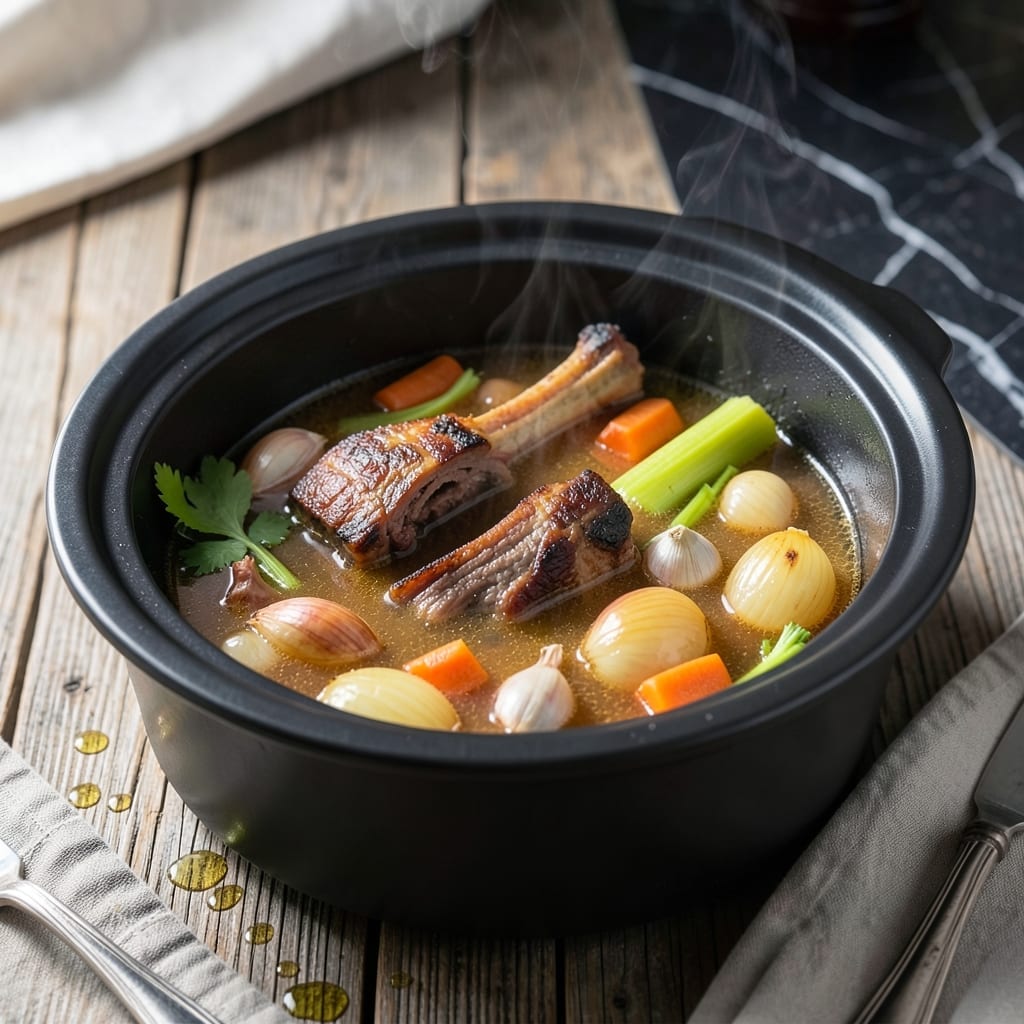
This slow cooker method extracts maximum flavor and nutrients from beef bones with minimal effort. The low, steady heat breaks down collagen into gelatin, creating a rich, nourishing broth that forms the backbone of countless dishes.
I’ve refined this technique over years of professional cooking, balancing traditional principles with modern convenience. The result is a deeply flavorful liquid gold that’s perfect for soups, sauces, or sipping straight from the mug.
Ingredients for Beef Bone Broth Recipe Slow Cooker
Professional kitchens rely on these quality ingredients to build rich, nourishing foundations for countless dishes.
| Ingredient | Amount | Notes |
|---|---|---|
| Beef Bones 🥩 | 2 lb | Marrow or knuckle bones preferred |
| Apple Cider Vinegar 🍏 | 2 tbsp | Helps extract minerals from bones |
| Carrots 🥕 | 2 whole | Roughly chopped, no need to peel |
| Celery Stalks 🥬 | 2 whole | Cut into large chunks |
| Yellow Onion 🧅 | 1 whole | Quartered, skin left on |
| Garlic Cloves 🧄 | 6 cloves | Smashed, no need to peel |
| Bay Leaves 🍃 | 2 whole | Dried, whole leaves |
| Black Peppercorns 🌶️ | 1 tbsp | Whole, not ground |
| Fresh Thyme Sprigs 🌿 | 4 whole | Optional but recommended |
| Sea Salt 🧂 | 1 tbsp | Adjust to taste after cooking |
| Cold Water 💧 | 12 cups | Enough to cover bones completely |
[recipe_ingredient_scaler]
The beef bones are critical here. Source grass-fed, organic bones from a trusted butcher or Whole Foods for the deepest flavor and highest gelatin content. Marrow bones add richness, while knuckle bones contribute collagen for that perfect gelatinous texture. Look for bones with visible cartilage and joint material—these break down beautifully during the slow cook. Avoid pre-cooked bones from the grocery store meat case, as they lack the necessary collagen.
No apple cider vinegar? White vinegar or lemon juice works in a pinch at the same ratio. Missing fresh thyme? Dried thyme at one-third the amount is an acceptable substitute. The vegetables can be flexible—parsley stems, leek greens, or mushroom stems add depth. For a deeper color, roast the bones and vegetables in the oven for 20 minutes before adding to the slow cooker.
Broth can be refrigerated for up to 5 days or frozen for 6-12 months. Skim off any fat that solidifies on the surface after chilling. For long-term storage, portion into airtight containers or freezer bags, leaving room for expansion. Label with the date to track freshness.
Why You’ll Love This Recipe
- Set and Forget: I dump the bones, veggies, and a splash of apple cider vinegar in the slow cooker and let it work its magic for 24 hours.
- Rich and Deep: The combination of beef bones and carrots creates a broth so flavorful I use it as a base for everything from soups to risotto.
- Meal Prep MVP: Honestly, I make a big batch on Sunday and it fuels my week—soups, stews, even cooking rice in it.
- Budget Stretcher: A few pounds of beef bones and basic veggies yield quarts of liquid gold that cost pennies per serving.
Step-by-Step Instructions for Beef Bone Broth Slow Cooker
Master the technique for extracting maximum flavor and nutrients from every ingredient.
Step 1: Roast the Beef Bones for Depth
Preheat your oven to 400°F. Arrange the 2 lb Beef Bones on a rimmed baking sheet and roast for 20-25 minutes until deeply browned. This caramelization process develops complex flavors that will infuse the broth.
You’ll notice the marrow beginning to melt and the bones taking on a rich, golden color. Rotate the bones halfway through for even browning. The aromatic compounds created here form the foundation of your broth’s robust character.
Step 2: Prepare Vegetables and Aromatics
While bones roast, roughly chop the 2 whole Carrots, 2 whole Celery Stalks, and quarter the 1 whole Yellow Onion (leave the skin on for color). Smash the 6 cloves Garlic Cloves with the flat side of your knife—no need to peel them.
Combine these in your slow cooker with the 2 whole Bay Leaves, 1 tbsp Black Peppercorns, and 4 whole Fresh Thyme Sprigs. This aromatic base will mellow beautifully during the long cooking process while imparting layers of savory depth.
Step 3: Deglaze and Combine All Elements
After roasting, transfer the beef bones to the slow cooker. Pour the 2 tbsp Apple Cider Vinegar into the hot baking sheet and scrape up all browned bits with a wooden spoon—this liquid gold contains concentrated flavor.
Add this to the slow cooker along with the 12 cups Cold Water and 1 tbsp Sea Salt. The vinegar helps extract minerals from the bones while the cold water start ensures gradual, even heating. Stir to distribute all ingredients evenly.
Step 4: Slow Cook to Perfection
Set your slow cooker to low heat and cook for 18-24 hours. This extended time allows for maximum collagen extraction from the bones, resulting in a gelatinous, nutrient-rich broth.
You’ll see a layer of fat rise to the surface—this is normal. Skim it off if desired, though many choose to retain it for added richness. The broth should develop a deep amber color and a fragrant aroma that fills your kitchen.
Check occasionally to ensure bones remain submerged, adding hot water if needed to maintain the original 12 cups volume. The longer cook time within this range yields more concentrated flavor.
Pro Tips For Making Beef Bone Broth Recipe Slow Cooker
- Roast the Bones: Toss beef bones with a little oil and roast at 400°F for 20-30 minutes until deeply browned—I learned this the hard way after making pale, weak broth for years.
- Add Vinegar Early: Pour 2 tablespoons of apple cider vinegar over the bones and let sit for 30-60 minutes before cooking; it pulls out minerals you’d otherwise miss.
- Skip the Peeling: Just scrub carrots and celery well and chop roughly—peeling wastes time and the skins add depth to the broth.
- Simmer Low and Long: Set the slow cooker to low for 18-24 hours; high heat breaks down collagen too fast and makes the broth cloudy.
Regional Styles of This beef bone broth recipe slow cooker
French Technique
In classic French cuisine, we call this fond de veau, using veal bones for a lighter, more delicate broth. The technique involves sweating mirepoix (carrots, celery, onions) in fat before adding bones and water. I learned this method during my training—it creates a remarkably clear, refined broth perfect for consommé or velouté sauces.
Asian Inspiration
Vietnamese pho broth uses similar bones but adds charred onion and ginger for depth. Star anise, cinnamon, and cardamom create that signature aromatic profile. I love foraging for wild ginger along coastal trails to add to my broth—it brings a unique, earthy note that store-bought can’t match.
Mexican Traditions
In Mexico, caldo de res incorporates beef bones with corn, cabbage, and zucchini for a hearty soup. The broth is often simmered with cilantro stems and epazote. I’ve adapted this by adding 1 tbsp cumin seeds to my slow cooker version for that authentic Mexican flavor.
Southern Comfort
Southern-style bone broth often includes smoked bones for a deeper, wood-fired flavor. I like to add 1 smoked ham hock along with my beef bones for a rich, smoky undertone. This reminds me of family cookouts where hickory smoke filled the air—pure comfort in a mug.
Japanese Clarity
Japanese tonkotsu ramens use pork bones, but the principle is the same: long, slow simmering. They often use a pressure cooker for 12-18 hours to achieve that creamy, collagen-rich broth. I’ve borrowed this technique for my beef version when I’m short on time.
Eastern European Heartiness
Polish rosół uses chicken or beef bones with root vegetables and a bay leaf. The key is straining through cheesecloth for crystal-clear results. I add 1 tbsp whole allspice berries for warmth, a trick I picked up from a Warsaw chef during my travels. 💛
Nutrition Facts
Frequently Asked Questions
Why roast the bones first?
Roasting at 400°F for 20-25 minutes caramelizes natural sugars and proteins, creating deep, complex flavors. Skipping this step results in a bland, one-dimensional broth.
Can I use an Instant Pot instead?
Yes, use the high pressure setting for 2-3 hours. The results will be slightly less rich than slow cooking but still flavorful. Pressure cooking speeds up collagen extraction.
How do I remove the fat layer?
Chill the broth completely—the fat will solidify on top. Simply lift it off or skim with a spoon. For clearer broth, avoid breaking the fat layer while removing.
What if my broth doesn’t gel?
This means more collagen is needed. Use more joint-rich bones (knuckles, feet) next time, or add 1 tbsp gelatin powder at the end. Cooking longer than 24 hours also helps.

Trained in classic French technique but raised on slow-cooked ribs and spicy rubs, she blends culinary skill with smoke and soul.
- Recipe for Boneless Pork Chops in Cast Iron Skillet: Sear and Baste to Juicy Perfection - October 3, 2026
- Recipe for Boneless Cross Rib Roast: Slow-Roasted Beef with Herb Crust - October 3, 2026
- Hamburgers in Sauce Recipe Crock Pot: Slow-Cooked Savory Delight - October 3, 2026