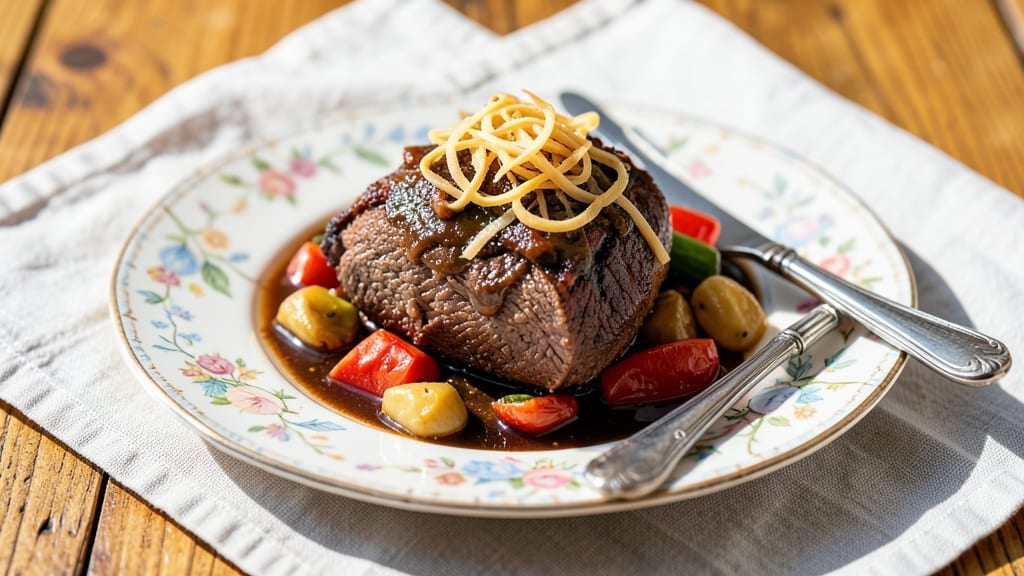
Creating an authentic beef brisket bourguignon recipe transforms a simple weeknight into a gourmet experience without the restaurant price tag. The key lies in slow-braising tough brisket until it becomes fork-tender, then enriching it with a deep red wine sauce infused with mushrooms, bacon, and herbs.
This method builds layers of flavor over hours, resulting in a dish that feels like a celebration on your dinner table.
What sets this recipe apart is the balance of techniques—searing the meat first for depth, then simmering it low and slow to develop rich, caramelized flavors. The wine sauce reduces to a velvety consistency, while bacon and mushrooms add savory complexity.
With just 20 minutes of active prep and 3 hours of hands-off cooking, you’ll achieve restaurant-quality results that impress even skeptical guests.
The final dish delivers melt-in-your-mouth beef swimming in a glossy, aromatic sauce with earthy mushrooms and smoky bacon. Serve it alongside creamy mashed potatoes or crusty bread to soak up every last drop of that luxurious sauce. This is comfort food at its finest—warm, hearty, and deeply satisfying.
Perfect for cold evenings or special occasions, this bourguignon scales easily for crowds and tastes even better the next day. The secret? Patience and attention to detail—two small investments for a dish that feels like a masterpiece. Let’s get started on creating this timeless classic.
Ingredients for beef brisket bourguignon
Authentic brisket bourguignon requires patience and quality ingredients for restaurant-level results.
| Ingredient | Amount | Notes |
|---|---|---|
| Beef Brisket 🥩 | 4 lb | Flat-cut, trimmed of fat |
| Bacon 🍖 | 12 oz | Thick-cut, sliced into lardons |
| Pearl Onions 🧅 | 12 whole | Peeled, halved |
| Button Mushrooms 🍄 | 16 oz | Sliced, cremini preferred |
| Garlic Cloves 🧄 | 8 cloves | Peeled, smashed |
| Shallots 🧅 | 3 whole | Thinly sliced |
| Dry Red Wine 🍷 | 3 cups | Cabernet Sauvignon or Merlot |
| Beef Broth 💧 | 3 cups | Low-sodium preferred |
| Tomato Paste 🍅 | ½ cup | High-quality, unsweetened |
| Fresh Thyme 🌿 | 1 tbsp | Leaves only, plus 1 sprig |
| Fresh Rosemary 🌿 | 1 tbsp | Chopped, plus 2 sprigs |
| Diamond Crystal Kosher Salt 🧂 | 1 ½ tbsp | For seasoning |
| Freshly Ground Black Pepper 🌶️ | 1 tsp | Coarse grind preferred |
| Unsalted Butter 🧈 | ½ cup | Cold, cut into cubes |
| All-Purpose Flour 🌾 | ¼ cup | For dredging meat |
[recipe_ingredient_scaler]
The beef brisket is the star—opt for preferably USDA Choice with visible marbling. Costco or butcher shops carry ideal cuts, and ask for the flat-cut to ensure even cooking. Trim excess fat yourself for better flavor control; leave a thin layer for richness. The bacon should be thick-cut for maximum smokiness, and Trader Joe’s or local delis often have excellent selections. Pearl onions and cremini mushrooms elevate the dish—fresh is best, but frozen works in a pinch for mushrooms.
Substitutions exist but may alter the dish: apple cider vinegar for acidity if no wine is available, dried thyme and rosemary at one-third the fresh amount, or white wine with extra beef broth for a lighter sauce. For mushrooms, oyster mushrooms add a different texture, or chestnut mushrooms for a nuttier flavor. The tomato paste can be San Marzano crushed tomatoes if unavailable, but reduce the liquid by half. Always use unsalted butter to control seasoning—salted butter disrupts the flavor balance.
Store the uncooked brisket in airtight packaging in the coldest part of your fridge for up to 5 days, or freeze for 3 months. The bacon and mushrooms can be prepped ahead and refrigerated for 2 days. The cooked brisket reheats beautifully—simmer gently in its sauce to maintain tenderness. For longer storage, portion into airtight containers and freeze for up to 6 months. The sauce thickens as it cools, so add a splash of broth if needed when reheating. This dish tastes even better the next day as flavors meld.
Why You’ll Love This Recipe
- Here’s what sold me: I braise the brisket on Sunday, and suddenly I’ve got dinner, lunch rolls, and even breakfast (yes, fried brisket eggs) covered. The sauce? Even better the next day, thickened and concentrated. Zero waste, maximum payoff.
- One-Pot Magic: Honestly, this isn’t just a meal—it’s a system. That Dutch oven does all the work while you focus on sipping wine (the good kind) and flipping bacon lardons until they’re crispy gold. No last-minute cleanup chaos, just a pot of pure flavor waiting to happen.
- Wine-Soaked Perfection: Between the deep Cabernet or Merlot and the smoky tomato paste, this isn’t your average beef dish. The garlic and rosemary cling to the brisket like old friends, while the mushrooms soak up all the richness. Trust me, the first bite is that je ne sais quoi you didn’t know you needed.
- Leftover Powerhouse: Here’s what sold me: I braise the brisket on Sunday, and suddenly I’ve got dinner, lunch rolls, and even breakfast (yes, fried brisket eggs) covered. The sauce? Even better the next day, thickened and concentrated. Zero waste, maximum payoff.
Step-by-step instructions for beef brisket bourguignon
Master this rich, slow-braised technique for tender brisket infused with deep wine flavor.
Sear the Brisket and Render the Bacon
Heat a Dutch oven over medium-high heat with ½ cup of the unsalted butter until foaming. Pat the 4 lb beef brisket dry with paper towels, then season generously with 1½ tablespoons of the diamond crystal kosher salt and all of the freshly ground black pepper. Sear the brisket on all sides until deeply browned, about 8-10 minutes total, pressing down gently with a spatula to ensure even contact.
Remove the brisket and set aside. In the same Dutch oven, add the 12 oz bacon sliced into lardons and cook until crispy, about 6-8 minutes. Remove the bacon with a slotted spoon and set aside, leaving the rendered fat in the pot. This bacon fat will form the flavor base for your bourguignon.
Build the Flavor Foundation
Reduce heat to medium and add the 3 shallots and 8 smashed garlic cloves to the bacon fat. Sauté for 3-4 minutes until the shallots soften and become translucent. Stir in the 12 halved pearl onions and cook for another 2 minutes until they begin to caramelize slightly.
Add the 16 oz sliced button mushrooms and cook for 5-6 minutes until they release their moisture and begin to brown. Sprinkle in the ¼ cup all-purpose flour and stir vigorously for 1 minute to create a roux. This will help thicken the sauce later. Pour in the 3 cups dry red wine and scrape up any browned bits from the bottom of the pot.
Develop the Sauce and Braise the Brisket
Return the brisket to the Dutch oven, along with the crispy bacon. Add the ½ cup tomato paste, 3 cups beef broth, 1 tablespoon chopped fresh thyme, and 1 tablespoon chopped fresh rosemary. Bring to a simmer, then cover tightly with a lid. Transfer to a preheated 325°F oven and braise for 3-4 hours, turning the brisket occasionally, until fork-tender.
Here’s the thing—this is where patience pays off. The brisket should be so tender it nearly falls apart when pierced with a fork. If the liquid reduces too much before the brisket is tender, add more beef broth ½ cup at a time to maintain adequate moisture. The sauce should coat the back of a spoon by the end of cooking.
Finish and Serve
Remove the brisket from the Dutch oven and transfer it to a cutting board. Tent loosely with foil and let rest for 15-20 minutes. Skim any excess fat from the surface of the sauce, then adjust seasoning if needed with additional diamond crystal kosher salt or freshly ground black pepper.
Slice the brisket against the grain into ½-inch thick pieces and return it to the sauce, spooning the rich braising liquid over the top. Serve immediately with the sauce ladled generously over each portion, accompanied by crusty bread to soak up every last drop of that velvety wine-infused reduction.
Pro Tips For Making Beef Brisket Bourguignon
- Press the Brisket Hard: That spatula isn’t just for show—press down firmly when searing the brisket. I used to think “gentle pressure” meant light touches, but this recipe calls for actual weight to get those deep brown crusts on all sides. The first time I skipped this, my brisket ended up steamed instead of seared—don’t make that mistake.
- Caramelize Those Onions: The 2 minutes with the pearl onions isn’t just “a quick toss”—watch them turn golden, not just soft. I learned this the hard way when I rushed and ended up with bland, pale onions. A little color makes a real difference in the sauce’s depth.
- Don’t Skimp on Wine Deglaze: That 3 cups of red wine isn’t just “some wine”—it’s the soul of the dish. Scrape every last bit of browned bacon and onion bits from the pot when you pour it in. I used to wipe the pot first (bad move), but those bits pack serious flavor. Trust the recipe here.
- Check the Brisket Early: After 2 hours, pull the brisket out and give it a fork test—if it’s tender but not falling apart, it’s done. I’ve wasted hours letting it overcook because I assumed “3-4 hours” meant exactly 3.5 hours. Start checking at 2, and adjust from there.
Make-ahead tips for this dish
Prep Ahead for Flavor
I prep everything except the brisket the night before to save time. Start by slicing the 12 oz bacon into lardons and halving the 12 whole pearl onions.
Store them in separate airtight containers in the fridge—they’ll stay fresh for 2 days. This way, your morning is just about searing and braising. 💡
Freeze the Brisket
If you’re planning ahead for a week, freeze the 4 lb brisket raw in an airtight bag for up to 3 months. Thaw it overnight in the fridge before searing—this prevents uneven cooking. I always label my freezer bags with the date so I don’t forget!
Make the Sauce Base
For extra efficiency, sauté the 3 shallots and 8 garlic cloves with the bacon fat the night before. Store them in the fridge with the 16 oz sliced mushrooms—just reheat gently before adding to the Dutch oven. This skips a step during the busy braising phase.
Sauce Prep for Leftovers
After braising, let the sauce cool completely, then transfer it to a jar or container. It keeps well in the fridge for 4 days—just reheat on the stovetop with a splash of broth. I often use it as a base for pasta or sandwiches later in the week. 🍷
Portion for Meal Prep
Divide the cooked brisket into 2-3 airtight containers with some sauce for easy reheating. Store in the fridge for 3 days or freeze for up to 6 months. When reheating, simmer gently to avoid drying out the meat—this keeps it just as tender as the day it was made.
Bread Stash for Crunch
Toast your crusty bread ahead of time and store it in a paper bag at room temperature. This way, you can serve it fresh alongside the reheated brisket without rushing. A little crunch makes all the difference! 🥖
Nutrition facts
Frequently asked questions
Why does my brisket need to braise for so long?
The 3-4 hours of slow braising at 325°F breaks down tough collagen fibers in the brisket, transforming them into gelatin that tenderizes the meat. This process develops deep, complex flavors from the red wine and aromatics while keeping the beef moist and melt-in-your-mouth tender. Patience here is key to restaurant-quality results!
Can I use white wine instead of red wine for this recipe?
While you can substitute white wine, it won’t achieve the same depth of flavor. The tannins in red wine work with the beef’s richness, while white wine can make the dish taste overly acidic. If you must use white, add an extra ½ cup tomato paste to balance the acidity and maintain the dish’s signature character.
What should I do if my sauce is too thin after braising?
Simmer the sauce uncovered for 10-15 minutes to reduce it naturally, stirring occasionally. If it’s still too thin, whisk in a 1 tablespoon of cold unsalted butter and let it melt into the sauce—this will help thicken it beautifully. Avoid adding flour directly to the hot sauce, as it can create lumps.
Is it okay to skip the flour roux step?
Yes, but your sauce will be thinner and less rich. The ¼ cup flour creates a natural thickening agent that helps the sauce cling to the brisket. If you skip it, add 1 tablespoon cornstarch mixed with 2 tablespoons cold water to the sauce during the last 30 minutes of braising for similar results. The texture won’t be as luxurious, though!
How do I prevent the brisket from drying out during reheating?
Reheat the brisket gently in its sauce on the stovetop over low heat, covered with foil. Add ¼ cup beef broth to the Dutch oven to create steam, which keeps the meat moist. Never reheat in the oven—it dries out the meat quickly. For extra tenderness, let it rest 10 minutes after reheating before slicing.

Trained in classic French technique but raised on slow-cooked ribs and spicy rubs, she blends culinary skill with smoke and soul.
- Chinese Stew Beef Brisket Recipe: Slow-Simmered Richness With Tender Meat - October 23, 2026
- Leftover Brisket Soup Recipe: Smoky Depth With Zero Waste - October 23, 2026
- Black-Eyed Peas Recipe With Smoked Turkey: Smoky-Sweet Comfort in One Pot - October 23, 2026