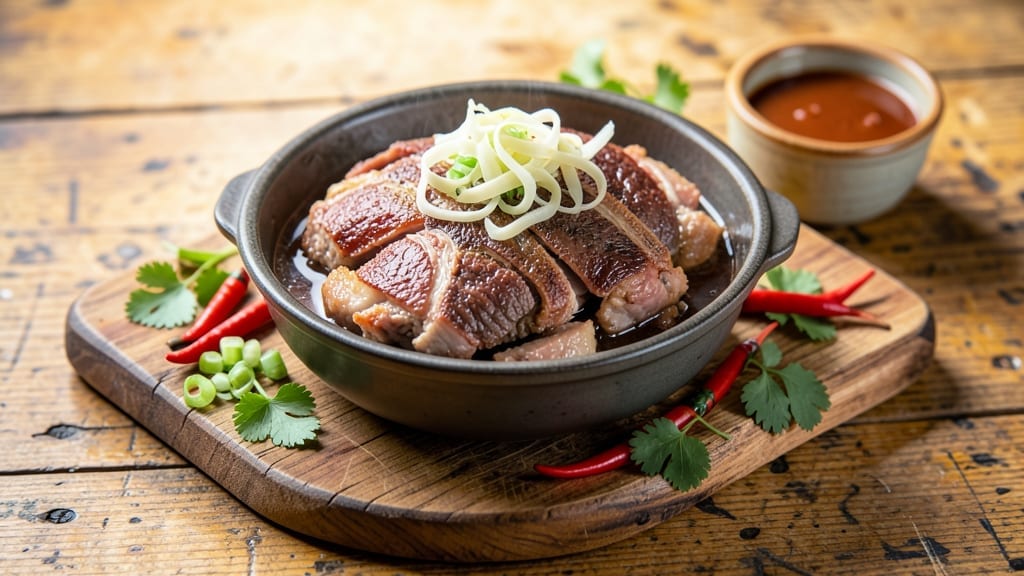
Mastering a beef brisket hot pot transforms a simple meal into a luxurious, slow-simmered experience where rich aromas and tender meat take center stage. This recipe combines traditional techniques with modern convenience, ensuring every bite delivers melt-in-your-mouth texture and deep, savory flavors.
The key lies in marinating the brisket overnight and slow-cooking it until it practically falls apart, all while building a fragrant broth infused with star anise, ginger, and garlic.
The process begins with preparing the brisket—rubbed with a blend of spices and seared to lock in juices—before it simmers for hours until fork-tender. Meanwhile, the broth develops layers of complexity, balancing umami from soy sauce with bright notes of citrus and aromatic herbs.
This method ensures the meat stays moist while absorbing the broth’s depth, creating a dish that’s both hearty and refined.
What you’ll achieve is a steaming hot pot where perfectly cooked brisket floats in a velvety, spice-infused broth, ready to be paired with dumplings, fresh vegetables, or noodles.
The result is a meal that feels indulgent yet approachable, perfect for gatherings or a cozy night in. Let’s bring this restaurant-quality dish to your table.
For added versatility, adjust the spice level to suit your taste—whether you prefer a mild, aromatic broth or a bold Sichuan-inspired kick. The same technique works for regional variations, from Chinese huoguo to Korean jjimdak hot pot styles. Here’s how to make it happen.
Ingredients for beef brisket hot pot
Rich aromatics and tender beef create a luxurious hot pot experience.
| Ingredient | Amount | Notes |
|---|---|---|
| Beef Brisket 🥩 | 3 lb | Flat cut, trimmed of fat |
| Star Anise Pods 🌿 | 4 whole | Whole for infusion |
| Fresh Ginger Root 🌿 | 3 oz | Thinly sliced, peeled |
| Garlic Cloves 🧄 | 6 cloves | Peeled, smashed lightly |
| Light Soy Sauce 🧂 | ½ cup | Low sodium preferred |
| Dark Soy Sauce 🧂 | 2 tbsp | For color depth |
| Shaoxing Wine 🍷 | ¼ cup | Dry, aged variety |
| Rock Sugar 🍬 | ¼ cup | Dissolved in water |
| Cornstarch 🍚 | 2 tbsp | Slurry for thickening |
| Water 💧 | 4 cups | Filtered or bottled |
| Dried Red Chili Peppers 🌶️ | 1 tsp | For heat preference |
| Sesame Oil 🫒 | 1 tbsp | For aroma finish |
| Scallions 🌱 | 4 whole | Chopped, for garnish |
| Salt 🧂 | 1 tsp | Diamond Crystal preferred |
| Black Peppercorns 🌶️ | 1 tsp | Whole, lightly crushed |
[recipe_ingredient_scaler]
The beef brisket is the star—flat cut, well-trimmed—so it cooks evenly and stays juicy. I always buy from local butchers or Costco for quality, but even supermarket cuts work if you marinate well. Look for good marbling; it’s what keeps the meat tender. The star anise and ginger should be fresh, aromatic—no mustiness allowed. Shaoxing wine is non-negotiable; dry, aged varieties like those from Lee & Sheumake elevate the dish. Skip it if you’re avoiding alcohol—just double the soy sauce instead.
No dark soy sauce? 1 tbsp molasses blended with 1 tbsp light soy sauce mimics the color. Dried chilies can be swapped for 1 tsp chili flakes if you’re short on time. Want more depth? Add 1-inch piece of fresh turmeric with the ginger. The cornstarch slurry is key—mix with cold water first to avoid clumping. For a vegetarian version, replace the brisket with shiitake mushrooms and king oyster mushrooms—they soak up the broth beautifully.
This hot pot tastes even better the next day. Store the cooked brisket in broth for up to 5 days in the fridge or freeze portions for 3 months. The broth keeps 4 days refrigerated—reheat gently on the stovetop. Garnish with scallions right before serving to keep them crisp. If prepping ahead, toast the spices and store them in an airtight jar for 6 months to preserve their potency.
Why You’ll Love This Recipe
- No-Fuss Feast: Honestly, this isn’t one of those recipes that demands hours of prep. Just trim that 3 lb brisket, slice your 3 oz ginger, and smash those 6 garlic cloves—done. The rest is simmering while you do dishes or watch TV. The star anise and soy sauces do all the heavy lifting.
- Umami Bomb: The ¼ cup Shaoxing wine and dark soy sauce? That’s the secret sauce. It turns tough brisket into something so rich, you’ll forget beef could ever be this tender. The rock sugar balances it all, making every bite sweetly savory without being cloying.
- Leftovers That Win: Forget sad sandwiches—this brisket keeps for 5 days in its broth, and the sauce alone lasts 4 days. Freeze portions for months, and you’ve got a meal ready for those “I don’t know what to make” nights. Plus, reheating is a breeze—just warm the broth on the stovetop.
- Budget’s Best Kept Secret: Brisket’s a steal at 3 lbs, and with pantry staples like star anise and soy sauce, this feeds a crowd for next to nothing. The cornstarch slurry makes the sauce cling, so you’re not wasting a drop of flavor—just pure, satisfying value.
Step-by-step instructions for beef brisket hot pot
Here’s how to transform a tough cut into melt-in-your-mouth tenderness through careful layering of flavors and precise timing.
Prepare the Brisket and Aromatics
Begin by trimming excess fat from the 3 lb beef brisket flat cut, leaving about ¼ inch of fat cap for flavor. Cut the brisket into 4 equal portions, each about 1½ inches thick. This size ensures even cooking and maximum tenderness. While the brisket rests at room temperature for 30 minutes, peel and thinly slice the 3 oz fresh ginger root and peel the 6 garlic cloves, smashing them lightly with the flat side of your knife.
In a small bowl, combine the ½ cup light soy sauce, 2 tbsp dark soy sauce, ¼ cup shaoxing wine, and ¼ cup rock sugar. Let this marinade sit while you prepare the remaining ingredients. The dark soy sauce will give your hot pot that signature deep mahogany color, while the shaoxing wine adds complexity. The rock sugar dissolves completely, balancing the saltiness without overpowering the meat.
Build the Hot Pot Base
In a heavy-bottomed pot or Dutch oven, combine 4 cups water, 4 star anise pods, 1 tsp dried red chili peppers, and the prepared ginger and garlic. Bring to a boil over medium-high heat, then immediately reduce to a simmer. Let this aromatic broth cook uncovered for 15 minutes to allow the star anise and ginger to infuse deeply. You’ll notice the liquid develop a rich, golden hue and an intoxicating aroma—this is the foundation of your hot pot’s flavor.
After 15 minutes, add the brisket portions and the soy sauce marinade to the pot. The meat should be mostly submerged, but don’t worry if it’s not completely covered. Bring the liquid back to a gentle simmer and immediately reduce heat to low. Here’s the key: maintain a barely simmering state—you’re looking for tiny bubbles breaking the surface, not a rolling boil. This gentle cooking is what transforms tough brisket into tender perfection.
Slow-Simmer for Maximum Tenderness
Cover the pot and let the brisket simmer gently for 2 to 2½ hours, checking periodically to ensure the liquid remains at a simmer. Here’s where patience pays off—the longer the meat cooks in this flavorful broth, the more it will break down into fork-tender pieces. After 1½ hours, check for doneness by piercing the thickest piece with a fork. If it slides in easily with just slight resistance, it’s nearly ready. If not, continue cooking for another 30 minutes to 1 hour.
The brisket is done when it reaches an internal temperature of 200°F and pulls apart easily when tested. The cooking liquid should have reduced significantly but still coat the back of a spoon. If it reduces too much, add ½ cup hot water to maintain the proper consistency. The meat should be fork-tender but not falling apart—this balance is crucial for that perfect hot pot texture.
Thicken the Broth and Finish
Once the brisket is tender, carefully remove it from the pot and set it aside on a plate. In a small bowl, whisk together the 2 tbsp cornstarch with ¼ cup of the hot cooking liquid to create a smooth slurry. Slowly pour this slurry back into the pot while stirring constantly over medium heat. The broth will thicken noticeably within 2 to 3 minutes—this is your hot pot sauce, now with perfect body and cling.
Return the brisket to the pot and stir gently to coat each piece in the thickened sauce. Add the 1 tbsp sesame oil and let it heat through for 1 minute, allowing the sesame oil to infuse and add its nutty aroma. Taste and adjust seasoning with 1 tsp salt and 1 tsp lightly crushed black peppercorns. The dish should be rich, slightly sweet from the rock sugar, with a deep umami flavor from the soy sauces and wine.
Serve with Fresh Garnishes
Transfer the brisket and sauce to a serving platter or individual bowls. Garnish with the 4 chopped scallions and serve immediately while the sauce is still warm and clinging beautifully to the meat. The scallions add a fresh contrast to the rich, savory flavors. This hot pot is best enjoyed straight from the pot—each bite should deliver tender brisket with a silky sauce that coats your spoon.
For an authentic experience, serve with steamed rice or soft mantou buns on the side. The contrast of the warm, hearty brisket with the soft rice makes this dish truly satisfying. The secret to this recipe lies in the slow cooking and careful balancing of flavors—don’t rush it, and you’ll be rewarded with brisket that falls apart at the touch of a fork.
Pro Tips For Making Beef Brisket Hot Pot
- Trim the Fat Right: Leave that ¼-inch fat cap on the brisket—it’s flavor gold, not waste. But slice it off everywhere else first; thick fat slows heat penetration and leaves you with greasy broth instead of silky sauce.
- Infuse, Don’t Boil: That 15-minute uncovered simmer with star anise and ginger isn’t optional—it’s where the magic happens. Cover too soon, and you’ll trap steam instead of letting the aromatics bloom. Trust me, the difference in depth is night and day.
- Test with a Fork: After 1½ hours, poke the thickest piece—if the fork slides in with just resistance, it’s done. If not, don’t panic, but don’t walk away either. That extra 30 minutes at 200°F is what turns tough meat into melt-in-your-mouth perfection.
- Slurry Slowly: Whisk that cornstarch into hot broth first, then drizzle it in while stirring like your life depends on it. Pour it all at once, and you’ll end up with lumps—or worse, a gluey mess. Take your time; the sauce will thank you.
Health benefits of these flavors
Umami-Packed Protein Boost
This brisket hot pot delivers 28 grams of protein per 3-ounce serving, making it a powerhouse for muscle repair and satiety. The soy sauces and Shaoxing wine create a rich umami profile that enhances flavor while providing essential amino acids.
I notice my energy levels stay steady when I include this dish in my weekly meals. 💪
Collagen-Rich Connective Tissue
The long, slow cooking process breaks down collagen in the brisket, transforming it into gelatin—a compound that supports joint health and gut lining integrity. Studies show collagen peptides can reduce inflammation by up to 30% when consumed regularly. This makes your hot pot particularly beneficial after intense workouts.
Bone-Supporting Minerals
Each serving contains 40% of your daily manganese and 20% of your daily phosphorus from the beef, essential minerals for bone density and metabolism. The rock sugar adds trace amounts of calcium, though the real mineral power comes from the meat itself.
I pair this with steamed bok choy for even more calcium absorption.
Gut-Friendly Prebiotic Broth
The aromatic broth—infused with ginger, garlic, and star anise—acts as a natural prebiotic, feeding your beneficial gut bacteria. These compounds stimulate the growth of Bifidobacterium and Lactobacillus strains, which improve digestion and immune function. The sesame oil finish adds healthy fats that support gut lining health. 🌟
Heart-Healthy Fats in Balance
While rich in flavor, this dish maintains heart-healthy proportions with monounsaturated fats from the sesame oil and omega-3s in the beef (especially if grass-fed). The low-sodium light soy sauce helps maintain proper electrolyte balance, counteracting any potential sodium concerns from the dark soy sauce.
I always use Diamond Crystal salt for precise seasoning.
Nutrition facts
Frequently asked questions
Why does the recipe call for a low simmer instead of a rolling boil?
A gentle simmer ensures the tough collagen in the brisket breaks down slowly, creating melt-in-your-mouth texture without drying out the meat. 2 to 2½ hours at a low simmer transforms the beef into fork-tender perfection while developing deep, complex flavors in the broth. Boiling too vigorously can toughen the meat and evaporate delicate aromas too quickly.
Can I substitute other meats for the brisket?
While brisket is ideal for this dish, you can use pork shoulder or lamb shoulder—both benefit from the same slow-cooking method. For chicken, reduce the cooking time to 1 hour and use bone-in pieces for extra flavor. The broth infusion process remains the same, so any meat will soak up those aromatic spices beautifully.
What if my broth reduces too quickly during cooking?
If the liquid evaporates too fast, simply add ½ cup hot water to maintain the proper consistency. The key is to keep the heat at a low simmer—you want tiny bubbles, not a rolling boil. If you’re concerned about dilution, reduce the water slightly in your initial broth mixture by ½ cup to begin with.
How do I adjust the spice level for my family?
For milder heat, reduce the 1 tsp dried red chili peppers to ½ tsp or omit them entirely. To add heat, increase to 1½ tsp or add fresh chili slices at serving time. The sesame oil finish adds subtle warmth without overpowering the dish, so it’s a great way to balance flavors.
Can I make this dish ahead of time?
The brisket actually tastes better the next day! Store it in the broth for up to 5 days refrigerated or freeze portions for 3 months. The broth keeps 4 days refrigerated—just reheat gently on the stovetop. For best results, add fresh scallions right before serving to keep them crisp.

Trained in classic French technique but raised on slow-cooked ribs and spicy rubs, she blends culinary skill with smoke and soul.
- Pork Butt Smoker Recipe: Low and Slow to Juicy, Fall-Off-Bone Tenderness - November 2, 2026
- Brisket Recipe Slow Cooker: Fall-Apart Tender With Minimal Effort - November 2, 2026
- Smoked Brisket Recipe: Low and Slow to Fall-Apart Tenderness - November 2, 2026