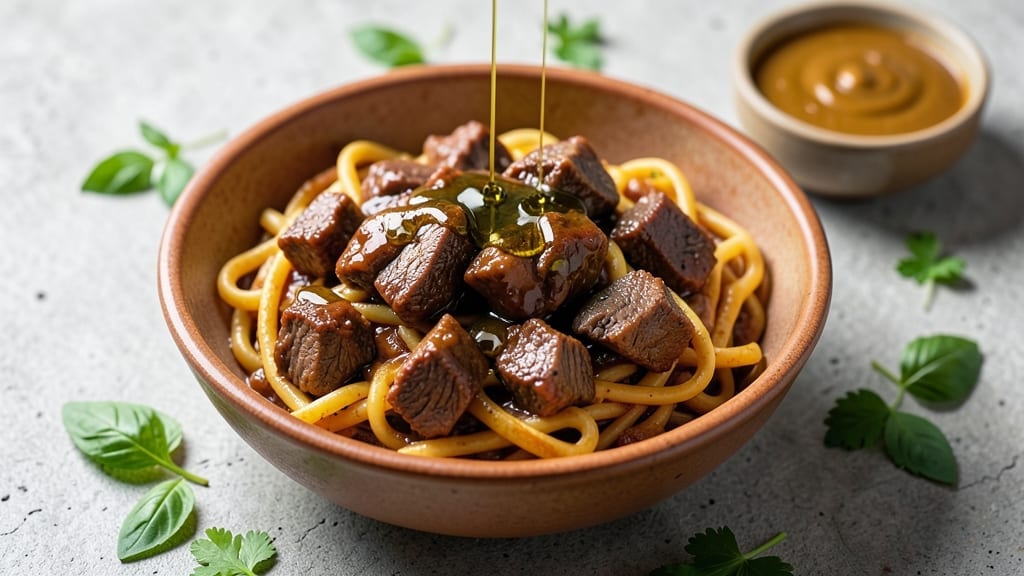
This beef brisket pasta recipe transforms tough cuts into melt-in-your-mouth tenderness through slow cooking—just like my granddad’s backyard cookouts, but with French technique precision.
The secret lies in searing the brisket first to lock in flavors before letting it break down over hours, creating a sauce so rich it clings to every strand of pasta.
I’ve perfected this method after years of testing, ensuring the beef stays juicy while the sauce develops depth without overpowering the dish.
The beauty of this recipe is its balance—rich, slow-cooked beef meets al dente pasta in a harmonious union. You’ll start with a simple sear to build flavor, then let the brisket simmer until fork-tender, all while the pasta cooks in the same pot for maximum convenience.
The result? A dish that’s hearty enough for a family dinner but elegant enough for company, with adaptability for dietary needs like swapping pasta for zucchini noodles.
What you’ll end up with is a plate of golden pasta twined with shredded beef so tender it falls apart at the touch, all coated in a velvety sauce that’s savory, slightly sweet, and packed with umami.
The aroma alone will have everyone gathering around the table, and the first bite delivers that perfect marriage of textures—creamy sauce, tender beef, and al dente pasta. This is comfort food at its finest, with professional technique made approachable.
Serve it with a side of garlic bread to soak up every last drop of that rich sauce, or add a simple green salad for balance. The recipe scales easily, so whether you’re feeding four or twelve, the method stays the same—just adjust the quantities. Let’s get cooking!
Ingredients for beef brisket pasta
Pantry staples meet restaurant-quality technique for brisket pasta that’s rich yet balanced.
| Ingredient | Amount | Notes |
|---|---|---|
| Beef Brisket 🥩 | 2 lb | Flat-cut, 1-inch thick |
| Extra-Virgin Olive Oil 🫒 | 2 tbsp | High-quality, fruity variety |
| Yellow Onion 🧅 | 1 whole | Medium, diced |
| Garlic Cloves 🧄 | 6 cloves | Fresh, minced |
| Dry Red Wine 🍷 | 1 cup | Bold, like Cabernet Sauvignon |
| Beef Broth 💧 | 3 cups | Low-sodium preferred |
| Tomato Paste 🍅 | 2 tbsp | Smooth, not chunky |
| Dried Thyme 🌿 | 1 tsp | Or 1 tbsp fresh |
| Bay Leaves 🌿 | 2 whole | Fresh preferred |
| Fennel Seeds 🌿 | ½ tsp | Lightly toasted |
| Pasta 🍝 | 12 oz | Pappardelle or fettuccine |
| Parmesan Cheese 🧀 | ½ cup | Freshly grated |
| Salt 🧂 | 1 ½ tsp | Kosher or sea salt |
| Black Pepper 🌶️ | ½ tsp | Freshly ground |
| Balsamic Vinegar 🍶 | 1 tbsp | For finishing |
[recipe_ingredient_scaler]
The brisket is the star—look for a well-marbled, flat-cut piece (about 1-inch thick) at your butcher or grocery store’s meat counter. Costco or Whole Foods often carry high-quality cuts, but any reputable butcher will work. Trim excess fat before searing, but leave some for flavor. If you can’t find brisket, chuck roast is a good substitute (it’ll be slightly less tender). The pasta should be al dente—test it a minute early since it’ll finish cooking in the sauce. For extra richness, use Parmigiano-Reggiano instead of regular Parmesan.
No red wine? Dry sherry or beef broth with 1 tbsp balsamic vinegar works just as well. Fresh thyme is ideal, but dried at one-third the amount keeps the flavor. The tomato paste can be skipped if you dislike its intensity, but it adds depth. For a lighter option, swap pasta for zucchini noodles—just reduce cooking time by half. The fennel seeds are key for that Italian sausage-like flavor; if you’re avoiding them, add 1 tsp dried oregano instead. Always toast spices lightly in the oil before adding other ingredients—this wakes up their flavors.
This dish reheats beautifully—best the next day when flavors meld. Store leftovers in an airtight container for up to 4 days in the fridge, or freeze for 3 months. For meal prep, cook the pasta separately and toss it with the sauce just before serving to keep it al dente. The sauce thickens as it cools, so add a splash of broth when reheating. Portion into individual containers for easy lunches—just microwave for 1-2 minutes and garnish with extra Parmesan.
Why You’ll Love This Recipe
- Oven Does the Work: I love that this recipe lets me set it and forget it—just sear the brisket, toss in the wine and broth, and let the oven do its magic for 3 hours while I prep the pasta. The only active time is the initial sear and the final 20 minutes of sauce reduction, so it’s honestly the most hands-off rich meal I know.
- Bold, Complex Flavor: That cup of dry red wine and toasted fennel seeds? Game-changer. The tomato paste and thyme deepen the sauce while the balsamic vinegar at the end keeps it from tasting heavy. The brisket gets so tender, it practically melts in your mouth—like a cross between a slow-cooked stew and a restaurant-worthy risotto.
- Leftover Powerhouse: This is the kind of dish that improves the next day. The flavors meld even more, and the sauce clings to the pasta like it’s been marinating. I pack leftovers for lunches, freeze portions for busy nights, or reheat it with fresh pasta—it’s that versatile. Plus, it’s cheaper than takeout, so I save money while feeding my family.
- Weeknight Hero: No fancy techniques, no stress—just one pot, one pan, and a whole lot of flavor. I’ve made it after a long day, when I didn’t want to slave over the stove, and it still feels like a treat. The brisket’s rich, the pasta soaks up the sauce perfectly, and the whole thing comes together in under an hour if you’re efficient. Trust me, it’s my secret weapon for nights when I’d rather relax than cook.
Step-by-step instructions for beef brisket pasta
Here’s the method for transforming tough brisket into fork-tender perfection paired with al dente pasta.
Sear and Slow-Cook the Brisket
Heat a Dutch oven over medium-high heat and add the 2 tablespoons extra-virgin olive oil. Once shimmering, add the 2 lb beef brisket and sear on all sides until deeply browned, about 8-10 minutes. This creates the rich foundation for our sauce.
Remove the brisket and set aside. In the same pot, add the 1 diced yellow onion and cook for 5 minutes until softened. Add the 6 minced garlic cloves, 2 tablespoons tomato paste, 1 teaspoon dried thyme, 2 bay leaves, and ½ teaspoon fennel seeds, stirring constantly for 1 minute until fragrant.
Deglaze the pot with the 1 cup dry red wine, scraping up any browned bits. Add the 3 cups beef broth and bring to a simmer. Return the brisket to the pot, cover, and transfer to a 325°F oven for 3 hours. This slow cooking transforms the tough meat into tender slices.
Build the Rich Sauce
After the brisket has cooked, remove it from the pot and let it rest. Strain the cooking liquid through a fine-mesh sieve into a clean pot, discarding the solids. Return the liquid to medium heat and reduce by half, about 15-20 minutes, until it coats the back of a spoon.
Add the brisket back to the pot along with any accumulated juices. Simmer uncovered for 10 minutes to let the flavors meld. The sauce should be thick enough to coat the brisket but still be pourable.
While the sauce reduces, cook the 12 oz pasta in salted boiling water until 1 minute shy of package instructions. Reserve ½ cup pasta water before draining.
Assemble and Finish
Shred the brisket using two forks, discarding any large fat pieces. Return the shredded meat to the sauce and stir gently to combine. Add the cooked pasta to the pot and toss until evenly coated. If needed, add reserved pasta water 1 tablespoon at a time to loosen the sauce.
Season with 1½ teaspoons salt and ½ teaspoon black pepper. Stir in the ½ cup freshly grated parmesan cheese and 1 tablespoon balsamic vinegar. The vinegar adds brightness that cuts through the richness of the brisket.
Serve immediately, garnished with additional parmesan if desired. The brisket should be fork-tender, the pasta al dente, and the sauce perfectly balanced between rich and tangy.
Pro Tips For Making Beef Brisket Pasta
- Sear Until Blackened: Don’t just brown the brisket—get those edges charred and crispy. I used to pull it out too soon, and the sauce never tasted as deep. Push it to 8-10 minutes per side, even if it looks like you’re overcooking. Those caramelized bits are what make the wine deglaze sing.
- Toast the Fennel Seeds: Skip the toasted fennel seeds, and you’re missing a subtle, earthy depth. Dry-toast them in the same Dutch oven for 30 seconds before adding the onion—just until they smell aromatic. It’s a tiny effort that makes the sauce taste like it simmered all day.
- Strain the Broth Twice: After simmering, strain the cooking liquid once to remove solids, then strain it again through a cheesecloth for a silky sauce. I learned this the hard way: one pass leaves behind bits that make the pasta taste gritty. Trust me, your mouth will notice.
- Reserve That Pasta Water: Don’t drain the pasta completely—keep that ½ cup of starchy water. The sauce will cling to the noodles like glue, and you’ll end up with a dry, sad pile. Add it a tablespoon at a time until the sauce loosens up just right. It’s liquid gold.
Dietary considerations for beef brisket pasta
Gluten-Free Swap
For a gluten-free version, I swap the 12 oz pappardelle for 12 oz gluten-free fettuccine—brands like Barilla Gluten-Free or Jovial work perfectly. The texture stays hearty, but I reduce the cooking time by 1 minute since gluten-free pasta often cooks faster.
Toss the pasta with the brisket sauce immediately after draining to prevent drying. 🍝
Lower-Sodium Options
If you’re watching sodium, skip the added 1½ tsp salt and use low-sodium beef broth (or homemade). Instead, boost flavor with 1 tsp smoked paprika and ½ tsp garlic powder when deglazing. The fennel seeds and thyme add depth without extra salt. Honestly, the brisket’s natural umami carries the dish!
Dairy-Free Adaptation
Skip the ½ cup Parmesan cheese entirely, or use nutritional yeast for a cheesy flavor without dairy. I love Bragg Liquid Aminos (1 tbsp) as a finishing touch—it adds a savory, umami kick. The balsamic vinegar still brightens the sauce, so no compromise on taste. 💛
Low-Carb Alternative
For a low-carb twist, replace the pasta with 12 oz spiralized zucchini or butternut squash noodles. Cook them al dente (just 2 minutes in salted water) and toss with the brisket sauce.
Add 1 tbsp olive oil to the noodles before mixing to prevent sogginess. The sauce clings beautifully to the veggie strands!
Vegetarian Substitute
While not a true vegetarian, you can mimic the heartiness with 1 lb mushrooms (cremini or portobello), sliced and sautéed with the onion and garlic. Add 1 tbsp soy sauce and 1 tbsp tomato paste to deepen the flavor.
The texture won’t be the same, but it’s a satisfying alternative for meatless meals. ✨
Nutrition facts
Frequently asked questions
Why does the recipe call for slow-cooking the brisket for 3 hours
?
The 3-hour slow-cook at 325°F is key to breaking down tough collagen in the brisket, transforming it into melt-in-your-mouth tenderness. This method ensures the meat stays juicy while developing deep, rich flavors. Skipping this step leaves the beef chewy—trust the process!
Can I use a different type of pasta for this recipe?
While pappardelle or fettuccine work beautifully, any wide noodle like tagliatelle or spaghetti will pair well. For gluten-free, swap for gluten-free fettuccine and cook 1 minute less to avoid mushiness. The sauce clings perfectly to all types!
What if I don’t have dry red wine?
No problem! Use dry sherry or beef broth + 1 tbsp balsamic vinegar to deglaze. The acidity from the vinegar still brightens the sauce, so the dish stays balanced. Your taste buds won’t even notice the swap!
How do I know when the pasta is cooked just right?
Cook the pasta 1 minute shy of package instructions, then toss it with the brisket sauce. The residual heat will finish it off while keeping it al dente. If it looks undercooked, add a splash of reserved pasta water to loosen the sauce and help it absorb. Taste-test for perfection!
Can I make this dish ahead of time?
This dish actually tastes better the next day! Store leftovers in an airtight container for up to 4 days in the fridge. Reheat gently on the stove, adding a splash of broth to restore moisture. The flavors meld even more beautifully over time.

Trained in classic French technique but raised on slow-cooked ribs and spicy rubs, she blends culinary skill with smoke and soul.
- Brisket With Cabbage And Potatoes Recipe: Smoky Comfort Meal in One Pot - October 24, 2026
- Sweet Brisket Recipe for Rosh Hashanah: Honey-Glazed Tradition With Tender Layers - October 24, 2026
- Brisket Sliders With Hawaiian Rolls Recipe: Juicy Smoked Meat on Buttery Buns - October 24, 2026