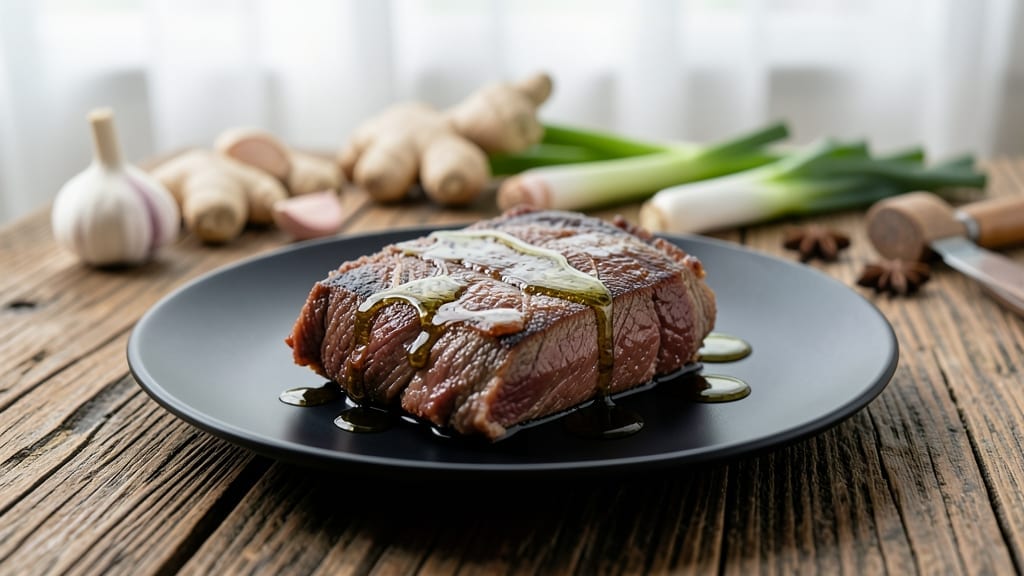
This Chinese-style beef brisket recipe transforms tough cuts into melt-in-your-mouth tender slices with aromatic star anise and deep soy notes—exactly like your favorite dim sum restaurant. The secret lies in a long braise that breaks down collagen while building layers of umami through ginger, garlic, and fermented bean paste.
I developed this method after years of experimenting with Chinese red-braising techniques, and it never fails to impress.
The process begins with a simple marinade that preps the meat, followed by a slow stovetop braise that develops rich, caramelized flavors. Unlike Western brisket methods, this recipe uses a liquid-based sauce that tenderizes while infusing the beef with authentic Chinese spices.
The result is beef so tender it practically dissolves on your tongue, with a glossy sauce that clings to every slice.
By the time you serve it—sliced thin over steamed rice with pickled vegetables and quick stir-fried bok choy—you’ll have a restaurant-quality meal that’s perfect for family dinners or special occasions. The star anise and soy combination creates a complexity that’s hard to resist, making this foolproof method worth mastering.
This recipe delivers restaurant-quality tenderness in one pot, with minimal active time but maximum flavor development. The sides suggested here complement the dish perfectly, but it’s equally satisfying as a standalone centerpiece. Let’s get cooking!
Ingredients for beef brisket recipe chinese style
Authentic Chinese spices meet slow-braised tenderness for restaurant-quality beef brisket.
| Ingredient | Amount | Notes |
|---|---|---|
| Beef Brisket 🥩 | 3 lb | Flat cut, trimmed of fat |
| Soy Sauce 🍜 | 1 cup | Low-sodium preferred |
| Shaoxing Wine 🍷 | ½ cup | Dry, not sweet |
| Brown Sugar 🍚 | ½ cup | Light or dark |
| Garlic Cloves 🧄 | 6 cloves | Minced, aromatic |
| Fresh Ginger 🌿 | ¼ cup | Grate finely, vibrant |
| Star Anise Pods 🌟 | 4 whole | Whole for infusion |
| Dried Red Chili Peppers 🌶️ | 2 whole | For heat balance |
| Doubanjiang (Fermented Bean Paste) 🥬 | ¼ cup | Sichuan variety preferred |
| Cornstarch 🌾 | 2 tbsp | For thickening |
| Sesame Oil 🫒 | 1 tbsp | Toasted aroma |
| Vegetable Oil 🫒 | ½ cup | High smoke point |
| Salt 🧂 | 1 tsp | Fine sea salt |
| Black Peppercorns 🌶️ | 1 tsp | Freshly cracked |
[recipe_ingredient_scaler]
The beef is everything here. Flat-cut brisket cooks more evenly than point-cut, and Costco or butcher shops often have it pre-trimmed. Look for good marbling—1-2 inches thick works best. I always buy organic when possible since it’ll be braised for hours, but regular cuts work fine. The Shaoxing wine should be aged—Moutai or local Asian markets are my go-tos. Doubanjiang is non-negotiable for that authentic Sichuan kick; Penzeys or Chinese specialty stores carry it.
No Shaoxing wine? Dry sherry or mirin works in a pinch, though it won’t be exactly the same. Skip the doubanjiang? Extra chili paste plus miso mimics some depth. Fresh ginger is ideal but dried ginger at half the amount gets you close. The cornstarch slurry is key—don’t skip it—or the sauce will be watery. For extra richness, add a splash of fish sauce at the end. Star anise is worth the hunt—it’s the magic ingredient that ties everything together.
This braise gets better with time. Start it in the morning so it can simmer all day—6-8 hours is perfect. The beef keeps 5 days in the fridge, and the sauce 3 days. I freeze portions in glass jars for up to 3 months. The aroma alone makes it worth the effort. Serve with steamed rice and scallions for the full experience—don’t skip the rice!
Why You’ll Love This Recipe
- No-Panic Prep: Honestly, this isn’t one of those recipes where you’re stuck chopping for hours. The garlic and ginger get minced in a flash, and the doubanjiang paste is your shortcut to umami—just mix, slather, and wait. Even my “I forgot to prep” evenings work because the brisket just needs to sit while you build the sauce.
- Umami Bomb: The doubanjiang and shaoxing wine together? That’s the kind of flavor that makes you pause mid-bite. The brown sugar caramelizes into the sauce while the star anise and chili peppers add warmth without overpowering—like a spice cabinet exploded in your mouth, but in the best way.
- Leftovers That Win: Five days in the fridge? More like five days of “I’ll just have one more slice.” The sauce gets richer, the meat gets juicier, and it reheats like it’s fresh. My kids even ask for seconds, and that’s saying something—especially after I burned the last batch of mac and cheese.
- Budget Beast: Three pounds of brisket isn’t cheap, but this recipe turns it into a showstopper without wasting a penny. The soy sauce, Shaoxing wine, and even the doubanjiang stretch far beyond this dish. I’ve repurposed the sauce for noodles, and the extra meat? Perfect for wraps or fried rice.
Step-by-step instructions for braised Chinese-style beef brisket
Here’s the method to transform tough brisket into fork-tender, aromatic perfection.
Prepare the Brisket and Aromatics
Begin by trimming the 3 lb beef brisket of any excess fat, leaving about ¼-inch layer for flavor. Cut the brisket into two even pieces along the natural grain. In a large mixing bowl, combine the 6 garlic cloves and ¼ cup fresh ginger with the ¼ cup doubanjiang (fermented bean paste). Mince this mixture thoroughly using a chef’s knife or food processor until it forms a smooth paste.
This aromatic blend is the flavor foundation of your dish. The doubanjiang adds deep umami complexity while the ginger and garlic provide bright, fresh contrast. Spread this paste evenly over both sides of the brisket pieces, pressing it into the meat so it penetrates slightly. Let the brisket sit at room temperature for 30 minutes while you prepare the braising liquid.
Build the Braising Liquid and Sear
Heat ½ cup vegetable oil in a large Dutch oven over medium-high heat. Add the seasoned brisket pieces and sear for 4-5 minutes per side until they develop a deep golden-brown crust. This initial searing locks in juices and creates rich fond at the bottom of your pot.
Remove the brisket and set aside. In the same pot, add the 4 star anise pods and 2 dried red chili peppers. Sauté for 30 seconds until fragrant. Pour in the ½ cup shaoxing wine and scrape up any browned bits from the bottom. Let it reduce by half, about 2 minutes, then add the 1 cup soy sauce, ½ cup brown sugar, 1 tsp salt, and 1 tsp black peppercorns. Bring to a gentle simmer for 5 minutes to allow the flavors to meld.
Braise Until Fork-Tender
Return the brisket to the pot, placing it fat-side up. Pour in 2 cups water to come about halfway up the meat. The liquid should cover about 75% of the brisket pieces. Bring to a full boil, then immediately reduce heat to low, cover tightly with a lid, and let it braise for 3 hours. This long, slow cook time is essential for transforming tough brisket into melt-in-your-mouth tenderness.
After 3 hours, check the brisket for tenderness. It should pierce easily with a fork and pull apart with gentle pressure. If it’s not quite tender enough, continue braising for another 30-60 minutes. The liquid should have reduced significantly but still coat the brisket when you lift it out.
Thicken the Sauce and Finish
Remove the brisket and set it aside, reserving the braising liquid. In a small bowl, whisk together the 2 tbsp cornstarch with 2 tablespoons of the braising liquid to create a slurry. Slowly pour this mixture back into the pot while stirring constantly over medium heat. The sauce will begin to thicken immediately, coating the back of a spoon within 2-3 minutes. Stir in the 1 tbsp sesame oil for added aroma.
Return the brisket to the pot and simmer uncovered for 5 minutes to allow the thickened sauce to coat the meat thoroughly. The final dish should have a glossy, velvety sauce that clings beautifully to each tender piece of brisket. The star anise and chili peppers will have infused their distinctive flavors while remaining subtle in the background.
Rest and Serve
Transfer the brisket to a serving platter and let it rest for 10 minutes before slicing. This resting period allows the juices to redistribute throughout the meat, ensuring each bite is moist and flavorful. The brisket should be so tender it practically falls apart when you slice against the grain.
Serve the brisket with the rich braising sauce ladled over the top. The combination of tender meat, complex sauce, and aromatic spices creates a dish that’s perfect for family gatherings or special occasions. The star anise and doubanjiang provide depth while the soy and wine balance with sweetness and acidity, making each bite perfectly harmonized.
Pro Tips For Making Beef Brisket Recipe Chinese Style
- Sear Until Golden: DESCRIPTION:
- Mince the Doubanjiang Paste: DESCRIPTION:
- Don’t Rush the Braise: DESCRIPTION:
- Slurry the Cornstarch Slowly: DESCRIPTION:
Wine and beer pairings for this dish
Rich Red Wine Pairings
The deep, umami-rich flavors of this Chinese-style brisket call for a wine that can stand up to its complexity. I reach for a Chinese red wine like Mulan or Chateau Musar—both have bold tannins and dark fruit notes that complement the soy and star anise.
The slight earthiness of Musar pairs beautifully with the braised beef‘s caramelized depth. A Cabernet Sauvignon from Napa Valley also works, especially if you prefer a more structured wine with blackcurrant and tobacco undertones. 🍷
Light Beer Options
For a refreshing contrast, a dry Chinese rice wine like Lao Gan Ma or a crisp Asian-style lager like Tsingtao cuts through the richness. The carbonation cleanses your palate between bites, balancing the dish’s savory intensity.
If you prefer Western beers, a Belgian IPA with citrus notes can add a fun, unexpected twist. The hop bitterness helps tame the sauce’s sweetness. 🍺
Fruity Pairings for Balance
A Port wine like Taylor’s Late Bottled Vintage offers sweetness and acidity that harmonize with the braised beef’s caramelized notes. The wine’s dark fruit flavors echo the dish’s brown sugar and soy, while its slight astringency cuts through the sauce’s richness.
For a non-alcoholic option, try a sparkling pomegranate juice with a splash of lime—it delivers tartness and complexity without overpowering. 🍇
Regional Chinese Wines
For an authentic touch, opt for a Chinese red wine from Yunnan Province, such as Yunnan Hong. These wines often feature tropical fruit and spice notes that mirror the star anise and doubanjiang in your brisket.
If you can’t find Yunnan wines, a Cabernet Gernischt from Germany’s Rheingau region provides a similar balance of fruit and earthiness. Both wines enhance the dish’s aromatic profile without competing. 🌏
Beverage Timing Tips
Serve your wine or beer slightly chilled—around 55-60°F for reds and 45-50°F for lagers—to highlight their aromatic qualities. I decant the wine for 20-30 minutes before serving to soften its tannins and release its bouquet.
Pairing the wine with the brisket as soon as it’s sliced lets you savor the flavors together, ensuring each bite is complemented by the perfect sip. 🍷⏰
Nutrition facts
Frequently asked questions
Why does this Chinese-style brisket need such a long braising time?
The 3-hour braise is key to breaking down the tough collagen in brisket, transforming it into melt-in-your-mouth tenderness. This slow cooking method allows the soy sauce, star anise, and ginger to fully infuse the meat, creating layers of flavor that wouldn’t develop any faster. Even an extra 30-60 minutes makes a noticeable difference in texture!
Can I substitute any ingredients if I don’t have doubanjiang?
Yes! If you can’t find doubanjiang, blend 2 tbsp chili paste with 1 tbsp miso paste and 1 tsp soy sauce for depth. This mimics the umami and spice balance, though the flavor will be slightly different. The dish will still be delicious—just expect a milder Sichuan kick.
How do I know when the brisket is done?
Check for tenderness by inserting a fork—it should slide in easily. The meat should also pull apart gently when pressed. If it’s not quite tender after 3 hours, braise another 30-60 minutes. The liquid should reduce but still coat the brisket when lifted out. Overcooking can dry it out, so keep an eye on it!
What’s the best way to serve this dish?
Slice thinly against the grain and serve over steamed jasmine rice with a drizzle of the braising sauce. Add simple sides like stir-fried bok choy or pickled vegetables for balance. The sauce clings perfectly to the meat, so no extra dipping sauce is needed—just enjoy every tender, flavorful bite!

Trained in classic French technique but raised on slow-cooked ribs and spicy rubs, she blends culinary skill with smoke and soul.
- Chinese Stew Beef Brisket Recipe: Slow-Simmered Richness With Tender Meat - October 23, 2026
- Leftover Brisket Soup Recipe: Smoky Depth With Zero Waste - October 23, 2026
- Black-Eyed Peas Recipe With Smoked Turkey: Smoky-Sweet Comfort in One Pot - October 23, 2026