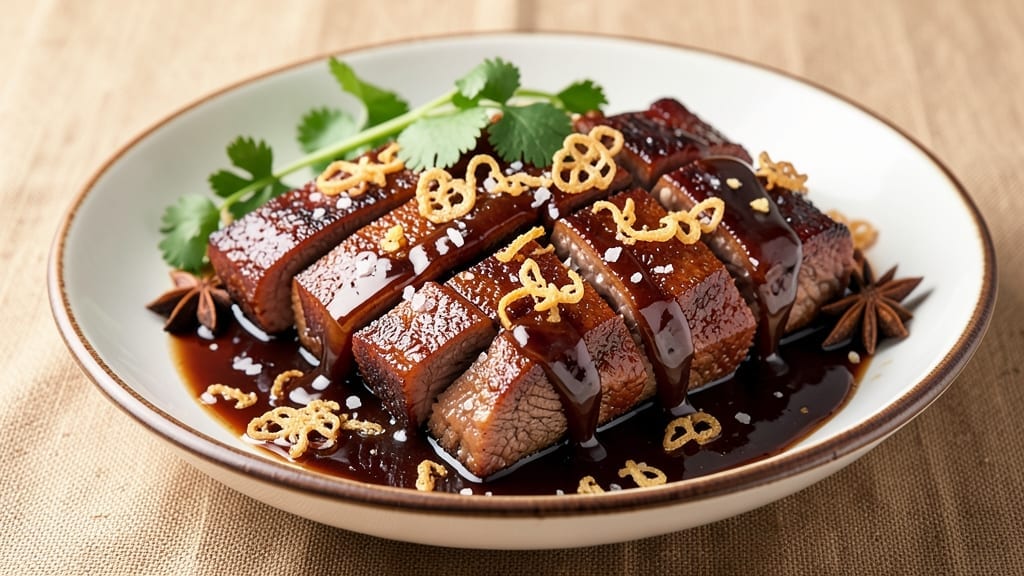
This Cantonese braised beef brisket delivers the deep, complex flavors of a classic Hong Kong-style dish—tender beef swimming in a glossy, umami-rich soy-brown sauce. The secret lies in slow cooking with aromatic spices like star anise and cinnamon, which infuse the meat with layers of warmth and depth over hours.
I first made this recipe after a trip to a Michelin-starred Cantonese restaurant, where the braised beef became an instant family favorite.
The method combines traditional techniques with modern convenience: a 3-4 hour braise transforms tough brisket into melt-in-your-mouth perfection, while the sauce reduces to a perfect balance of sweet, salty, and savory. No pressure cooker required—just a heavy pot and patience.
The result is a dish that feels like a hug in every bite, with rich flavors that pair beautifully with steamed rice and quick-pickled vegetables.
What makes this recipe special is how it captures the soul of Cantonese home cooking—simpler than restaurant versions but just as flavorful. The star anise and cinnamon create warmth, while soy sauce and brown sugar build the sauce’s signature depth.
By the time you serve it, your kitchen will smell like a bustling Hong Kong dim sum parlor, and the beef will fall apart at the touch of a fork.
Serve this braised beef brisket as the centerpiece of a weekend meal, with steamed jasmine rice and a simple cucumber salad. The leftovers taste even better the next day, making it perfect for meal prep. Let’s get started—this dish is worth every minute of waiting.
Ingredients for cantonese braised beef brisket
Pantry staples meet Cantonese tradition for this rich, aromatic beef dish.
| Ingredient | Amount | Notes |
|---|---|---|
| Beef Brisket 🥩 | 2 lb | Flat cut, 1-inch thick |
| Dark Soy Sauce 🥄 | ½ cup | For deep color and flavor |
| Light Soy Sauce 🥄 | ¼ cup | For balance of saltiness |
| Brown Sugar 🍯 | ½ cup | Packed, for caramelization |
| Shaoxing Wine 🍷 | ½ cup | Or substitute dry sherry |
| Star Anise 🌟 | 2 whole | For aromatic depth |
| Cinnamon Sticks 🌿 | 2 whole | For warmth and spice |
| Garlic Cloves 🧄 | 6 cloves | Peeled, smashed lightly |
| Fresh Ginger 🌿 | ½ cup | Finely chopped, peeled |
| Green Onions 🧅 | ¼ cup | Sliced, for garnish |
| Vegetable Oil 🫒 | 2 tbsp | For searing beef |
| Water 💧 | 1 ½ cups | For braising liquid |
| Cornstarch 🌾 | 1 tbsp | For thickening sauce |
| Sesame Oil 🫒 | 1 tbsp | For finishing aroma |
| Salt 🧂 | 1 tsp | Adjust to taste |
[recipe_ingredient_scaler]
The beef brisket is non-negotiable here—flat cut, 1-inch thick gives you that perfect tenderness. Most Asian grocery stores carry it pre-cut, but if you’re at a regular supermarket, ask the butcher for brisket flat. Costco and H Mart are my go-tos for quality cuts. Look for good marbling—it translates to juicier meat. The star anise and cinnamon sticks? Penzeys or bulk bins at Whole Foods have the best quality, but the regular grocery store spices work fine if they’re fresh. Quick test: if your spices smell like dust, toss them.
No Shaoxing wine? Dry sherry or even a good white wine works in a pinch, but the flavor won’t be identical. Fresh ginger is ideal, but ground ginger at half the amount gets you close. The soy sauces? Kikkoman is reliable, but for authentic flavor, grab Lee Kum Kee dark and light soy sauces from any Asian market. The brown sugar should be packed—don’t scoop it loosely. If you’re making this ahead, the sauce actually improves overnight, so double the cornstarch if you’re freezing leftovers to prevent mushiness.
This dish tastes even better the next day—honestly, that’s when it shines. Keeps in the fridge for 4-5 days, freezes for 3 months. I always make a double batch because the leftovers reheat beautifully. Store the beef and sauce separately in airtight containers. When reheating, add a splash of water to the sauce to loosen it up. Garnish with those green onions right before serving—they add a fresh pop of color that makes the dish feel special.
Why You’ll Love This Recipe
- One-Pot Magic: I swear by this—just toss the brisket in a deep pan with soy sauces, wine, and sugar, then walk away. The longer it simmers, the richer it gets, and honestly? That’s my kind of cooking.
- Umami Bomb: The dark soy gives it that glossy, caramelized crust, while the Shaoxing wine cuts through the richness like a secret weapon. That first bite? Pure satisfaction—sweet, salty, and deeply savory all at once.
- Leftovers? More Like Leftovers Win: This dish actually improves the next day. The beef gets fork-tender, and the sauce thickens into a glossy blanket. I make a double batch on Sundays just to have it ready for lazy weeknights—no regrets.
- Budget Stretch: A pound of brisket feeds four, and the ingredients? Basic pantry staples. Between us, this is how I feed my family well without breaking the bank. The brown sugar and soy combo makes even the toughest cuts taste luxurious.
Step-by-step instructions for Cantonese braised beef brisket
Here’s how to transform tough brisket into silky, flavorful braised beef with a glossy soy-brown sauce.
Prepare the Brisket and Aromatics
Start by trimming any large fat deposits from the 2 lb beef brisket to expose clean surfaces for better browning. Using a sharp knife, cut the brisket into two even pieces if it’s particularly large. Pat both pieces dry with paper towels—this helps create a better sear later.
In a small bowl, combine the 6 cloves garlic cloves (lightly smashed), 0.5 cup fresh ginger (finely chopped), 2 whole star anise, and 2 whole cinnamon sticks. This aromatic bundle will infuse the braising liquid with deep, complex flavors. Set aside for now—we’ll use it in the next step.
Sear the Brisket and Build the Braising Base
Heat a heavy-bottomed Dutch oven over medium-high heat until hot. Add the 2 tbsp vegetable oil and swirl to coat the bottom. Working in batches if needed, sear the brisket pieces for 3-4 minutes per side until they develop a deep golden-brown crust. This step is crucial—it locks in juices and creates the foundation for rich flavor.
Remove the seared brisket and set it aside. In the same pot, add the aromatic bundle and cook for 30 seconds until fragrant. Immediately pour in the 0.5 cup shaoxing wine, scraping up any browned bits from the bottom with a wooden spoon. Let it simmer for 1 minute to cook off the alcohol.
Braise with Soy Sauce and Brown Sugar
Return the brisket to the pot. Add the 0.5 cup dark soy sauce, 0.25 cup light soy sauce, 0.5 cup brown sugar, 1.5 cups water, and 1 tsp salt. Stir gently to combine, then bring the liquid to a gentle simmer. The mixture should just barely bubble—this ensures tender meat without toughening the surface.
Cover the pot with a tight-fitting lid and transfer it to the oven preheated to 325°F. Braise for 2 hours, then carefully flip the brisket pieces and continue cooking for another 30 minutes. The sauce should reduce to a glossy, thick consistency with a rich mahogany color—this is your signal that the beef is nearly tender.
Thicken the Sauce and Finish
Remove the brisket from the pot and set it aside. In a small bowl, whisk together the 1 tbsp cornstarch with 2 tbsp of the braising liquid until smooth. Slowly pour this mixture back into the pot while stirring constantly. Bring the sauce to a gentle simmer and cook for 2-3 minutes until it thickens enough to coat the back of a spoon.
Return the brisket to the pot and stir in the 1 tbsp sesame oil. The aroma will intensify—this is the finishing touch that elevates the dish. Let the brisket sit in the sauce for 10 minutes off the heat to absorb those final flavors. Garnish with 0.25 cup sliced green onions before serving.
Pro Tips For Making Cantonese Braised Beef Brisket
- Sear the Brisket Hard: High heat. Seriously, crank it up until you get deep golden-brown crusts on every side—this isn’t just for looks. The Maillard reaction here is what builds the deep, caramelized flavor that makes Cantonese braised beef sing, and skipping it means missing the soul of the dish.
- Trim the Fat Last: Leave a thin layer of fat on the brisket when you first sear it—it renders down during braising and keeps the meat moist. I learned this the hard way after trimming too aggressively and ending up with dry, tough slices. Save the aggressive trimming for after the braise if you’re picky about presentation.
- Deglaze with Wine First: Pour in the Shaoxing wine immediately after searing, while the pan is still screaming hot. Let it bubble and reduce by half before adding any soy sauces or sugar—this locks in the seared flavors and prevents the sauce from tasting flat. Yes, it’s an extra 2 minutes, but it makes a real difference.
- Balance the Soy Sauces: Use twice as much light soy sauce as dark—this keeps the sauce glossy and bright, not muddy. Dark soy adds color, but too much turns your braise into a slab of black glue. Start with 1 tablespoon light to ½ tablespoon dark per pound of beef, then adjust to taste. (Your future self will thank you.)
Creative variations of this dish
Sweet and Spicy Fusion
Transform this Cantonese classic into a sweet-spicy version by adding 1 tbsp gochujang (Korean chili paste) and 1 tbsp honey to the braising liquid. The gochujang brings deep umami heat while the honey caramelizes beautifully with the brown sugar.
I like to finish with 1 tsp chili crisp stirred into the sauce just before serving for an extra layer of smoky spice. 🌶️
Mushroom and Shiitake Boost
For an earthy twist, add 1 cup sliced shiitake mushrooms and 1 cup baby bella mushrooms to the pot during the final 30 minutes of braising. The mushrooms absorb the sauce while adding a meaty texture that pairs perfectly with the beef.
I recommend using fresh shiitakes for their rich umami, but dried shiitakes rehydrated in the braising liquid work too.
Red Wine Reduction
Swap out the Shaoxing wine for 1 cup dry red wine (like Cabernet Sauvignon) and reduce it with the aromatics before adding the brisket. The tannins in red wine create a deeper, more complex sauce that still maintains the Cantonese balance.
Deglaze the pot with the wine after searing, then reduce by half before adding the soy sauces and sugar. 🍷
Slow-Cooker Adaptation
For hands-off cooking, sear the brisket as directed, then transfer everything (including aromatics) to a 6-quart slow cooker. Cook on LOW for 8 hours or HIGH for 5 hours, then thicken the sauce on the stovetop with cornstarch.
The slow cooker method is perfect for weeknight meals—just shred the beef slightly for easier serving.
Vegetarian Adaptation
Replace the beef with 2 lbs extra-firm tofu (pressed and cubed) or 2 lbs king oyster mushrooms (whole). Marinate the tofu in 2 tbsp soy sauce, 1 tbsp sesame oil, and 1 tsp grated ginger for 30 minutes before cooking.
The mushrooms or tofu will absorb the sauce beautifully, creating a hearty vegetarian version that still delivers rich, umami-packed flavor.
Spiced Orange Glaze
Add zest and juice of 1 orange along with the brown sugar to the braising liquid for a bright, citrusy twist. The orange complements the deep soy flavors while adding a subtle sweetness.
For extra drama, finish with 1 tsp candied orange peel (store-bought or homemade) sprinkled over the top. This variation works especially well with the sweet-spicy fusion above. 🍊
Nutrition facts
Frequently asked questions
Why does Cantonese braised beef need to be braised for so long?
The long braising time—2-3 hours—is essential to break down the tough collagen in brisket, transforming it into tender, melt-in-your-mouth beef. The slow cooking also allows the aromatics (star anise, cinnamon, ginger) to infuse deeply, creating that signature umami-rich sauce. Patience here makes all the difference!
Can I substitute beef brisket with another cut of beef?
While brisket is ideal, you can use chuck roast or short ribs for similar results. Avoid leaner cuts like sirloin—they won’t braise as tenderly. If using short ribs, reduce braising time to 1.5 hours since they cook faster. The key is choosing a cut with good marbling for flavor.
What if my sauce turns out too thin or too thick?
For a thinner sauce, add 1-2 tbsp water and simmer until reduced. If it’s too thick, whisk 1 tsp cornstarch with 2 tbsp water and stir in slowly. The sauce should coat the back of a spoon but still glide smoothly. Pro tip: Taste as you go—adjust sweetness with sugar or saltiness with soy sauce.
How do I reheat leftovers without drying out the beef?
Reheat gently in the sauce on low heat or in a 350°F oven for 20-30 minutes covered. Avoid microwaving—it makes the beef rubbery. For extra moisture, add a splash of water or broth to the sauce. Leftovers taste even better the next day!
What’s the best way to serve this dish for a dinner party?
Pair it with steamed jasmine rice and quick-pickled cucumbers for a classic Cantonese spread. For contrast, add a light sesame salad or stir-fried bok choy. Garnish the braised beef with extra green onions and a drizzle of sesame oil right before serving to impress guests. The aroma alone will have them lining up!

Trained in classic French technique but raised on slow-cooked ribs and spicy rubs, she blends culinary skill with smoke and soul.
- Cantonese Braised Beef Brisket Recipe: Deep Umami Richness in Soy-Brown Sauce - October 15, 2026
- Smoked Steak Recipe: Low-and-Slow Smoky Crust With Juicy Core - October 15, 2026
- Smoked Beef Ribs Dry Rub Recipe: Bold Spice Blend for Deep Bark and Tender Meat - October 15, 2026