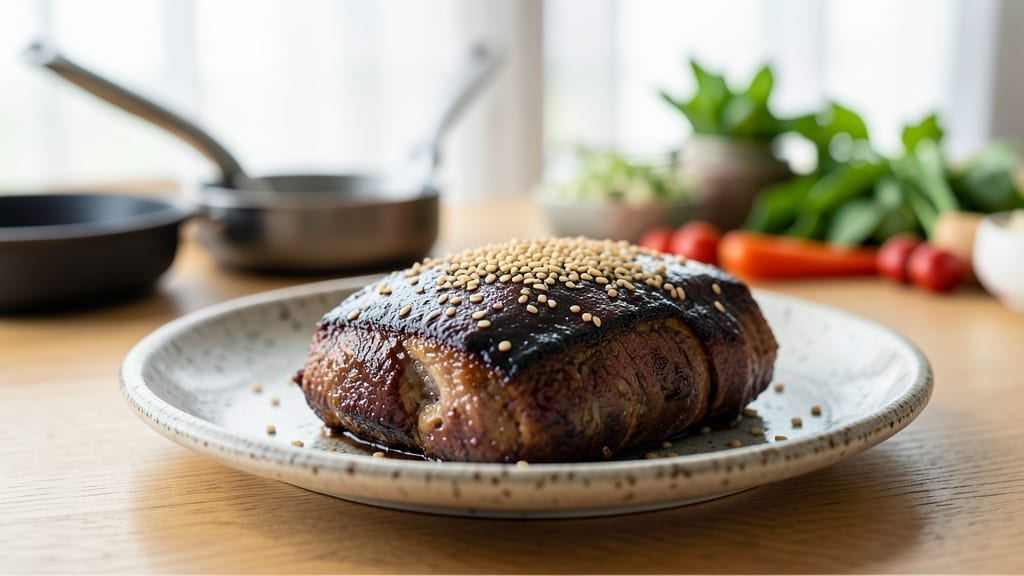
This Filipino beef brisket recipe transforms tough cuts into melt-in-your-mouth tenderness using time-tested adobo techniques. After years of perfecting slow-cooked Filipino dishes, I’ve developed a method that delivers restaurant-quality results at home—where the meat practically falls apart with each bite.
The key lies in balancing vinegar’s tang with soy sauce’s depth, creating a marinade that tenderizes while building complex flavors.
The process begins with a simple yet powerful marinade of soy sauce, vinegar, garlic, and spices that works overnight to break down the meat’s fibers.
Unlike quick-cook methods, this recipe relies on low-and-slow braising—typically 8-10 hours in a pressure cooker or 6-8 hours in a slow cooker—where the meat absorbs the aromatic sauce until it’s fork-tender. The result is a dish that bridges Filipino comfort food traditions with approachable home cooking techniques.
What you’ll end up with is brisket so tender it requires no cutting—just pull it apart with your hands—and infused with that signature Filipino adobo tanginess.
Each bite delivers a perfect harmony of savory, slightly sweet, and bright acidity that makes this dish equally impressive for family gatherings or weeknight dinners. The sauce thickens beautifully into a glossy, flavorful reduction that coats every piece of meat.
Pair this with steamed jasmine rice and simple sautéed greens for a complete meal that honors Filipino home cooking traditions. Here’s how to achieve that perfect balance of tenderness and flavor in your own kitchen.
Ingredients for beef brisket recipe filipino
Pantry staples and a few specialty items for restaurant-quality Filipino beef brisket.
| Ingredient | Amount | Notes |
|---|---|---|
| Beef Brisket 🥩 | 3 lb | Tough cut, trimmed of excess fat |
| Cane Vinegar 🍶 | 1 cup | White vinegar substitute |
| Soy Sauce 🥄 | ½ cup | Regular or reduced-sodium |
| Garlic Cloves 🧄 | 8 cloves | Peeled, rough chopped |
| Fresh Ginger 🌿 | 2 tbsp | Finely grated, fresh |
| Bay Leaves 🌿 | 2 whole | Dried, standard size |
| Black Peppercorns 🌶️ | 1 tsp | Whole, lightly crushed |
| Brown Sugar 🍚 | ¼ cup | Light or dark |
| Onions 🧅 | 1 whole | Yellow or red, sliced |
| Olive Oil 🫒 | 2 tbsp | Extra-virgin for richness |
| Salt 🧂 | 1 ½ tsp | Kosher or sea salt |
| Ground Black Pepper 🌶️ | ½ tsp | Freshly ground preferred |
| Water 💧 | 1 cup | Room temperature |
[recipe_ingredient_scaler]
The beef brisket is the star—look for well-marbled cuts at your local butcher or grocery store’s meat department. Costco or Whole Foods often carry high-quality brisket, but any reputable butcher will have what you need. The vinegar should be cane vinegar if you can find it—it has a cleaner taste than white vinegar. If not, white vinegar works just fine. Fresh ginger and garlic are non-negotiable here; don’t use powdered substitutes. For the bay leaves, California or Mexican bay leaves add a deeper flavor, but regular dried will work.
No cane vinegar? White vinegar or apple cider vinegar will do the trick. The soy sauce can be swapped for tamari if gluten-free is needed. If you’re short on time, you can use pre-minced garlic and grated ginger from the produce section, but fresh is always better. For the brown sugar, coconut sugar works beautifully if you prefer a more natural option. The onions can be swapped for shallots or leeks if you have them on hand. If you’re cooking for a crowd, double the water to ensure the meat stays submerged during cooking.
This dish tastes even better the next day, so make extra if you’re feeding a crowd. Store leftovers in an airtight container in the fridge for up to 5 days. For longer storage, freeze portions in airtight containers for up to 3 months. When reheating, add a splash of water or broth to keep the sauce from drying out. The brisket reheats beautifully—just warm it through gently on the stove or in the microwave, covered, until heated through.
Why You’ll Love This Recipe
- Marinate While You Sleep: That overnight soak in the cane vinegar and soy sauce? Game-changer. I toss the brisket in the fridge the night before and wake up to meat that’s already half-cooked in flavor—no stress, just pure hands-off magic.
- Sauce That’s Actually Worth Spooning: The browned bits from searing? They turn into a glossy, tangy-sweet sauce that’s ridiculously good drizzled over rice. Between the garlic, ginger, and brown sugar, every bite tastes like a hug from your abuela.
- Feeds a Crowd (Without the Crowd): Three pounds of brisket? That’s enough to feed six hungry people—or three leftovers for lunch. And honestly, the second helping is always bigger than the first.
- Budget’s Your Friend: Brisket’s tough but cheap, and the ingredients? Pantry staples. I’ve made this on a Tuesday with whatever was in the fridge, and it still turned out spot-on. Your wallet and your taste buds both win.
Step-by-step instructions for Filipino beef brisket
Here’s the method that transforms tough brisket into fork-tender adobo magic.
Prepare the Brisket and Marinade Base
Pat the 3 lb beef brisket dry with paper towels, removing any remaining fat. Place it in a large resealable bag or deep dish. In a separate bowl, combine the 1 cup cane vinegar, ½ cup soy sauce, 8 peeled garlic cloves (roughly chopped), 2 tbsp finely grated fresh ginger, 2 bay leaves, 1 tsp whole black peppercorns (lightly crushed), and ¼ cup brown sugar. Pour this marinade over the brisket, ensuring it’s fully coated. Add the 1 sliced onion and 2 tbsp olive oil to the bag.
Seal the bag and massage the marinade into the meat, pressing it into all crevices. Let it marinate in the refrigerator for at least 4 hours, preferably overnight. This acid bath breaks down tough fibers, while the aromatics infuse every inch. The longer it marinates, the more tender the final result will be.
Sear the Brisket for Depth of Flavor
Remove the brisket from the marinade (reserve the marinade) and pat it dry again. Heat a heavy Dutch oven over medium-high heat and add the brisket fat-side down. Let it sear undisturbed for 5-6 minutes until a deep golden crust forms. Flip and sear the other side for another 4-5 minutes. Transfer the brisket to a plate and set aside.
Pour the reserved marinade into the Dutch oven, scraping up all the browned bits from the bottom. Add the 1 cup water and bring to a simmer. This step captures all the caramelized flavors that would otherwise be lost. Here’s where the real magic begins – those browned bits will form the rich, glossy sauce that coats every bite.
Slow Cook Until Fork-Tender
Return the brisket to the Dutch oven, fat-side up, and cover with the lid. Reduce heat to low and simmer gently for 3-4 hours, turning the brisket occasionally. The goal is to maintain a gentle simmer – you should see just a few bubbles breaking the surface. Add more water if needed to keep it moist.
After about 2 hours, check for tenderness by inserting a fork into the thickest part. If it pierces easily with minimal resistance, it’s ready. If not, continue cooking another 30-60 minutes. The meat should be falling apart when you test it. Here’s the thing – patience is everything with brisket. Rushing this step will leave you with tough, chewy meat instead of the melt-in-your-mouth texture you’re after.
Finish with Seasoning and Resting
Once tender, remove the brisket and place it on a cutting board. Discard the bay leaves. Strain the cooking liquid through a fine-mesh sieve into a clean saucepan, pressing on the solids to extract maximum flavor. Return the liquid to medium heat and simmer until slightly thickened.
Season the brisket with 1½ tsp salt and ½ tsp freshly ground black pepper. Let it rest for 10 minutes before slicing against the grain into ¼-inch thick pieces. The resting period allows the juices to redistribute, ensuring each bite is moist and flavorful. Serve the brisket with the reduced sauce spooned over the top, accompanied by steamed rice for the perfect Filipino meal.
Pro Tips For Making Beef Brisket Recipe Filipino
- Crush the Peppercorns: I learned this the hard way—whole black peppercorns need to be lightly crushed, not pulverized. A mortar or rolling pin works best; if you skip this, you’ll end up with peppery sauce but bland meat. Those tiny cracks let the flavor seep into the brisket during the long simmer.
- Don’t Skimp on Sear Time: That 5-6 minutes per side on high heat isn’t optional—it’s what builds the crust that locks in moisture and carries the sauce. I used to rush it, and my brisket turned out dry. Trust the process; the Dutch oven will stay hot enough if you give it time.
- Strain Like You Mean It: After simmering, press those garlic and onion bits hard through the sieve. That’s where the real flavor hides—especially the caramelized bits from the sear. I used to be lazy and just pour, but now I use a spoon to really work the solids. Your sauce will taste richer, I promise.
- Test with the Fork Early: At the 2-hour mark, poke the thickest part—if it’s still tough, don’t panic, but don’t walk away either. Brisket needs gentle heat, not a rolling boil. I’ve had batches turn mushy from too-high heat; keep it at a lazy simmer, and you’ll hit perfect tenderness.
Creative variations of beef brisket recipe filipino
Spicy Adobo-Inspired
For those who love heat, I add 1-2 tbsp of Penzeys hot sauce (like Buffalo Wing) to the marinade alongside the soy sauce and vinegar. This creates a fiery adobo twist that still keeps the dish balanced.
After slow-cooking, I drizzle the brisket with extra hot sauce before serving—just enough to satisfy the spice lovers in your group. David always insists on a side of cooling cucumber salad to balance it out! 🌶️
Sweet and Sour Sinigang Fusion
Inspired by Filipino sinigang soup, I swap half the cane vinegar for ½ cup tamarind paste in the marinade. This adds a tangy, slightly sour depth that pairs beautifully with the soy sauce sweetness.
After cooking, I simmer the brisket in the sauce with 1 cup coconut milk for the final 30 minutes—the result is a rich, creamy-savory dish that feels like a Filipino comfort food hug. 💛
Crispy Garlic Butter Brisket
For a modern twist, I finish the brisket with 2 tbsp melted garlic butter brushed on top during the last 10 minutes of cooking. This adds a luxurious richness that contrasts perfectly with the tangy adobo flavors.
I let the butter melt into the seared crust, creating pockets of flavor that make every bite irresistible. Trust me—David always cleans his plate when I do this! 🔥
Vegetarian “Brisket” Alternative
If you’re avoiding meat but want that Filipino flavor, I substitute the brisket with extra-firm tofu pressed and cubed. Marinate it in the same adobo mixture, then pan-sear until crispy before slow-cooking with the rest of the ingredients.
The result is a hearty, protein-rich dish that still captures the essence of Filipino comfort food. It’s a game-changer for vegetarian families! ✨
Pork Belly Sidekick
In the Philippines, pork is often the star, so I sometimes add 1 lb pork belly to the Dutch oven alongside the brisket during the last 2 hours of cooking. The pork absorbs the adobo flavors beautifully while staying juicy.
I cut it into ½-inch slices and serve it alongside the brisket for a true Filipino feast. It’s like having a mini buffet in one dish! 💫
Nutrition facts
Frequently asked questions
Why does this Filipino beef brisket recipe call for vinegar in the marinade?
The cane vinegar acts as a tenderizer, breaking down the tough collagen in the brisket while creating the signature tangy flavor of Filipino adobo. This acid bath transforms the meat into fork-tender perfection. The longer it marinates—ideally overnight—the more tender and flavorful the result. It’s a classic Filipino technique that separates good brisket from great brisket!
How do I know when the brisket is fully cooked and ready to rest?
After about 2 hours of slow cooking, insert a fork into the thickest part of the brisket. If it slides in with minimal resistance, it’s done. For extra assurance, continue cooking another 30-60 minutes until the meat practically falls apart. The key is patience—rushing this step will leave you with chewy meat instead of melt-in-your-mouth tenderness.
Can I use a slow cooker instead of a Dutch oven for this recipe?
Transfer the seared brisket and marinade to your slow cooker, then cook on low heat for 6-8 hours, stirring occasionally. The slow cooker method works beautifully and keeps the meat moist. Just make sure to add water if needed to maintain a gentle simmer. It’s a hands-off way to achieve the same tender results!
What should I serve with this Filipino beef brisket?
Steamed jasmine rice is a must to soak up the rich adobo sauce. For extra flavor, try a simple side of garlic green beans or a refreshing cucumber salad. The combination creates a complete Filipino meal that feels like a warm hug from family. Trust me—it’s a crowd-pleaser!

Trained in classic French technique but raised on slow-cooked ribs and spicy rubs, she blends culinary skill with smoke and soul.
- Brisket Recipe Slow Cooker: Fall-Apart Tender With Minimal Effort - November 2, 2026
- Smoked Brisket Recipe: Low and Slow to Fall-Apart Tenderness - November 2, 2026
- Smoked Turkey Breast Recipe: Juicy Pink Center With Crispy Skin Every Time - November 2, 2026