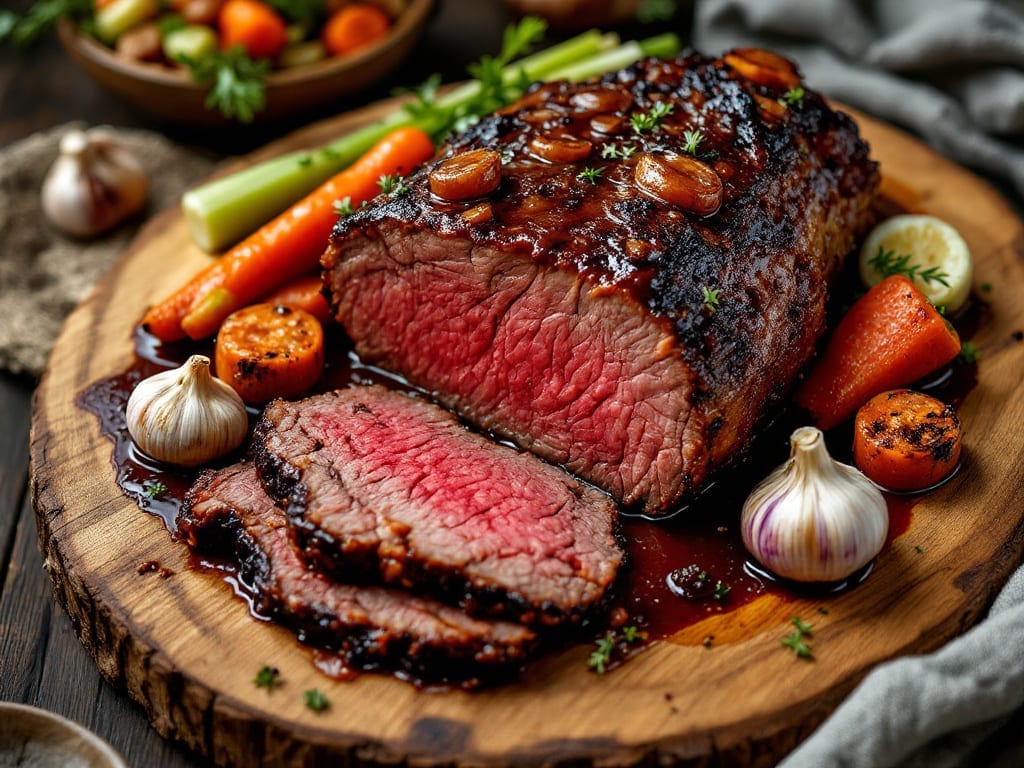
Jamie Oliver’s beef brisket recipe transforms tough cuts into fork-tender perfection with slow braising that unlocks deep, smoky flavors. Standing on a step stool in my grandmother’s kitchen in Sicily, I learned how patience and precise technique turn simple ingredients into something extraordinary.
This method delivers restaurant-quality results at home, where every bite melts like butter.
The secret lies in a low-and-slow approach—cooking the brisket at just 200°F for hours until it practically falls apart. Jamie Oliver’s style focuses on balancing bold spices with natural beef richness, ensuring the meat stays juicy while developing that signature caramelized crust.
No fancy equipment needed—just time, a Dutch oven, and a little attention to detail.
By the end, you’ll have brisket so tender it shreds effortlessly, with a surface glistening from rendered fat and a depth of flavor that’s impossible to resist. The aroma alone will have everyone gathering around the table, and the texture—perfectly tender—makes every slice worth the wait.
This is comfort food elevated to an art form.
Pair it with classic sides like creamy mashed potatoes or tangy coleslaw, and you’ve got a meal that feels like a celebration. Let’s get cooking—this brisket is about to become your new favorite centerpiece.
Ingredients for beef brisket recipe jamie oliver
Six core ingredients and a slow cook transform tough brisket into melt-in-your-mouth perfection.
| Ingredient | Amount | Notes |
|---|---|---|
| Beef Brisket 🥩 | 4 lb | Flat cut, 1-inch thick, well-marbled |
| Yellow Onion 🧅 | 2 whole | Large, yellow, sliced into wedges |
| Carrots 🥕 | 4 whole | Medium, peeled, cut into chunks |
| Celery Stalks 🥬 | 4 whole | Fresh, cut into 2-inch pieces |
| Garlic Cloves 🧄 | 6 cloves | Fresh, peeled, smashed |
| Beef Broth 💧 | 4 cups | Low-sodium, homemade preferred |
| Red Wine 🍷 | 1 cup | Dry, bold (Cabernet Sauvignon) |
| Apple Cider Vinegar 🍎 | ¼ cup | For tangy depth |
| Brown Sugar 🍚 | ½ cup | Light, packed |
| Dried Thyme 🌿 | 1 tbsp | Or 1 tbsp fresh, chopped |
| Ground Black Pepper 🌶️ | 1 tbsp | Freshly cracked |
| Sea Salt 🧂 | 2 tsp | Diamond Crystal preferred |
| Bay Leaves 🍃 | 2 whole | Fresh, if available |
| Olive Oil 🫒 | 2 tbsp | Extra-virgin, for searing |
[recipe_ingredient_scaler]
The brisket is non-negotiable—look for a well-marbled flat cut at your butcher or Costco. A 4-pound piece feeds six generously, but if you’re feeding a crowd, grab a 6-pound and adjust the braising time. The fat cap should be at least 1/4-inch thick; that’s what renders down into flavor gold. For the best quality, I always ask the butcher to trim excess fat from the sides but leave the fat cap intact. Whole Foods or local butcher shops often carry higher-quality cuts than big-box stores, and the difference in tenderness is night and day.
No red wine? Extra beef broth with a splash of balsamic vinegar works just as well. The apple cider vinegar adds that tangy brightness—don’t skip it, or the brisket will taste flat. For the vegetables, frozen carrots and celery are fine in a pinch, but fresh adds a subtle sweetness that’s worth the effort. The thyme can be fresh or dried, but if using dried, toast the spices in the Dutch oven for 30 seconds before adding the liquid—this deepens the flavor. And trust me on the brown sugar: it’s not just for sweetness, it helps caramelize the meat’s surface for that perfect crust.
This brisket tastes even better the next day, so plan ahead. Store leftovers in the fridge for up to 5 days, covered with its own juices. For longer storage, freeze portions in airtight containers for up to 3 months. The braising liquid? Strain it, reduce it, and use it for gravy or freeze it for future soups. And here’s a pro tip: shred the brisket with two forks while it’s still hot—it’ll come apart like butter, and the texture is worth the extra minute.
Why You’ll Love This Recipe
- One-Pot Magic: I swear by this recipe because it’s one pan, zero stress—just toss in the brisket, onions, carrots, celery, and garlic, then let the slow cooker or oven do the work. No chopping like you’re in a cooking competition, just rough dice that disappear into rich, caramelized goodness.
- Deep Flavor Payoff: That crispy, smoky crust on the brisket? Worth the wait. The onions and carrots soften into sweet, jammy bits, while the garlic infuses everything with a warmth that makes this taste like a restaurant dish—even if you’re eating straight from the pot.
- Weeknight Workhorse: Between us, this is my go-to when I need to feed a crowd but don’t want to slave over a stove. Serve it on sandwiches, over mashed potatoes, or just as-is with crusty bread—it’s that versatile. (Yes, even on a Tuesday night.)
Step-by-step instructions for Jamie Oliver’s slow-braised beef brisket
Here’s how to transform tough brisket into melt-in-your-mouth perfection using Jamie’s signature slow-braising technique.
Sear the Brisket to Lock in Flavors
Heat a large Dutch oven over medium-high heat until very hot. Add the 2 tablespoons olive oil and swirl to coat the bottom. Place the 4 lb beef brisket fat-side down and let it sear undisturbed for 8-10 minutes until deeply browned. You’ll see the fat render and bubble vigorously—this is when all those rich flavors start developing.
Flip the brisket and sear the other side for another 6-8 minutes, pressing down gently with a tong to ensure even contact. The goal is to create a deep mahogany crust that will later dissolve into the braising liquid, creating a silky, flavorful sauce. Remove the brisket and set it aside on a plate.
Build the Aromatic Base
In the same Dutch oven, add the sliced 2 whole yellow onion wedges, 4 whole carrots cut into chunks, and 4 whole celery stalks cut into 2-inch pieces. Cook over medium heat for 8-10 minutes, stirring occasionally, until the vegetables begin to soften and release their natural juices. You’re looking for a sweet, caramelized aroma—this is the foundation of your braising liquid.
Add the 6 cloves smashed garlic cloves, 1 tablespoon dried thyme, 1 tablespoon ground black pepper, and 2 teaspoons sea salt. Stir everything together and cook for another 2 minutes until the garlic becomes fragrant. This is where the magic happens—the aromatic compounds meld together, creating layers of flavor that will infuse the brisket during the long cook.
Deglaze and Combine All Ingredients
Pour in the 1 cup red wine and scrape up all the browned bits from the bottom of the Dutch oven using a wooden spoon. This deglazing step captures all the concentrated flavors that would otherwise burn. Let the wine simmer for 3-4 minutes until it reduces by about half, intensifying its flavor profile.
Add the 4 cups beef broth, 0.25 cup apple cider vinegar, 0.5 cup brown sugar, and 2 whole bay leaves. Stir well to combine all the ingredients. The vinegar will add bright acidity, the brown sugar will create a subtle caramelization, and the bay leaves will contribute earthy depth. Return the brisket to the Dutch oven, fat-side up, so it’s partially submerged in the liquid.
Braise Until Fork-Tender
Cover the Dutch oven with a tight-fitting lid and transfer it to a 325°F oven. Braise for 3 hours, then carefully flip the brisket and add 1 cup hot water to the braising liquid to maintain moisture. Return to the oven and cook for another 2-3 hours, until the brisket reaches an internal temperature of 200-205°F and a fork slides in like butter with no resistance.
Here’s the thing—patience is key. The brisket needs time to break down collagen into gelatin, which transforms tough meat into luxurious tenderness. If you peek too early, you risk drying out the meat. Trust the process and let it work its magic in the oven.
Rest and Serve with Confidence
Remove the brisket from the oven and transfer it to a cutting board. Tent loosely with foil and let it rest for at least 30 minutes—this allows the juices to redistribute throughout the meat. Skim any excess fat from the braising liquid and reduce it on the stovetop for 5-10 minutes until it reaches a syrupy consistency if you prefer a thicker sauce.
Slice the brisket against the grain into ¼-inch thick pieces. Each slice should be so tender it practically melts in your mouth. Serve the brisket with the braising liquid spooned over the top and alongside crusty bread or roasted vegetables. The result is a restaurant-quality dish that’s rich, tender, and packed with deep, satisfying flavors.
Pro Tips For Making Beef Brisket Recipe Jamie Oliver
- Trim the Fat First: Jamie’s recipe relies on even cooking, and thick fat layers can turn your brisket into a greasy mess. Use a sharp knife to score the fat cap in a diamond pattern—this renders the fat faster and keeps the meat juicy without drowning it in its own oil. (Yes, it’s tedious, but your future self will notice the difference.)
- Sear in Batches: I learned this the hard way—dumping a whole brisket in a hot pan just makes it steam. Work in 2-3 batches over medium-high heat, letting the fat pool before adding more. The crust builds better, and you won’t end up with a sad, gray slab. (Pro move: Use the same pan for the onions later—flavor gold right there.)
- Don’t Crowd the Veggies: Chop the onions, carrots, and celery into even ½-inch pieces, but resist the urge to pack them tightly. Overcrowding steams them instead of caramelizing. Spread them out in a single layer, then stir every 2-3 minutes until they’re deep golden—this is where the depth of flavor hides.
- Rest Before Slicing: The brisket needs 15 minutes under foil, not just because it’s polite—it’s physics. Slicing too soon sends juices pooling on your plate instead of staying in the meat. Cut against the grain, but wait. (I know, I know—you’re starving. But trust me, the first bite makes it worth it.)
Dietary considerations for this beef brisket recipe jamie oliver
Gluten-Free Adaptations
This brisket recipe is naturally gluten-free, but always double-check your ingredients—especially the beef broth and spices. I use Annie’s Organic Low-Sodium Beef Broth because it’s certified gluten-free and adds rich depth without hidden additives.
For extra insurance, opt for a gluten-free soy sauce if you’re adding it to the braising liquid, though it’s not in the original recipe. 🌾
Dairy-Free Considerations
The recipe is already dairy-free, but if you’re serving it with sides like mashed potatoes, swap in olive oil or vegan butter instead of traditional dairy butter.
For gravy, thicken with a cornstarch slurry (1 tbsp cornstarch + 2 tbsp cold water) instead of flour, and use the reduced braising liquid as your base. The brisket’s natural richness shines without dairy. 🥄
Low-Carb/Keto Options
This brisket is perfect for low-carb diets since it’s packed with protein and fat while being naturally low in carbs. Skip the brown sugar entirely—it’s not essential for flavor—and reduce the apple cider vinegar to 2 tablespoons to keep carbs minimal.
Serve with cauliflower mash or a simple zucchini salad instead of starchy sides. The result is a hearty, satisfying meal under 10g net carbs per serving. 🥦
Allergen-Friendly Swaps
For nut allergies, ensure your beef broth is nut-free (some brands add soy sauce with trace nuts). If you’re avoiding sulphites, use fresh bay leaves instead of dried, and check your wine for added preservatives.
For FODMAP-sensitive eaters, reduce the onion to 1 small wedge and skip the celery—carrots are lower-FODMAP. Always verify labels, especially for spices and broth. 🚫
Protein-Packed Boost
Want to make this brisket even more protein-rich? Add 1 cup cooked lentils to the braising liquid during the final hour—it absorbs the flavors beautifully and adds 15g extra protein per serving.
Alternatively, serve with a hard-boiled egg salad on the side for an extra protein punch. This keeps the dish satisfying while boosting nutritional value. 🍳
Slow Cooker Adaptation
For a hands-off approach, sear the brisket as directed, then transfer everything (including vegetables and liquid) to a 6-quart slow cooker. Cook on LOW for 8-10 hours or HIGH for 5-6 hours, adding the 1 cup hot water halfway through.
The slow cooker maintains moisture better than some ovens, making it ideal for busy days. Just shred before serving! ⏳
Nutrition facts
Frequently asked questions
Why does Jamie Oliver’s brisket recipe require such a long cooking time?
The slow braising method is essential for breaking down the tough connective tissue in brisket. Cooking at 325°F for 5-6 hours transforms collagen into gelatin, creating that signature fork-tender texture. This low-and-slow approach also allows flavors to meld deeply, resulting in rich, complex taste that’s impossible to achieve with faster cooking methods.
Can I use a different cut of beef instead of brisket?
While brisket is ideal for this recipe, you could substitute with chuck roast or short ribs—both have similar connective tissue that benefits from slow cooking. However, the flavor profile will differ slightly. For best results, stick with brisket to match Jamie’s intended dish. The fat cap is particularly important for moisture and flavor.
What’s the best way to tell when the brisket is fully cooked?
Use a meat thermometer to check for an internal temperature of 200-205°F. The brisket should also pull away from the bone slightly and feel tender when probed with a fork. If it’s not quite there, return it to the oven for another 30-60 minutes. Overcooking can dry it out, so aim for that perfect window of tenderness.
How do I prevent the brisket from drying out during cooking?
Never remove the lid while braising, and add 1 cup hot water halfway through cooking to maintain moisture. Also, avoid cutting into the brisket until it’s fully rested (30 minutes)—this lets the juices redistribute. If the braising liquid evaporates too quickly, add a splash of beef broth to keep everything tender.
What are the best sides to serve with this brisket?
Jamie Oliver often pairs brisket with simple, complementary sides like creamy mashed potatoes, buttery dinner rolls, or a crisp apple salad. For a heartier meal, try roasted root vegetables or a tangy coleslaw. The key is balancing rich flavors with something light—like a bright green salad or steamed greens—to cut through the richness.

Trained in classic French technique but raised on slow-cooked ribs and spicy rubs, she blends culinary skill with smoke and soul.
- Best Smoked Oxtail Recipe: Deep-Rich Flavor After Low-and-Slow Cooking - October 14, 2026
- Pit Boss Smoked Prime Rib Roast Recipe: Bark-to-Bone Crispness in 4 Hours - October 14, 2026
- Smoked Tuna Steak Recipe: Seared Crust Meets Silky Centers - October 14, 2026