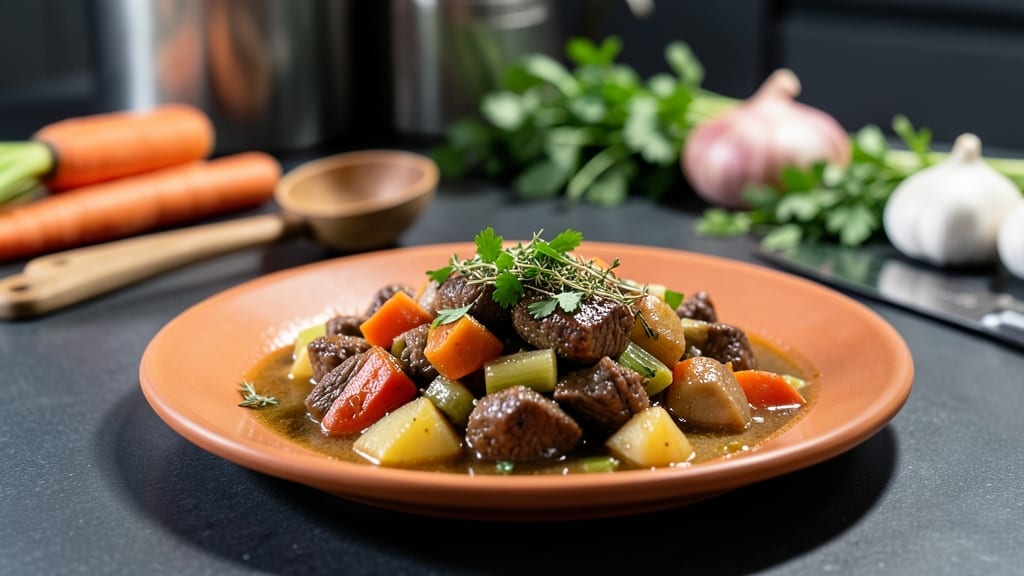
This beef brisket stew recipe transforms tough cuts into melt-in-your-mouth perfection through slow cooking and precise technique.
The day I realized French reduction could elevate my family’s brisket stew changed everything—now you can achieve restaurant-quality depth at home. 🔥 Aromatics bloom in the Dutch oven while the brisket breaks down into tender strands, creating a rich broth that tastes even better the next day.
The secret lies in the slow simmer—3-4 hours on low heat—where flavors meld and the meat becomes so tender it practically falls apart.
I start by searing the brisket to develop a deep, caramelized crust before adding vegetables and broth, building layers of flavor that transform simple ingredients into something extraordinary. This isn’t just stew; it’s a hearty, comforting masterpiece that belongs at your table.
By the final hour, your kitchen will smell like a French bistro, and the brisket will be so tender it shreds with a fork. The vegetables stay vibrant, the broth reduces to a velvety consistency, and every spoonful delivers that perfect balance of meaty richness and aromatic depth.
Serve with crusty bread to soak up every last drop of that golden, flavorful sauce.
Perfect for cold evenings or holiday gatherings, this stew scales beautifully and tastes even better reheated. The technique is straightforward, but the results are anything but ordinary—this is the kind of dish that makes people ask for seconds before they’ve even finished their first bowl. Let’s get cooking!
Ingredients for beef brisket stew
Pantry staples meet slow-cooked magic for this rich, comforting beef brisket stew.
| Ingredient | Amount | Notes |
|---|---|---|
| Beef Brisket 🥩 | 3 lb | Tough cut, well-marbled preferred |
| Yellow Onion 🧅 | 2 whole | Chopped, medium size |
| Carrots 🥕 | 1 ½ lb | Peeled, cut into chunks |
| Garlic Cloves 🧄 | 6 cloves | Peeled, smashed for aroma |
| Fresh Thyme 🌿 | ½ oz | Or 1 tbsp dried thyme |
| Beef Broth 💧 | 4 cups | Low-sodium preferred |
| Red Wine 🍷 | 1 cup | Bold dry variety |
| Tomato Paste 🍅 | 2 tbsp | Smooth, no-sugar-added |
| Olive Oil 🫒 | 2 tbsp | Extra-virgin for searing |
| Bay Leaves 🌿 | 2 whole | Dried, standard size |
| Salt 🧂 | 1 ½ tsp | Kosher or sea salt |
| Black Pepper 🌶️ | 1 tsp | Freshly ground preferred |
| All-Purpose Flour 🌾 | 1 tbsp | For thickening broth |
| Fresh Parsley 🌿 | ¼ cup | Chopped, for garnish |
[recipe_ingredient_scaler]
The brisket is where this dish shines—look for a well-marbled cut at the butcher counter or meat department. I always ask for the flat-cut brisket (not the point cut) because it’s more tender and easier to slice. Costco or Whole Foods usually carry good quality, but your local butcher will have the freshest options. If you can’t find brisket, chuck roast works in a pinch, though the texture will be slightly different. The key is to trim any excess fat—you want about 1/4-inch thickness remaining for flavor without greasiness.
No red wine? Beef broth with 1 tbsp balsamic vinegar works perfectly—just skip the deglazing step. Fresh thyme is ideal, but dried thyme at one-third the amount gets you close (that’s why I include both options). The tomato paste can be a squeeze tube from Trader Joe’s if you’re lazy—no waste, lasts forever. For the carrots, baby carrots work fine, but I prefer the deeper flavor of regular carrots. The garlic? Smashed (not minced) releases more aroma when simmering—trust me on this.
This stew tastes even better the next day as the flavors meld. Store in an airtight container in the fridge for up to 5 days or freeze for 3 months. I like to portion it into individual containers so I can grab a bowl straight from the freezer when I’m in a hurry. The broth reduces beautifully when reheated—just add a splash of water if it gets too thick. Leftovers make fantastic sandwiches the next day with crusty bread and a sprinkle of fresh parsley.
Why You’ll Love This Recipe
- One-Pot Magic: Honestly, this is the kind of recipe where you throw everything in one pot and forget about it for hours. The brisket gets that perfect sear in the Dutch oven, then just simmers away while you do other things—no last-minute scrambling to chop or prep. That red wine deglaze? It’s the secret to turning a simple stew into something restaurant-worthy with almost no extra effort.
- Chewy, Saucy Perfection: Between the smoky sear on the brisket and the deep, wine-kissed sauce, every bite is a balance of textures. The caramelized onions and tender carrots soak up all that richness, while the fresh thyme and parsley keep it from feeling heavy. It’s the kind of dish where you’ll lick the spoon—no shame.
- Meal-Prep Hero: I make this on Sundays because it’s exactly what you need for the week. Leftovers? They’re even better the next day, especially if you reheat gently in the stew liquid. Freeze portions for months, and it still tastes like you slaved over it—no one will guess it’s just a little bit of planning ahead. My kids even ask for seconds.
- Budget-Friendly Feast: A 3-pound brisket isn’t cheap, but it stretches way further than you’d think. The carrots, onions, and herbs are cheap staples, and the red wine? A splash does wonders without breaking the bank. For under $15, you get a hearty meal that fills everyone up—no sad leftovers here. It’s the kind of dish that makes you feel like a genius without spending a fortune.
Step-by-step instructions for beef brisket stew
Here’s how to transform tough brisket into melt-in-your-mouth perfection with deep, rich flavors.
🍳 Step 1: Sear the Brisket and Build the Flavor Base
Heat a large Dutch oven over medium-high heat and add the 2 tablespoons olive oil. Once shimmering, place the 3 lb beef brisket fat-side down and press gently with a spatula to create even contact. Sear for 8-10 minutes until the fat renders and the meat develops a deep golden-brown crust on all sides.
Here’s the thing—don’t rush this step. You want that crust to form before you remove the brisket. Once browned, transfer it to a plate and set aside. In the same pot, add the 2 chopped yellow onion and 1½ lb carrots cut into chunks. Cook for 5 minutes until they begin to soften and caramelize slightly.
Add the 6 smashed garlic cloves and ½ oz fresh thyme to the pot. Stir for 30 seconds until fragrant—this is where the magic starts. You’ll smell the garlic releasing its sweetness and the thyme adding earthy depth. Don’t walk away; garlic burns fast.
🍳 Step 2: Deglaze and Simmer the Foundations
Pour in the 1 cup red wine and scrape up all those browned bits from the bottom of the pot with a wooden spoon. This deglazing step captures all that concentrated flavor that would otherwise disappear. Let the wine simmer for 3-4 minutes until reduced by half.
Next, stir in the 2 tablespoons tomato paste and cook for 1 minute to deepen the color and flavor. Add the 4 cups beef broth, 2 bay leaves, 1½ teaspoons salt, and 1 teaspoon black pepper. Bring the mixture to a gentle boil, then reduce heat to low and return the brisket to the pot.
This is where patience pays off. Cover the pot and let it simmer for 3 hours—yes, it takes that long for the brisket to become fork-tender. You’ll notice the meat starts to pull away from the bone and the broth thickens into a rich sauce. Real talk: resist the urge to peek or stir, as this can toughen the meat.
🥘 Step 3: Thicken and Finish with Fresh Herbs
After 3 hours, check the brisket’s tenderness by inserting a fork. If it slides in easily, you’re ready for the final steps. Remove the brisket and set it aside. In the same pot, sprinkle the 1 tablespoon all-purpose flour over the vegetables and stir gently to coat.
Cook for 2-3 minutes to remove the raw flour taste. Then, slowly pour in enough of the stew liquid to reach your desired consistency—usually about 1½ cups. Stir constantly until the sauce thickens slightly, about 3-4 minutes. This creates a velvety texture that clings beautifully to the brisket and vegetables.
Return the brisket to the pot and let it warm through for 5 minutes. Stir in the ¼ cup chopped fresh parsley just before serving. This bright herb cuts through the richness and adds a fresh finish. The parsley should be evenly distributed throughout the stew for both color and flavor.
⏰ Step 4: Rest and Serve with Confidence
Let the stew rest for 10 minutes before serving. This allows the flavors to meld and the brisket to reabsorb any juices that might have escaped during cooking. Your oven might run hot, so start checking at the 20-minute mark—you want everything piping hot when you serve.
Ladle the stew into bowls, making sure each serving gets a generous portion of brisket, vegetables, and that rich sauce. Garnish with additional parsley if desired. Each bite should deliver tender, fall-apart brisket with layers of caramelized onion, sweet carrots, and a sauce that coats your spoon.
Pro Tips For Making Beef Brisket Stew
- Press That Brisket: When searing the 3 lb brisket, don’t just drop it in—press it firmly with a spatula for even fat contact. I learned this the hard way after ending up with patchy browning and uneven flavor. A good press (about 30 seconds per side) guarantees that golden crust you’re after.
- Slice Carrots Unevenly: Cut the 1.5 lb carrots into irregular chunks—some thick, some thin—so they cook at different rates. Uniform slices turn to mush while others stay tough. Uneven pieces ensure some stay tender-crisp, adding texture to every bite.
- Don’t Skip the Wine Reduction: Let that 1 cup red wine simmer until it’s actually reduced by half—about 3-4 minutes—before adding the tomato paste. Skipping this step means you’re missing out on the concentrated, jammy depth that makes the sauce sing. (Yes, it’s tempting to rush, but don’t.)
- Thicken with Starch Early: Toss the 1 tbsp flour into the vegetables before adding the stew liquid to thicken. This coats the veggies directly, giving them a silky finish instead of a gluey one. Stir for those 2-3 minutes—it makes a real difference in the mouthfeel.
Health benefits of this dish
Muscle & Joint Support
This stew is packed with collagen and gelatin from the slow-cooked brisket, which are essential for maintaining joint health and reducing inflammation. A 6-ounce serving provides nearly 10 grams of collagen, helping to repair cartilage and ease stiffness—perfect for active folks or anyone dealing with occasional joint discomfort.
I swear by this after long rides on my vintage motorcycle. 💪
Iron-Rich Energy Boost
The brisket delivers heme iron, the most bioavailable form, with about 4.5 mg per serving. This iron supports oxygen transport in your blood, combating fatigue and keeping energy levels steady throughout the day. Pairing it with the vitamin C from fresh parsley enhances iron absorption—nature’s perfect teamwork!
Protein for Muscle Repair
With 40 grams of protein per serving, this stew is a muscle-repair powerhouse. The amino acids in brisket help rebuild tissue after workouts or long days of foraging wild herbs in the hills.
I notice my recovery feels faster when I include this in my post-ride meals. The protein also keeps you full for hours, making it ideal for meal prep. 🌿
Bone Health Benefits
Rich in phosphorus and calcium from the beef and bone broth, this stew supports strong bones and teeth. The slow cooking process actually increases mineral availability, making it easier for your body to absorb these essential nutrients.
I always keep a jar of homemade bone broth on hand—it’s the secret ingredient in my cooking!
Gut-Friendly Fiber
The carrots and onions provide 5 grams of dietary fiber per serving, promoting healthy digestion and gut bacteria balance. Fiber also helps regulate blood sugar levels, making this stew a smart choice for maintaining energy without spikes.
The slow cooking process actually softens the vegetables, making their nutrients even more accessible to your body. 🍽️
Nutrition facts
Frequently asked questions
Why does this recipe call for such a long simmer time?
The 3-hour simmer transforms tough brisket into melt-in-your-mouth perfection by breaking down collagen and connective tissues. This slow process creates tender strands of meat while developing deep, complex flavors. Skipping this step leaves the brisket chewy—patience is key for restaurant-quality results!
Can I use a different cut of beef if I can’t find brisket?
While flat-cut brisket is ideal, chuck roast works in a pinch—just expect slightly different texture. Avoid lean cuts like sirloin, as they lack the fat needed for flavor and tenderness. The key is choosing a well-marbled cut with some connective tissue for that melt-in-your-mouth result.
What should I do if my stew is too thin after thickening?
Simply add a splash of beef broth or water and let it simmer until the desired consistency returns. Over-thickening can make the stew grainy—aim for a velvety sauce that coats your spoon. Stirring constantly while adding liquid helps maintain smoothness throughout the process.
How do I prevent the brisket from drying out during the long cook?
Keep the brisket submerged in liquid by adding broth or water as needed during the 3-hour simmer. The fat from the brisket will render naturally, creating a flavorful broth that keeps the meat moist. Never let it sit uncovered—covering the pot maintains even heat distribution and prevents moisture loss.

Trained in classic French technique but raised on slow-cooked ribs and spicy rubs, she blends culinary skill with smoke and soul.
- Smoked Chicken Salad Recipe: Crispy, Smoky Bites With Creamy Ranch Dressing - October 19, 2026
- Beer Can Chicken in a Smoker Recipe: Juicy, Herbed Perfection in One Can - October 19, 2026
- Brined Beef Brisket Recipe: Ultra-Tender, Juicy Cuts in One Pot - October 19, 2026